REVIEW · OSAKA
Full Day Guided Tour to Nara from Osaka by Van
Book on Viator →Operated by Explorer Tours · Bookable on Viator
If you like big temples and small crowds, go. This Nara day trip from Osaka mixes World Heritage sites with a Harushika sake tasting, all in a van capped at 12.
What I like most is the pacing: you get guided context at the big-ticket stops, then time to wander Naramachi on your own. I also love the small-group feel with an English guide who can answer questions without rushing you.
One thing to plan for: this is a walking-and-stairs day with hills, and it is not customizable. If you struggle with long distances on foot, this may be tough.
Small group max 12
English-speaking guide in the van
Most site entry fees included
Harushika brewery sake-tasting set included
Naramachi town time for lunch and souvenirs
Weather/traffic can shift timing
In This Review
- Price and logistics: what you’re really paying for
- From Osaka to Nara Park: a smooth start at 9:45
- Todai-ji’s Nandaimon gate: the first wow moment
- Inside Todai-ji: the Great Buddha Hall and UNESCO scale
- Kasuga Grand Shrine and the deer: plan to look down
- Naramachi free time: lunch, souvenirs, and old-town streets
- Nanen-do: a quieter stop after lunch
- Kofuku-ji and the Central Golden Hall: big, but different
- The 5-Story Pagoda: symbolism and scale
- Harushika Brewery sake tasting: the included highlight
- Back to Osaka: a comfortable wind-down
- Who this tour fits best (and who should skip it)
- Guide quality: small group, real communication
- Is it worth it? My honest booking take
- FAQ
- How long is the full-day tour?
- Where do I meet the guide in Osaka?
- How many people are in the group?
- Is transportation included?
- What admission fees are included?
- Is lunch included?
- Is sake tasting included?
- Is the tour customizable?
- Does the tour involve walking, stairs, or hills?
- What if weather or traffic changes the schedule?
- Is there free cancellation?
Price and logistics: what you’re really paying for
At $113.85 per person for a 7 to 8 hour day, this is priced like a proper guided experience, not a quick shuttle. You’re paying for three main things: the van ride from Osaka, a guide handling the flow between stops, and included admission at key sights (plus the sake tasting).
I like that you also get practical perks that add up during a full day: an air-conditioned vehicle, WiFi on board, bottled water, and an English-speaking guide. That matters when you’re moving between crowded temple areas and trying to keep your day calm and simple.
The main logistics tradeoff is upfront: there’s no extra pickup/drop-off service, and the tour meeting point is either Shinsaibashi or Umeda DT Tower. Also, schedules can shift due to weather and traffic, which is normal in Japan, especially around popular Nara sights.
From Osaka to Nara Park: a smooth start at 9:45
The tour starts at 9:45 am, and you meet your guide at Shinsaibashi or Umeda DT Tower. From there, you’ll ride about 1 hour by private van toward Nara Park.
This opening matters more than you might think. Nara can get busy early, and being en route at a steady pace helps you arrive before the heaviest crush. Plus, traveling by van instead of train transfers keeps the day from feeling like a constant scramble.
Once you’re in Nara, you start at Yumekaze Plaza for a short stop (about 10 minutes). Think of this as your landing point: you’ll regroup, reset, and get your bearings before the temple walk begins.
You can also read our reviews of more guided tours in Osaka


Todai-ji’s Nandaimon gate: the first wow moment

Your guided day builds toward the famous entrance area of Todai-ji. First up is the Todai-ji Namdaimon, also called the Great South Gate. You’ll walk toward the gate and take in the sheer scale.
This is one of those places where photos can’t fully explain it. The gate is massive, about 25.5 m tall, and the Ni-o guardian statues make the whole entrance feel intense. You pass through the gate and can stand close enough to really notice the size of the wooden statues.
The ticket note here is great for value: the time at this stop is listed with admission free. So you get a big visual payoff without adding another gate fee.
Inside Todai-ji: the Great Buddha Hall and UNESCO scale
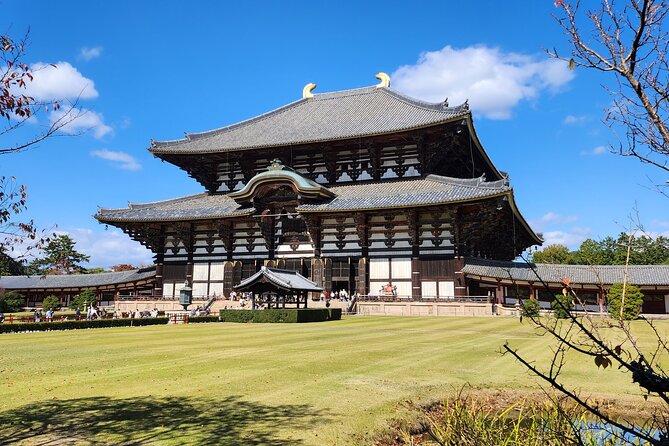
Next comes Todai-ji proper, with about 1 hour 10 minutes here. Your guide frames it as a temple connected to prayers for the country’s peace, and you’ll spend time at the Great Buddha Hall, where the Great Buddha is housed.
The hall is a jaw-drop size: roughly 57 m wide, 50 m deep, and 48 m high. The building you see today was rebuilt in 1709, and Todai-ji is a UNESCO World Heritage Site (since 1998).
Here’s the practical tip: go in ready to slow down a little. Even if you’ve seen a Buddha photo before, the hall’s scale hits different when you’re standing inside. Let your guide point out what to notice, especially if you’re not used to temple architecture.
This stop has admission included, which is one more reason the tour can feel efficient. You’re not hunting ticket windows while everyone else is squeezing in.
Kasuga Grand Shrine and the deer: plan to look down

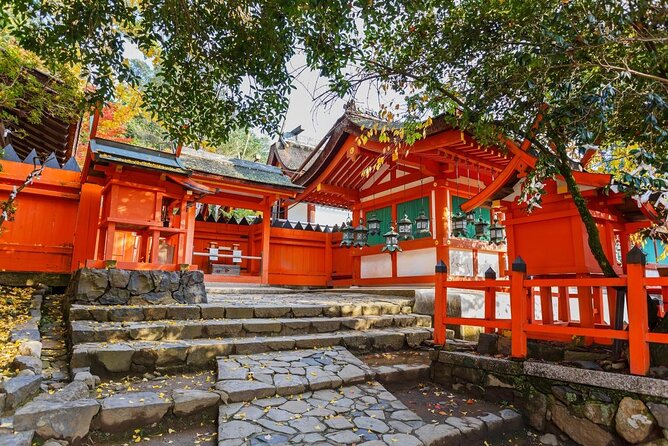
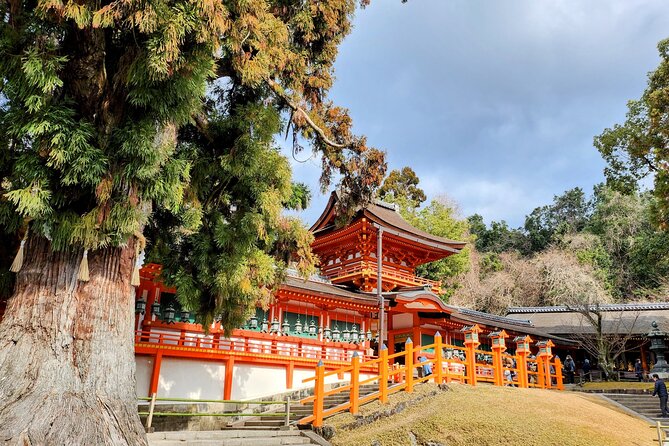
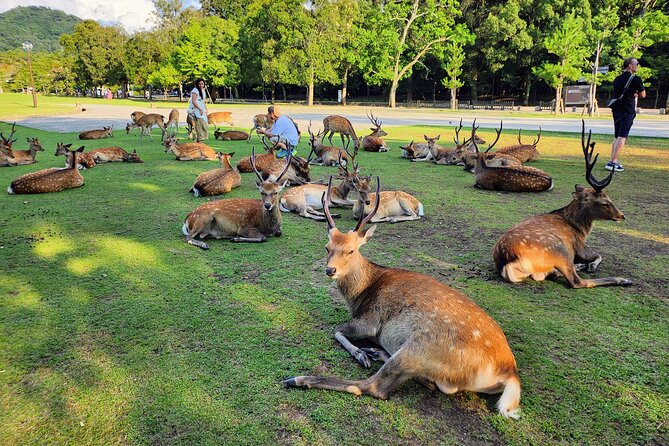
Then you head to Kasuga Grand Shrine (about 1 hour). This part is special for two reasons: it’s a shrine setting within Nara Park, and you’ll see the deer up close.
Your guide will take you there on foot, and you’ll have a chance to see the deer roaming freely. One fun detail I picked up from the guide chatter and tour vibe: if the deer are close, you’ll do a lot of natural smiling and photo positioning—plus, there’s a bit of a local moment where it’s worth remembering the deer are part of the experience. If you don’t bow in the spirit of the place, at least don’t act surprised when they act like they own the road.
This stop also has admission included, and it’s another UNESCO World Heritage Site (since 1998). You’ll hear about the shrine’s restoration tradition and the lanterns around the grounds, and you’ll learn about the large collection of national treasures stored at the shrine (the tour notes mention 352).
If you dislike animal contact, keep your distance and watch the deer patterns. They’re not there to be mean; they’re there because this is their home-range.
Naramachi free time: lunch, souvenirs, and old-town streets
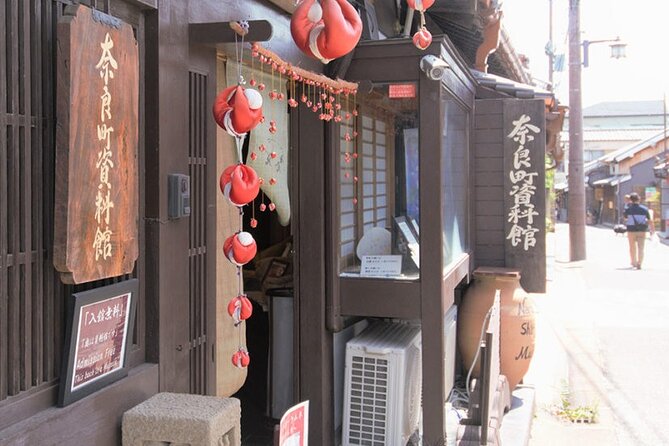
After the main temple blocks, you get a break with Naramachi. This is your free-time and lunch break (about 1 hour), and it’s one of the best parts of the day because it gives you control.
You’ll be walking around on your own with your group and finding lunch wherever works best. This matters because lunch preferences vary a lot—some people want something quick, others want a sit-down meal, and the tour doesn’t include lunch. You also get time to browse for souvenirs.
Naramachi is described as Nara’s main town area, known for preserved old-town facades. The area is noted for having escaped air raid damage during World War II, so you can still see structures with a preserved machiya look (late Edo to Meiji period style facades, updated storefronts, galleries, restaurants, and shops).
Practical approach: use this hour strategically. Pick one lunch spot, eat, then spend the remaining time browsing. Naramachi can be charming enough that you lose track of time if you wander too far.
You can also read our reviews of more tours and experiences in Osaka
Nanen-do: a quieter stop after lunch
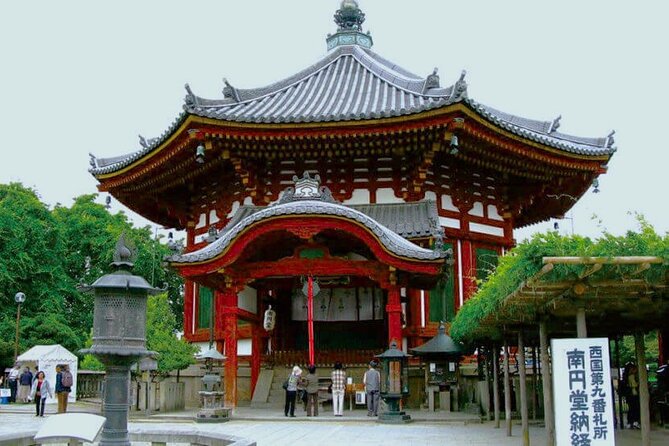
After lunch, you meet your guide again and head to Nanen-do (about 20 minutes). This stop is smaller and calmer compared to Todai-ji and Kasuga, so it works well as a reset.
Nanen-do is an octagonal structure, connected with the dedication to the peace of a father’s passing. The tour notes mention a national treasure statue housed there, so even though it doesn’t take long, it’s still meaningful.
Admission here is listed as free, so it’s another win for the day’s value equation.
Kofuku-ji and the Central Golden Hall: big, but different
Next is Kofuku-ji with about 45 minutes. You’ll visit the Central Golden Hall, and the guide sets it in a timeline that traces origins from Kyoto and relocation to its Nara position.
The tour notes say Kofuku-ji was founded in 669 and moved to current location in 710. After war damage, the present building came after rebuilding. Like the other heavy hitters, it’s also a UNESCO World Heritage Site (since 1998).
If Todai-ji feels massive in one direction, Kofuku-ji can feel massive in a different texture. It’s still grand, but it’s more about the way the complex sits in the temple area and how the hall anchors your sense of place.
Admission for this stop is included, so you don’t have to think about costs mid-day.
The 5-Story Pagoda: symbolism and scale
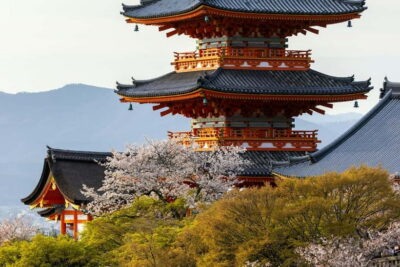
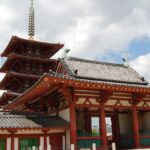
After the Central Golden Hall, you walk to the Kofuku-ji 5 Stories Pagoda (about 20 minutes). You’ll be amazed by the wooden tower and the fact that it’s been rebuilt multiple times after disasters.
The current pagoda you see today is described as reconstructed in 1426, standing about 50.1 m tall. The tour also explains the five roofs as symbolizing land, water, fire, air, and sky—five dimensions of the world.
This is a short stop, so don’t rush it. Spend the first minute just looking upward, then let your guide connect the symbolism to what you’re seeing. It’s one of those moments where a tiny bit of context makes the structure feel less like a random tower and more like a message.
Harushika Brewery sake tasting: the included highlight
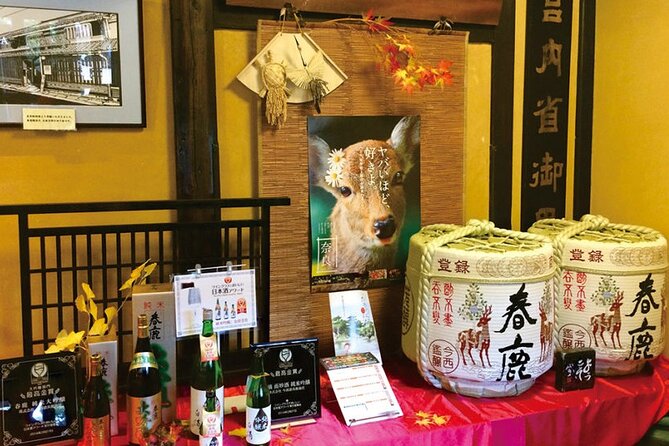
After temples, you head to Harushika Brewery for about 45 minutes. This is where the tour turns from sightseeing mode into taste mode.
You can enjoy Kikizake, a tasting set of five kinds of sake, with explanation from the brewery staff. Harushika is described as established in 1884 and later started exporting sake to the world in 1984.
The tour also shares the origin of the name: gods of Kasugataisha shrine coming from the heavens riding a deer from Nara. In other words, it ties the brewery back to the story-world of Nara rather than acting like a random stop.
Admission here is included, which makes a big difference in perceived value. Alcohol tastings are often priced separately on independent tours, so this turns the tour day into a better deal if you drink or even if you’re just curious about the taste differences.
Tip for your day: take it slow here. After hours of walking, it’s easy to get sleepy or tipsy without realizing it, especially if you aren’t used to sake. Sip, taste, and keep your energy steady for the drive back.
Back to Osaka: a comfortable wind-down
Once the brewery visit is done, you board the private vehicle and ride back to Osaka for about 1 hour. You’ll be dropped off at your pick-up point.
This is a good end to the day because you don’t have to think about trains, transfers, or crowds. It’s also one reason the schedule can feel smooth even when Nara is busy.
If you’re planning dinner later in Osaka, I’d keep it flexible. Your appetite might swing after the tasting, and you’ll likely feel temple-walk fatigue in your legs.
Who this tour fits best (and who should skip it)
This tour is best for you if:
- You want UNESCO highlights in Nara without planning every detail.
- You enjoy structure: guided context at the major sites, then free time in Naramachi.
- You like small groups (max 12) where a guide can actually be heard.
Skip it or think hard if:
- You cannot walk long distances or handle stairs and hills. This is clearly described as a walking-included tour.
- You need a customizable itinerary. The tour is not customizable.
- You’re sensitive to schedule shifts. Time can change with weather and traffic.
Also, if it helps you: service animals are allowed, and the tour is near public transportation—useful info if you plan to extend your trip on your own.
Guide quality: small group, real communication
One of the most praised aspects in the tour experience is the guide impact. I’m paying attention to names like Taka, Mark, Take, and Marc because they show up in standout comments about being fun, informative, and helpful with translation.
If you’re the type who likes more than just facts—if you want someone to explain what you’re seeing and help you move through crowds—this is the style that tends to work. A private van with a guide is also the right format if your Japanese is limited and you want things kept simple.
Is it worth it? My honest booking take
If your priority is a guided, efficient Nara day with included entry fees and a real cultural stop at a sake brewery, I think this tour is a strong value. You get a tight route through the big landmarks: Todai-ji’s gate and hall, Kasuga Shrine, Kofuku-ji, plus time to wander Naramachi.
The only reason I’d hesitate is the walking intensity. If stairs and hills are a problem for you, the best part of the day will be the van, and you won’t get to enjoy the sights at the pace they’re meant to be seen.
FAQ
How long is the full-day tour?
The duration is listed as 7 to 8 hours.
Where do I meet the guide in Osaka?
You can meet your tour conductor in Shinsaibashi or at Umeda DT Tower.
How many people are in the group?
The tour has a maximum capacity of 12 travelers per vehicle.
Is transportation included?
Yes. You travel by air-conditioned private vehicle and you are driven between Osaka and Nara, then back again.
What admission fees are included?
Admission is included for several main temple/sight stops, and the tour also lists some stops as free while others are included.
Is lunch included?
No. Lunch is not included. You’ll have free-time in Naramachi to find your own lunch.
Is sake tasting included?
Yes. The tour includes a visit to Harushika Brewery with a tasting set of five kinds of sake.
Is the tour customizable?
No. The tour is not customizable.
Does the tour involve walking, stairs, or hills?
Yes. The tour includes walking and can involve stairs and hills, so it’s not recommended if you can’t walk long distances.
What if weather or traffic changes the schedule?
Time schedules might change due to weather and traffic conditions.
Is there free cancellation?
The cancellation policy states you can cancel up to 24 hours in advance for a full refund.
If you tell me your walking comfort level and whether you care more about temples or the sake tasting, I can help you decide if this route matches your style.