REVIEW · OSAKA
Osaka: Guided Food Tour with 12 Dishes at 4 Local Eateries
Book on Viator →Operated by Local Guide Stars · Bookable on Viator
Osaka food clicks faster with a guide. This 2.5-hour 12-dish outing strings together four local eateries in the areas that locals actually use, so you can focus on eating instead of playing map games. The whole setup is built to help you taste a lot of Osaka flavors in one night, with a mobile ticket and a small-group feel.
What I like most is the way it keeps you out of the obvious tourist traps while still hitting the kinds of places that make Osaka famous. You also get sake bars and drinks work into the evening, and your guide can steer you to what to order and where to go next.
One thing to consider: the restaurants can change by day, so the exact dish lineup may shift even though the experience pattern stays the same. If you are hunting a very specific snack or you have a strict must-eat list, keep your expectations flexible and let the guide handle the choices.
In This Review
- Key Points You’ll Care About
- Osaka’s Kitchen in 2.5 Hours: What the 12-Dish Plan Really Means
- Meet at Don Quijote Dotonbori Midosuji: Finding the Start Without Stress
- Stop-by-Stop Flavor: How Four Local Eateries Add Up
- The warm-up bites that get you into Osaka mode
- An izakaya-style stop with drinks and comfort food energy
- Fresh fish dishes and grilled skewers later in the route
- Why “12 dishes” doesn’t feel like 12 tiny samples
- Sake Bars Without the Guesswork: What Makes the Drinks Part Work
- Your Guide Is Part of the Meal: Ken, Spike, Mao, Ukyo, and Nori
- Group Size and Pace: Social, Not a Stampede
- Price and Value at $83.57: Paying for Time, Not Just Food
- Who This Tour Suits Best (and Who Should Think Twice)
- Practical Tips Before You Go (So You Enjoy It More)
- Should You Book This Osaka Food Tour?
- FAQ
- How many dishes does the tour include?
- How long is the Osaka guided food tour?
- How much does the tour cost?
- Where does the tour start?
- Does the tour end back at the meeting point?
- Are there sake bars included?
- Do the restaurants and dishes stay the same every day?
- How many people are in the group?
- Is there free cancellation?
Key Points You’ll Care About
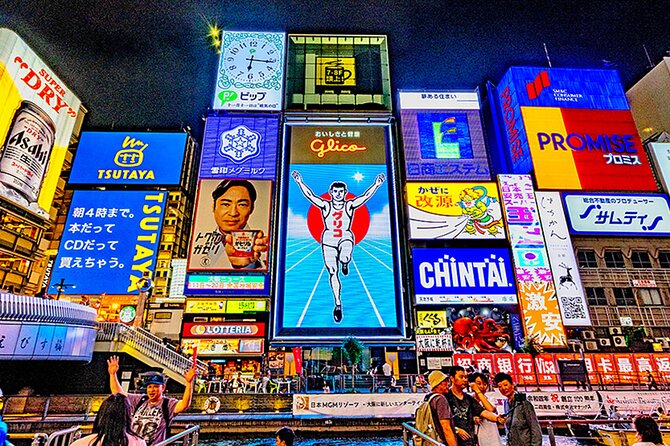
- 12 dishes across 4 local eateries in about 2.5 hours, so you don’t waste time deciding
- Sake bar stops with local-style ordering help, not random tourist sampling
- Different restaurants by day, which broadens the flavor range but can change exact dishes
- Local guides with serious street-level tips, including names like Ken, Mao, Spike, Ukyo, and Nori
- Small group limit (up to 30), which helps the pace feel social, not chaotic
Osaka’s Kitchen in 2.5 Hours: What the 12-Dish Plan Really Means
This tour is built for people who want Osaka food now, not later. In just a couple of hours, you’ll work through 12 distinct dishes, which is the main advantage here: you get variety without doing a whole planning project. Osaka’s food scene is huge, and this format helps you sample the broad picture fast.
I also like that the stops are restaurant-based, not just a “walk-and-look” route. You’ll spend real time eating at places that do this day after day, which makes the food feel more normal and less staged. That matters when you’re trying to understand what Osaka does well instead of chasing one famous item.
Finally, the tour is flexible in a practical way: there are two evening tour options. That lets you match your energy level and dinner timing, which is huge in a city where nights can start early and move fast.
You can also read our reviews of more food & drink experiences in Osaka
Meet at Don Quijote Dotonbori Midosuji: Finding the Start Without Stress
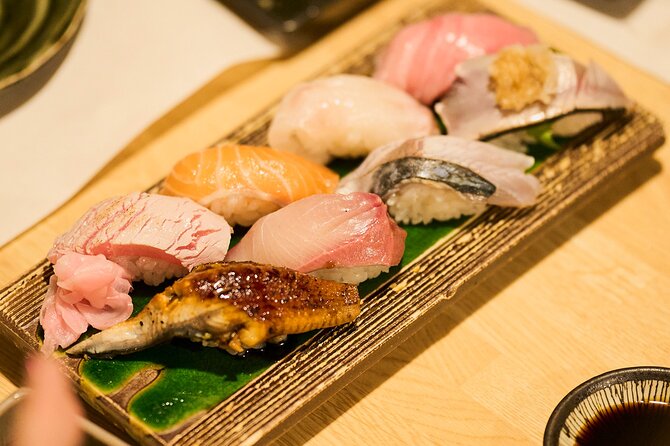
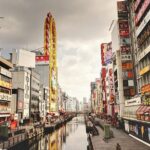
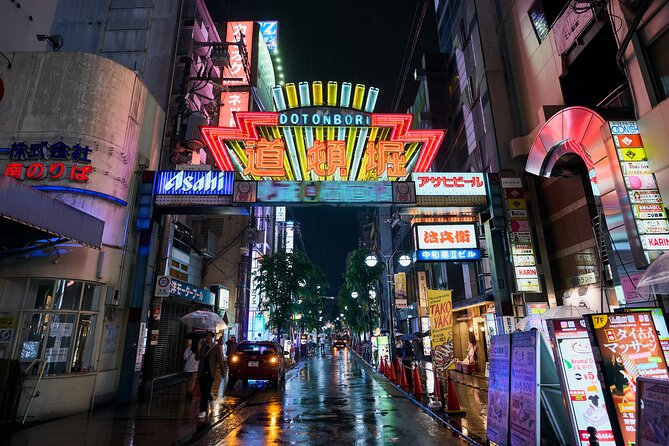
Your meeting point is easy to anchor because it uses a big landmark. You meet at Don Quijote Dotonbori Midosuji in Nishishinsaibashi, Chuo Ward, Osaka, and the tour ends back at that same spot.
Why that’s useful: you can line up your other plans around a known point. When a tour returns you to the start, you avoid the hassle of figuring out your next train or walk in the dark right after you’ve eaten your way through four stops.
The location is also described as near public transportation, which is another quiet win. If you’re staying in central areas, you’ll likely be able to get there without complicated transfers, and you can spend more time on the food part instead of commuting.
Stop-by-Stop Flavor: How Four Local Eateries Add Up
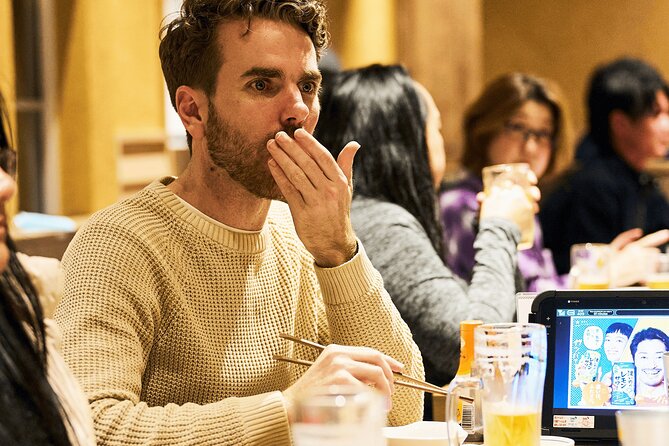
The exact restaurants can vary by day, so I won’t pretend you’re following the same menu every time. But the experience pattern is consistent: you’ll hit local favorites and sample a mix of fresh fish dishes, grilled skewers, and other Osaka staples.
The warm-up bites that get you into Osaka mode
The evening often starts with quick, street-ready favorites. One example from the experience shows fresh crispy dumplings and takoyaki at the first stop, which is a smart way to begin because it sets the “Osaka flavor dial” early.
This kind of start helps you get confident fast. If you’ve never ordered takoyaki or dumplings in Japan, you’ll learn the rhythm of eating these foods on the move, then you’ll carry that comfort into the sit-down portions later.
An izakaya-style stop with drinks and comfort food energy
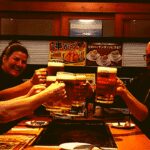
Next, the tour typically moves into an izakaya environment, the kind of casual place where Osaka evenings feel real. In one featured sequence, the group went from dumplings and takoyaki into an izakaya tucked away from the loudest streets.
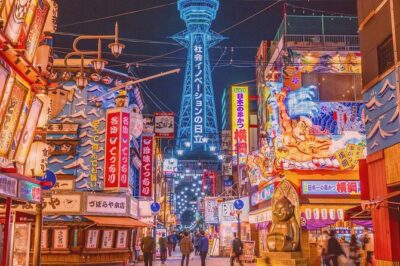
That “tucked away” part matters. Osaka can look like a theme park near the big neon areas, but izakayas are where the day-to-day rhythm shows up. You’ll usually eat and drink in a way that feels social, not performance-based.
You can also read our reviews of more tours and experiences in Osaka

Fresh fish dishes and grilled skewers later in the route
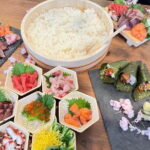
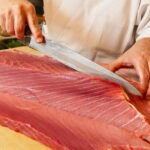
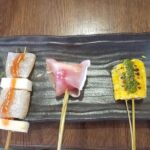
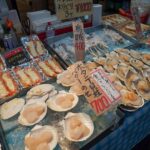
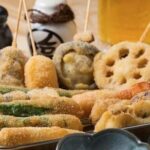
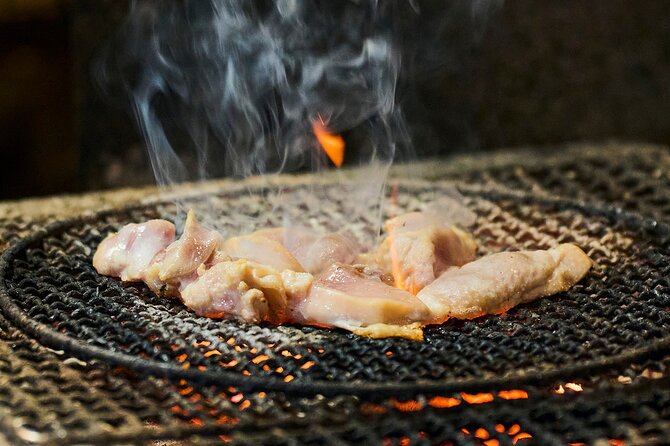
As the evening continues, you can expect fresh fish dishes and grilled skewers to show up. This is one of the better parts of the format because it balances textures: something delicate and seasonal on one side, something smoky and grilled on the other.
If you’re trying to understand why Osaka is nicknamed Japan’s Kitchen, this balance is a key clue. You’re not just stacking one style of food; you’re tasting how Osaka handles quick bites and more comforting, hot-off-the-grill items.
Why “12 dishes” doesn’t feel like 12 tiny samples
A lot of food tours technically hit a lot of items, but some of those dishes end up being thin slivers. Here, the structure is built around multiple stops, so you spend time at each place rather than sprinting through tiny tastes only.
That changes the feel of the night. You’ll still be hungry by the end in the best way, but you won’t feel like you ate crumbs to prove a point.
Sake Bars Without the Guesswork: What Makes the Drinks Part Work
The tour is explicit about sake bars beloved by locals, and that’s more than a label. If you’ve ever stared at a sake menu with zero context, you know how easy it is to order wrong just because you don’t know what matters.
With a guide, you don’t have to be a sake expert to enjoy the drinks. They can point you toward what to try, and that makes the whole evening more fun because you’re drinking with intention instead of fear.
Also, the sake stops fit naturally into the Osaka night rhythm. Izakayas and small bars are where conversations happen, and where you learn what locals actually drink with their meals. Even if you don’t become a sake devotee by the end, you’ll probably leave with clearer ideas of what you like.
Your Guide Is Part of the Meal: Ken, Spike, Mao, Ukyo, and Nori
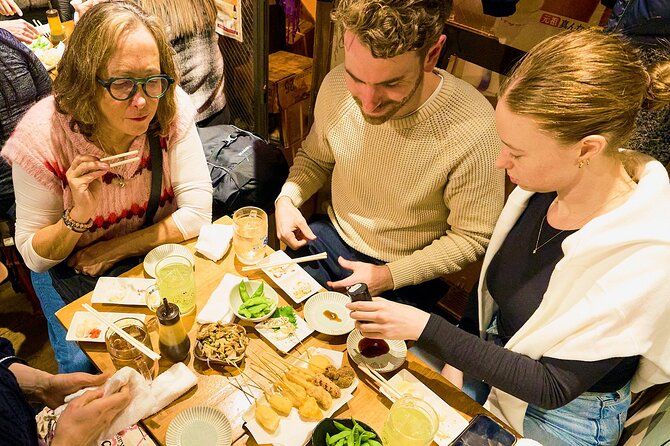
The most consistent strength in the experience is the human one: guides who connect the food to the city. Guides named in the experience include Ken, Spike, Mao, and Ukyo and Nori, and the recurring theme is that they don’t just point; they explain.
One of my favorite qualities to look for is when the guide helps you understand the places you’re entering. In this tour, that shows up as local-level choices and the ability to steer you toward good ordering, not just whatever’s easiest for a group.
The practical bonus: these guides also share more recommendations for the rest of your stay. That matters because Osaka doesn’t end when the tour ends. If you can leave with a short list of where to go next, the tour becomes more like a local introduction service than a one-off meal.
And yes, the guides also tend to bring a friendly, high-energy vibe. Names like Mao and Spike come up with the kind of warmth that makes a group evening feel smooth, even when you’re surrounded by strangers.
Group Size and Pace: Social, Not a Stampede
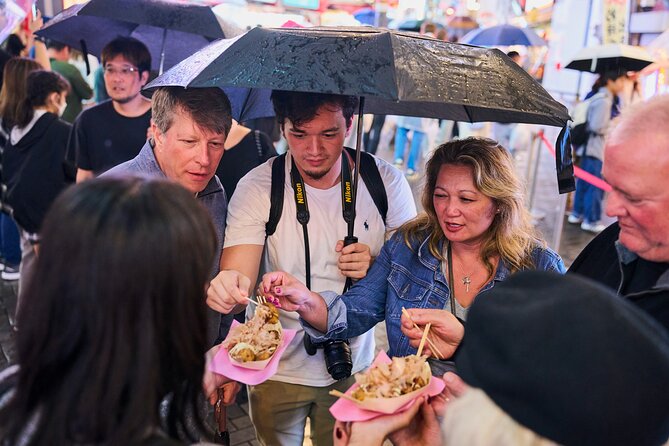
The group limit is up to 30 travelers, and that helps the pace. In a bigger crowd, guides often lose time managing logistics, and food tours turn into waiting games. Here, the smaller ceiling means you’re more likely to move smoothly and get attention when you need it.
You also get a chance to meet fellow travelers along the way, which is part of why shared food tours work. Eating together breaks down the “I’m new here” feeling fast, and Osaka is the kind of city where having a few new faces to compare notes with can make the evening feel lighter.
In a tour that runs about 2 hours 30 minutes, tempo is everything. Too slow and you feel stuck. Too fast and nothing lands. This one is set up to keep you moving while still letting each stop matter.
Price and Value at $83.57: Paying for Time, Not Just Food

At $83.57 per person, the price looks reasonable once you translate it into what you’d do on your own. You’re paying for guided restaurant access, a structured route through four local eateries, and the fact that someone else handles the “where should we go next” problem.
The biggest value piece is choice and efficiency. Osaka’s food scene is massive, and if you try to plan the same coverage yourself, you’ll spend time researching, checking menus, and walking around comparing places. This tour replaces that effort with a ready-made sequence.
You’re also not only paying for food. The tour includes sake bars and drinks as part of the experience, which boosts value because you’d normally have to add those stops to your plan separately.
Could you eat cheaper on your own? Sure. But you’d lose the convenience, the local ordering help, and the broad coverage in one evening. For many visitors, that trade-off is exactly what makes this cost feel fair.
Who This Tour Suits Best (and Who Should Think Twice)
This is ideal if you’re short on time, or if you’re the kind of traveler who hates decision fatigue. If you want to taste a wide range of Osaka food, skip the tourist-trap sorting, and learn what to try next, this tour fits nicely.
It’s also a good fit for first-time Osaka visitors. The city’s nickname, Japan’s Kitchen, can feel like pressure when you don’t know where to start. A guide-led tasting gives you an immediate framework for what Osaka does well.
Think twice if you’re very strict about specific dishes. Since restaurants can change depending on the day, you might not get the exact items you pictured from a previous date. You’ll still eat well, but your best move is to treat the tour as an Osaka sampler, not a rigid menu.
If you have dietary restrictions, the tour information says most travelers can participate, but it does not spell out dietary accommodation details here. If that’s your situation, I’d message the operator before booking so you’re not guessing.
Practical Tips Before You Go (So You Enjoy It More)
Come hungry, but not painfully stuffed. With 12 dishes, you’ll feel the accumulation, and Osaka portions can add up quickly. I’d plan for a light snack earlier in the day rather than a huge meal right before the tour.
Wear comfortable shoes. Even though the route details aren’t broken down into distance, it’s a multi-stop evening, so you’ll want feet that can handle a walk-friendly pace.
Use the guide like a cheat code. The experience explicitly encourages you to ask for more recommendations during your stay, and that’s where you’ll get the real long-tail benefit. If you tell them what you like, you’ll usually get better advice than wandering.
If you’re a sake drinker, ask about what you’re tasting. If you’re not a sake drinker, don’t worry about pretending. Just lean into the food first, and treat drinks as part of the atmosphere.
Should You Book This Osaka Food Tour?
Book it if you want a fast, structured way to taste Osaka without the research headache. The combination of 12 dishes, sake bar energy, and local-guided restaurant choices is exactly the kind of value that works for limited vacation time.
You should also book if you like meeting people and hearing practical guidance from people who clearly care about giving you a great evening. Names like Ken, Spike, Mao, and Ukyo and Nori show up because the experience is as much about the guide’s personality and insight as it is about the food.
Skip or reconsider if you need a fixed menu with zero variation. Since restaurants and dishes can change by day, your safest expectation is variety, not predictability.
If you want Osaka in one night that actually teaches you what to chase next, this is a strong pick.
FAQ
How many dishes does the tour include?
The tour includes 12 unique dishes.
How long is the Osaka guided food tour?
It runs about 2 hours 30 minutes.
How much does the tour cost?
The price is $83.57 per person.
Where does the tour start?
The meeting point is Don Quijote Dotonbori Midosuji in Nishishinsaibashi, Chuo Ward, Osaka.
Does the tour end back at the meeting point?
Yes. The activity ends back at the meeting point.
Are there sake bars included?
Yes. The experience includes stops at sake bars that are described as beloved by locals.
Do the restaurants and dishes stay the same every day?
No. The tour visits different restaurants depending on the day, and the dishes may differ as well.
How many people are in the group?
The tour has a maximum of 30 travelers.
Is there free cancellation?
Yes. You can cancel for a full refund if you cancel up to 24 hours in advance.