REVIEW · OSAKA
Full Day Hiroshima and Miyajima Tour by Bullet Train from Osaka
Book on Viator →Operated by JTB Global Marketing & Travel Inc. · Bookable on Viator
A Shinkansen day that hits hard and beautiful. This full-day route pairs a classic island shrine stop with the Hiroshima Peace Memorial experience, all paced by a tight schedule and a real guide in the Hiroshima portion. I especially like the fast Shinkansen logistics and the way the Hiroshima visit is guided with human, on-the-ground perspective. One thing to think about: it’s a long day (about 13 hours 10 minutes, roughly 14 hours), and lunch is on your own.
The day starts at Hotel Granvia Osaka, right by the elevators, and you’re moved to Shin-Osaka in time for the bullet train. There’s also a mobile ticket, and the plan runs on Japanese timing, so being late can throw you off the whole flow.
You’ll finish back in Osaka (around 9:00 pm) at Osaka Station, without a hotel drop-off. If you only have one day and want the highlights of both Miyajima and Hiroshima, this is a solid way to do it. Just don’t expect breathing room between stops.
In This Review
- Key highlights worth planning for
- A one-day route that squeezes two iconic worlds
- Morning start: Hotel Granvia Osaka to Shin-Osaka station
- Shinkansen magic: the Osaka-to-Hiroshima speed factor
- Miyajima and Itsukushima Shrine: the UNESCO star stop
- Walking and timing tip
- Lunch on Miyajima: your one-hour window
- Back to Hiroshima: Peace Memorial Park and Museum
- How to get the most out of the museum
- Genbaku Dome: why the stop matters
- The logistics that can make or break your day
- Expect a full, long day
- Group size and pace
- A practical note on meeting clarity
- Price and value: what you’re really paying for
- Who this tour fits best
- Should you book this Hiroshima and Miyajima day tour?
- FAQ
- What time does the tour start and when do we return?
- Is lunch included in the price?
- What admissions and tickets are included?
- Is there an English guide?
- Is there time to explore Miyajima on your own?
- How large is the group, and are train seats guaranteed?
Key highlights worth planning for
- Bullet train reserved seating between Hiroshima and Shin-Osaka (standard or Green Car options)
- Itsukushima Shrine Treasure Hall visit on Miyajima with admission included
- Boat transfer to Miyajima’s Sacred Island as part of the rhythm of the day
- Peace Memorial Museum with admission included, plus time in Peace Memorial Park nearby
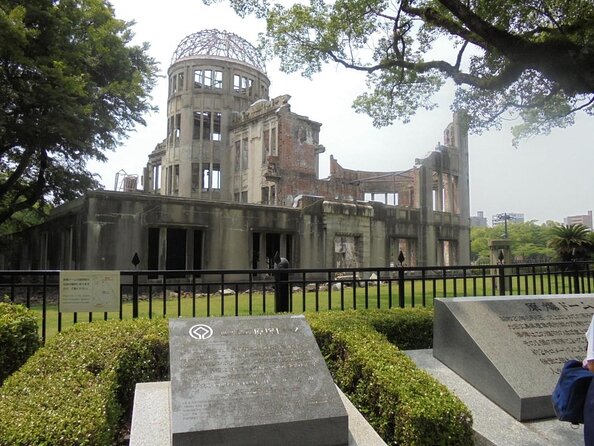
- Atomic Bomb Dome visit (Genbaku Dome) preserved as it was after the bombing
- English guide support during Hiroshima, with some guides sharing personal family stories
A one-day route that squeezes two iconic worlds
This is the kind of day that makes Japan feel both efficient and deeply moving. On one end, you get Miyajima’s shrine views and island atmosphere. On the other, Hiroshima asks you to slow down and really pay attention.
You’re doing a lot of “major landmarks,” yes. But the pacing matters. You’re not left to guess trains or ferries. The plan gets you from Osaka to the Shinkansen, from Hiroshima to Miyajimaguchi, and then back again, with the Hiroshima segment handled with an English interpreter-style guide.
And the emotional weight is real. Hiroshima isn’t a quick photo stop. Even if you’re used to history museums, the museum and park area hit differently because you’re seeing the preserved evidence of what happened in 1945.
You can also read our reviews of more tours and experiences in Osaka
Morning start: Hotel Granvia Osaka to Shin-Osaka station
The meeting point is Hotel Granvia Osaka, 3-chōme-1-1 Umeda, Kita Ward. The key detail: meet at the elevator hall on the first floor. It matters because the tour uses a tight timing window. You then take public transportation to Shin-Osaka station.
Start time is 7:40 am. Plan to arrive a few minutes early, not “basically on time.” Japanese trains run like clockwork, and the day is built around those exact departures.
Once you reach Shin-Osaka, the Shinkansen takes over. That’s one of the reasons this tour works well as a one-day option: you’re using rail speed to compress distance, while the guide portion helps you avoid wasting energy figuring things out.
Shinkansen magic: the Osaka-to-Hiroshima speed factor
The Shinkansen segment is a big part of the value here. You’re traveling reserved seating from Hiroshima back to Shin-Osaka later in the day (standard car or Green Car). You also get admission-covered transport included in the package.
Two practical notes:
- Seats may not be designated, so don’t assume you’ll pick a perfect seat location.
- You should dress for comfort. Even if it’s a short train ride, you’ll still spend a good chunk of the day moving through stations, ferries, and walking areas.
If you haven’t ridden Japan’s high-speed trains before, this tour gives you a clean taste of that experience without having to plan a single timetable.
Miyajima and Itsukushima Shrine: the UNESCO star stop
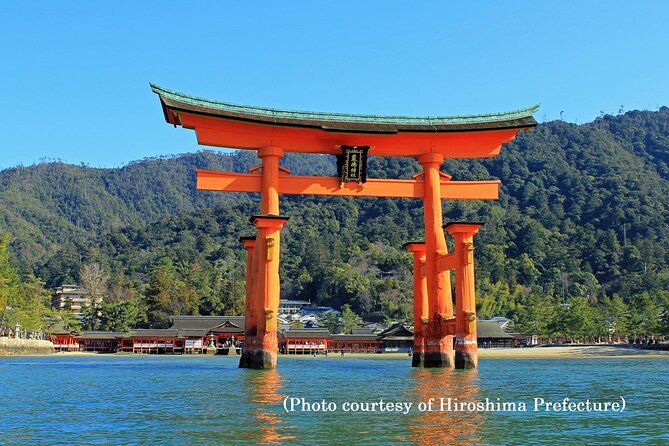
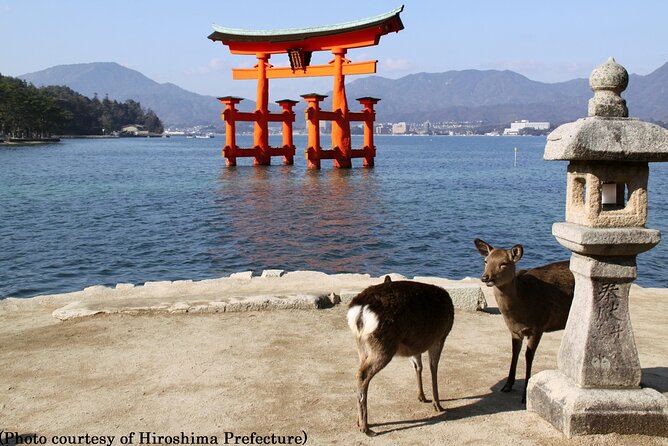
After Hiroshima, you head to Miyajimaguchi and then board a boat to Miyajima. This boat leg isn’t just transport. It sets the tone. The island experience starts before you even reach the shrine.
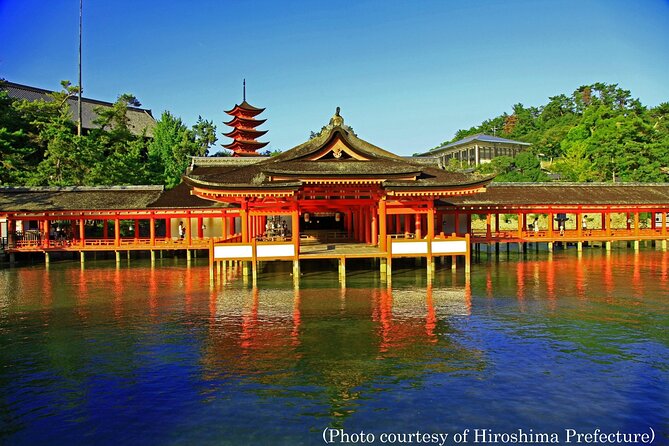
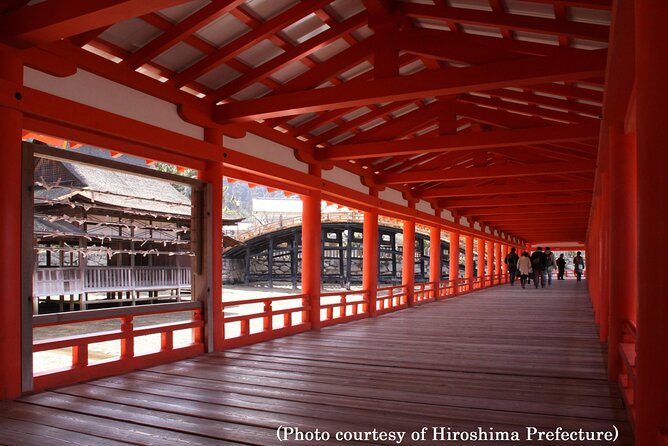
On Miyajima, you visit the Itsukushima Shrine Treasure Hall for about an hour, with admission included. The shrine is famous for its Heian-period residential-style architecture (Shinden-zukuri style). You’ll see why the site is listed as UNESCO World Heritage.
What I like about this stop in a group tour: you don’t have to “make it up” as you go. You’re guided through the key cultural point, and you get a structured amount of time—just enough to see the essentials without the day turning into a long detour.
Walking and timing tip
Miyajima is active. Even without a full hike, you’ll be walking between points and around the shrine area. Bring comfortable shoes, and expect that you might cover more ground than you think during a “one-hour shrine” block.


Lunch on Miyajima: your one-hour window
Time for lunch is allotted on Miyajima, and this is the one chunk you’ll manage on your own. The tour doesn’t include lunch, so you’ll be choosing what fits your appetite and budget.
The area is known for foods like oysters, Hiroshima-style okonomiyaki, and conger eel rice bowls, and you’ll find options around the island. Because you have a limited time window, it helps to decide what you want before you’re hungry—otherwise you can end up waiting for a spot and losing valuable minutes.
If you want a calmer lunch pace, choose a simple meal you can eat without a long line. If you want the full local-food experience, pick one specialty and commit. With a fixed schedule, this is not the day to sample five things and hope you’ll still catch the rest of the group on time.
Back to Hiroshima: Peace Memorial Park and Museum
Once you return to Hiroshima, the tone shifts sharply. This is the section that most strongly separates this tour from a casual sightseeing day.
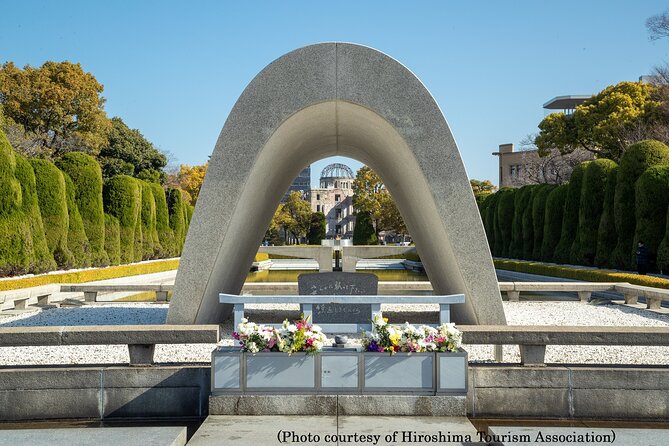
You’re taken to Hiroshima Peace Memorial Park, where you spend time near the area where the atomic bomb exploded. The Peace Memorial Museum is included, and it’s a major stop in the day (about an hour). You’ll see exhibits that explain the destruction and the aftermath, alongside the city’s recovery.
A detail I really value: some guides are connected to the story in a personal way. In recent outings, guides such as Mayumi and Keiko have shared moving family-connected accounts in their interpretation of the events. Even when a guide doesn’t share personal stories, the museum experience itself is designed to make you understand what happened, not just remember dates.
How to get the most out of the museum
This is not a museum where you win by speed-reading. Go in with a focus question. Something like:
- What changed in daily life after the bombing?
- How did survivors describe the immediate aftermath?
- What does the museum ask you to do with that knowledge?
If you try to absorb everything at once, you’ll miss the emotional and educational points that make Hiroshima land.
Genbaku Dome: why the stop matters
After the museum time, you head to the Atomic Bomb Dome (Genbaku Dome). It’s a skeletal structure that was preserved as it survived the 1945 attack.
This stop is shorter (about 40 minutes), but it works as a final “anchor.” If the museum gives you context, the dome gives you a physical reminder—an object you can’t mentally file away as distant history.
Bring your sense of respect here. A group tour can keep you moving, but you still control how you look. Take a moment before you step into the next stage. It’s worth it.
The logistics that can make or break your day
This tour is well-structured. Still, it’s a lot of moving parts, and that’s where your planning matters.
Expect a full, long day
Duration is listed at about 13 hours 10 minutes, and the experience runs until around 9:00 pm. That’s not a “light day trip.” You’ll spend time on:
- transfers by bus or train,
- a Shinkansen ride,
- boat travel to Miyajima,
- sightseeing walks in shrine and museum areas,
- and return rail to Osaka.
If you have a late-night dinner plan in Osaka, treat this as your main event. You’ll want something easy when you get back.
Group size and pace
The group has a maximum of 40 travelers. You’ll be moving as a unit, and some stops are timed. You do get a guided approach in Hiroshima, and you also get the “freedom block” for lunch on Miyajima—but the overall schedule doesn’t stretch.
That’s great for efficiency. It can feel less flexible if you want to linger in the museum, take a long detour on Miyajima, or slow down for extra photo time.
A practical note on meeting clarity
The meeting spot is specific, and it can be easy to miss if you show up right at the start time and don’t know where the elevator hall is. When a tour runs on precise schedules, your best friend is early arrival and a quick check with staff once you’re there.
Price and value: what you’re really paying for
At $397.73 per person, this tour isn’t cheap. But you are paying for several big-ticket items bundled together:
- Shinkansen transport,
- boat transfer to Miyajima,
- included admissions (Itsukushima Shrine Treasure Hall and Hiroshima Peace Memorial Museum),
- Hiroshima segment guide support in English,
- and other transportation and included fees (including Miyajima visitor tax).
Lunch is the one main missing piece: you’ll pay for it yourself.
So is it worth it? For me, the value comes down to your priorities:
- If you want to maximize one day and avoid transport planning headaches, the bundled rail and admissions are a time-saver.
- If you already know how to navigate trains and you’re comfortable building your own schedule, the cost may feel steep for the limited time in each place.
Given the day length and the included major sites, I see this as best for people who want a guided, ordered route rather than a DIY marathon.
Who this tour fits best
This tour is a good match if:
- you’re based in Osaka and you don’t want to plan a complex Hiroshima + Miyajima transit day,
- you want an English guide presence during the Hiroshima portion,
- you’re okay with a packed schedule in exchange for seeing the key sites.
It may be less ideal if:
- you need lots of quiet time in the museum (the Hiroshima museum block is about an hour),
- you’re sensitive to long walking days,
- you prefer total freedom to set your own pace.
If you’re traveling with older kids, this can work well because the itinerary is structured and easy to follow. If you’re traveling with someone who tires easily, I’d strongly consider whether you want this much transit in one go.
Should you book this Hiroshima and Miyajima day tour?
If you only have one day from Osaka and you want both Miyajima’s iconic shrine setting and Hiroshima’s essential peace sites, I’d say book it. The biggest win is the ordered logistics: you get rail speed, boat time, and the key admissions without having to stitch everything together yourself.
But go in with the right expectations:
- It’s long.
- Lunch isn’t included.
- You won’t have unlimited time to wander.
- You should prepare mentally for Hiroshima. This is a serious visit, even when it’s done on a schedule.
If that sounds like your kind of day—beautiful, historical, and emotionally direct—this tour is a practical way to make it happen.
FAQ
What time does the tour start and when do we return?
The tour starts at 7:40 am. It ends with arrival at Osaka Station around 9:00 pm, with no hotel drop-off service.
Is lunch included in the price?
No. Lunch isn’t included, and you’ll have allotted time to eat on Miyajima. You’ll cover lunch charges yourself.
What admissions and tickets are included?
Shinkansen tickets are included, and admission fees are included for the Itsukushima Shrine Treasure Hall and the Hiroshima Peace Memorial Museum. Other listed transportation costs and fees are also included, including Miyajima visitor tax.
Is there an English guide?
Yes. A national government licensed English guide interpreter is included during the Hiroshima segment.
Is there time to explore Miyajima on your own?
You’ll have about an hour on Miyajima, which includes lunch time and free time to explore at your own pace before rejoining for the next part of the itinerary.
How large is the group, and are train seats guaranteed?
The tour has a maximum of 40 travelers. On the Shinkansen, reserved seating is offered (standard car or Green Car), but seats may not be designated.