REVIEW · OSAKA
Enjoy artistic TEMPURA Cooking Class
Book on Viator →Operated by Sakura Cook · Bookable on Viator
Six kinds of tempura, taught step by step.
This Osaka class is fun for one big reason: it starts with dashi broth and then moves into making six tempura types (4 vegetables and 2 seafood, including one big shrimp). I also like the small-group setup, capped at eight people, so you’re not stuck watching from the sidelines while the frying gets real.
The main consideration is time and cost. With about 2 hours on the clock, you need to be ready to work at a steady pace, and at $70.79 per person it’s not the cheapest way to learn Japanese cooking—though you do leave with recipes and full portions to eat.
In This Review
- Key moments you’ll remember
- Why a Dashi-First Tempura Class Makes Sense in Osaka
- Where You Meet and How the 2 Hours Flow
- Starting the Class: Apron On, Dashi In Hand
- The Tempura Section: 4 Vegetables, 2 Seafood, Including Shrimp
- Cooking Together: Making It Through Battering to Frying
- The Best Part: Eating Your Tempura With Rice and Chilled Tofu
- Price, Group Size, and Value at $70.79
- Who Should Book This Tempura Class (and Who Might Not)
- Should You Book Sakura Cook’s Tempura Class?
- FAQ
- How many people are in the class?
- How long does the tempura cooking class last?
- Can I choose lunch or dinner?
- What kinds of tempura will I make?
- Do I learn dashi soup stock too?
- What do I eat at the end of the class?
- Where is the meeting point?
- Is there free cancellation?
Key moments you’ll remember
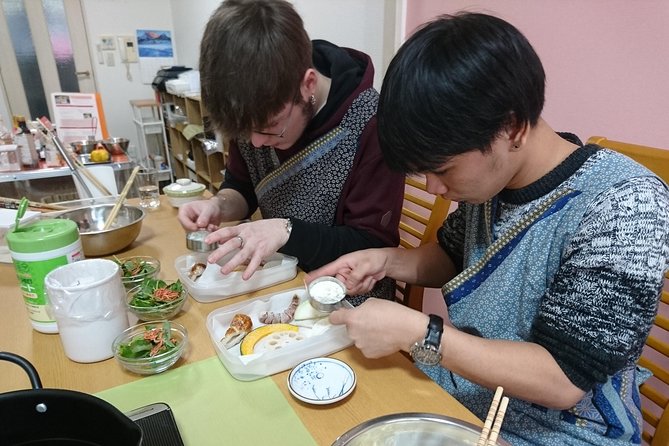
- Dashi first: You make savory Japanese broth at the start, not as an afterthought.
- Six tempura types: 4 vegetable tempura plus 2 seafood styles, including that standout shrimp.
- Proper prep tools: Knives and chopping boards are provided for your hands-on work.
- Everything gets eaten: You finish by eating what you cooked with chopsticks, rice, and chilled tofu.
- Recipes to take home: The instructor provides written recipes, so you can recreate it later.
Why a Dashi-First Tempura Class Makes Sense in Osaka
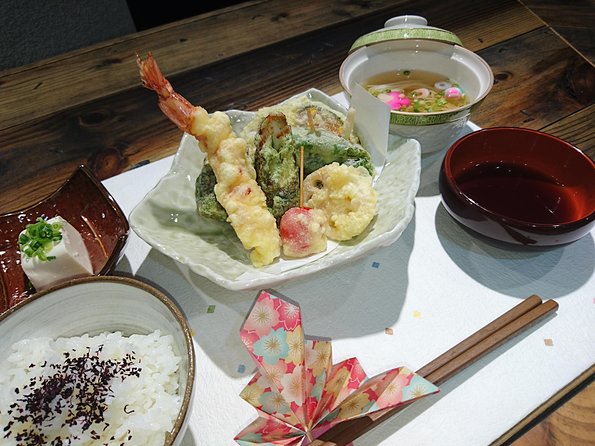
Tempura gets the spotlight, but I love that this class begins with the soup stock, dashi, because it teaches you the flavor backbone of Japanese cooking. You start by learning how to make a savory broth and how to approach getting it right, rather than only focusing on batter and frying.
Osaka is a great place to learn this kind of food skill because you’re surrounded by seriously good everyday eating. In a class like this, you’re not just consuming tempura—you’re learning how the taste is built, from the broth to the meal.
One practical benefit: once you understand dashi, you’ll recognize how it shows up beyond tempura. You’ll have a framework for tasting, adjusting, and cooking similar dishes later, even if the exact recipe varies.
You can also read our reviews of more cooking classes in Osaka

Where You Meet and How the 2 Hours Flow
The class meets at 1-chōme-17-20 Kitahorie, Nishi Ward, Osaka, 550-0014, Japan. It’s near public transportation, and you’ll use a mobile ticket, which keeps things simple on arrival.
This is a choose-your-time setup. You can pick either lunch or dinner, so you’re not forced to rearrange your whole Osaka day around one fixed slot. Most sessions run for about 2 hours, which is long enough to learn and cook multiple items, but short enough to stay flexible.
Also, timing matters. On average, this experience is booked about 56 days in advance, so if you’re traveling in a busy season, I’d book sooner rather than later to avoid getting stuck with only the least convenient time.
Starting the Class: Apron On, Dashi In Hand
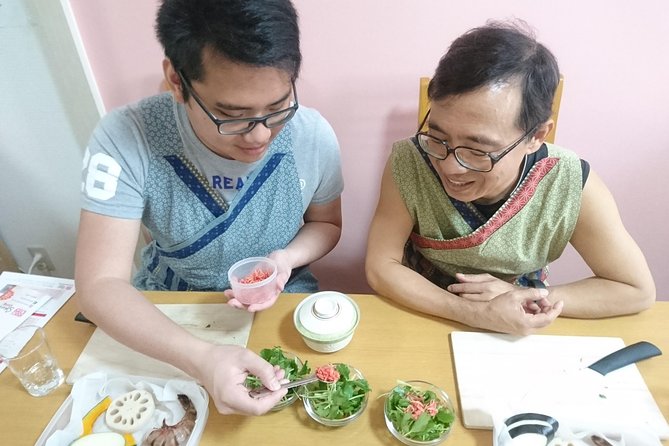
At the beginning, you put on an apron and jump straight into making traditional Japanese broth, dashi. The instructor guides you step by step, focusing on how to make the broth savory and how to handle the process for good results.
This part is more important than it sounds. Dashi is the kind of foundation that affects everything you eat around it, and learning it early helps you connect the dots while you cook. It also gives you a less chaotic entry point than starting with tempura immediately, which is handy if you’re new to Japanese kitchen technique.
You’ll get hands-on instruction on what to do and why, plus tips for making soup that looks and tastes right. Since the class doesn’t treat dashi like a quick demo, you’ll finish this portion feeling like you could actually repeat the approach at home.
The Tempura Section: 4 Vegetables, 2 Seafood, Including Shrimp
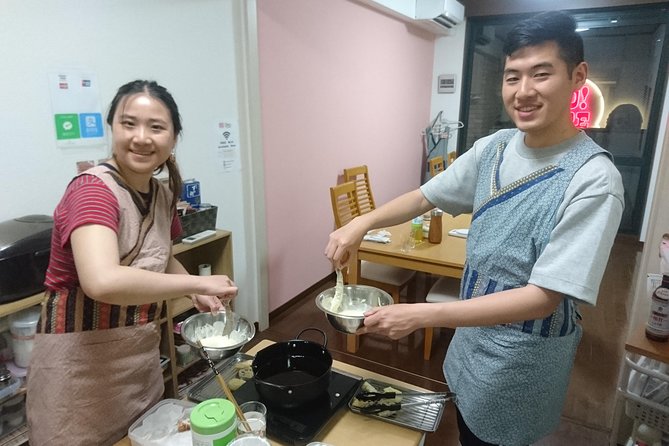
Next comes the fun part: tempura prep. You’ll get kitchen knives and chopping boards, then prep the ingredients while the instructor keeps you moving in an orderly way.
In total, you’ll make six different kinds of tempura:
- 4 vegetable tempura
- 2 seafood tempura, including one big shrimp
That big shrimp matters. It’s the kind of item that forces attention to detail—portion size, handling, and timing—so you learn the tempura approach in a way that’s more useful than just making one small, easy piece. And because the class includes both vegetables and seafood, you’re not only learning one cooking style.
If you care about mastering technique (not only tasting), this structure helps. You practice tempura as a method across different ingredient types, which is exactly how real cooking feels.
Cooking Together: Making It Through Battering to Frying
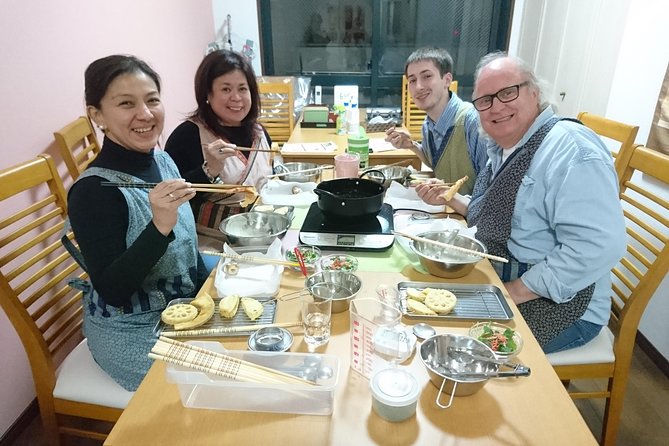
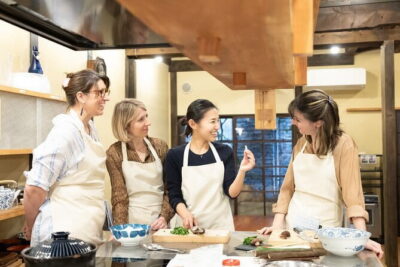
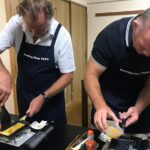
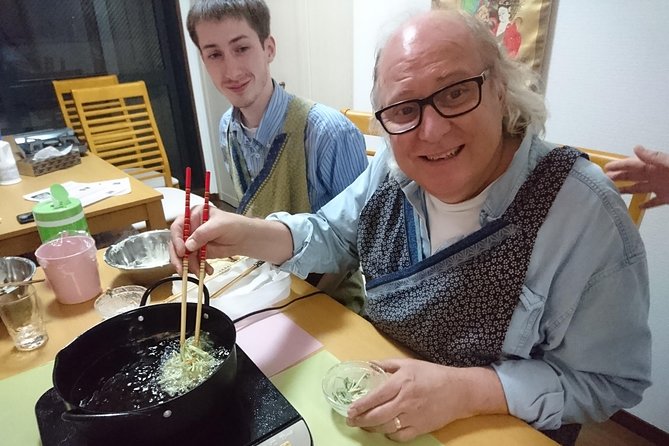
The class is designed so you’re actively cooking, not just watching someone else. You’ll follow step-by-step guidance through the tempura process, including battering and deep-frying.
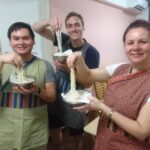
Here’s what I think makes this effective for visitors: the pace keeps you involved, but the small group size prevents it from turning into a chaotic sprint. With a maximum of eight people, you’re more likely to get direct help when something needs correcting, whether that’s ingredient prep or getting the finished texture you want.
You’ll then plate the dishes with chopsticks ready for the eating portion. That final plating moment isn’t just for show—it’s your cue to check the results and connect what you did with what you’re about to taste.
If you’re the type who learns best by doing, this is exactly the right format. If you’re only hoping for a light snack experience, the two-hour hands-on schedule might feel like more work than you expected, but it’s also what makes the skills feel real.
You can also read our reviews of more tours and experiences in Osaka


The Best Part: Eating Your Tempura With Rice and Chilled Tofu
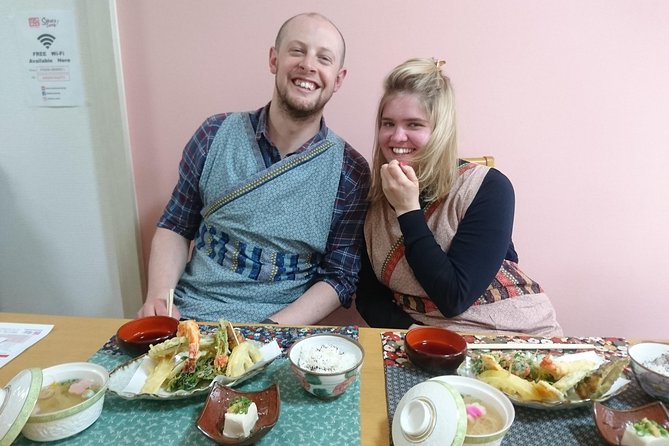
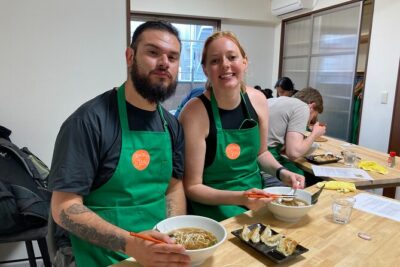
At the end, you don’t leave with a bag of samples. You eat everything you made in class.
Your meal includes:
- The tempura dishes you prepared
- Steamed rice
- Chilled tofu
- Chopsticks, and the class culminates with the meal-start word Itadakimasu
I like the pairing. Steamed rice gives you something plain to ground flavors, while chilled tofu is a neutral, cooling counterpoint that helps you notice how the fried and savory elements taste together. It’s also just a very real-feeling Japanese meal setup, not a made-for-tour version.
And since the class provides recipes you can take home, this final meal works like your own tasting lesson. You can compare what you aimed for with what you actually got, then use the recipe to reproduce it later.
Price, Group Size, and Value at $70.79
Let’s talk value. At $70.79 per person for about 2 hours, this isn’t a bargain deal. But you’re not only buying food—you’re buying instruction, tools, and a full meal.
What you get for the money is practical:
- You learn dashi and six tempura types
- You use provided knives and chopping boards
- You eat the finished dishes with rice and chilled tofu
- You receive recipes to take home
- The group is capped at eight people, which usually means more personal attention than big classes
That small-group cap is the hidden value. When you’re learning frying-based technique, tiny mistakes can matter, and you want help fast. A maximum of eight people is a big difference from crowded cooking rooms where you only get a quick glance and then you’re back to guessing.
If you’re planning your Osaka food budget, I’d see this as one paid lesson that replaces a chunk of “just eat” spending. It’s pricey compared to a casual meal, but cheaper than paying for repeated takeout while you experiment at home.
Who Should Book This Tempura Class (and Who Might Not)
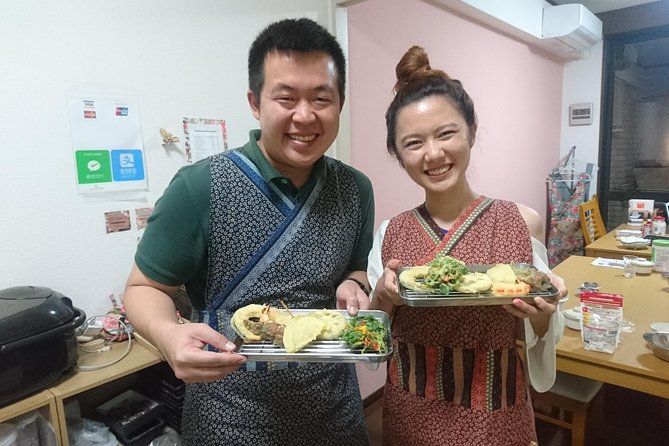
This class is ideal if you want real technique with a clear outcome. I’d especially point you to it if you’re excited to cook tempura and dashi rather than just tasting them.
It’s also a good fit if you travel with friends or family who like shared tasks. Six tempura types plus dashi and a sit-down finish means you’re all busy and then all eat together.
You might want to think twice if you’re the kind of traveler who hates hands-on cooking. This is a working class: you’ll prep ingredients, follow instructions, and cook. It’s designed to make you capable, not to act like a food show.
Should You Book Sakura Cook’s Tempura Class?
My vote is yes, especially if you’re serious about bringing home a skill instead of only a photo. The class is paced well for learning—dashi at the start, then structured prep for four vegetable tempuras and two seafood tempuras with that standout big shrimp—and you eat the results immediately with rice and chilled tofu.
Book it if:
- You want a small group and hands-on instruction
- You care about learning dashi as a foundation
- You like the idea of recipes you can reuse at home
Skip it if:
- You’re short on time and can’t spare about 2 hours
- You’re looking for a low-cost food experience rather than a cooking lesson
If you’re choosing between “watching” and “doing,” this one pushes you firmly toward doing—and that’s why it works.
FAQ
How many people are in the class?
This experience has a maximum of 8 travelers, keeping it small-group and less crowded.
How long does the tempura cooking class last?
The class lasts about 2 hours.
Can I choose lunch or dinner?
Yes. You can choose either a lunch or a dinner experience to fit your schedule.
What kinds of tempura will I make?
You’ll make 4 types of vegetable tempura and 2 types of seafood tempura, including one big shrimp.
Do I learn dashi soup stock too?
Yes. You’ll learn how to make Japanese soup stock (dashi) as part of the class, starting at the beginning.
What do I eat at the end of the class?
You eat everything you prepare, plus it’s served with steamed rice and chilled tofu. You’ll use chopsticks to eat.
Where is the meeting point?
You’ll meet at 1-chōme-17-20 Kitahorie, Nishi Ward, Osaka, 550-0014, Japan, and the experience ends back at the meeting point.
Is there free cancellation?
Yes. You can cancel for a full refund up to 24 hours before the experience starts.