REVIEW · OSAKA
Umeda Sky Building & Kuchu Teien Observatory Ticket in Osaka
Book on Viator →Operated by TREVOPEDIA · Bookable on Viator
Osaka glows from above, and Umeda Sky Building is one of the easiest ways to see why. You get 360-degree Osaka views from the KUCHU TEIEN Observatory, with standout sunset timing whether you go in daylight or after dark. I love the Floating Garden Observatory concept, especially the feeling of walking through an elevated garden space, and I also like that there are shops on-site so you can turn the visit into a mini outing. One heads-up: it can be crowded even around 8–9 pm.
This is a modern tower experience with a distinctly Osaka rhythm. The observatory connects you to the city’s top-view energy, and the experience can feel extra magical at night with the glowing stone floor under the stars. If you like doing one big, photo-friendly skyline stop without complex planning, this fits the bill.
Plan for about 1 to 1.5 hours. With easy public transportation access and a ticket included with admission, it’s a simple add-on for most itineraries, not a half-day commitment.
In This Review
- Key things I’d circle in advance
- Umeda Sky Building and KUCHU TEIEN: why this view experience works
- What your $22 ticket really buys you
- Your main stop: stepping into the Floating Garden Observatory
- Morning versus evening: choosing the mood without overthinking it
- Shops and souvenirs: what to do besides watching the skyline
- Time management: how to plan the 60 to 90 minutes
- Getting there and fitting it into Osaka
- Price check: is it worth $22?
- Who this is best for (and who might want a different plan)
- Should you book the Umeda Sky Building & KUCHU TEIEN Observatory ticket?
- FAQ
- What is included with the Umeda Sky Building & KUCHU Teien Observatory ticket?
- How long should I plan to spend there?
- How much does the ticket cost?
- Where is it located and is it easy to reach?
- Is confirmation provided after booking?
- What is the usual booking lead time?
- Is it suitable for most people?
- Can I cancel for a full refund?
Key things I’d circle in advance
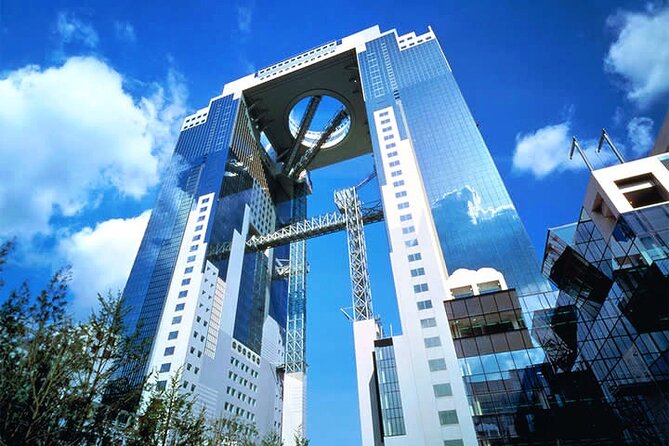
- 360-degree views from the KUCHU TEIEN Observatory for wide, clear city panoramas
- Floating Garden Observatory walk that feels different from a standard glass viewing deck
- Day or night option for morning city clarity or evening skyline mood
- On-site shopping so you can grab souvenirs while you’re up there
- Crowds can build so later evenings may be busy, even at popular hours
- Quick visit window at roughly 1 to 1.5 hours, making it easy to schedule
Umeda Sky Building and KUCHU TEIEN: why this view experience works
If you’ve ever looked at Osaka’s map and thought, I should get oriented from somewhere high, this is one of the cleanest answers. Umeda Sky Building (via the KUCHU TEIEN Observatory) gives you a full-circle look at the city, so you’re not just seeing one direction or one iconic landmark. You can turn slowly and check multiple districts, river lines, and traffic patterns, which is a big deal when you’re trying to understand where you’ve been and where you’ll go next.
I also like how the experience isn’t only about standing and photographing. The KUCHU TEIEN Observatory is built around a garden-style layout, so your movement matters. That turns the view into a short walk rather than a single stop. For many visitors, that extra “there’s something to do while you’re looking” factor is what makes the time feel worthwhile instead of rushed.
And because it’s a tower in a major area of Osaka, you’re not sacrificing convenience for the skyline. This is a place you can slot into a busy day without turning the whole plan upside down.
You can also read our reviews of more tours and experiences in Osaka
What your $22 ticket really buys you
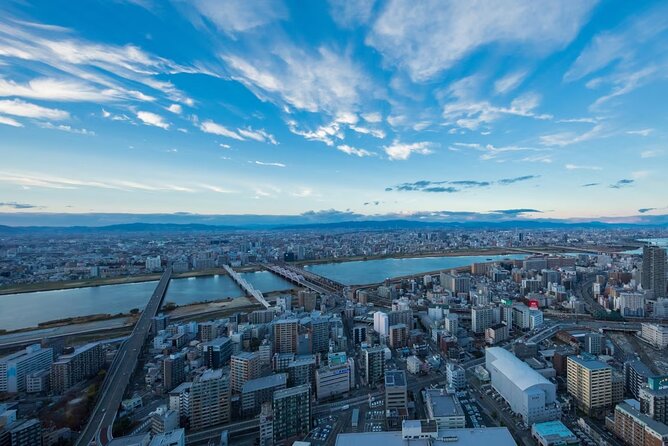
At $22 per person, you’re paying for the core experience: admission to the KUCHU TEIEN Observatory inside Umeda Sky Building. The ticket value is strongest when you treat this as a focused skyline stop. You’re not paying extra to piece together multiple venues. You show up, go in, and spend your time where the city views are actually happening.
The experience provider is TREVOPEDIA, and you’ll receive confirmation at booking. The exact timing and start moment depend on your booked entry, but the visit itself is generally 1 to 1.5 hours.
A practical mindset here: think of it as “one ticket, one major payoff.” If you’re staying in the Osaka area and you’re choosing between multiple smaller sightseeing tasks versus one high-impact viewpoint, this tends to be the better trade.
Your main stop: stepping into the Floating Garden Observatory
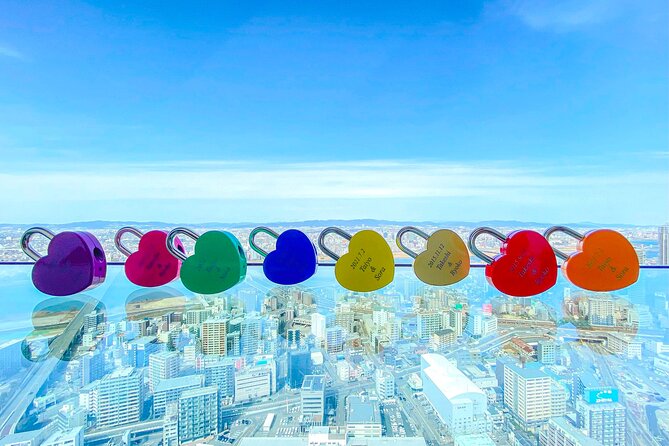
The heart of the experience is the KUCHU TEIEN Observatory inside Umeda Sky Building. The big promise is a 360-degree panorama, and you’ll actually feel it when you rotate through the viewpoints. Instead of searching for the best angle, you can pick an angle based on what you want at that moment: daytime sharpness, evening glow, or the layered city lights.
What I find useful about the Floating Garden Observatory idea is that it changes how you experience height. You’re not stuck at one spot. The walkway-style layout helps you keep moving at a comfortable pace, and that can reduce the stress of waiting for the perfect photo.
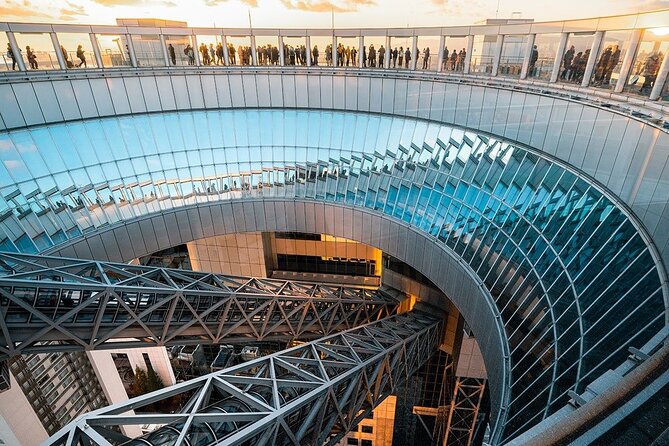
You should also know there’s a strong night-time feel to it. The experience includes a glowing stone floor under the stars, which adds atmosphere beyond the city view itself. Even if you’re mainly there for skyline photos, it helps to shift your focus for a moment. Look down as well as across. That’s where the observatory feels like an attraction, not just a platform.
One more detail to keep in mind: it can be easy to assume crowds only happen at peak daytime hours, but they can show up at night too. At around 8–9 pm, you can expect plenty of people. If you want wide-open space for photos, earlier entries can be calmer.
Morning versus evening: choosing the mood without overthinking it

Both morning and evening can make sense, but they deliver different “reasons to go.”
In the morning, you’re more likely to get a clearer city view across many districts. One of the strongest takeaways from people who visited earlier is that the entire city feels visible from up high, with a strong sense of how Osaka spreads out. If your day starts early and you want the view without heavy nighttime crowd pressure, a morning visit is a smart approach.
Evening is about atmosphere. The payoff comes from the skyline lighting up and the chance to catch sunset. For many visitors, this is when the observatory feels most cinematic. Still, you need to plan around crowds. Even later in the evening, the observatory can be packed, so you may spend more time waiting for a clear angle.
A helpful strategy is to match your visit to your tolerance for people. If you don’t mind shoulder-to-shoulder for a bigger show, evening is great. If you hate delays and want easier strolling and calmer photos, morning is the safer bet.
Shops and souvenirs: what to do besides watching the skyline
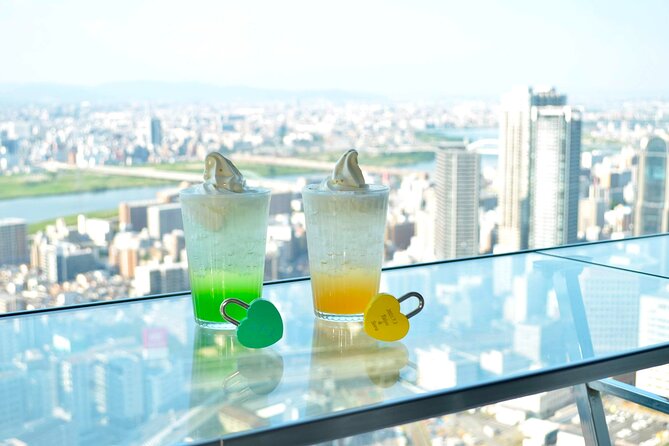
One thing I appreciate about this stop is that it’s not only a view. There are shops on-site, and they’re convenient because you’re already up there. That means you can pick up souvenirs without detouring back into the city center later, and it makes the whole 1 to 1.5 hour block feel more complete.
From the on-site shopping angle, a practical tip is to treat this as your planned souvenir stop rather than wandering the whole day. When you know your purchase time is built into the experience, you avoid the typical travel pattern of hunting for the right gift at the end of the trip when you’re low on energy.
Also, the shops can help you fill time while you wait for crowd flow to ease. If you end up in a busier time slot, browsing for a few minutes can make the overall experience feel less constrained.




Time management: how to plan the 60 to 90 minutes
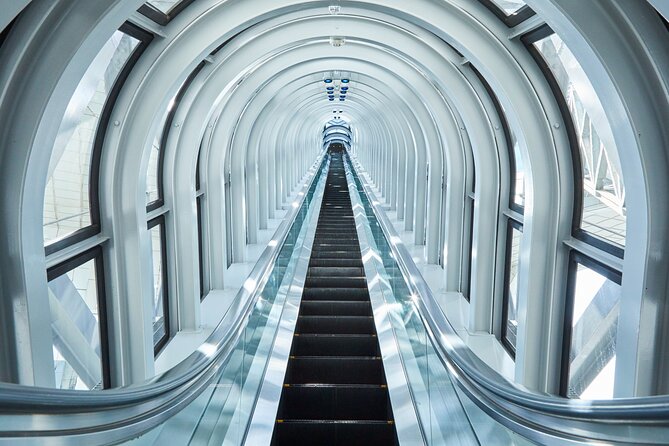
For this ticket, plan roughly 1 hour to 1 hour 30 minutes. That’s enough time to enter, walk the observatory loops, stop for photos, and still have time to check the shops.
The biggest time drain is not the walking. It’s crowding at popular hours. If it’s busy, you’ll naturally spend longer waiting for space at the best sightlines. That’s why your schedule matters more than you might expect. A visit during high-demand times can still be great, but build the rest of your day with a little buffer.
What I’d do in your shoes: treat it like a set-piece. Arrive ready to spend the full hour range. Don’t schedule it as a rushed “quick look.” With the garden-style layout and the glowing-floor atmosphere, you’ll get more out of it when you allow yourself to slow down.
Getting there and fitting it into Osaka
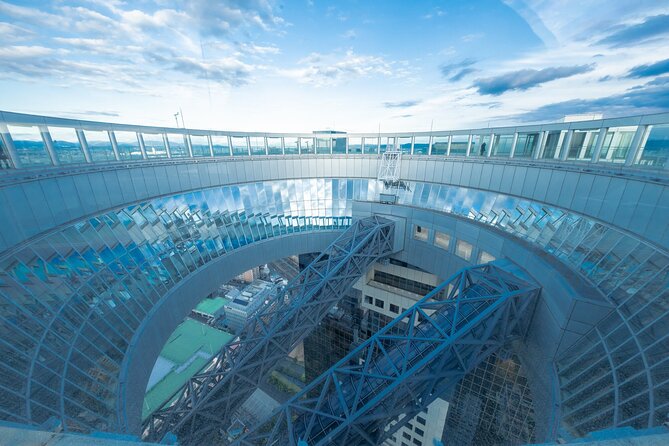
Umeda Sky Building is described as near public transportation, which is exactly what you want for a tower visit. You don’t want a viewpoint that requires complicated transfers or long walks right when you’re tired.
This stop is also “easy to join,” since most travelers can participate. If you’re traveling with mixed ages or you’re not trying to do intense walking all day, this tends to work well. It’s a contained activity: you go in, you enjoy the view loop, you come out.
Best use case: combine it with other Osaka neighborhoods in a way that makes the skyline the punctuation mark. Think of it as a way to see the city as a whole, then return to street-level exploring with a stronger sense of geography.
Price check: is it worth $22?
For $22, the value depends on what you’re trying to do in Osaka.
If you want one major view that’s quick, photo-friendly, and supported by on-site shopping, this is a strong deal. You’re paying for admission to a major observatory rather than cobbling together multiple places. The view angle is wide (360 degrees), and the visit length is short enough that you’re not “buying hours” like you might with longer tours.
If you’re the type who only wants the “one best photo” and hates crowding, the value still holds, but you should be picky about timing. Crowds can change the experience from relaxing to squeeze-y, and that can affect how worth it feels.
I’d consider it good value if you want a skyline moment without turning your entire day into logistics.
Who this is best for (and who might want a different plan)
This is best for you if:
- you want a clear, high-impact city view in a short time
- you like mixing a viewpoint with shopping and atmosphere
- you’re visiting Osaka for the first time and want an easy way to orient yourself visually
You might hesitate if:
- you strongly dislike crowded indoor spaces, especially during popular hours
- you only want a view and don’t care about walking through a garden-style layout
If you’re deciding between morning and evening, pick based on your crowd tolerance. The sunset light is tempting, but calmer photos often come earlier in the day.
Should you book the Umeda Sky Building & KUCHU TEIEN Observatory ticket?
Yes, I’d book it if you want one efficient skyline stop that feels like an attraction, not just a platform. The 360-degree views, the Floating Garden Observatory feel, and the glowing stone-floor night atmosphere make it memorable, and the included admission keeps the experience straightforward.
If you’re sensitive to crowds, choose your timing carefully. This place can be busy even at later evening hours, so earlier entry is the gentler option.
Bottom line: for $22, you’re buying a classic Osaka overview with a short time commitment. That combination is hard to beat when you’re trying to see more of the city without burning half a day.
FAQ
What is included with the Umeda Sky Building & KUCHU Teien Observatory ticket?
Your ticket includes admission to the Umeda Sky Building KUCHU TEIEN OBSERVATORY.
How long should I plan to spend there?
The experience is approximately 1 hour to 1 hour 30 minutes.
How much does the ticket cost?
The price is $22.00 per person.
Where is it located and is it easy to reach?
It’s in Osaka, Japan, and it’s listed as near public transportation.
Is confirmation provided after booking?
Yes. Confirmation will be received at time of booking.
What is the usual booking lead time?
On average, this is booked 45 days in advance.
Is it suitable for most people?
It’s stated that most travelers can participate.
Can I cancel for a full refund?
Yes, it offers free cancellation. You can cancel up to 24 hours in advance for a full refund.