REVIEW · OSAKA
Osaka Cooking Class: Okonomiyaki &Japanese cuisines experience
Book on Viator →Operated by Cooking Class YAYO · Bookable on Viator
Osaka food lessons in a real home kitchen. I love that you cook from the first minute, not just watch, and the small-group size keeps you close to the instructor as you learn classic Japanese technique. This is a hands-on Osaka Cooking Class with Yayo, focused on okonomiyaki and takoyaki, with miso soup as the flavor base you’ll want to copy at home.
I also love the finish. You eat what you make, and there’s an optional add-on for a sake and beer pairing that makes the whole meal feel like a proper night out, not a demo. On top of the dishes, you also end with taiyaki and matcha tea, so you’re not leaving hungry.
One thing to consider: the studio is small and the lesson happens in the host’s home, so plan for close quarters and be punctual. Arriving more than 10 minutes late can mean you can’t join, and refunds aren’t provided.
In This Review
- Key things to know before you go
- A real Osaka home kitchen with Yayo (not a big production)
- The menu: what you’ll cook and why it’s a smart mix
- Inside the 2.5 hours: the flow from broth to pancakes to bites
- Miso soup technique: where “small” steps change everything
- Okonomiyaki: the pancake you’ll actually recreate at home
- Takoyaki: flipping for crisp edges and soft centers
- Optional sake and beer pairing: when to add it (and how to get value)
- Taiyaki and matcha tea: a sweet finish that still feels Japanese
- Price and value: why $104.13 can feel fair
- Getting the most out of the class (without overthinking it)
- Who should book this Osaka cooking class (and who might skip it)
- Should you book it? My practical take
- FAQ
- How long is the Osaka cooking class?
- Where do I meet for the class?
- Is hotel pickup included?
- What’s the group size?
- Is the instructor available in English?
- What dishes are included?
- Can I add sake and beer to the class?
- Are vegetarian or pescatarian options available?
- What happens if I’m late?
- What’s the cancellation policy?
Key things to know before you go
- Cook in Yayo’s home kitchen with an English-speaking instructor and all ingredients ready
- Make a full Osaka menu: miso soup, takoyaki, okonomiyaki, plus taiyaki and matcha tea
- Small group cap at eight so you can ask questions while you cook
- Optional sake and beer pairing to level up the meal
- Leave with thoughtful extras like snacks and take-home gifts from the host
A real Osaka home kitchen with Yayo (not a big production)
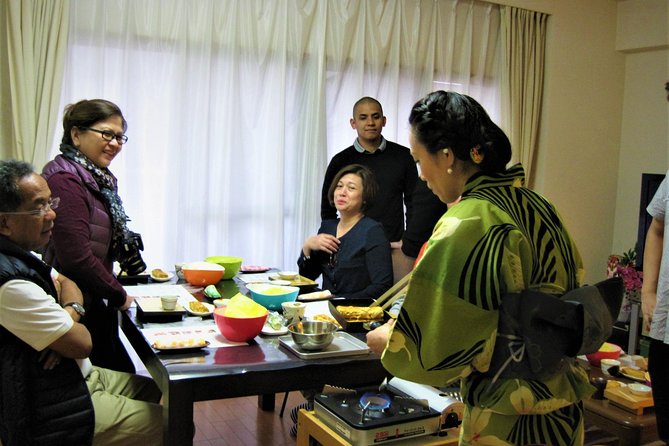
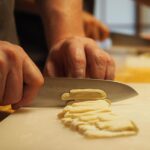
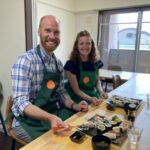
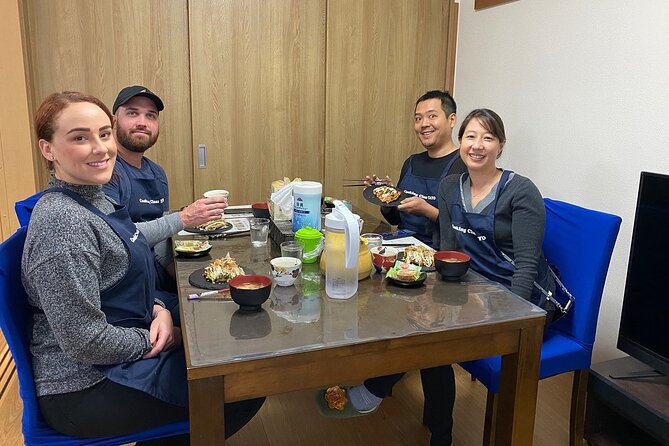
This class is built around one simple idea: learn Japanese cooking by doing it in a home kitchen. You’re not herded through a conveyor-belt tasting. Instead, you work at your own station with guidance, then sit down and eat your results.
That home setting matters more than it sounds. When the space is small and the group is limited, the instructor can correct your grip, your timing, and your heat control in real time. Yayo’s teaching style comes through clearly in the experience: she explains not just how, but why certain ingredients and steps matter for the final taste.
You also get a warm, welcoming vibe from the start. Several small details show up in the way the class is run—clear instruction, a friendly rhythm, and even take-home touches after you finish.
You can also read our reviews of more cooking classes in Osaka

The menu: what you’ll cook and why it’s a smart mix
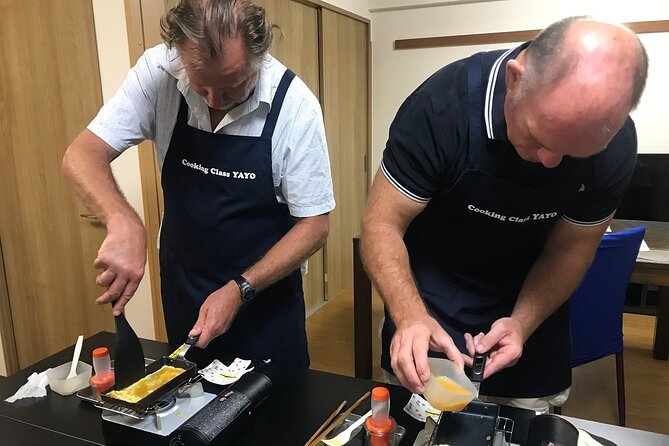
The core dishes follow a very Osaka-friendly arc: start with broth and fundamentals, then move into savory batter and frying, and end with a sweet tea moment.
Here’s what’s on the experience:
- Miso soup: you learn how subtle technique affects flavor, especially around the base (dashi) and seasoning balance
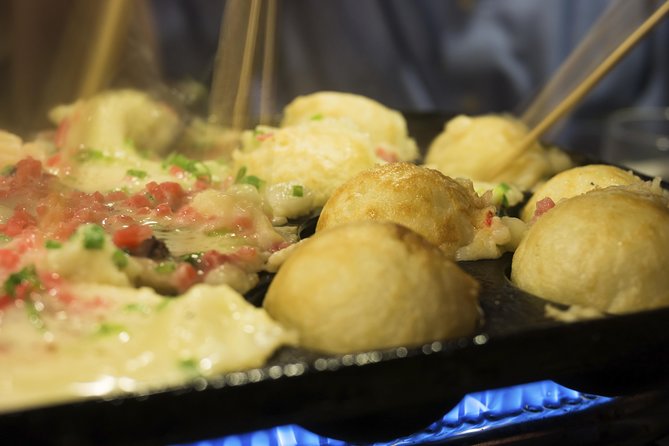
- Takoyaki: wheat flour batter stuffed with octopus, cooked until crisp outside and tender inside
- Okonomiyaki: a cabbage-forward savory pancake built with egg, flour, pork, and dried bonito flakes
- Taiyaki and matcha tea at the end: the sweet payoff that makes the meal feel complete
And many sessions include an egg dish in the “warm, savory” lane as well (often described as tamago-maki or dashimaki tamago). Even if you’re not a cook, that’s a good thing: egg-based dishes build confidence fast because the results are easy to see as you go.
Why this mix is so practical for you: okonomiyaki and takoyaki use similar “batter mindset” (texture, heat, timing), while miso soup trains your palate for seasoning and broth depth. If you want Japanese home cooking that feels doable back home, this is a strong starter set.
Inside the 2.5 hours: the flow from broth to pancakes to bites
The class runs about 2 hours 30 minutes, and the pacing is designed to keep you cooking instead of waiting. You start in central Osaka, then head to the cooking studio.
Once you’re there, you begin with miso soup. This is not just soup-in-a-bowl. It’s the training ground for flavor control. Miso can taste flat or muddy depending on how it’s introduced and how the base is handled. Learning it early helps everything later taste more “right.”
Next comes takoyaki. This part is hands-on and a little skill-testing, because takoyaki is all about heat consistency and shape. The batter is poured, stuffed, and flipped in a way that creates that classic round form, with a crisp exterior and a soft interior.
Then you shift to okonomiyaki. Think of it like a savory pancake with structure. You build it in layers, cook it until it sets, and get the right balance between tender cabbage, savory pork, and the smoky kick from dried bonito. This is where you learn what makes okonomiyaki taste like the real deal rather than just a thick pancake.
After the cooking and eating, you finish with taiyaki and matcha tea. It’s a nice reset after frying and griddling. You get a sweet, familiar ending that also keeps the whole experience feeling like a full meal.
Miso soup technique: where “small” steps change everything
Miso soup sounds simple. The trick is that it’s not only about miso paste—it’s about the broth logic underneath.
In class, you’re taught to pay attention to subtle differences that can shift the final taste. That’s the big takeaway you’ll bring home: Japanese soup is often won or lost through how you treat heat, how you combine ingredients, and when you season.
If you’re planning to cook miso soup again later, you’ll get the most value from the method you’re shown for building the base and adjusting miso at the right moment. The goal isn’t to make it complicated. It’s to make it predictable, so you can repeat the flavor without guessing.
Okonomiyaki: the pancake you’ll actually recreate at home
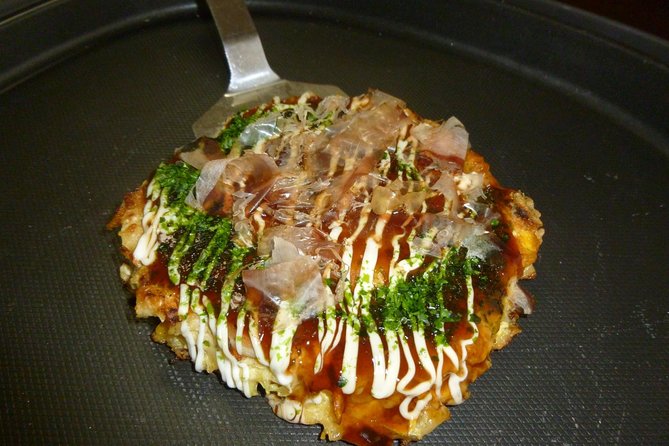
Okonomiyaki is the dish people order in Japan because it’s comforting and customizable. Learning it in class is different: you practice the actual technique and learn how to get the texture right.
What you make here typically includes cabbage, egg, flour, pork, and dried bonito flakes. Each part has a job. Cabbage brings crunch and sweetness. Egg helps bind. Flour supports the pancake structure. Pork brings richness. Bonito adds that smoky, savory depth that feels uniquely Japanese.
The instruction focuses on professional tips and trick-level details. That matters because okonomiyaki can go wrong in two common ways: it can be too thick and doughy, or too thin and falling apart. Once you see how the batter behaves on the griddle and how the cooking time changes the texture, recreating it at home becomes much more realistic.
Also, because you’re cooking as a group, you can watch others’ pancakes too. That helps you spot what “set” looks like and how color equals doneness in this style.
You can also read our reviews of more tours and experiences in Osaka


Takoyaki: flipping for crisp edges and soft centers
Takoyaki is fun because the results are so visible. You pour batter into a special mold, stuff with octopus, then cook until the batter firms and browns. Flipping is where technique becomes the whole game.
You’ll learn how to handle the batter so it thickens properly and how to time flipping so you get the signature golden outside. The class approach makes it feel less intimidating. Instead of trying to figure it out alone, you’re guided while you work.
One practical benefit: takoyaki teaches frying fundamentals without needing fancy equipment knowledge. You learn how to control heat and how to keep the inside from turning rubbery while building a crisp crust.
If you want one dish to master for bragging rights back home, takoyaki is it. Even if your equipment isn’t identical, you’ll know what “right” looks and feels like.
Optional sake and beer pairing: when to add it (and how to get value)
The class offers an optional add-on for a sake and beer tasting/pairing. If you already like Japanese drinks, it’s an easy upgrade because your food is warm, freshly cooked, and full of savory flavor.
Sake and beer both pair well with fried and griddled dishes. The pairing option turns the lesson meal into something more memorable than a standard “cook and eat.” It’s also a way to practice the Japanese habit of treating meals as an event, not just fuel.
Is it required? No. If you’re only after the cooking, you can stick with what’s included. But if you like tasting culture along with food, the pairing is where the evening energy rises.
Taiyaki and matcha tea: a sweet finish that still feels Japanese
At the end, you get to try taiyaki (fish-shaped cake) and matcha tea. This works well because you’re not just full—you’re finished in a way that feels like a real Japanese meal.
Taiyaki adds a warm, comforting sweetness right after all the savory cooking. Matcha tea then resets your palate. It’s also a smart cultural button: it signals that sweets in Japan are not an afterthought.
If you’re taking photos, this is also the moment that looks the most “Japan” in a single frame: the fish shape, the matcha color, and the relaxed end to the class.
Price and value: why $104.13 can feel fair
At $104.13 per person, this isn’t the cheapest food activity in Osaka. But it also isn’t just a snack tour. You’re paying for several things that add up quickly if you tried to DIY them.
You get:
- a hands-on cooking class with an English-speaking instructor
- all ingredients and utensils
- a meal (lunch or dinner, based on the time you join) that includes what you cook
- the guidance needed to make technique-based dishes without trial-and-error
- optional sake pairing if you choose it
- and you leave with additional small extras and gifts (like chopsticks and paper crafts mentioned in participant stories)
In other words, the price is closer to paying for a skilled teacher plus a full meal than paying for a quick experience. When the class is limited to a maximum of eight, your instruction is less diluted, which is part of why the value feels strong.
There’s also a practical savings hidden in the experience: you’re learning method. Japanese cooking is often about process. Once you understand dashi/miso timing, batter texture, and heat control, you’ll be able to recreate dishes without buying an armload of specialty items “just in case.”
Getting the most out of the class (without overthinking it)
If you want this to feel smooth, go in hungry and relaxed. A common theme is that the class feeds you well—more than you might expect. Arrive ready to taste, cook, and eat again.
Here are smart moves:
- Bring curiosity, not big cooking confidence. The class is designed so you can succeed even if you’re not a home chef.
- If you want to take food home or save leftovers, ask what’s possible and how to handle it. Some participants report leaving full, sometimes with extra food.
- Watch your timing. Griddles and hot molds move fast. If you get too cautious, your texture can suffer.
- If you’re pairing sake and beer, pace your sipping with bites so you don’t rush the experience.
Also note the reality of the location: the cooking studio is small and the lesson happens in the host’s home. You’ll likely be moving between stations and sitting close. That’s part of the charm, but it’s not a giant classroom.
Who should book this Osaka cooking class (and who might skip it)
This class is ideal if you:
- want to learn Japanese cooking by making dishes with clear technique steps
- are a foodie who likes savory comfort food like okonomiyaki and takoyaki
- enjoy small groups where you can ask questions while you work
- want a warm first-night or early-trip Osaka activity that feels welcoming rather than overwhelming
You might consider a different option if you:
- need a big, impersonal venue with lots of space
- hate close quarters and tight studio movement
- prefer only casual street-food tasting rather than hands-on cooking
If you’re traveling solo, that’s also a plus. With a maximum of eight, some dates run with very small numbers, which can turn the experience into something closer to a private lesson.
Should you book it? My practical take
Yes, you should book this if your goal is to leave Osaka with more than photos. You’ll come away knowing how miso soup flavor is built, how okonomiyaki texture is formed, and how takoyaki gets its crisp outside.
The big win is the combination: small-group attention, hands-on cooking, and a meal that lands right after you cook it. Add the optional sake and beer pairing if you want a more “Japanese evening” feel, not just a cooking session.
If you’re on the fence because of the price, think of it as paying for instruction plus a full, served meal in a real home kitchen. That mix is hard to replicate on your own.
FAQ
How long is the Osaka cooking class?
It runs about 2 hours 30 minutes (approximately).
Where do I meet for the class?
The start point is outside Noda Station, Osaka (1 Chome-1 Ohiraki, Fukushima Ward, Osaka, 553-0007, Japan). The experience ends back at the meeting point.
Is hotel pickup included?
No. Hotel pickup and drop-off are not included.
What’s the group size?
The tour/activity has a maximum of 8 travelers.
Is the instructor available in English?
Yes. The instructor is English-speaking.
What dishes are included?
You’ll learn to make miso soup, takoyaki, and okonomiyaki. Before you leave, you also get to try taiyaki and matcha tea. Lunch or dinner is included as you enjoy what you cook.
Can I add sake and beer to the class?
There’s an optional add-on for a sake and beer pairing. If selected, local sake tasting is included.
Are vegetarian or pescatarian options available?
Yes. Vegetarian and pescatarian options are available upon request at the time of booking.
What happens if I’m late?
Please arrive on time. Participation cannot be guaranteed for guests arriving more than 10 minutes late, and refunds will not be provided.
What’s the cancellation policy?
Free cancellation is available. You can cancel up to 24 hours in advance for a full refund. If you cancel less than 24 hours before the start time, the amount you paid won’t be refunded.