REVIEW · OSAKA
Osaka: Cooking Class Ramen & Gyoza Course in Nanba
Book on GetYourGuide →Operated by 株式会社XLSWORLD · Bookable on GetYourGuide
Ramen from scratch beats noodle souvenirs. This Osaka class is fun because you actually make the ramen and gyoza, not just watch. I like the hands-on pace (chopping, mixing, and shaping) and the fact that you leave with recipe cards you can use later. One thing to consider: you’ll need to get yourself to the meeting spot in Nanba, since no hotel pickup is included.
If you’re in Osaka for food, this is a smart use of time. It runs about 2 hours total, with a setup phase, a cooking phase, and then a sit-down tasting with drinks like sake and beer.
In This Review
- Key things I’d circle before you book
- Ramen and gyoza in Nanba: the format that makes it click
- Price and value: is $70 worth it?
- Finding the place: Dear Court Semba 303 in Chuo Ward
- What happens in the first 30 minutes: orientation and prep
- 1.5 hours of hands-on cooking: noodles and dumplings, step by step
- Making ramen: more than opening a packet
- Gyoza: the folding skill that makes the difference
- The 1-hour tasting with drinks: what to focus on after you cook
- Allergies, vegetarian, vegan: what you should know
- Take-home recipes: why this is more than a night out
- Group size, language, and the “cook with friends” feeling
- Practical tips to get the most out of your ramen and gyoza night
- Who should book this class (and who might skip it)
- Should you book Osaka Cooking Class: Ramen & Gyoza in Nanba?
- FAQ
- What’s the duration of the Osaka ramen and gyoza cooking class?
- Where does the class meet?
- Is hotel pickup or drop-off included?
- What’s included in the price?
- Are drinks included?
- Do instructors teach in English?
- Is the class suitable for beginners?
- How big is the group?
- Do I need to bring anything?
- Can I get a refund if plans change?
- Is booking required?
Key things I’d circle before you book
- Small-group feel (up to 8 people) so you get real attention, not just a demo.
- Ramen noodles from scratch plus gyoza prep, so you learn techniques you can repeat.
- English support with Japanese instruction, which helps if your language skills are a work in progress.
- Take-home recipes, which turn a great night out into a meal you can re-create.
- Tasting with drinks (sake, beer, and soft drinks) included after you cook.
- Vegetarian/vegan accommodation reported, so you’re not stuck hoping the kitchen can do it.
Ramen and gyoza in Nanba: the format that makes it click
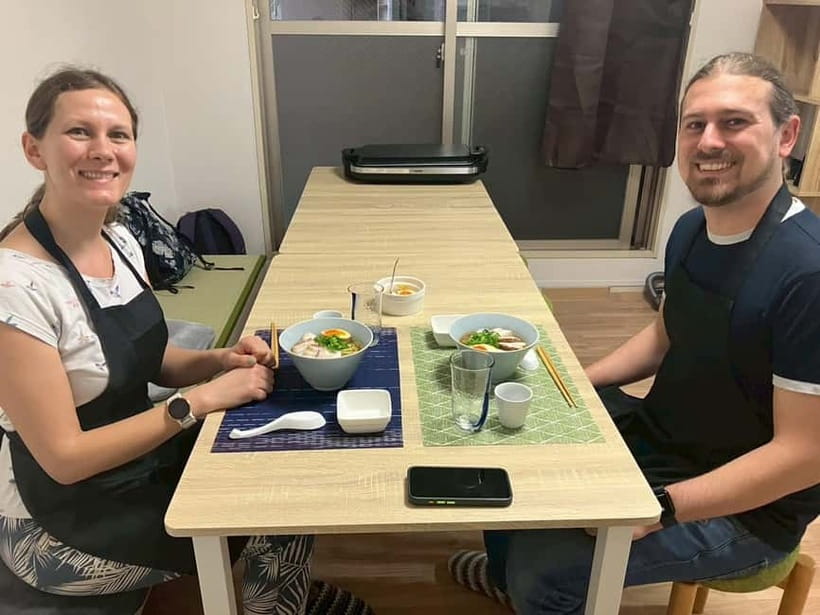
This class is built like a friendly workshop, not a stiff cooking show. You start with a short orientation, then you move into the hands-on cooking session where every person has tasks—prep, mix, shape, and build.
What makes it especially satisfying is the pairing. Ramen isn’t only about dumping ingredients into a bowl; you learn noodle-making steps and how the dish should come together. Then gyoza gives you a totally different skill set—wrapping and folding with vegetables and pork.
It’s also a good option if you want something local but still comfortable as a non-expert. The class is suitable for beginners, and instruction is available in English and Japanese.
You can also read our reviews of more cooking classes in Osaka

Price and value: is $70 worth it?
At $70 per person for about 2 hours, this isn’t a bargain-food “cheap eats” deal. But it often feels fair once you break down what’s included.
You get:
- Ingredients and tools for cooking
- Guided instruction from Washoku professionals
- 1.5 hours of hands-on cooking
- A 1-hour tasting session with drinks (sake, beer, soft drinks)
- Recipes to take home
The value is strongest if you plan to cook again after your trip. Those recipe cards aren’t fluff; they’re what lets you repeat the results later without guessing. And because the group is limited to 8, you’re more likely to get help while your dough is on the cutting board and your gyoza are still fixable.
Finding the place: Dear Court Semba 303 in Chuo Ward
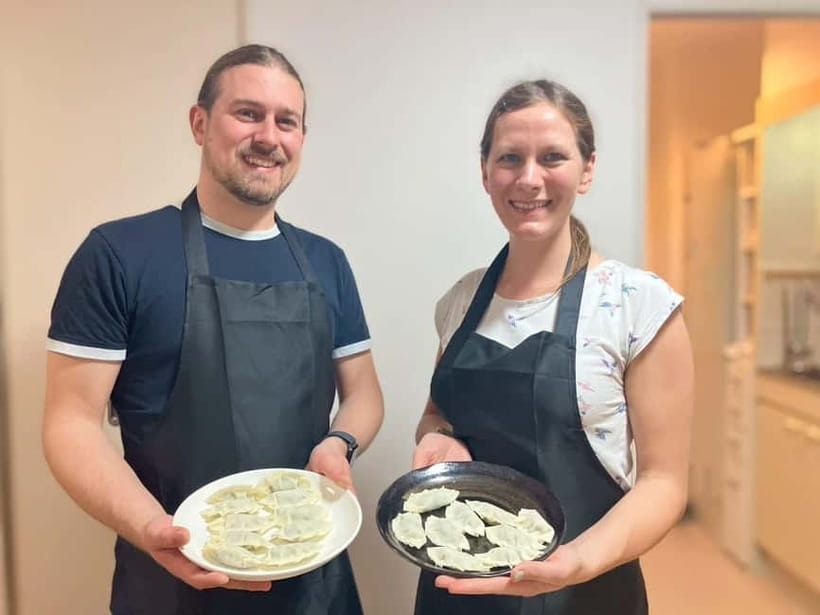
The meeting point is Dear Court Semba 303, 4-chōme-3-1 Bakurōmachi, Chuo Ward, Osaka (541-0059). Since there’s no hotel pickup, I recommend building a little buffer time into your Osaka schedule and arriving a few minutes early.
Entry is simple but specific:
- Look for the doorbell panel at the entrance.
- Press 303, then the “Call 呼” button.
- Go to Room 303 on the 3rd floor (stairs or elevator).
One practical tip from people who’ve had a hard time finding it: the building can feel tucked away. It’s described as being a block behind a Ferrari dealership, just past a big stairway to a gym and near an outdoor lounge area with couches. If you’re walking and nothing looks right, slow down and use that landmark logic.
What happens in the first 30 minutes: orientation and prep
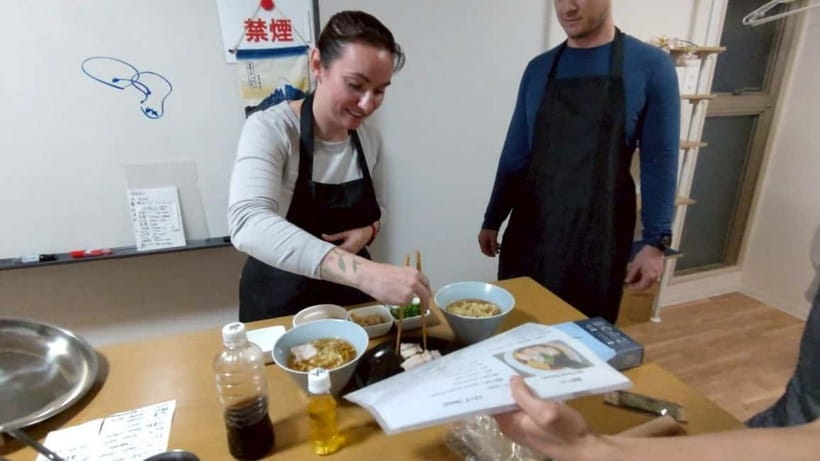
The class begins with a 30-minute orientation and preparation session. This is the part that makes the rest of the night smoother because you’ll understand what you’re making and where everything is.
Typically, you’ll get guidance on:
- What ingredients and tools you’ll use
- Basic workflow (when to chop, mix, and assemble)
- How to handle the ramen noodle process and the gyoza filling/wrapping
Even if you’re new to Japanese cooking, this stage helps you stop overthinking. The instructors keep things interactive, so you don’t just stand around waiting.
From the variety of instructor names mentioned in recent classes—people like Nana and Yuriko, Keiichi and Mimi, and Ryota and Saya—the vibe seems consistent: calm, hands-on coaching with an emphasis on doing it correctly (and doing it confidently).
1.5 hours of hands-on cooking: noodles and dumplings, step by step
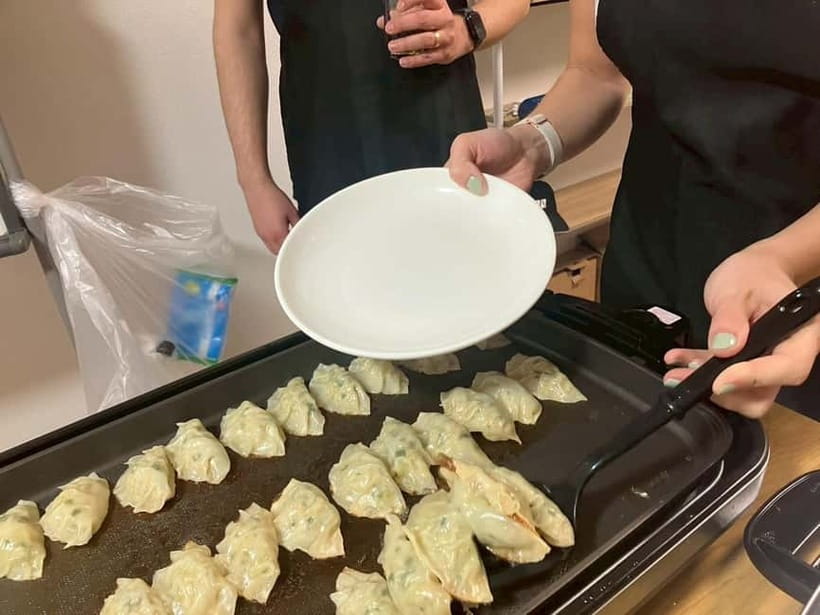
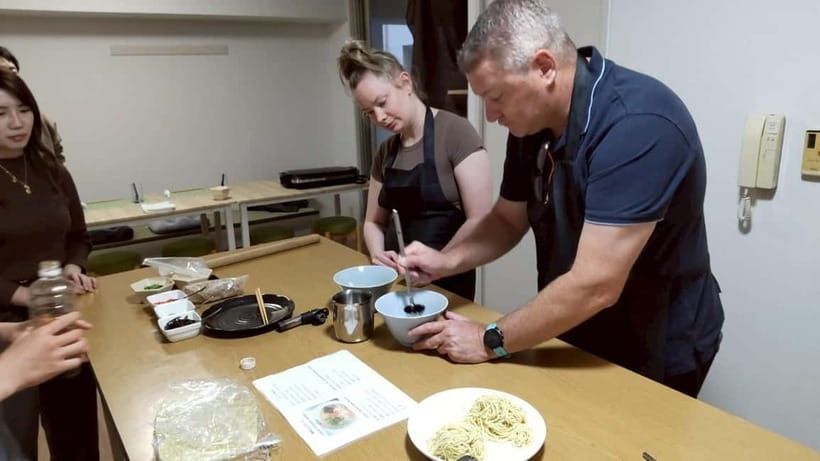
The core of the experience is 1.5 hours of hands-on cooking. This is where you’ll feel the satisfaction of control: you can see the dough change, you can feel the filling and folding, and you can adjust when something isn’t quite right.
You can also read our reviews of more tours and experiences in Osaka



Making ramen: more than opening a packet
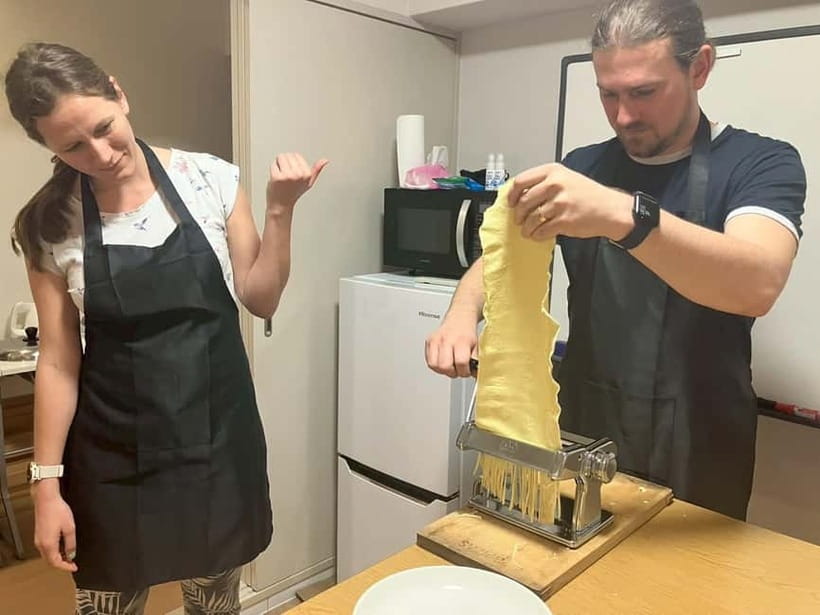
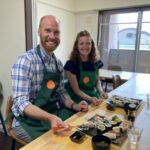
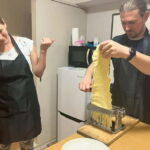
For ramen, the big win is learning noodles from scratch. You’ll work with flour and follow the steps to get your noodle dough ready and shaped properly. Several people specifically highlight making the noodles from scratch, which is exactly what turns this into a real skill, not just a meal.
Watch for the little cues the instructors give you—how the dough should feel, how to portion, and what to aim for as you shape. Those small details are what usually determine whether your final ramen tastes like restaurant ramen or like a decent home version.
Gyoza: the folding skill that makes the difference
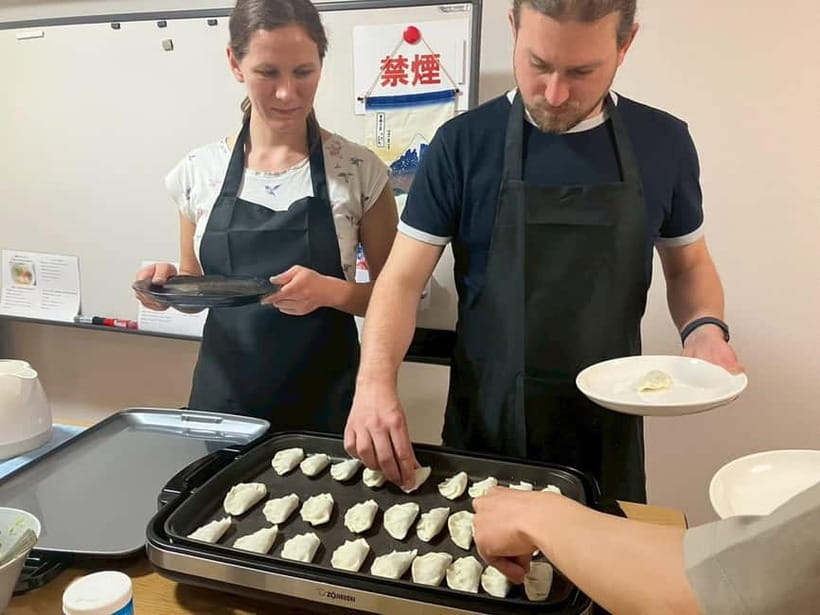
Gyoza is the second highlight. You’ll make dumplings with a filling that includes vegetables and pork. The technique that gets praised again and again is gyoza folding—and yes, it can feel tricky at first.
If you’ve ever tried folding gyoza at home and ended up with dumplings that open in the pan, you’ll appreciate the coaching here. People mention the instructors being patient, and that you learn the folding method closely enough that you can repeat it later.
Even better: gyoza gives you quick feedback. Your folds, your pan timing, and your texture choices show up fast when you cook and eat.
The 1-hour tasting with drinks: what to focus on after you cook
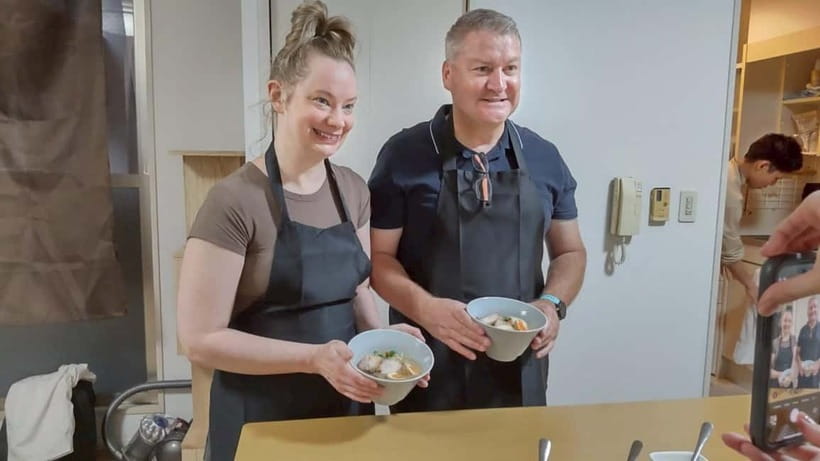
After the cooking portion, you get a 1-hour tasting session. This is when you slow down and actually enjoy what you made—ramen and gyoza sit on the table like a proud little payoff.
Drinks are included during this part, including:
- Sake
- Beer
- Soft drinks
A good tasting session isn’t just about drinking. It’s also about learning how the flavors should land. When you’ve just made the dish yourself, you can connect taste to technique:
- If the broth feels lighter or richer, you’ll remember what you did with the base and timing.
- If the gyoza tastes more savory or a little under-seasoned, you’ll think back to the filling steps.
This is also where the social side kicks in. Because it’s a small group, you can chat with fellow cooks and compare notes without it becoming a chaotic food court conversation.
Allergies, vegetarian, vegan: what you should know
This class can be a solid fit if you eat vegetarian or need vegan options. One recent participant specifically mentions vegan accommodation, and another notes vegetarian and that vegan is possible too.
Still, don’t wait until the last minute. If you have dietary restrictions, message ahead so the kitchen can plan ingredients and approach. That’s your best bet for getting a meal that matches what you’re hoping for, not a rushed substitution.
Take-home recipes: why this is more than a night out
A lot of cooking classes end with you eating dinner. This one adds something useful: recipes to take home.
That matters because ramen and gyoza are technique-driven. Without a reference, you’ll remember that it was good—but not why. With recipe cards, you can rebuild the workflow at home and avoid the usual guesswork around measurements and method order.
If you’re the kind of person who buys a gadget during a trip and then never uses it, this is the opposite. These recipes are meant for future use, and multiple people describe leaving with enough confidence to make gyoza and ramen again.
Group size, language, and the “cook with friends” feeling
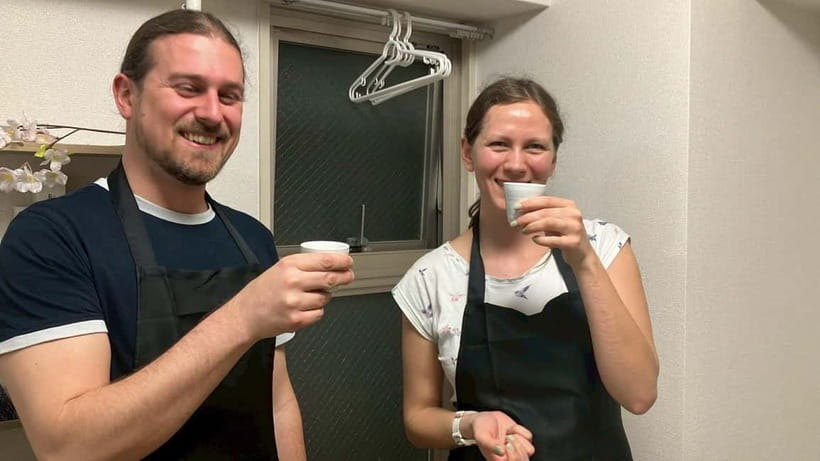
The class is limited to 8 participants, and that’s a big deal. In a small group, you’re more likely to get personal coaching at the exact moment you need it—especially for tasks like dough handling and dumpling folding.
Language support is also a practical advantage. Instruction is available in English and Japanese, which means you can follow the steps without relying entirely on pictures or translation apps.
The overall tone comes across as welcoming and interactive. People repeatedly describe it as feeling like cooking with friends, not a formal lecture. That’s exactly how I’d want a food class to feel after a full day of walking around Osaka.
Practical tips to get the most out of your ramen and gyoza night
Keep these in mind before you go:
- Wear comfortable clothes you don’t mind getting a little flour on. This is hands-on cooking.
- Arrive a touch early. The meeting point is in an apartment-building setting, and it can take a minute to spot.
- If you want to learn specific parts, ask questions during orientation. The class is structured, but you can still guide your learning.
- Plan to eat the full meal. The tasting portion is included, and you’ll want to experience your results while the techniques are fresh in your head.
If you’re traveling with friends or family, this is also a fun shared activity. One family-style review mentions it worked well across ages, including teens.
Who should book this class (and who might skip it)
You’ll probably love this if you:
- Want a hands-on Osaka food experience, not just a tasting tour
- Like learning techniques you can repeat later
- Prefer small-group settings with real interaction
- Enjoy ramen and gyoza and want to understand what makes them taste right
You might skip if:
- You strongly prefer watching over cooking
- You don’t want to handle food prep and shaping (it’s hands-on by design)
- You’re hoping for hotel pickup or a completely guided city sightseeing day
Should you book Osaka Cooking Class: Ramen & Gyoza in Nanba?
I’d book it if your trip includes Osaka and you care about learning real Japanese comfort food skills. The best part isn’t only that the ramen and gyoza are delicious—it’s that you build the skills: noodles from scratch, gyoza folding, and then you take the recipe cards home.
If you’re on the fence, ask yourself one question: do you want to cook ramen in your own kitchen later? If yes, this is one of the better ways to spend an evening in Osaka, because it turns local flavor into something practical.
FAQ
What’s the duration of the Osaka ramen and gyoza cooking class?
The class lasts about 2 hours total, including a 30-minute orientation and preparation, 1.5 hours of hands-on cooking, and a 1-hour tasting session.
Where does the class meet?
The meeting point is Dear Court Semba 303, 4-chōme-3-1 Bakurōmachi, Chuo Ward, Osaka 541-0059, Japan.
Is hotel pickup or drop-off included?
No. Hotel pickup and drop-off are not included.
What’s included in the price?
The price includes all ingredients and tools, expert guidance, the orientation and cooking time, a tasting session with drinks (sake, beer, soft drinks), and recipes to take home.
Are drinks included?
Yes. During the 1-hour tasting session, drinks included are sake, beer, and soft drinks.
Do instructors teach in English?
Yes. Instruction is available in English and Japanese.
Is the class suitable for beginners?
Yes, it’s described as suitable for beginners and food enthusiasts.
How big is the group?
It’s a small group limited to 8 participants.
Do I need to bring anything?
The guidance says to bring just yourself, since ingredients and tools are provided.
Can I get a refund if plans change?
Free cancellation is offered up to 24 hours in advance for a full refund.
Is booking required?
Booking is essential, and you’re advised to book at least one day in advance.