REVIEW · OSAKA
Osaka: Ramen and Gyoza Cooking Class in Dotonbori
Book on GetYourGuide →Operated by Cooking Sun · Bookable on GetYourGuide
Ramen isn’t something you watch here. You’ll knead ramen noodles, cut them with a machine, and cook everything toward a bowl you actually eat, not a photo. I also love the small-group feel, where instructors can correct your technique without losing the pace, and the class writing includes recipes you can take home. One thing to plan for: the building and room can be a little tricky to find at first.
The vibe is friendly and practical. The class is taught in English, and you’ll get clear step-by-step guidance from instructors like Yoshi, Kasa, Miki, and June. If you’re worried about dietary needs, one review noted they adapted quickly for a vegan option, and another mentioned a substitution when someone disliked the fish broth.
In This Review
- Key Highlights You’ll Feel in Your Hands
- Ramen and Gyoza Cooking in Osaka: What You Really Make
- Cooking Sun Osaka and Finding Room 807 Without Stress
- The Noodle-Making Part: Kneading and Cutting Ramen Like a Pro
- Building Soy-Sauce Ramen Broth From Scratch (and Why the Base Matters)
- Gyoza From Minced Chicken to Dumplings You’re Proud to Eat
- The Class Meal: Eating Your Own Ramen and Gyoza
- Small-Group Coaching: How the Instructors Keep You on Track
- Dietary Adjustments: Vegan Options and Broth Substitutions
- Value for $70: What You’re Paying For (and Why It Adds Up)
- Who Should Book This Osaka Class in the First Place?
- Quick Practical Advice Before You Go
- Should You Book This Ramen and Gyoza Cooking Class?
- FAQ
- How much does the Osaka ramen and gyoza cooking class cost?
- Where is the meeting point?
- Do I need hotel pickup or drop-off?
- What dishes will I cook?
- Do we make ramen noodles ourselves?
- How long is the class?
- How big is the group?
- Can the class accommodate vegan or vegetarian diets?
- Will I get recipes to take home?
- What’s the cancellation and pay-later policy?
Key Highlights You’ll Feel in Your Hands
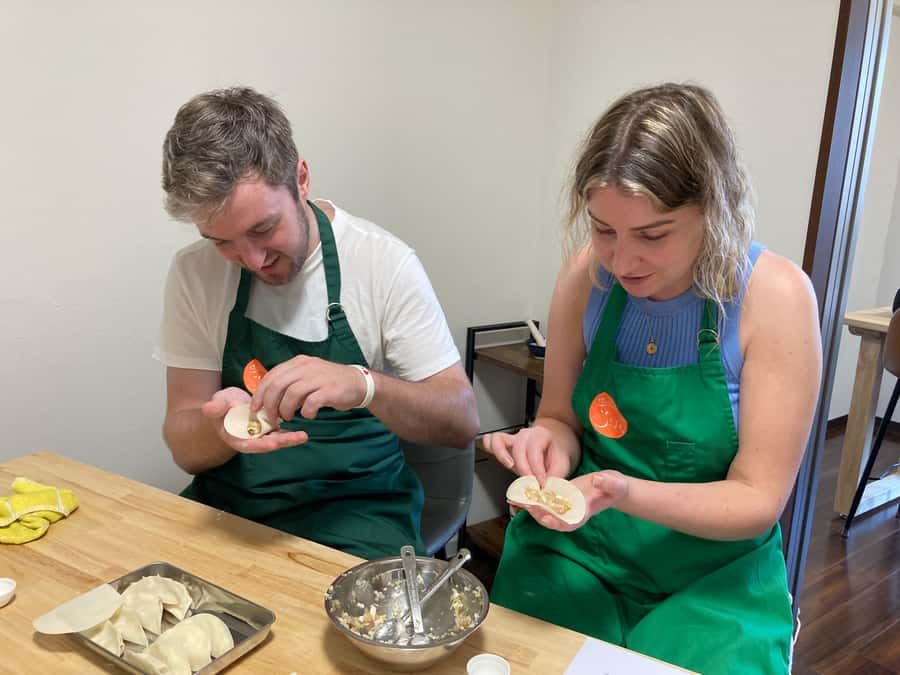
- Knead wheat dough for ramen noodles so you understand what makes the texture chewy
- Use a noodle machine to cut consistent strands without guesswork
- Make soy-sauce ramen from scratch, using chicken bones and dried sardines for the base
- Fold gyoza with minced chicken and shape dumplings that actually seal
- Small class size (often up to about 7–8 people) for real coaching while you cook
- Diet swaps can happen, including a plant-based option and broth substitutions
Ramen and Gyoza Cooking in Osaka: What You Really Make
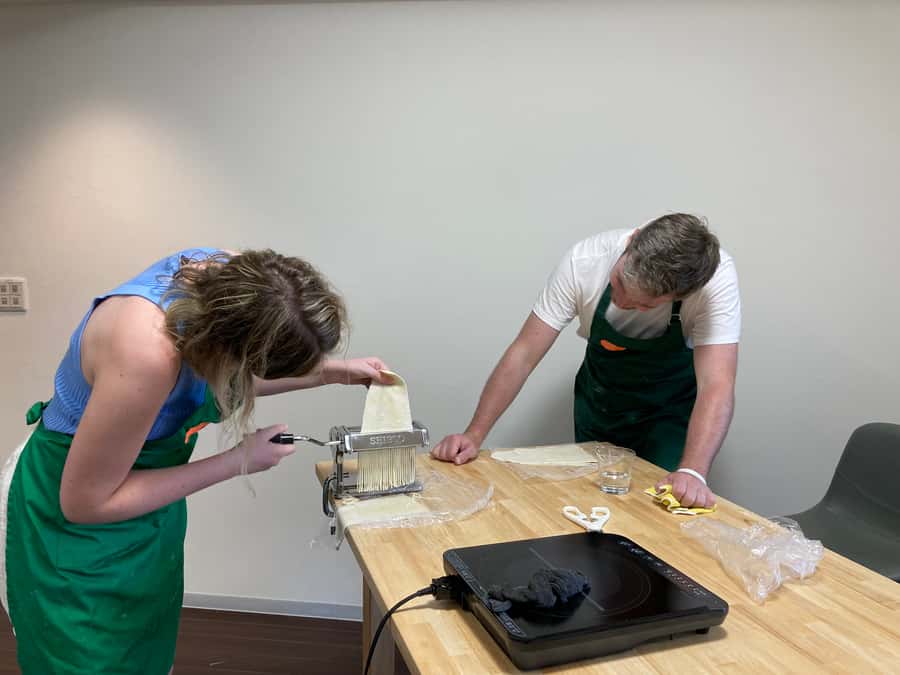
This class is built around two Japanese comfort foods that most people only understand as something they order. Here, you learn why they taste the way they do. You’ll make ramen noodles from wheat dough, build a soy-sauce ramen style broth from scratch, and assemble gyoza dumplings with a minced chicken filling.
Ramen in Japan comes in many styles, but the class focuses on a standard soy-sauce ramen. You also learn a practical twist: you can add miso to the soup to make miso ramen. That matters because it gives you a switch you can use later at home, instead of memorizing only one flavor path.
Gyoza is the other half of the meal, and the class treats it as more than a side dish. You’ll make your own dumplings and then sit down and eat what you made. The best part is that the finished results are not just “edible.” Multiple reviews say the ramen and gyoza turn out so good you want to recreate them later.
You can also read our reviews of more cooking classes in Osaka

Cooking Sun Osaka and Finding Room 807 Without Stress
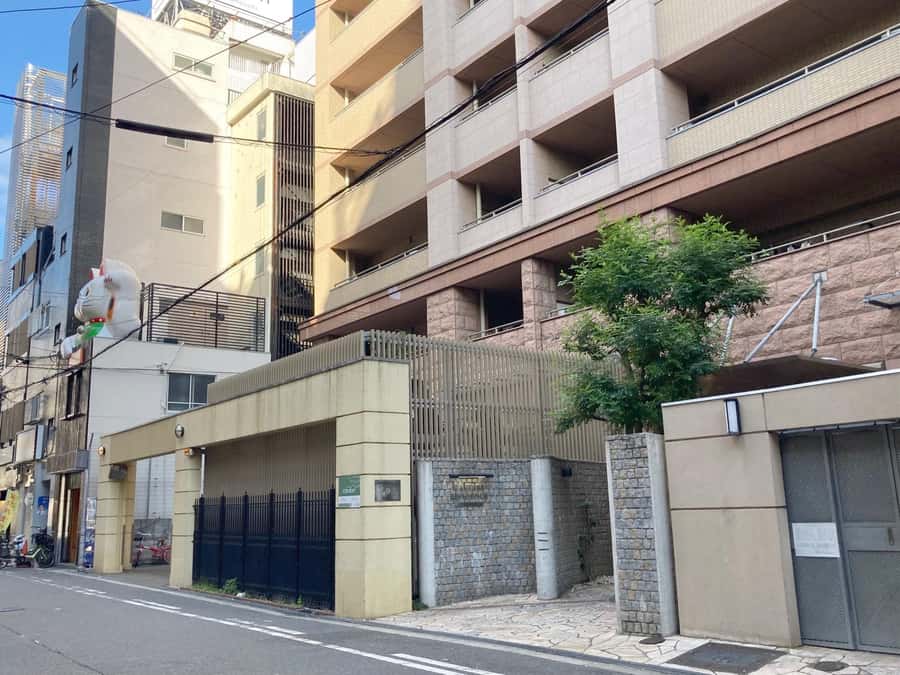
The meeting point is Cooking Sun Osaka, room 807. When you arrive, press 807 and the 呼出 (call) button at the entrance.
I’d treat finding the spot as part of your prep, not an afterthought. One review straight-up flagged that the building isn’t the easiest to find, so if you’re arriving close to the start time, give yourself extra buffer. Once you’re inside, the class ends back at the meeting point, so you won’t need to coordinate transport for a return.
One more logistics note: there’s no hotel pickup or drop-off included. You’ll want to be ready to navigate on your own, using the meeting location above as your anchor.
The Noodle-Making Part: Kneading and Cutting Ramen Like a Pro
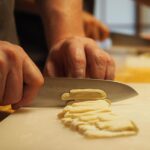
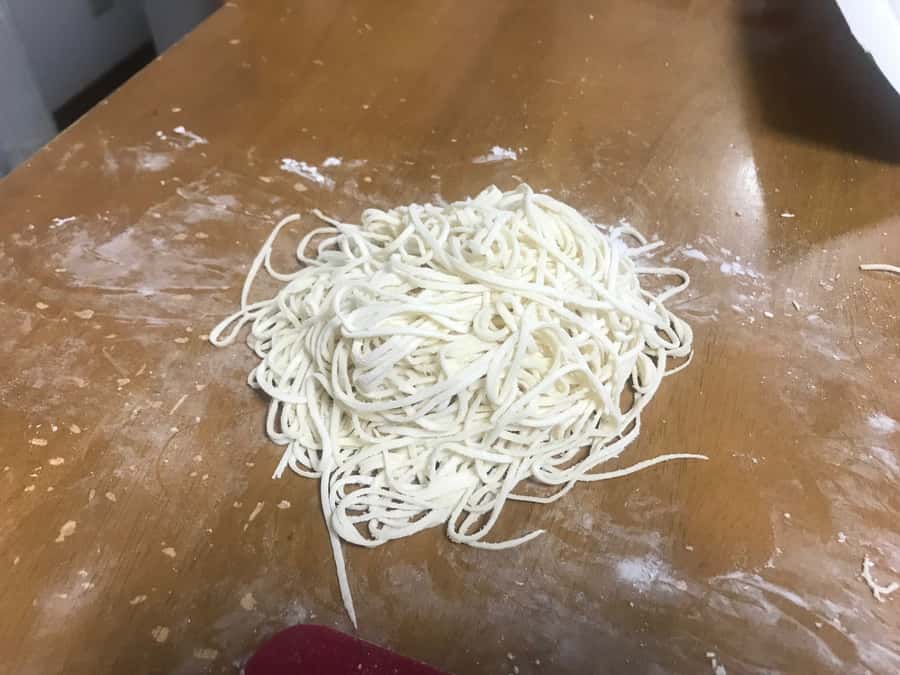
This is the moment that turns ramen from a menu item into a skill. You start by kneading wheat to make ramen noodles. If you’ve never worked with dough before, don’t worry—this class is set up so you can follow along and learn the feel, not just the steps.
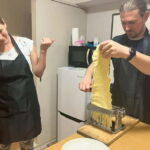
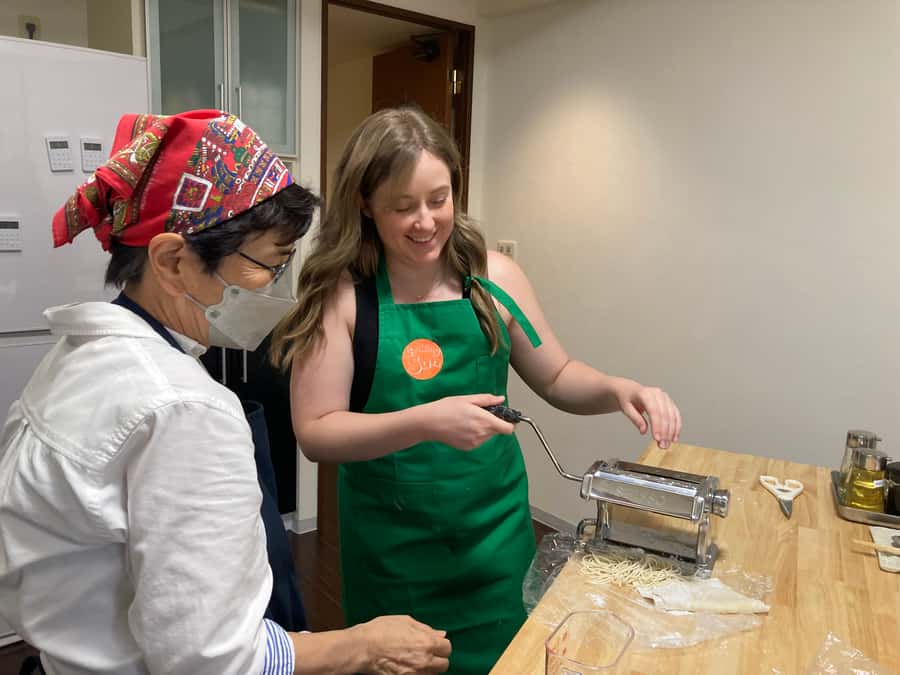
Then comes the tool that makes it feel like ramen production: you cut the noodles using a noodle machine. The class highlights it like a key skill, and that’s true. Cutting consistency affects how the noodles cook and how they hold sauce.
A couple of reviews mention the pacing and timing being well handled, which is important because noodle-making has a rhythm. If the class moved too fast, the dough would suffer and the whole meal would feel rushed. Instead, people repeatedly mention the class stays on schedule without feeling like a sprint.
Building Soy-Sauce Ramen Broth From Scratch (and Why the Base Matters)
Ramen is famous for many things—flavor, comfort, toppings—but the foundation is the broth. In this class, the ramen soup is made from scratch using chicken bones and dried sardines. That combo is doing a lot of work: it gives you depth and a savory backbone that holds up once the seasoning and noodle texture meet.
You’ll focus on a soy-sauce ramen style. And you’ll learn that you can add miso to switch to miso ramen. That’s a small change with big payoff, because miso isn’t just “another ingredient.” It changes the flavor profile in a way you’ll notice right away.
Practical takeaway: once you understand the broth base, the rest of ramen becomes easier to customize. The class approach supports that. You can add various toppings as you like, so the ramen isn’t stuck in one rigid template. You’re learning how to assemble, balance, and adjust instead of copying a single bowl only.
Gyoza From Minced Chicken to Dumplings You’re Proud to Eat
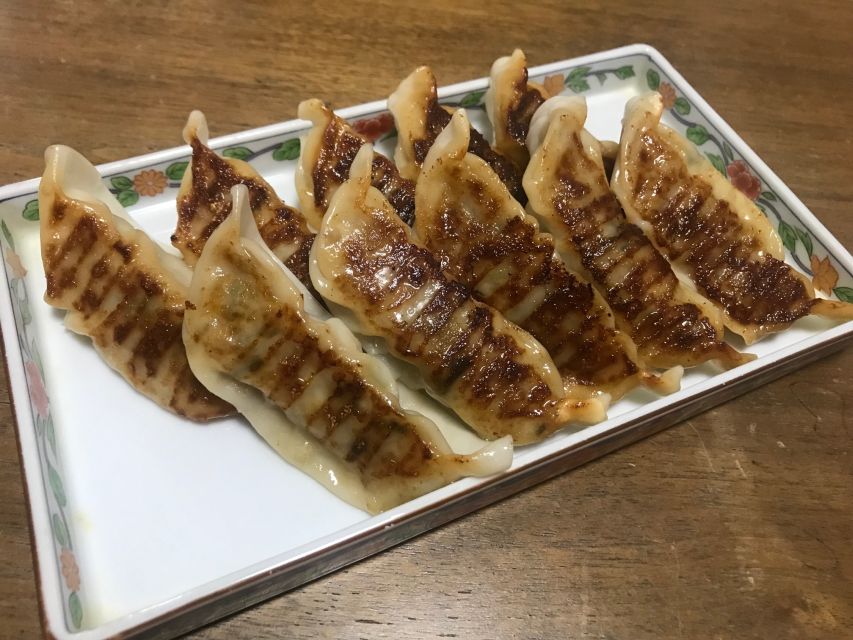
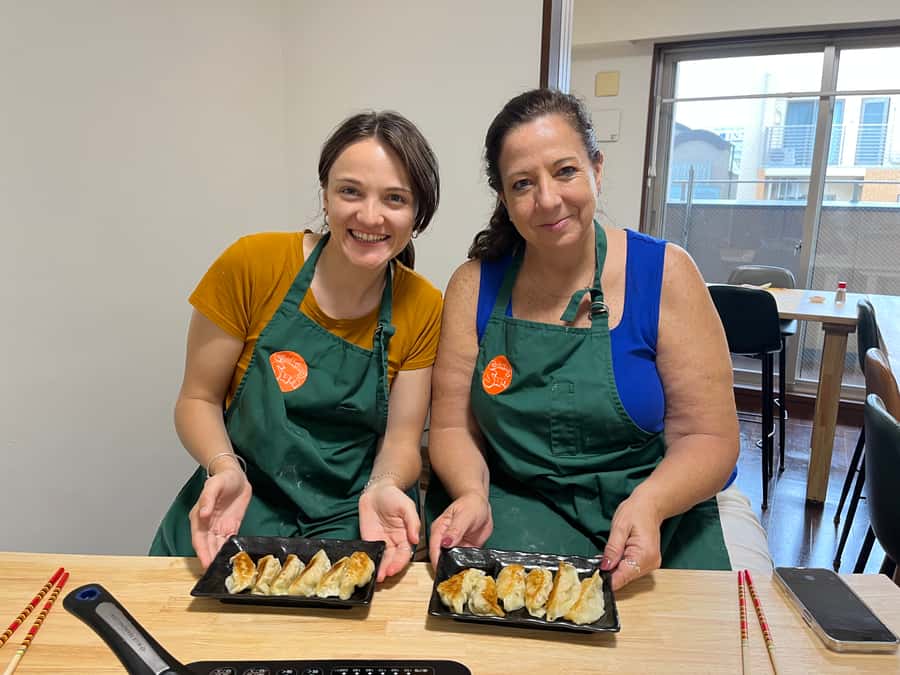
If ramen is the class for the noodles, gyoza is the class for shaping and stuffing. You’ll make original dumplings using minced chicken. That gives you a concrete, hands-on understanding of how fillings work—how much you use, how you shape, and how the dumplings stay together.
One review highlights that they made the filling themselves, which is a big deal. Eating good gyoza is one thing; learning how the filling comes together is what makes you confident enough to repeat it at home.
Also, the class is described as clean, organized, and run with enough space for everyone to cook. That matters when you’re working with dough and dumplings. You don’t want cramped conditions that turn a fun class into a frustrating one.
You can also read our reviews of more tours and experiences in Osaka



The Class Meal: Eating Your Own Ramen and Gyoza
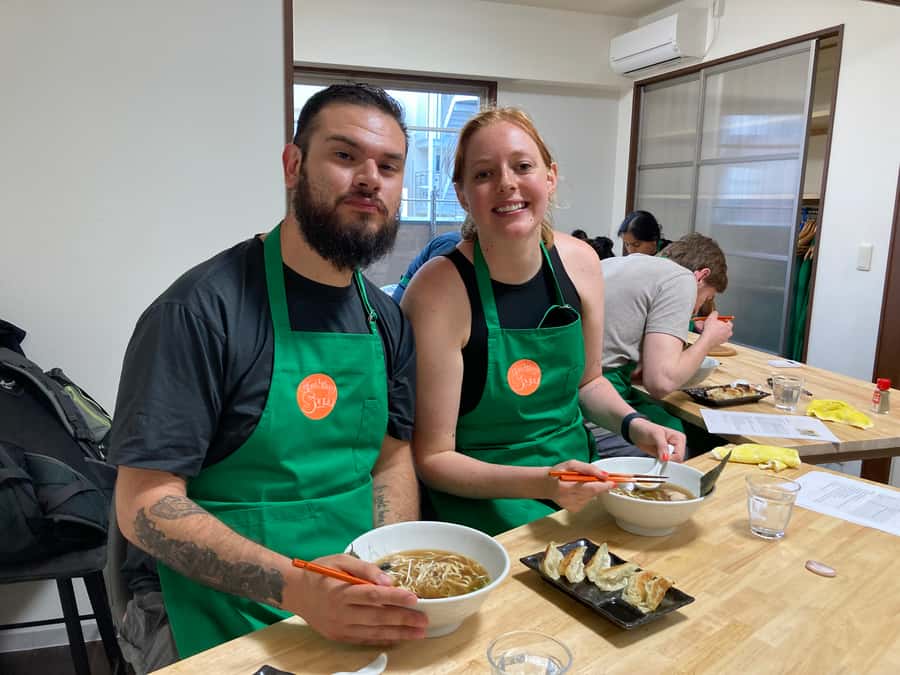
This class is structured so you don’t just cook and leave. You finish and then sit down to eat your ramen and gyoza.
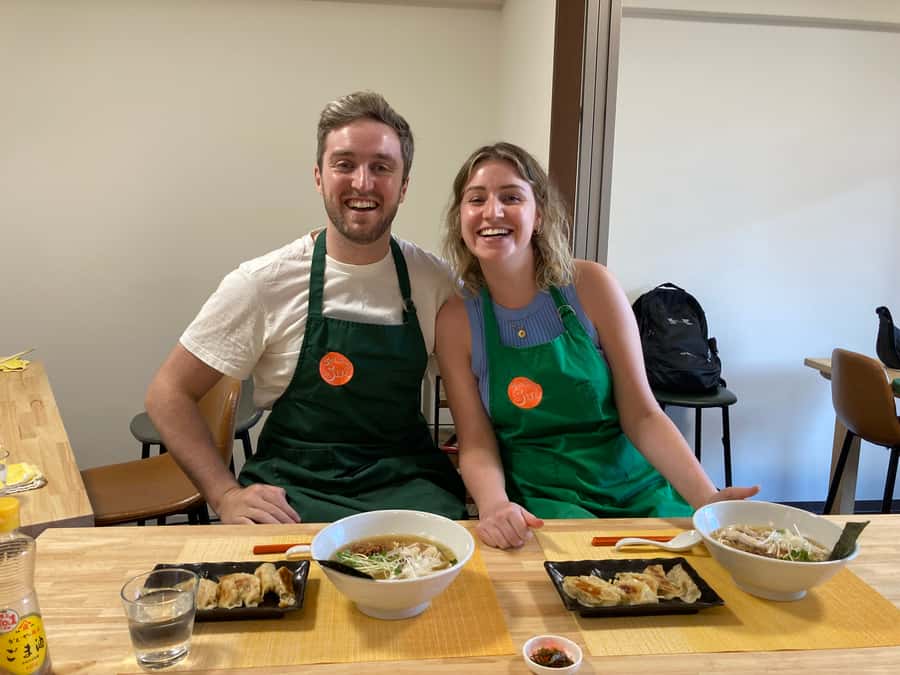
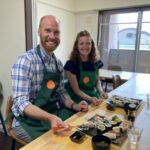
Multiple reviews say the eating part is the best part. That makes sense. Ramen and gyoza are “work for the reward” foods. When you’ve kneaded, cut, assembled, and shaped, the first bite hits differently. You can taste your own choices: noodle texture, broth flavor, and the dumpling’s balance.
One practical tip that came up: come on an empty stomach. If you arrive already full, it’s harder to enjoy the full impact of what you made.
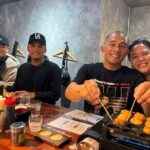
Another small detail that people appreciated: instructors check in and help with questions, including taking photos when you want them. That keeps the class from feeling like a factory line.
Small-Group Coaching: How the Instructors Keep You on Track
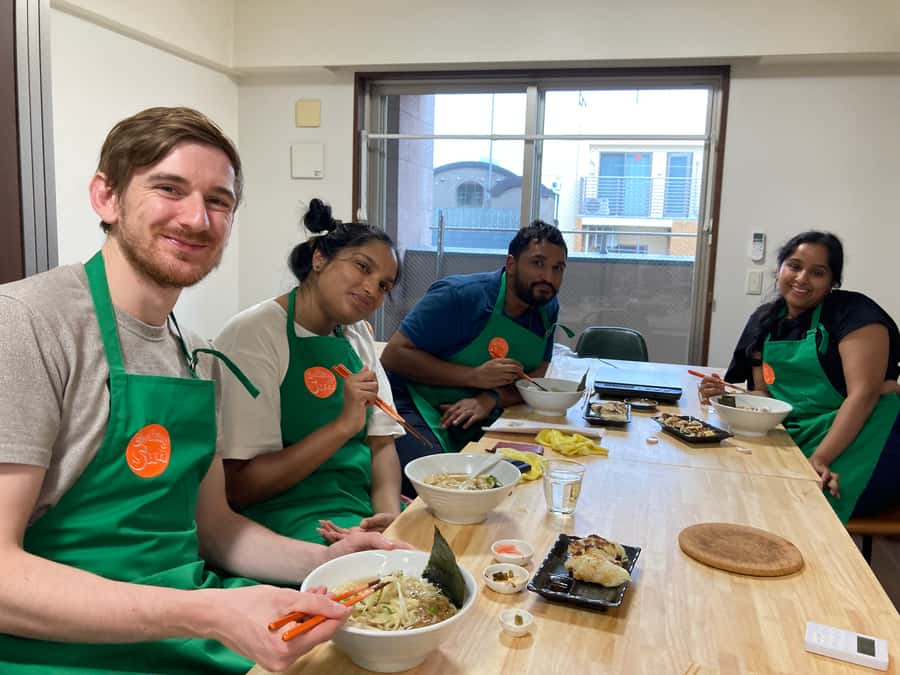
The class size is repeatedly described as small—often around 7 to 8 people. That’s a sweet spot. It’s large enough to feel lively, but small enough that the instructor can correct problems quickly.
Several reviews mention instructors stepping in if someone is falling behind, keeping the group together and on schedule. That’s huge for first-timers. Dough work can be hard if you’re trying to figure things out alone, but with real-time coaching, you’re more likely to succeed.
You’ll see different instructor names in reviews, including Yoshi, Kasa, Miki, and June, plus others. The consistent thread is patient, detailed explanations delivered in English. One reviewer even described it as clear and well timed, so nothing felt chaotic.
Dietary Adjustments: Vegan Options and Broth Substitutions
If you’re vegan or vegetarian, this class may be a better bet than you’d expect. One review specifically says they adapted the recipes for a vegan guest with a delicious plant-based option.
Another review mentions a substitution when someone didn’t like fish broth. That’s worth noting because the ramen base uses dried sardines and chicken bones. If fish-based flavor is a problem for you, don’t assume the class can’t adjust—ask when you arrive.
Bottom line: don’t show up thinking the class is one-size-fits-all. The evidence here suggests they can make changes when needed, but the exact method can vary by the situation.
Value for $70: What You’re Paying For (and Why It Adds Up)
At $70 per person, you might wonder if this is just a novelty class. Here’s why it feels like good value.
First, the price includes all the ingredients. You’re not buying a ticket and then shopping for food or missing components. Second, you’re learning multiple core skills: noodle-making (kneading and cutting), broth assembly for soy-sauce ramen, and gyoza dumpling prep with minced chicken filling.
Third, you get a finished meal at the end. That’s not a small thing in Japan, where “just eating” can add up fast. This gives you two dishes plus the confidence to reproduce them later.
Finally, multiple reviews mention taking recipes home. That turns the experience into something you can use beyond your Osaka day. If you like cooking, this is the kind of class that pays back later, not just tonight.
Who Should Book This Osaka Class in the First Place?
You’ll probably love this if:
- you want hands-on cooking, not a sit-and-watch demo
- you care about ramen beyond ordering it
- you want a small-group experience with real coaching
- you like the idea of making noodles and dumplings from scratch
Families can fit too. One review described it as great for a family with an 11-year-old, and another mentioned a parent-and-teen group enjoying the pace and clarity.
If you’re the type who gets frustrated when you miss a step, you’ll still likely be okay. People repeatedly mention instructors stepping in to help you catch up and keep the process moving.
Quick Practical Advice Before You Go
- Plan for a building search. Give yourself extra time to reach Cooking Sun Osaka and room 807.
- Come with an appetite. Reviews stress that you’ll want to eat right after cooking.
- If you have dietary needs, speak up when you arrive. There are examples of vegan adaptations and broth substitutions.
- Expect a class around 2 to 3 hours. Reviews mention both about 2 hours and 3 hours, so treat it as roughly a half-afternoon plan.
Should You Book This Ramen and Gyoza Cooking Class?
Yes, if you want a real skill-based Osaka experience and not just another meal. This class hits the sweet spot: you work with fresh ingredients, learn ramen structure from broth to noodles, shape gyoza, and then eat what you made. The small group size and English guidance mean you’re not left to figure things out alone.
I’d skip it only if you’re looking for a passive cultural tour or you want something outside ramen and gyoza specifically. But if you love Japanese food and you like the idea of taking recipes home, this is one of the more practical ways to understand Osaka flavors.
FAQ
How much does the Osaka ramen and gyoza cooking class cost?
The price is $70 per person.
Where is the meeting point?
The meeting point is Cooking Sun Osaka, room 807. Press 807 and the 呼出 (call) button at the entrance when you arrive.
Do I need hotel pickup or drop-off?
No. Hotel pickup and drop-off are not included.
What dishes will I cook?
You’ll make ramen (soy sauce ramen style) and gyoza from scratch.
Do we make ramen noodles ourselves?
Yes. You’ll knead wheat to make ramen noodles and use a noodle machine to cut them.
How long is the class?
The class is described as taking around 2 hours, and in some cases around 3 hours.
How big is the group?
It’s run as a small group, often described as up to about 7–8 people.
Can the class accommodate vegan or vegetarian diets?
Yes. One review notes they adapted the recipes for a vegan guest with a plant-based option, and they can look after vegetarians and vegans.
Will I get recipes to take home?
Yes. Reviews mention that recipes are written out and you can take them home.
What’s the cancellation and pay-later policy?
You can reserve and pay later, booking your spot and paying nothing today. Cancellation is free up to 24 hours in advance for a full refund.