REVIEW · OSAKA
Hiroshima & Miyajima 1 Day Bus Tour with Bullet Train Tickets
Book on Viator →Operated by H.I.S.Co., Ltd. · Bookable on Viator
One day can change the way you see Japan. I like how this tour handles the big legs—Shinkansen out and back, plus a bus in Hiroshima—so your day stays focused on the sights, not train math.
My favorite part is the built-in local food and the picture-perfect contrast of morning history and afternoon island beauty: you get Hiroshima-style okonomiyaki for lunch and the ferry route that puts you close to the famous Itsukushima Shrine Torii from the sea. The main drawback to plan around is the pace: it’s packed and involves a good amount of walking, with limited time for slow wandering and bathroom stops.
In This Review
- Key things to know before you go
- Price and value: what $270.88 covers in a long day
- Where the tour begins: station meet-ups and ticket handoffs
- Osaka departure (Shin-Osaka)
- Kyoto departure (Kyoto Station)
- Fukuoka departure (Hakata Station)
- Hiroshima first: Atomic Bomb Dome photo stop (and what to do with 30 minutes)
- Peace Memorial Museum timing: emotionally heavy, but you get the key hour
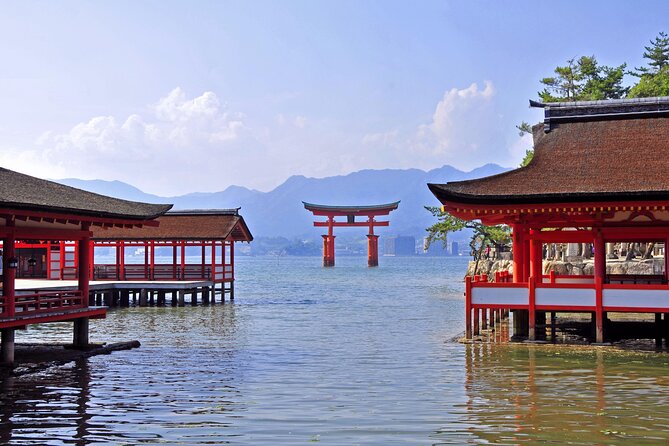
- Miyajimaguchi and the Great Torii ferry route: your best sea-view moment
- Itsukushima Jinja in one hour: what to prioritize
- Omotesandō shopping street: the free-time reset
- The lunch that makes this tour feel local: Hiroshima-style okonomiyaki
- Return to Osaka, Kyoto, or Fukuoka: the late-afternoon Shinkansen
- Pace, walking, and comfort: the real trade-off
- Is this the right tour for you?
- FAQ
- What cities does this Hiroshima and Miyajima tour leave from?
- How long is the tour?
- Is the Shinkansen ticket included?
- Do I need to buy attraction tickets?
- Is the ferry to Miyajima included?
- Is lunch included?
- Are there dietary options for okonomiyaki?
- What happens if Hiroshima Peace Memorial Museum is closed?
- What time do you return on the Shinkansen from Hiroshima?
- Is there air-conditioned transport?
- Can I cancel for a full refund?
Key things to know before you go
- Shinkansen + tour bus included: no worrying about ticketing or switching between trains and local transport
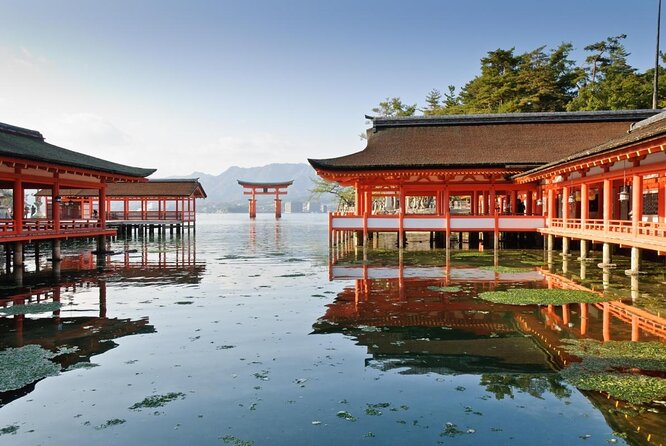
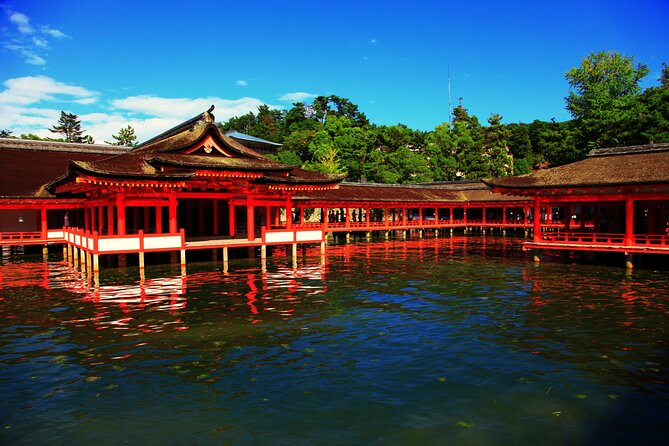
- Ferry on the Great Torii route: you get a front-row sea view of the floating Torii
- Hiroshima Peace Memorial visit is timed: you get 30 minutes at the Dome area and about 60 minutes at the museum
- Lunch is actually Hiroshima-style: okonomiyaki is included with clear pork/fish/egg options
- Guide support at stations: meeting points are specified so you know where to line up
- Backup museum plan: if Hiroshima Peace Memorial Museum is closed, you go to Hiroshima National Peace Memorial Hall instead
Price and value: what $270.88 covers in a long day
At $270.88 per person, this is not a cheap day trip. The good news is that the price is doing heavy lifting for you. You’re buying round-trip Shinkansen from Osaka, Kyoto, or Fukuoka, plus coach transport once you reach Hiroshima, plus ferry tickets, plus entrance fees for Itsukushima Shrine and the Hiroshima Peace Memorial Museum area.
A lot of the cost pain disappears when you think about what you would otherwise have to solve yourself: getting the right Shinkansen train times, finding the right meeting point in a busy station, then sorting out ferry access and entrance fees. One guest pointed out that the Shinkansen part alone can be around $150 round trip. Whether your exact seats are more or less, the point is the same: you’re paying for logistics to be handled for you.
Then there’s the value of time. The day runs about 12 hours, and your itinerary is built around getting you to both Hiroshima and Miyajima without needing an overnight stay. If you only have a short window while based in Osaka, Kyoto, or Fukuoka, this is a practical way to hit the highlights in one go.
You can also read our reviews of more tours and experiences in Osaka
Where the tour begins: station meet-ups and ticket handoffs
You start your day at a major rail hub, with clear meeting points and specific gates. That matters, because the first hour is where most independent plans go sideways.
Osaka departure (Shin-Osaka)
- Meet your guide at Shin-Osaka Station, Central Gate, 3rd Floor
- Departure time listed as 8:18am
- Then you travel Shin-Osaka to Hiroshima Station by Shinkansen, and an assistant will not accompany you onward to Hiroshima Station.
Kyoto departure (Kyoto Station)
- Meet at Kyoto Station, Shinkansen Central Gate, 2nd Floor
- Departure time listed as 8:03am
Fukuoka departure (Hakata Station)
- Meet at Hakata Station, Chikushi Gate, in front of 3 Mailbox
- Departure time listed as 8:23am
In all cases, you meet your Hiroshima-side guide at Hiroshima Station, Shinkansen Gate 2F (NORTH Exit). From there, the rest of the day runs by tour bus until you reach the ferry and island walking.
Practical tip: if you’re the kind of traveler who likes to arrive early and breathe, do it here. Big stations are easy to navigate once you’re calm—but harder when you’re rushed.
You can also read our reviews of more tours and experiences in Osaka
Hiroshima first: Atomic Bomb Dome photo stop (and what to do with 30 minutes)
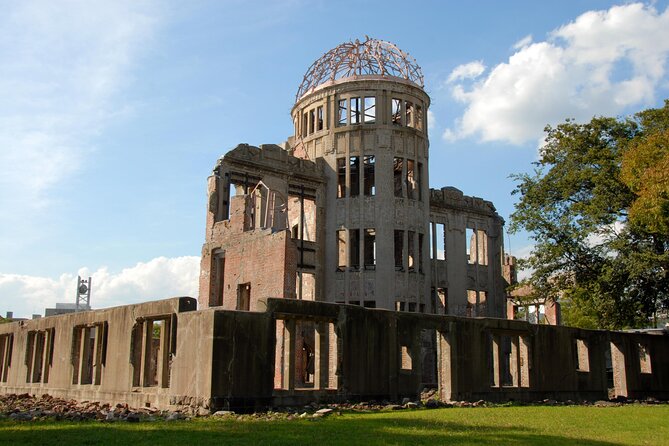
After arriving in Hiroshima, you head straight to the memorial area. Your first sight time is short by design: 30 minutes at the Atomic Bomb Dome.
This is a place where “seeing” happens fast, but “absorbing” takes longer. Since the stop is brief, your best move is to arrive mentally ready: take a few photos, look for viewpoints around the Dome area, and then let the weight of the site settle while you’re still there. Even with limited time, it’s an impactful introduction before you move into the museum.
If you’re sensitive to crowds or solemn settings, keep this in mind: you’ll likely feel the area’s seriousness immediately. That’s not a drawback—it’s just the reality of visiting this part of Hiroshima.
Peace Memorial Museum timing: emotionally heavy, but you get the key hour
Next comes your museum visit: Hiroshima Peace Memorial Museum with admission included for 60 minutes.
Here’s the important operational detail: if the Peace Memorial Museum is closed, the tour switches to Hiroshima National Peace Memorial Hall for the Atomic Bomb Victims instead. The listed closure dates for the museum are Dec 30–31 and Feb 16–21.
So what should you expect with an hour? You can read and look, but you can’t do everything at a slow museum pace. The timing is built to keep the day moving toward Miyajima, which is why the stop feels structured. If you want to maximize what you see, choose 2–3 things to focus on rather than trying to capture every exhibit.
If the museum is crowded (it can be), you’ll still be fine as long as you treat the visit like a guided course in the essentials, not a full independent marathon.
Miyajimaguchi and the Great Torii ferry route: your best sea-view moment
Then the tone shifts. You move to Miyajimaguchi and board a ferry to Miyajima, with the included ticket described as the Great Torii Ferry Route.
This is a big reason to book a guided day trip like this one. The ferry ride isn’t just transport—it’s an experience designed for photos. You’re brought closer to the Torii so you can see it from the sea in a way that would be harder to recreate on your own on a tight schedule.
Once you’re on the water, slow down your phone habits for a second. Watch how the light hits the shrine setting, then take your photos. The “floating” look is more convincing when you see how the scene sits relative to the tide and waterline.
Itsukushima Jinja in one hour: what to prioritize
On Miyajima, your guided shrine time is 60 minutes at Itsukushima Jinja.
This is not a “see every building” schedule. It’s a good, focused hour to get the most iconic views:
- the main shrine area
- the dramatic Torii framing
- the surrounding temple grounds from your walking routes
One helpful mindset: think of the shrine as a photo plus a stroll, not a long, deep hike. With only 60 minutes, you’ll feel best if you pick a couple of vantage points and return to the main pathways without trying to cover everything.
Also note: your whole day depends on staying on time here. If you wander too far, the group rhythm becomes your enemy.
Omotesandō shopping street: the free-time reset
After the shrine, you get 60 minutes of free time at Miyajima Omotesandō Shopping Street.
This is your break for snacks, souvenir browsing, and resetting your energy after Hiroshima’s emotional morning. It’s also where the island atmosphere really kicks in. If you want to taste something local beyond your included lunch, this is the moment.
One more practical note: Miyajima is famous for deer. You don’t need to fear them, but you should be alert. They’re curious around people and food, so keep items secure and don’t act like deer are cute decorations.
The lunch that makes this tour feel local: Hiroshima-style okonomiyaki
Lunch is included, and it’s Hiroshima-style okonomiyaki, served with options:
- pork
- vegetarian
- no-fish option
Your booking also lists three specific menu choices:
- Regular okonomiyaki
- NO PORK with EGGS okonomiyaki
- NO PORK, NO FISH POWDER, NO EGGS okonomiyaki
This matters because okonomiyaki isn’t one generic dish in Japan. Hiroshima-style is its own thing, and the included lunch is part of what keeps the day from feeling like a checklist of monuments only.
Dietary rules you should take seriously:
- You need to inform the operator in advance about allergies or dietary restrictions.
- Menu changes on the day are not accommodated.
- You should not bring your own food and drinks into the restaurant.
If you have a sensitive allergy, don’t rely on casual substitutions. Make sure your choice is locked in at booking so you can relax once you sit down.
Return to Osaka, Kyoto, or Fukuoka: the late-afternoon Shinkansen
Your day ends back at Hiroshima Station with Shinkansen on the return trip.
- From Osaka: NOZOMI 56, listed as 18:43 Hiroshima to 20:04 Shin-Osaka
- From Kyoto: NOZOMI 56, listed as 18:43 Hiroshima to 20:19 Kyoto
- From Fukuoka: SAKURA 565, listed as 18:52 Hiroshima to 19:59 Hakata
That end time is one reason the schedule is so tight. You’ll do best if you use your Omotesandō hour wisely and avoid losing time to last-minute “one more shop” decisions.
Pace, walking, and comfort: the real trade-off
This is an efficient day, and many people love that. Still, it’s not built for slow travel.
Expect:
- time boxed into stops (30 minutes here, 60 minutes there)
- a lot of walking, especially on Miyajima
- limited time for leisure at each location
On the plus side, the tour bus is described as air-conditioned, and you’re given earphone guides for convenience during the tour (you’ll need to handle them carefully and return them after use). The bus also has a luggage compartment, so you can bring normal bags without carrying everything on your back all day.
The tour is also conducted by an English-speaking guide only. If you rely heavily on English explanations rather than self-guided reading, that’s a comfort.
Your main “consideration” is physical pace. It’s not recommended if you have difficulty walking long periods.
Is this the right tour for you?
This one works best if you:
- have limited time in the Kansai or Fukuoka area and want Hiroshima + Miyajima in a single day
- prefer a guided day with major tickets handled for you
- want a mix of solemn history (Peace Memorial) and scenic contrast (Miyajima Torii and Omotesandō)
- like included local food without needing restaurant planning
I would skip it if:
- you want lots of free wandering and slow museum time
- you’re very sensitive to crowding and tight schedules
- you don’t handle long walking days well
If you’re on the fence because of the price, look at what’s included: Shinkansen, bus, ferry, key entrance fees, and lunch. That’s why the total doesn’t feel random once you compare it to doing it all yourself with the same timing.
If you want an easy, high-impact day that pairs the Dome and museum with a proper island ferry experience, this is a strong choice.
FAQ
What cities does this Hiroshima and Miyajima tour leave from?
It leaves from Osaka (Shin-Osaka Station), Kyoto (Kyoto Station), and Fukuoka (Hakata Station), depending on the option you book.
How long is the tour?
The duration is listed as about 12 hours.
Is the Shinkansen ticket included?
Yes. You get a round-trip Shinkansen (bullet train) ticket from Osaka, Kyoto, or Fukuoka.
Do I need to buy attraction tickets?
No. Entrance fees for Itsukushima Shrine and Hiroshima Peace Memorial Museum are included.
Is the ferry to Miyajima included?
Yes. Your Miyajima ferry ticket is included, and the route is described as the Great Torii Ferry Route.
Is lunch included?
Yes. Lunch is included and is Hiroshima-style okonomiyaki, with options for pork, vegetarian, and no-fish choices.
Are there dietary options for okonomiyaki?
Yes. The tour lists three options: regular okonomiyaki; no pork with eggs; and no pork, no fish powder, no eggs. You need to provide allergy or dietary restrictions in advance when booking.
What happens if Hiroshima Peace Memorial Museum is closed?
If the museum is closed (listed dates: Dec 30–31 and Feb 16–21), the tour visits Hiroshima National Peace Memorial Hall for the Atomic Bomb Victims instead.
What time do you return on the Shinkansen from Hiroshima?
For Osaka, it’s listed as NOZOMI 56 from 18:43 to 20:04. For Kyoto, it’s NOZOMI 56 from 18:43 to 20:19. For Fukuoka, it’s SAKURA 565 from 18:52 to 19:59.
Is there air-conditioned transport?
Yes. You travel by a comfortable air-conditioned tour bus in Hiroshima.
Can I cancel for a full refund?
Yes. You can cancel up to 24 hours in advance for a full refund.