REVIEW · OSAKA
Osaka: Umeda Sky Building Official E-Ticket
Book on GetYourGuide →Operated by LINKTIVITY Inc. · Bookable on GetYourGuide
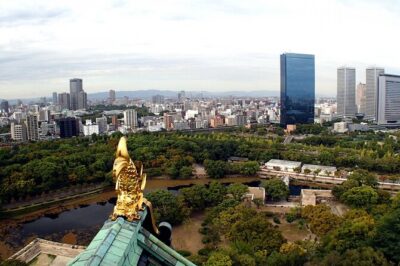
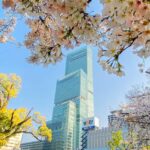
Osaka looks different when you rise above it. The Umeda Sky Building turns a simple city stop into a full-on Osaka panorama from the 40th-floor Kuchu Teien Observatory. You get an easy 360-degree view that makes landmarks, streets, and rivers of light snap into place fast.
I really like the way the visit works at both ends of the day. The Sky Walk and outdoor deck are especially memorable at night, when the city lights spread out in all directions. It is also one of those places where the architecture itself feels part of the show, not just the view.
The main consideration? Plan for crowds and elevator lines, especially in the evening. Even with an e-ticket, you may still spend time waiting once you are on-site.
In This Review
- Key points
- Umeda Sky Building: the fast pitch for a high-value Osaka view
- Getting there from Umeda: where to stand and what to expect
- Ticket reality: the e-ticket helps, but elevators still take time
- Going up: what the towers and connections add to the visit
- Kuchu Teien Observatory: where the 360-degree view clicks
- Sky Walk at night: the outdoor deck that changes the vibe
- When to go: day, sunset, and the late-hour trade-offs
- Rules and small logistics that affect your comfort
- No food or drinks inside
- Luggage and lockers
- Re-entry isn’t permitted
- Smoking is off-limits
- Accessibility and family practicality, in plain terms
- Best-fit for who this works for (and who should think twice)
- Value check: is $12 a fair deal?
- Should you book the Osaka Umeda Sky Building e-ticket?
- FAQ
- Where is the ticket counter for the Umeda Sky Building?
- What are the business hours and last admission?
- Do I need to bring a voucher or QR code?
- How long is the validity of the ticket?
- Is the observatory wheelchair accessible?
- Are food and drinks allowed inside?
- Can I re-enter after I leave the observatory?
- Is entry allowed in the rain?
- Who can enter based on age?
Key points
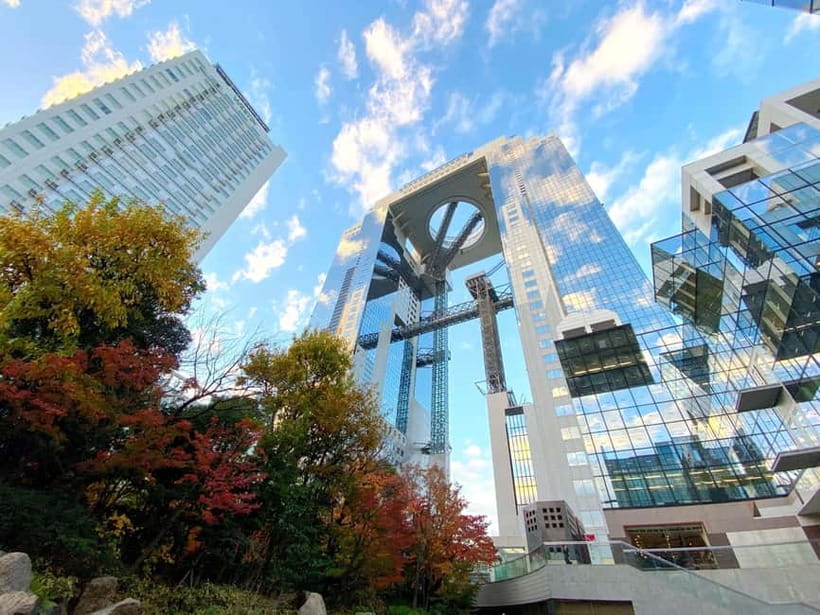
- 40th-floor Kuchu Teien Observatory delivers true 360-degree Osaka views.
- Sky Walk at night gives a romantic, twinkly perspective.
- Short walk from major stations (JR Osaka, Hankyu Osaka Umeda, Osaka Metro Umeda).
- QR-code voucher check-in is quick, but elevators can still queue.
- No re-entry means you should pace your time before you leave.
- Weather matters: rooftop access can be restricted in storms.
Umeda Sky Building: the fast pitch for a high-value Osaka view
If you only have a day (or even a few hours) in Osaka, this is a strong way to get oriented. The Umeda Sky Building stacks big-city views into one place, high above street level, with enough open space that you can actually move around while you look.
The ticket is straightforward: you are buying entry to the Kuchu Teien Observatory. No long guided route. No complicated transfer. Just arrive, scan your QR code voucher, go up, and make your own viewing plan. For about $12 per person, the value is mostly in that height, the 360-degree coverage, and the night-time atmosphere.
One nice detail: the business hours run long. You can go in daylight, at sunset, or at night, and you are not forced into one narrow time window. The flip side is that night equals crowds.
You can also read our reviews of more tours and experiences in Osaka
Getting there from Umeda: where to stand and what to expect
Your ticket counter is on the 39th floor of the Umeda Sky Building, at 1-1-88 Oyodonaka, Kita-ku, Osaka. The good news is the building sits right in Umeda, which is one of Osaka’s easiest transit hubs.
From nearby stations, you’re looking at roughly:
- 7-minute walk from JR Osaka Station
- 9-minute walk from Hankyu Osaka Umeda Station
- 9-minute walk from Osaka Metro Umeda Station
When you arrive, do not overthink it. The voucher check-in is where most people slow down. You’ll need to prepare your voucher in advance, with the provided QR code, because you will show it before entering.
If you come in the evening and the lines look long right at the start, keep calm. The queue tends to move in steps. Also, Osaka in general runs efficient, even when it is busy—just don’t treat this like a skip-the-line attraction.
Ticket reality: the e-ticket helps, but elevators still take time
This is worth saying plainly: an e-ticket can make the check-in smoother, but it usually does not erase all waiting.
Here is what to expect in the common flow:
- You show your QR-code voucher at the ticket counter.
- You move toward the elevator section.
- You wait for the ride up and again for the ride down.
Several practical tips can save your patience:
- If you see a long line for a glass elevator, you can choose a different option. One of the more useful pieces of advice I’d follow here is to skip the glass-elevator queue if your priority is time.
- If you hate standing in crowds, aim for earlier evening or late afternoon so you catch the city lighting without peak crush.
Even when waits are reasonable, this place is popular. Your best strategy is to build your schedule around viewing, not around speed.
Going up: what the towers and connections add to the visit
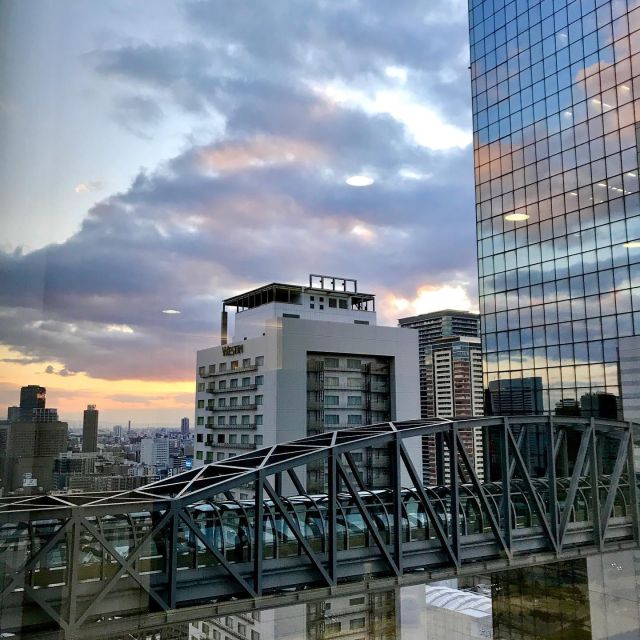
The Umeda Sky Building is not just one tower with an elevator and a single deck. The design includes movement between the towers, and the experience feels a bit like transitioning through levels of architecture rather than simply riding a lift.
One detail I like is that the climb itself becomes part of the attraction. You get those cross-building moments and the sensation of rising above the urban grid. If you are a photo person, this stage helps you line up your headspace: you start imagining where the view will open up.
Also, keep expectations realistic: you are paying for the observation decks, not for a guided tour. So when you get up there, slow down and let your eyes do the work.
Kuchu Teien Observatory: where the 360-degree view clicks
Once you reach the Kuchu Teien Observatory, the experience becomes about perspective.
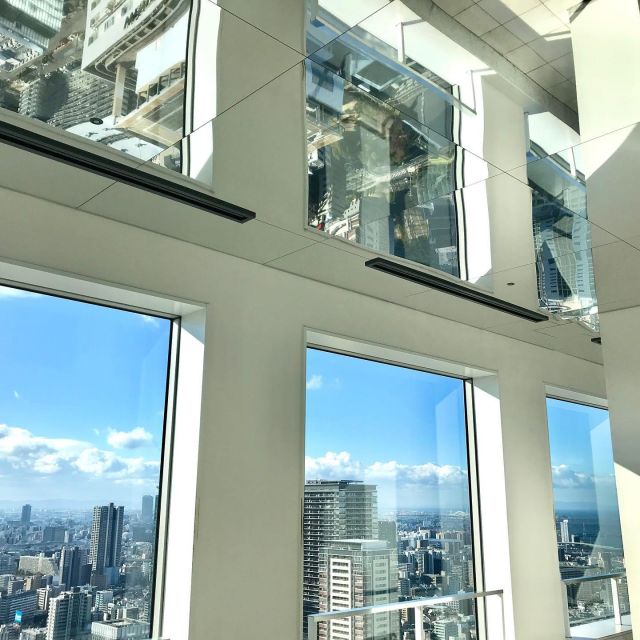
You are at the 40th-floor level, which means you can finally see how Osaka’s street plan, major routes, and district blocks relate to each other. On a clear day, the city stretches out cleanly. On a cloudy day, you may get less distance, but the viewpoints can still feel dramatic because you are above the everyday scale.
What makes this deck especially useful for first-time visitors is that it is not limited to one direction. You can:
- scan the city and find your bearings
- spot where your next neighborhood stop might fit
- frame photos without constantly turning your body at the same spot
The open-air elements and the viewing layout also help. You’ll see people moving between spots, and you can usually find a place that gives you a clear line rather than just standing in a single spot.
If you care about photography, the best advice is simple: arrive with a plan for your light. Sunset and just after sunset tend to be the sweet spot because daylight transitions into city glow. More on that below.


Sky Walk at night: the outdoor deck that changes the vibe
Night is where this building feels like a different attraction.
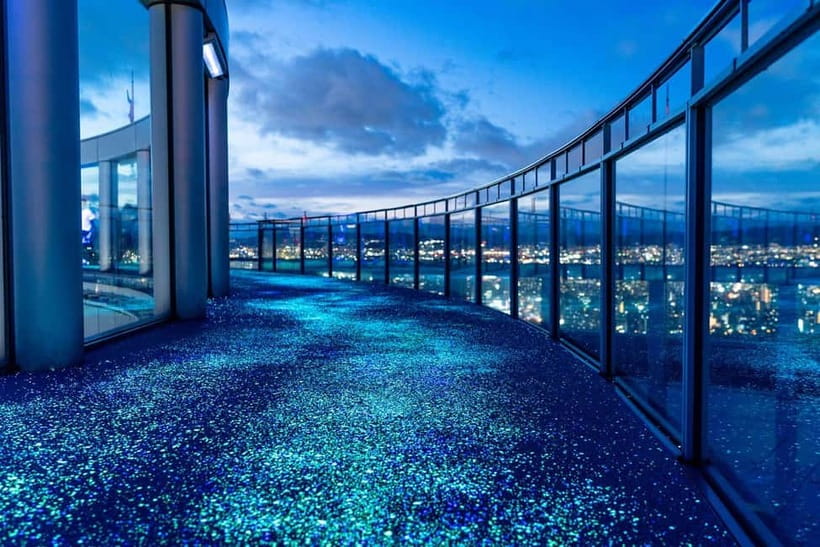
The highlight here is the Sky Walk and outdoor viewing experience. The “romantic night view” angle is real: Osaka’s lights spread outward, and the effect is that the city looks larger than it really is from street level.
There is also a fun visual detail underfoot. The outdoor area is known for a sparkly or glowing walkway effect. It’s the kind of small detail that makes your photos look less like generic skyline shots and more like you were actually on an experience-deck.
One more practical point: night can mean more waiting and more people hovering in the same spaces. If you want photos without constant shuffling, give yourself time. Do a first circuit quickly for the best wide angles, then return to the spots you like most.
When to go: day, sunset, and the late-hour trade-offs
You can visit during the 9:30 AM to 10:30 PM window, with last admission at 10:00 PM. That long schedule is a gift—use it wisely.
Here is how I’d think about timing:
- Daytime: best for clear structural views and understanding the city layout.
- Late afternoon to sunset: best all-around option for the day-to-night transition.
- Late evening: maximum sparkle, but expect thicker crowds and quicker pacing.
One thing to watch: if you go too close to the end of the line, you may feel like you are racing the clock. Since there is no re-entry, once you leave, you cannot come back to grab one more angle. So even if you arrive late, focus on doing the view rather than optimizing every minute.
If weather is part of your planning, note this: even if it’s raining, entry is allowed as usual. Just remember that rooftop access may be restricted in stormy weather, so your best plan is a clear-window assumption and a flexible backup.
Rules and small logistics that affect your comfort
This is where your visit can go smoothly—or annoyingly.
No food or drinks inside
You are not allowed to bring food and drinks into the observatory area. Food and drinks are not included in the ticket. That means you either plan to go without, or you use the on-site options.
Most people solve this by timing the visit around meals, then grabbing something after. A small cafe exists on-site, and you’ll find it a helpful way to take a break and warm up if the evening air feels sharp.
Luggage and lockers
There is no luggage storage inside the observatory. If you have bags, bring coin lockers into your plan. Coin lockers are available at specific locations, as your voucher guidance should indicate.
Re-entry isn’t permitted
Once you exit, you cannot re-enter. So decide how you want to split your time:
- first look: wide panorama
- second look: outdoor Sky Walk angles
- third look (if time): your favorite direction again
If you rush, you might miss the best outdoor views.
Smoking is off-limits
No smoking anywhere in the Kuchu Teien Observatory area, and there are no smoking areas there. It’s the kind of rule that keeps the deck more comfortable for everyone.
Accessibility and family practicality, in plain terms
If you use a wheelchair or have a stroller, this building is designed to be navigable, but you’ll want to follow the specific guidance. Wheelchair and stroller users are advised to take the high-rise elevator from the 1st floor of Tower East up to the 39th floor.
There are also nursing rooms on the 39th and 40th floors inside the observation deck area.
If your group includes kids: admission is for individuals aged 12 and above, while children 4 to 11 can enter. Kids 0 to 3 enter for free. That age rule matters, especially if you are calculating whether you need multiple tickets.
Best-fit for who this works for (and who should think twice)
This experience is a great fit if you want:
- one high-impact viewpoint in limited time
- easy navigation from major Osaka stations
- day-to-night options without locking yourself into a specific tour schedule
You might think twice if:
- you hate queues and elevators
- you only want a short stop and your group needs to move at different speeds
- you expect a fully hands-free, guided experience (this is ticket-entry focused)
If you are traveling solo, this is a smart “first orientation” stop. If you are with a friend or couple, night-time Sky Walk photos are a strong payoff.
Value check: is $12 a fair deal?
For the price, you are not paying for a multi-hour guided program. You are paying for height, visibility, and that 360-degree deck access.
Compared with paying for multiple smaller viewpoints, this can be the most efficient way to “get the picture” of Osaka. Even if an e-ticket does not drastically shorten the elevator wait, it still helps you arrive with less hassle and more control over your timing.
One more value angle: you can often adjust your visit based on your day. If Osaka is humid, crowded, or rainy, you can still go when it fits your schedule. And because you are not in a fixed tour group, you can spend more time where you want.
Should you book the Osaka Umeda Sky Building e-ticket?
Book it if your goal is simple: see Osaka from above, enjoy the night lights, and do it without complicated planning. The 40th-floor 360-degree views and the Sky Walk atmosphere are exactly the kind of payoff that justifies spending a small chunk of your time budget in Umeda.
Skip or wait on booking if you know your group will struggle with crowds and lines. This place gets busy, and the elevators are the bottleneck. If you prefer quiet viewing, go earlier in the evening, or plan for a longer time buffer.
FAQ
Where is the ticket counter for the Umeda Sky Building?
The ticket counter is on the 39th floor of the Umeda Sky Building, at 1-1-88 Oyodonaka, Kita-ku, Osaka 531-6039.
What are the business hours and last admission?
The business hours are 9:30 AM to 10:30 PM, and the last admission is 10:00 PM.
Do I need to bring a voucher or QR code?
Yes. Prepare your voucher in advance and have the provided QR code ready before entering.
How long is the validity of the ticket?
The ticket is valid for 1 day. You should check availability to see starting times.
Is the observatory wheelchair accessible?
Yes. The activity is wheelchair accessible, and wheelchair/stroller users are advised to take the high-rise elevator from the 1st floor of Tower East to the 39th floor.
Are food and drinks allowed inside?
No. Food and drinks are not allowed, and they are not included with the ticket.
Can I re-enter after I leave the observatory?
No. Re-entry is not permitted.
Is entry allowed in the rain?
Yes. Even if it’s raining, entry is allowed as usual, but rooftop access may be restricted in stormy weather.
Who can enter based on age?
Admission is for individuals aged 12 and above. Children aged 4 to 11 are welcome, and children aged 0 to 3 can enter for free.