REVIEW · OSAKA
Kyoto 1 Day Tour from Osaka
Book on Viator →Operated by JTB Global Marketing & Travel Inc. · Bookable on Viator
Kyoto in one long day, minus guesswork. This tour connects Osaka and Kyoto with JR rail and packs in the city’s biggest icons, including the Golden Pavilion. I like the simple flow: you move from stop to stop with admissions handled. I also like that you get built-in time for photos, gardens, and the old-street vibe near Kiyomizu-dera. One thing to consider: the group is often around 40, so hearing the guide can be tricky if the day gets crowded.
You meet in central Osaka at Hotel Granvia Osaka at 7:15am, then you’re back in the Osaka Station area around 6:30pm. It’s a long day, but it’s structured so you’re not spending your energy figuring out buses and tickets.
This is a smart pick if it’s your first time in Kyoto or you only have a single day. If you want to slow-walk every temple, wander off-grid, and linger for hours, you’ll likely feel rushed.
In This Review
- Key things to notice before you go
- Osaka to Kyoto: the 7:15am start, JR train, and how the day moves
- Nijo Castle: Tokugawa fortress drama with gold-leaf contrast
- Kinkaku-ji (Golden Pavilion): the gold look-and-feel everyone travels for
- Kyoto Imperial Palace: a timed look, plus swap days when it’s closed
- Fushimi Inari Taisha: vermilion torii and the short walk that adds up
- Sanjusangendo and Kiyomizu-dera: from 1,001 statues to panoramic terrace views
- Lunch and Kyoto Handicraft Center: the break that shapes the rest of your day
- Price, pacing, and the group-size trade-offs that affect your comfort
- Should you book this Kyoto 1 Day Tour from Osaka?
- FAQ
- How long is the Kyoto 1 day tour from Osaka?
- What time does the tour start and where do I meet?
- Which UNESCO World Heritage sites are included?
- What happens if Kyoto Imperial Palace is closed?
- What happens if Nijo Castle is closed?
- Is lunch included?
- What meal options are available for lunch?
- Are the JR train seats reserved?
- What time does the tour end, and do they drop you at your hotel?
- How big is the group?
Key things to notice before you go
- JR transfer with public, non-reserved seating so you should be ready for standing on busy days
- Three UNESCO power hitters: Nijo Castle, Kinkaku-ji, and Kiyomizu-dera
- Backup plans when big sites close (Nijo Castle, plus Kyoto Imperial Palace swaps)
- Sanjusangendo’s 1,001 statues is the kind of stop you can’t easily replicate on your own in one day
- Fushimi Inari Taisha starts with a walk from the parking area (about 15 minutes one-way)
- Lunch choice affects the meal type: Western set menu or Indian thali, with limited dietary options
Osaka to Kyoto: the 7:15am start, JR train, and how the day moves
The day begins at Hotel Granvia Osaka in Umeda (your pick-up point is right by public transit). You board a JR rapid service to Kyoto—fast, easy, and a real time-saver versus piecing everything together yourself. The tour uses public transportation with non-reserved seats, so on peak days you might not get a seat. That’s not a deal-breaker, but it’s good to know what kind of day you’re signing up for.
Once you arrive in Kyoto, you shift gears to an air-conditioned coach for the sightseeing blocks. The tour also includes an English-speaking guide/assistant on the outbound trip from Osaka to the Kyoto tour start area, and again on the way back from Kyoto Station to Osaka Station. In plain terms: you’re never totally on your own, even when the schedule gets busy.
The route is built around efficiency. Your stops are spaced so you can see a lot without spending hours in transit. The trade-off is simple: it’s not a slow, deep-study Kyoto day. It’s a hit-the-highlights day.
You can also read our reviews of more tours and experiences in Osaka
Nijo Castle: Tokugawa fortress drama with gold-leaf contrast
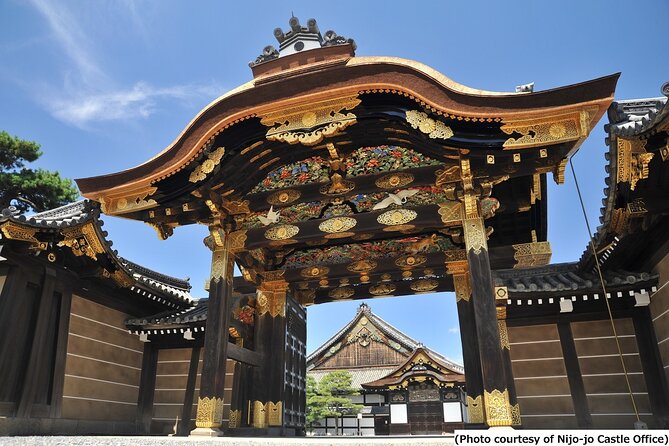
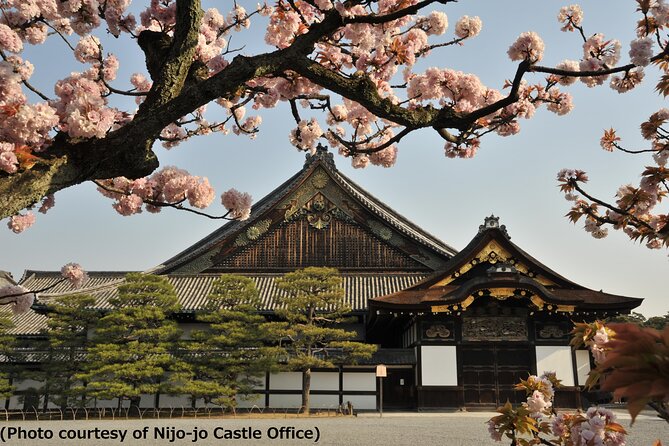
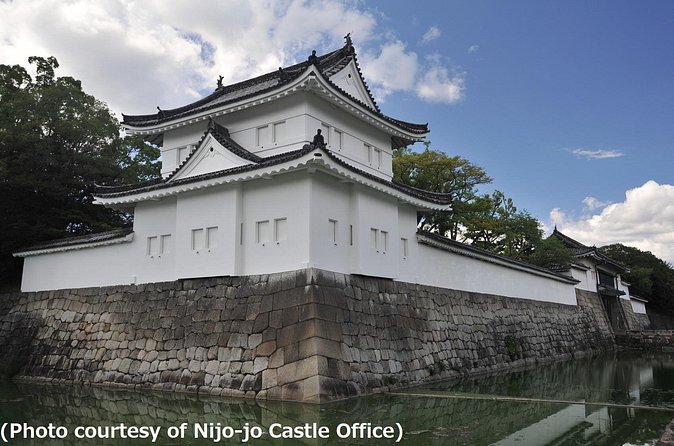
Nijo Castle is your first major UNESCO stop, and it’s a great way to wake up your brain. The castle complex dates to the early Tokugawa era, completed in 1626, and it was built as lodging for the shogun with Kyoto Imperial Palace as the political backdrop. Expect strong, fortress-like visuals outside, then a very different feeling inside.
You get about 50 minutes, with the admission included. The core experience is the contrast: sturdy gates and stone walls around a place that uses lavish decoration once you’re inside. The gardens around the castle are also worth your time if you want a calmer moment before the next temple scramble.
One practical note: Nijo Castle closes on Tuesdays in January, July, August, and December. If that happens, the tour swaps in Ryoan-ji Temple instead. In other words, you’re not left with an empty time slot—the plan adapts.
Kinkaku-ji (Golden Pavilion): the gold look-and-feel everyone travels for
Then comes Kinkaku-ji, the Golden Pavilion, another UNESCO site and the photo stop that usually steals the show. You get about 45 minutes here, including admission. The structure is wooden and covered in thin layers of pure gold, and it sits beside a pond that can make reflections part of the magic.
The key isn’t just taking one picture from one angle. Give yourself a little patience to look, shift position, and compare what the pond and garden setting do to the light. This is where timing can matter: on clear days the gold effect looks sharper; on gray days the contrast can feel more subdued, still beautiful, just less dramatic.
If the day is busy, you’ll move through quickly. But because the visit is compact and iconic, you still come away with that clear Kyoto feeling—imperial-era style with a garden setting that feels designed for lingering.
Kyoto Imperial Palace: a timed look, plus swap days when it’s closed

Kyoto Imperial Palace is one of the more “formal” stops on this route, and it’s a good counterweight to the temple energy. Your time here is around 40 minutes, and the admission is listed as free.
Here’s the catch: the palace can be closed to visitors on Mondays (and the following day if Monday is a holiday), plus days tied to Imperial Household Agency events. If that happens, your tour doesn’t cancel the stop—it swaps it. The alternate is Kitano Tenmangu Shrine. And if the closure falls on the 25th, the tour instead visits Nishi Hongan-ji Temple.
So what do you actually get? When it’s open, you’ll tour opulent areas used as the emperor’s residence until about the 19th century. When it’s closed, you pivot to a shrine visit instead. Either way, the stop is structured enough that you won’t waste the day waiting for access.
Fushimi Inari Taisha: vermilion torii and the short walk that adds up
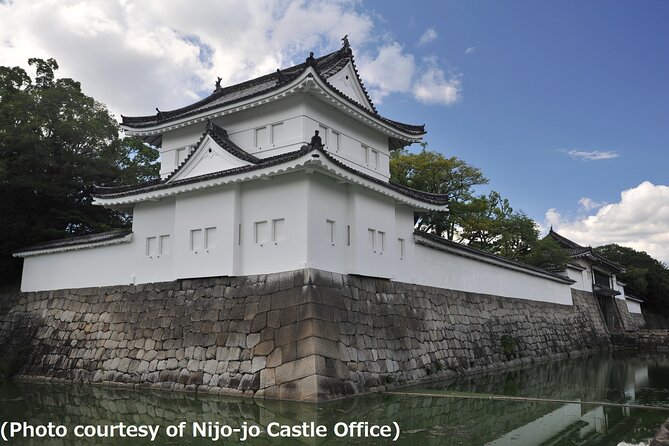
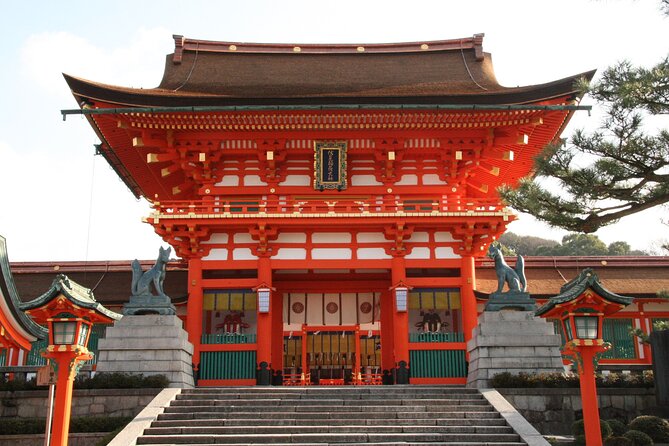
Fushimi Inari Taisha is the stop that turns Kyoto into a visual map. You’ll see the head shrine for thousands of inari-jinja across Japan, and the headline attraction is the red Senbon Torii gates. Your time here is about 30 minutes, and there’s no admission ticket cost listed for this stop.
One practical detail: you’ll walk from the parking area to Fushimi Inari Taisha (about 15 minutes one-way). That means your 30 minutes on-site can feel shorter if you’re trying to do photos, quick exploring, and picture-catching all at once.
The best advice is to decide what you want from this stop. If you want the full tunnel effect, plan to move steadily and accept that you won’t have time for a long hike up. If you just want the atmosphere and the big gate views, you can keep it casual and still get excellent photos—especially if you catch the late light when the torii walls look deeper.


Sanjusangendo and Kiyomizu-dera: from 1,001 statues to panoramic terrace views
This is where the tour goes from “icon” to “wow, I can’t believe that’s real.”
First up is Sanjusangendo Hall. This stop is about 30 minutes with admission included. The hall is described as Japan’s longest wooden structure and it houses 1,001 life-size statues of Buddhist Kannon deities from the 13th century. The feeling here is repetition plus scale: rows of statues that look almost unreal once you’re standing in front of them. It’s a very different kind of temple experience than the open-air torii and gardens earlier in the day.
Then you move to Kiyomizu-dera, with about 1 hour 10 minutes and admission included. Kiyomizu-dera is UNESCO-listed, and the views from the terrace are a big part of why people come. Add in the temple’s sweeping outlook over Kyoto, plus the historic shopping lane that leads toward it, and you get the best mix of temples and street energy in one stop.
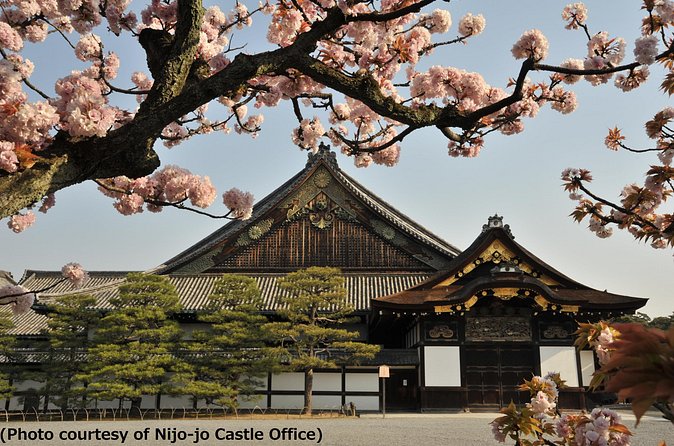
Kiyomizu-dera also connects to seasonal photo timing. The tour highlights chances to photograph cherry and maple trees, which makes sense here since the area is known for seasonal color and classic Kyoto viewpoints.
Important reality: this is a long day. Between Sanjusangendo’s indoor intensity and Kiyomizu-dera’s outdoor walking, you’ll want comfortable shoes. You’re not just touring—you’re also keeping your energy steady through multiple concentrated sights.
Lunch and Kyoto Handicraft Center: the break that shapes the rest of your day
Lunch depends on which option you pick. The tour is flexible, but the details matter.
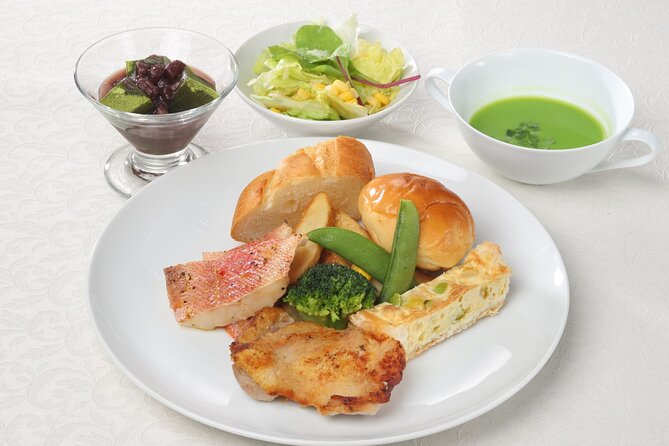
- If you choose With Lunch, you’ll get a Japanese-style lunch. The default is described as a Western-style set menu (unless you chose the Indian option).
- If you select Indian Thali Lunch, you’ll get a vegetarian thali set menu: multiple curries, vegetable pakora, yogurt, naan or roti, rice, salad, and a non-alcoholic drink.
- If you book No Lunch, you’ll have free time to eat on your own in the Kyoto Station area.
Dietary notes are clear and a little strict: for the Western set menu, vegetarian needs must be requested in advance. Halal, gluten-free, and other meal requests aren’t available. Also, lunch areas are separate depending on whether you choose Western or Indian—so you can’t switch on the day.
After lunch, you’ll browse goods at the Kyoto Handicraft Center. This is your souvenir chance without derailing your schedule. It’s also a nice palate cleanser between temples: instead of cameras and crowds, you get crafts, objects, and time to shop at your own pace.
Price, pacing, and the group-size trade-offs that affect your comfort
At $183.93 per person (for an around 11-hour day), you’re paying for more than sightseeing. Your price includes transport costs and admission fees, plus the English interpreter/guide fees and an air-conditioned bus. For a one-day route that hits multiple UNESCO sites, that package can be good value—especially if you don’t want to manage tickets, routing, and timing all day.
But you do trade comfort for coverage.
The tour size can be up to 40 people, and that shows up most in two ways: hearing the guide and the flow between stops. Some people love the steady commentary; others find it hard to catch details in busier moments. If you’re the type who wants to ask lots of questions or hear every word, plan to position yourself closer to the front when the guide is speaking.
Pacing is another trade-off. Each stop is given a set time window, which makes this a great “see a lot” day—but not a “linger for hours” day. If you’re the kind of person who loves one temple so much you want to sit and re-watch it in different light, you may feel the time pressure.
Weather can also change the vibe. If it’s pouring, temples and streets feel heavier, and the day can feel less fun even when the sights are amazing. On disrupted days, the plan may shorten.
So the real question is simple: do you want the convenience of a tight circuit, or do you want Kyoto at a slower pace with more freedom?
Should you book this Kyoto 1 Day Tour from Osaka?
I’d book this tour if you have a short Kyoto window, want maximum highlights, and prefer having logistics handled: JR transfer, coach rides, admissions, and guided routing. It’s also a strong choice if you enjoy classic Kyoto photo stops like Fushimi Inari and want a structured shot at Kinkaku-ji and Kiyomizu-dera in the same day.
I’d think twice if you’re hard to please with schedule pressure, you need a lot of time inside each site, or you’re sensitive to crowds and loud environments. This day is long, walking adds up, and you won’t have hotel drop-off at the end—your return is around Osaka Station, so you’ll handle the last bit on your own.
FAQ
How long is the Kyoto 1 day tour from Osaka?
It runs about 11 hours.
What time does the tour start and where do I meet?
You start at 7:15am at Hotel Granvia Osaka (3-chōme-1-1 Umeda, Kita Ward).
Which UNESCO World Heritage sites are included?
The tour includes Nijo Castle, Kinkaku-ji (Golden Pavilion), and Kiyomizu-dera.
What happens if Kyoto Imperial Palace is closed?
The tour visits Kitano Tenmangu Shrine instead. If the closure day falls on the 25th, the tour visits Nishi Hongan-ji Temple.
What happens if Nijo Castle is closed?
If it’s closed (noted for certain Tuesday dates in January, July, August, and December), the tour visits Ryoan-ji Temple instead.
Is lunch included?
Lunch is included only if you select the With Lunch option. If you choose No Lunch, you’ll have free time to eat around Kyoto Station.
What meal options are available for lunch?
With lunch, you can choose a Western-style set menu or an Indian vegetarian thali option. Vegetarian needs for the Western set must be requested in advance.
Are the JR train seats reserved?
No. The tour uses public transportation with non-reserved seats, so seating isn’t guaranteed.
What time does the tour end, and do they drop you at your hotel?
The tour ends around 6:30pm at Osaka Station. There is no hotel drop-off.
How big is the group?
This tour has a maximum of 40 travelers.
If you want, tell me your travel month and whether you’re aiming for cherry blossoms or autumn leaves, and I’ll suggest how to plan your one-day Kyoto priorities around that.