REVIEW · OSAKA
Osaka/Kyoto: Hiroshima Miyajima Bus Tour & Shinkansen Ticket
Book on GetYourGuide →Operated by H.I.S. Co Ltd(TIC) · Bookable on GetYourGuide
Atomic Hiroshima and Miyajima in one long day. This day trip stacks Hiroshima’s Peace Memorial with the scenic calm of Miyajima, so your emotions actually have room to shift. I like that the pace is structured—train, bus, short visits, then free time—so you’re not wasting your trip figuring out how to connect everything.
I also really like the included shinkansen round trip plus guided support in English, since Hiroshima is the kind of place where good explanations change what you see. One thing to watch: it’s a full 12 hours with a lot of walking, and the schedule gives the Peace Museum and Dome only limited time.
In This Review
- Key highlights worth planning around
- Why Hiroshima + Miyajima as a one-day plan actually works
- Shinkansen and air-conditioned bus: the low-stress backbone
- Hiroshima Peace Memorial Park: Dome first, then the museum
- Hiroshima okonomiyaki lunch: practical, filling, and with real choices
- Ferry to Miyajima: a calm-water pause you’ll feel
- Itsukushima Shrine and 1 hour of Miyajima free time
- Walking pace, earphones, and luggage: the stuff that matters at 12 hours
- Price and value: what $277 is really buying
- Should you book this Osaka/Kyoto to Hiroshima and Miyajima tour?
- FAQ
- What are the starting locations for this tour?
- How long is the tour?
- Does the price include the shinkansen train tickets?
- Is lunch included, and what is it?
- Are there pork-free or allergy-friendly lunch options?
- Do I get to ride a ferry on the way to Miyajima?
- How long do I spend at Itsukushima Shrine and Miyajima?
- Is the tour guided, and is there an English option?
- What happens if Hiroshima Peace Memorial Museum is closed?
Key highlights worth planning around
- Guided Peace Park stops that keep the story clear, from the Dome to the Peace Memorial Museum.
- Shinkansen tickets delivered with the group, so you can avoid ticket-hunting stress.
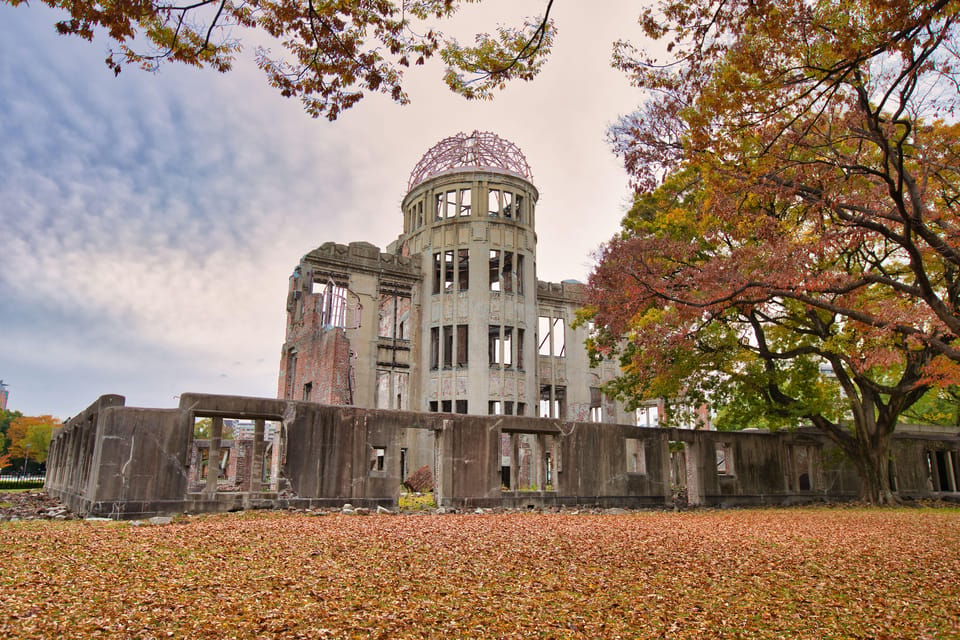
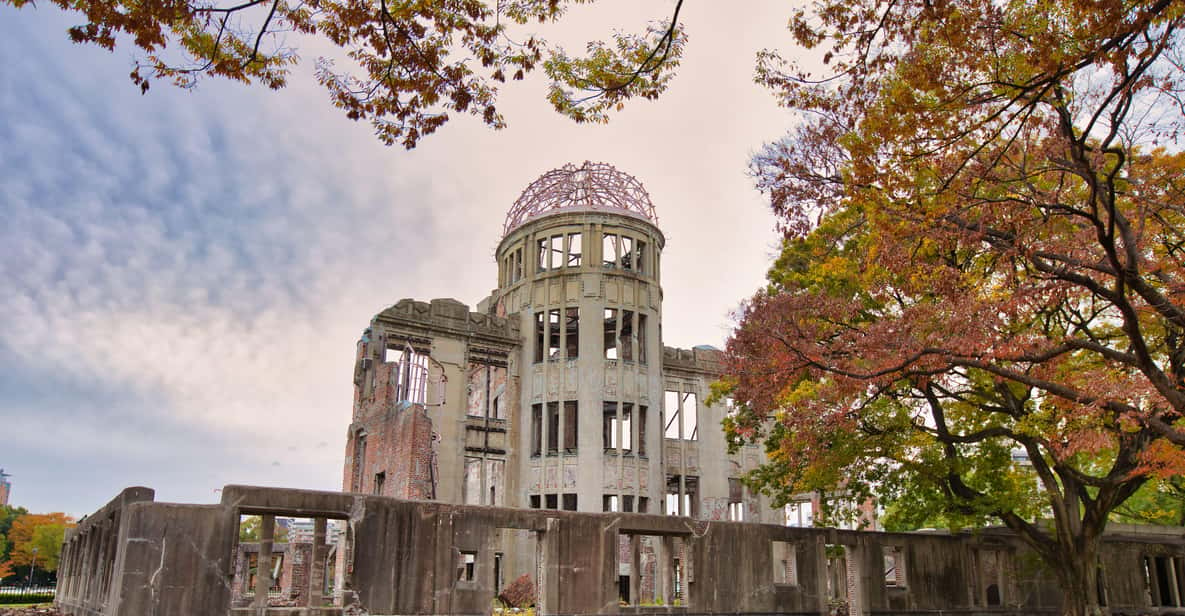
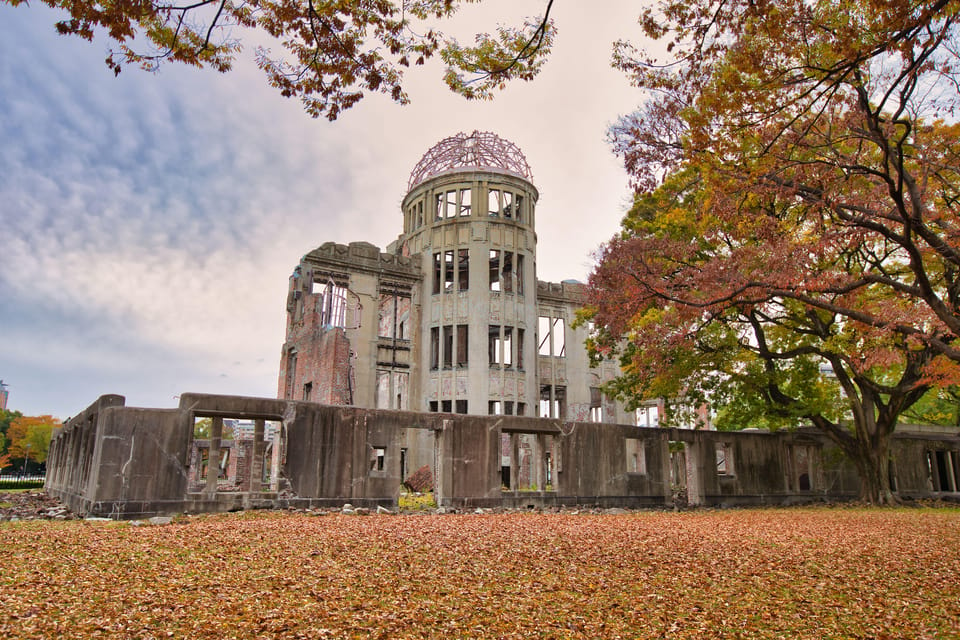
- Atomic Bomb Dome viewing time is short but focused, with time to feel what the site looks like today.
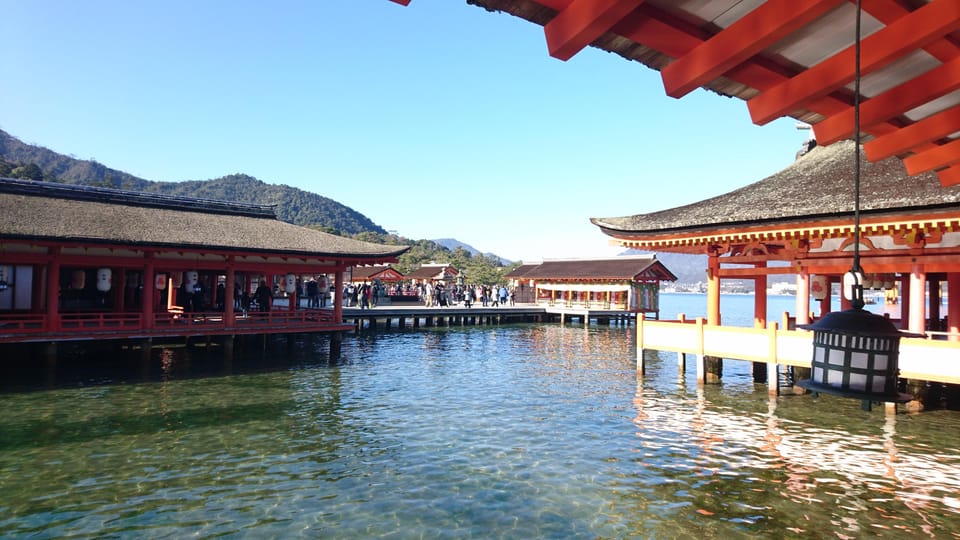
- Itsukushima Shrine on the water, then a real 1-hour free block on Miyajima.
- Hiroshima okonomiyaki lunch with options, including pork-free versions if you book ahead.
- Earphone guides during the walk, plus staff guidance on moving between stops.
Why Hiroshima + Miyajima as a one-day plan actually works
This tour is built for people who want the big Hiroshima moments without giving Hiroshima a full multi-day commitment. The sequence matters: you hit the Peace Memorial first, with the Atomic Bomb Dome and the museum, and then you travel on to Miyajima for Itsukushima Shrine. That shift is not random. It gives you time for the day to breathe, so you’re not stuck only with heaviness from morning to night.
Also, the itinerary is designed around “human scale” stops. You don’t just pass by. You get dedicated time at the Dome, then a full hour at the museum, then you move on. You’ll feel the crowd levels at the museum, but you’re still guided through the core sites that most visitors come for.
The value here is not that you see every square meter. It’s that you get the main emotional and cultural beats with transportation solved. If you’re short on time and hate logistical juggling, this format is a good fit.
You can also read our reviews of more tours and experiences in Osaka
Shinkansen and air-conditioned bus: the low-stress backbone
You start from either Kyoto Station or Shin-Osaka Station, then get a round-trip shinkansen ticket as part of the package. The train ride is about 1.5 hours each way. That’s the main advantage: you skip the slow, complicated parts of getting to Hiroshima and back.
Once you arrive, your day shifts onto a tour bus. It handles the in-city hops between places like the Peace Memorial area, lunch, and the route toward the ferry. You even pass Hiroshima Castle during the scenic drive, though it’s a pass-by rather than a stop.
A helpful detail: staff provide your round-trip shinkansen tickets at the meeting point, and your English guide coordinates the group from platform to coach to ferry. In real life, that kind of organization is what keeps a long day from turning into confusion.
You’re with other guests the whole time. This is not a private tour, so expect a group rhythm and meeting points at each transition.
Hiroshima Peace Memorial Park: Dome first, then the museum
The day’s emotional center is the Atomic Bomb Dome area in Peace Memorial Park. First comes a visit to the Atomic Bomb Dome with about 30 minutes on site. You’ll see the derelict structure with the now-famous blown-out windows and the way history remains physically present. That short window is intentional, because the Dome hits hard even without a long “wander” time.
From there, you go to the Hiroshima Peace Memorial Museum for about 1 hour. The museum is often crowded, and it can feel like you’re moving through more quickly than you’d like—especially if you’re the type who wants to read everything at a slower pace. Still, one hour is enough to take in the major messages and connect what you saw outside to what the museum explains.
The guide’s role is big here. Many tours’ guides bring the history with compassion and clear context, so you’re not staring at plaques alone. You also get earphone guide support, which matters when the park and museum get busy.
If the museum happens to be closed, the plan swaps to Hiroshima National Peace Memorial Hall for the Atomic Bomb Victims (the closure windows listed are Dec 30–31 and Feb 16–21).
Hiroshima okonomiyaki lunch: practical, filling, and with real choices
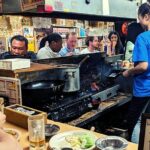
Lunch is Hiroshima-style okonomiyaki at a local restaurant, served with pork, cabbage, bean sprouts, fish powder, noodles, and egg in the included standard option. The meal is about 45 minutes, which is a decent reset after the walking in the Peace Memorial area.
What I like is that the tour offers booked-in options rather than last-minute guesswork. There are specific menu choices:
- regular okonomiyaki (with pork and egg as listed)
- no pork with eggs
- no pork, no fish powder, no eggs
If you have allergies or dietary restrictions, you need to tell the operator when you book. The day-of menu change isn’t supported. On top of that, you should plan to follow the restaurant rule of no outside food or drinks.
In practice, guides often help the group through ordering and timing, and some tours handle dietary needs with separate mixes or grill/sauce handling. The key takeaway for you: treat lunch like part of the schedule, not an open-ended hunt for food. If you go in hungry and follow their instructions, you’ll come out satisfied without losing time.
Ferry to Miyajima: a calm-water pause you’ll feel
After lunch and more bus time, you catch a short ferry ride (about 10 minutes) to Miyajima Island. This is one of those “small break, big effect” moments in the day. Peace Memorial Park is dense and intense. Then the ferry brings you across calm water, and the atmosphere shifts fast.
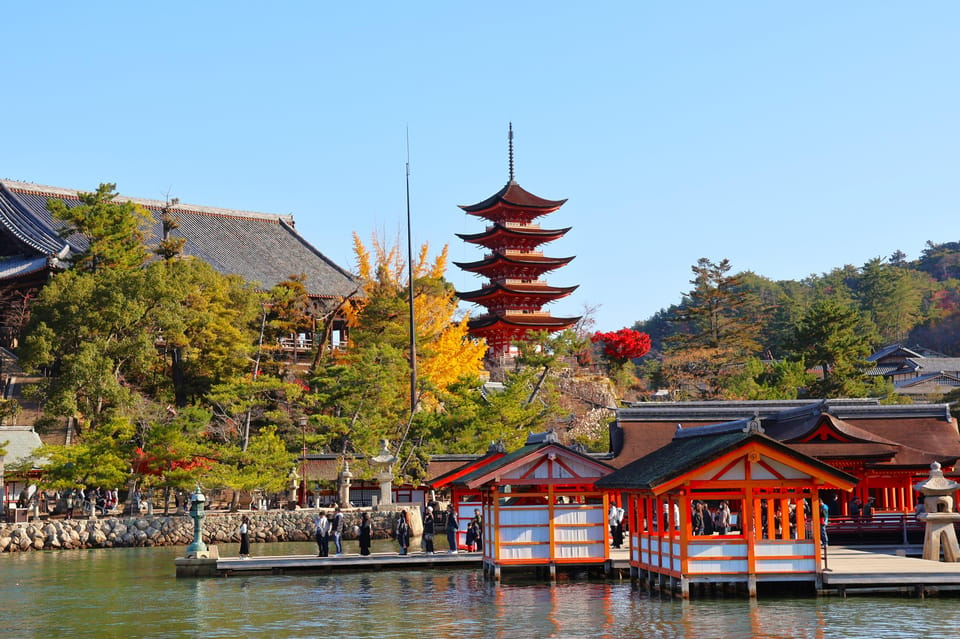
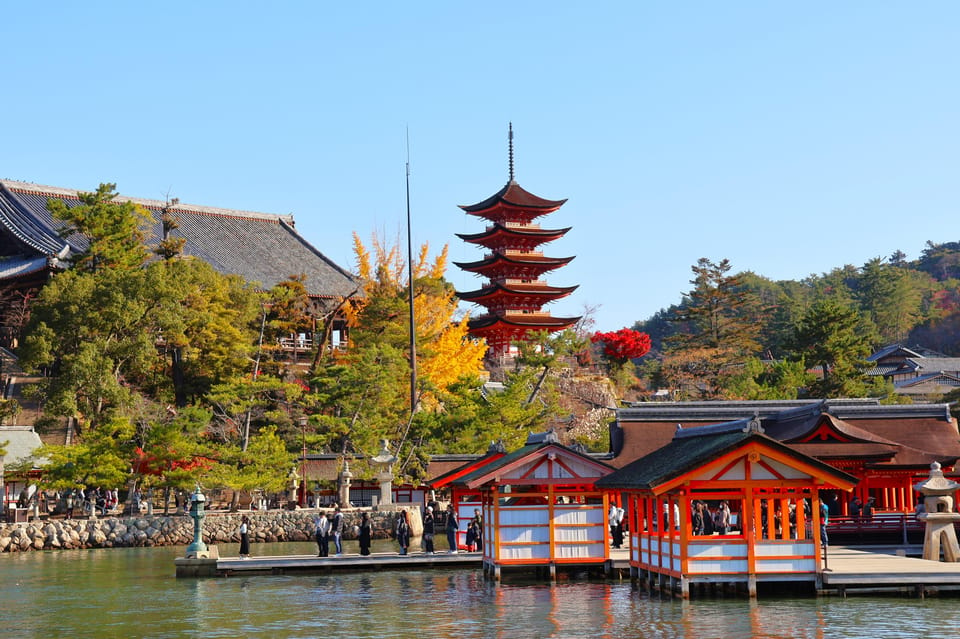
Miyajima’s most famous icon is Itsukushima Shrine, and the timing is built around getting to that area and making it your next big stop. The ferry is also your buffer: it helps break up a long day so you’re not constantly on the move.
Even if you’re not a ferry person, take advantage of the few minutes of open air and views. This is where the day stops being only about history and becomes about place—the island’s mood, the water, and the sense that you’ve arrived somewhere that feels different from the city.


Itsukushima Shrine and 1 hour of Miyajima free time
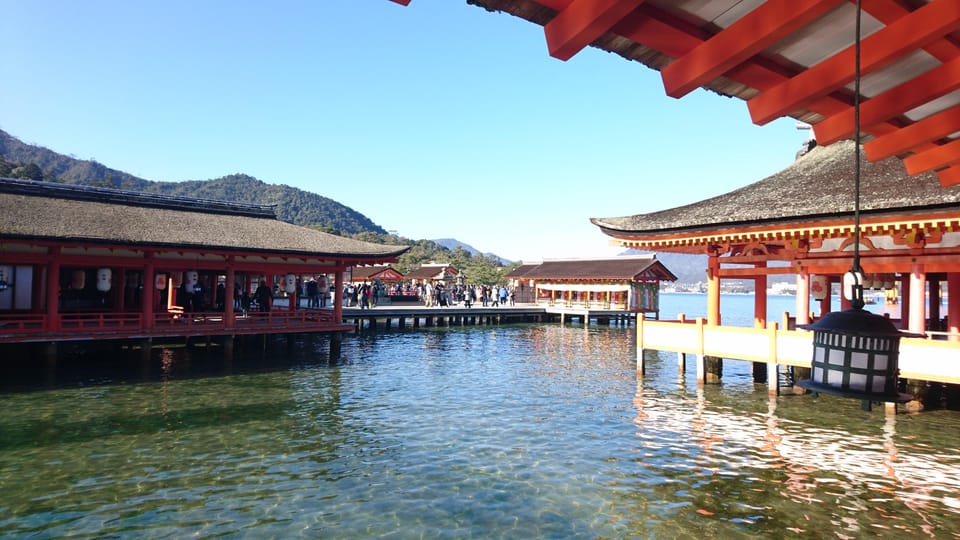
The guided stop at Itsukushima Shrine is about 1 hour, with entry included. This is where the tour pays off visually. You see the sacred waterfront setting and the classic shrine experience people travel for, including the famous torii-style icon. Your guide also helps you make sense of what you’re looking at, which is useful because Miyajima is full of small details.
Then you get about 1 hour of free time on Miyajima. That hour is not enough for every temple, shop, and hillside walk, but it is enough to do something meaningful. If you like wandering, you can shop for local treats, find a viewpoint, and just absorb the island vibe.
I’d plan your free time with intention. Many people prioritize the shrine approach and nearby sights, while others use the hour to take a short hike and look for pagodas or temples further in. If you try to do everything, you’ll feel rushed.
Also note the real-world factor: Miyajima can be crowded. The tour keeps you moving as a group, then gives you just enough independence to enjoy without getting stressed.
Walking pace, earphones, and luggage: the stuff that matters at 12 hours
This tour involves a lot of walking, so it’s not ideal if you struggle with mobility. Wheelchair users aren’t accommodated. If you’re unsure, treat that warning seriously.
You’ll also use provided earphone guides during the tour. They’re for your convenience, but you’re expected to return them after use. If something happens—loss or damage—you may be asked to cover a replacement fee up to 18,000 yen.
Another practical win: you can store luggage in the bus luggage compartment during the day. That helps keep your hands free for walking and helps you avoid dragging bags through busy stations and crowded sites.
A small planning tip: wear shoes you can walk in comfortably for extended periods. Most of the day is not “sit and enjoy.” Even when you’re waiting for transport, you’re usually moving between points, buying nothing, then walking again.
Price and value: what $277 is really buying
At $277 per person, you’re paying for speed and certainty. The biggest pieces included are:
- round-trip shinkansen tickets from Osaka or Kyoto
- round-trip bus transport (air-conditioned)
- Miyajima ferry
- entry tickets to Itsukushima Shrine and the Hiroshima Peace Memorial Museum
- a local English guide and earphone guidance
- Hiroshima okonomiyaki lunch
If you tried to DIY this, the “hidden costs” add up fast: shinkansen timing, getting everyone to the right places, ferry connections, entrance tickets, and the time your day loses to navigation. This tour basically buys you a schedule where those decisions are made for you.
Is it perfect value for everyone? Not if you want more time in the museum or the Dome. There are comments that the museum can feel crowded and the visit window is limited. But for most people doing Hiroshima as a single day, the trade-off is reasonable: you get guided access to the core sites without blowing your whole trip.
The value is strongest if you want an organized, emotionally guided day with major sights and a real food stop.
Should you book this Osaka/Kyoto to Hiroshima and Miyajima tour?
Book it if:
- you want the Atomic Bomb Dome + Peace Memorial Museum and Itsukushima Shrine in one day
- you like having an English guide to explain the context as you go
- you’re short on time and want transportation handled end to end
- you’re okay with a long day and a lot of walking
Skip it if:
- you can’t comfortably handle long walking segments
- you need deep, slow time in the Peace Museum or you want to linger much longer at the Dome
- you use a wheelchair (not accommodated)
If you fall in the “short on time but want the main experiences” category, this is a strong choice. The shinkansen removes stress, the guided stops keep you oriented, and the Miyajima free hour gives you room to remember the day for more than just its solemn sites.
FAQ
What are the starting locations for this tour?
You can start from either Shin-Osaka Station or Kyoto Station.
How long is the tour?
The total duration is about 12 hours.
Does the price include the shinkansen train tickets?
Yes. Round-trip shinkansen tickets from Kyoto or Osaka are included.
Is lunch included, and what is it?
Lunch is included and is Hiroshima-style okonomiyaki.
Are there pork-free or allergy-friendly lunch options?
Yes. There are options for no pork with eggs, and no pork with no fish powder and no eggs. You must inform the operator in advance about allergies or dietary restrictions.
Do I get to ride a ferry on the way to Miyajima?
Yes. Round-trip ferry rides between Hiroshima and Miyajima are included.
How long do I spend at Itsukushima Shrine and Miyajima?
Itsukushima Shrine is about 1 hour, and Miyajima free time is about 1 hour.
Is the tour guided, and is there an English option?
Yes. The tour includes a live English-speaking guide, and earphone guides are provided.
What happens if Hiroshima Peace Memorial Museum is closed?
If it is closed, the tour will visit Hiroshima National Peace Memorial Hall for the Atomic Bomb Victims instead. The listed closure periods are Dec 30–31 and Feb 16–21.