REVIEW · OSAKA
Kyoto and Nara Day Trip from Osaka
Book on Viator →Operated by JTB Global Marketing & Travel Inc. · Bookable on Viator
One day, two ancient capitals, zero guesswork. This full-day tour strings together Kyoto and Nara with a professional English-speaking guide, so you can see the big-hitters fast via the Shinkansen.
I especially like how each stop is a “no-doubt” landmark: Nijō Castle for shogun-era power, then Kinkaku-ji (Golden Pavilion) for that iconic gold facade. You get just enough context to make the sights click, without needing to plan every train and entrance.
The main drawback is time pressure. Site visits are short, and you’re on non-reserved train seating—so if you hate rushing or prefer lots of quiet wandering, this may feel a bit hectic.
In This Review
- Key things to know before you go
- What $198 buys: fast trains, paid entries, and a guided timeline
- Meeting points and the rhythm of the day (it starts early)
- Kyoto first: Nijō Castle and the shogun-meets-palace vibe
- Golden Pavilion: Kinkaku-ji in real time (and yes, it’s crowded)
- Kyoto Imperial Palace stop: what to do when it’s closed
- Nara basics: Kasuga Grand Shrine and a deer-backed fairy tale
- Todai-ji Temple: the Great Buddha and the sheer scale effect
- The ride back to Osaka: smooth, but plan your last hop
- Lunch options: included is convenient, but quality varies
- What makes this tour worth it (and what makes it risky)
- You’ll probably love it if:
- You might feel let down if:
- Practical tips to make this day trip feel smoother
- Should you book Kyoto and Nara from Osaka?
- FAQ
- How long is the Kyoto and Nara day trip from Osaka?
- Where do I meet the guide in Osaka?
- Is lunch included?
- Are train seats reserved?
- What happens if Kyoto Imperial Palace is closed?
- Where does the tour end?
Key things to know before you go
- You’ll pack World Heritage hits into one day without trying to DIY the route from Osaka
- Guides like Momo, Hatchi, and KC are repeatedly praised for keeping the group moving and explaining what matters
- Plan for short stop times at each main attraction, especially in Kyoto
- The Imperial Palace stop can change (Kitano Tenmangu Shrine or another alternative may replace it)
- Lunch depends on the option you pick, and the “included” meals aren’t all equally loved
- No hotel drop-off in Osaka: the tour ends at Osaka-Namba Station around 6:30pm
What $198 buys: fast trains, paid entries, and a guided timeline
At about $198 per person, you’re paying for three things that are hard to recreate when you’re traveling solo: time savings, transit help, and tickets handled for you. The tour includes admission fees plus transportation costs, and it uses public transit with non-reserved seat Shinkansen rides.
If you were to plan this yourself, you’d still spend money on trains and entrances. The difference is you’d also spend time figuring out the best order and where to queue. This tour trades flexibility for momentum, which is a good deal when you’re only in the Kansai region for a day.
Group size matters too. The max group is listed as 40 travelers, which is big enough to feel “organized chaos” at peak sites, but small enough that the day usually doesn’t turn into a zoo.
You can also read our reviews of more tours and experiences in Osaka
Meeting points and the rhythm of the day (it starts early)
You meet at Hotel Granvia Osaka (Umeda) at 7:15am. That early start is the whole trick. By the time you reach Kyoto and then Nara, you still have daylight for photos and temple time.
A typical flow looks like this:
- Train from Osaka area toward Kyoto (seats are not reserved on public transport)
- Walk to the Sunrise Tours Desk in Kyoto Avanti (B1F) for the next leg
- Bus connections between Kyoto stops
- Then Nara in the afternoon
- Return to Osaka by Kintetsu, arriving at Osaka-Namba Station around 6:30pm
- No drop-off back to your hotel, so you’ll do the last hop on your own
This is a tour where you should be ready to stand in lines, follow the group, and move when the guide signals. You’ll have chances to look around, but you won’t get long, slow “sit and soak it in” breaks at every stop.
Kyoto first: Nijō Castle and the shogun-meets-palace vibe
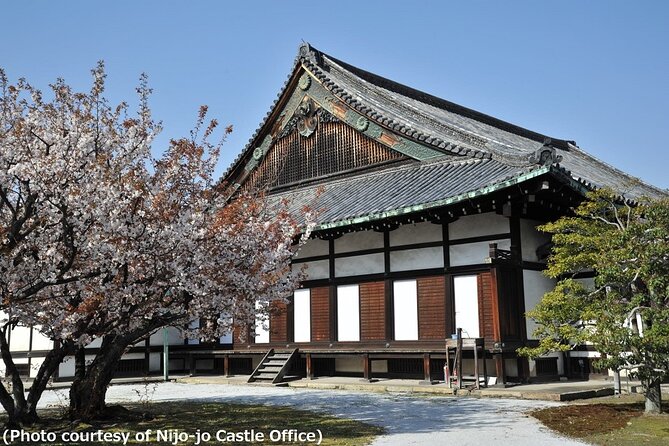
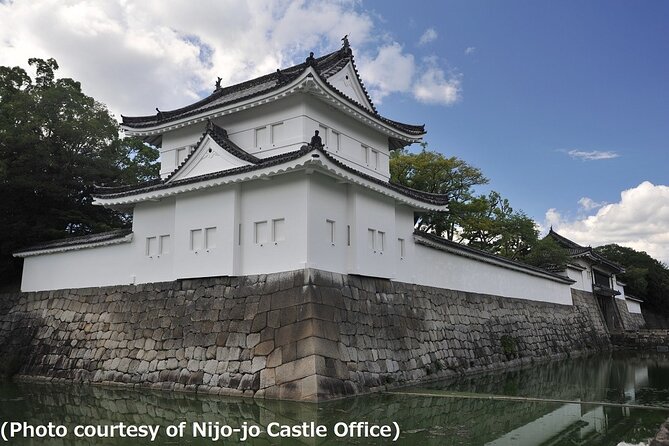
The day’s Kyoto anchor is Nijō Castle (completed in 1626). It’s famous as a World Heritage site and for what it was built to do: provide lodging for the Tokugawa shogun and help reinforce the power linked to Kyoto’s imperial presence.
Why it works on a day trip: it’s structured. You can see the layout, understand the symbolism, and still feel like you covered something substantial even with a tight schedule. The tour time here is about 50 minutes, and ticket entry is included.
The realistic downside: castle tours in general move fast, and this one is designed to fit multiple stops. One room at a time, short explanations, and then onward. If your favorite style of travel is slow exploration with questions, you’ll probably feel the clock.
Important swap: Nijō Castle is closed on Tuesdays in January, July, August, and December. If that happens, the tour visits Ryoan-ji instead. That replacement keeps you in temple/garden territory, but it’s not a like-for-like substitute for the castle experience.
Golden Pavilion: Kinkaku-ji in real time (and yes, it’s crowded)
Next up is Kinkaku-ji (Golden Pavilion), another World Heritage site. The tour time is about 45 minutes, and admission is included.
The appeal is obvious the moment you see it. The wooden architecture is covered in thin layers of pure gold and set beside a pond. It’s not just a building; it’s the way the gold looks against the water and the garden scene.
A practical note for your expectations: this is one of the most famous spots in Kyoto. Expect company—especially around school trip season. Even with a guided stop, you may get limited time to step back for photos, since the crowd flow can be tight.
Kyoto Imperial Palace stop: what to do when it’s closed
After Kinkaku-ji, the tour goes to Kyoto Imperial Palace. The scheduled time is about 40 minutes, and admission is free (per the tour description).
This stop helps you understand how Japan’s imperial system shaped architecture and space—how “simple” Japanese design can still feel ceremonial and powerful. The tour also includes explanation about the emperor who used to reside there.
The catch is closure rules. The Imperial Palace is closed to visitors on:
- Mondays (and the following day if Monday is a holiday)
- Days with an Imperial Household Agency event
If it’s closed, the tour visits Kitano Tenmangu Shrine instead. If the closed day is the 25th, the alternative is Nishi Hongan-ji Temple.
So if Kyoto Imperial Palace is your top must-see, check your tour date and don’t assume you’ll always get it.



Nara basics: Kasuga Grand Shrine and a deer-backed fairy tale
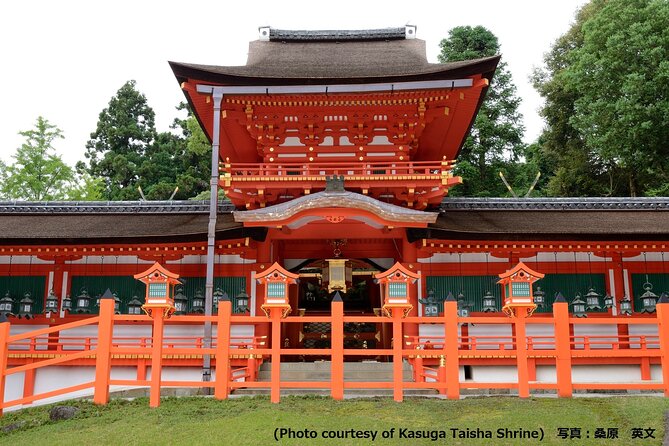
Nara is where the day shifts from palace power to spiritual calm. The first major Nara stop is Kasuga Grand Shrine (Kasuga Taisha), a World Heritage site.
This place ties into local legend in a very visual way: the deer of Nara Park are considered messengers for the shrine. If you haven’t been to Nara Park yet, you’ll feel like you’re stepping into that story early.
The tour includes about 1 hour here and includes ticket entry. The tour also enters the Main Sanctuary special visit area. If operational circumstances prevent entry, the tour visits either the Kasuga Taisha Museum or Todaiji Museum instead.
Real-world expectation: the timing helps you avoid some of the heaviest chaos, but Kasuga and Todai-ji both can be busy. The guide keeps things moving, so you’ll want to be ready for a bit of walking and group regrouping.
Todai-ji Temple: the Great Buddha and the sheer scale effect
The final and longest temple moment is Todai-ji Temple, with a scheduled time of about 1 hour 10 minutes and ticket entry included.
Todai-ji is a symbol of the Nara Period and one of the world’s largest wooden structures. The main hall houses the bronze Great Buddha, and even without deep architecture knowledge, the scale lands in a big way.
This is a spot where you benefit from guided interpretation. You don’t need to memorize dates, but you do want help understanding what you’re seeing and why it mattered. In a day trip, this is where the guide’s job is most valuable: converting big visuals into meaning.
The ride back to Osaka: smooth, but plan your last hop
You return to Osaka by Kintetsu Railway with non-reserved seats. The tour description says an assistant from Kintetsu Nara Station to Osaka Namba Station helps you with your transfer, but once you’re at Osaka-Namba, you’re on your own.
Timing lands around 6:30pm. That’s late enough that you’ll want a simple dinner plan near Namba, not something across town. Also, be ready for the “station reality” problem. Osaka stations are huge, and underground wayfinding can be confusing.
One review complaint in particular was about getting back to hotels near Granvia/major Osaka landmarks—so if you’re staying far from Namba or you hate metro navigation, choose dinner and your next metro stop with care.
Lunch options: included is convenient, but quality varies
Lunch is included only if you choose a With Lunch option when booking.
You have two types listed:
- With Lunch (Western-style set menu / buffet): described as a Western-style set menu. A vegetarian option is available if you tell them in advance. No halal, gluten-free, and other meal requests are available.
- With Indian Thali Lunch: a vegetarian-friendly thali menu (three kinds of curry, vegetable pakora, yogurt, naan or roti, rice, salad, and a non-alcoholic drink). It’s served in a separate dining area from the Western lunch group.
The good: you won’t waste time hunting lunch spots when you’re on a tight schedule. Convenience is real value on a day trip.
The mixed: lunch quality gets mixed feedback. Some people found it unexciting or not traditional enough. If you care a lot about food variety, treat lunch as a practical fuel stop, not a highlight.
Also note what you likely can’t do: if you booked one lunch type, you can’t switch to the other on the day.
What makes this tour worth it (and what makes it risky)
Let’s be honest about the trade-off.
You’ll probably love it if:
- You have one day and want a fast overview of Kyoto and Nara’s most famous sights
- You prefer structure over wandering
- You want entry tickets included and a guide to explain what you’re looking at
- You’re okay with short visit windows and moving as a group
You might feel let down if:
- You hate crowds and want quiet, slow temple time
- You think “seeing” a landmark means more than a quick guided pass
- You strongly dislike non-reserved seating on a train day
- You’re picky about lunch
Also, audio can be a make-or-break detail. One review flagged difficulty understanding the guide due to accent and suggested headsets would help. That’s not guaranteed for every tour, but it’s a sensible thing to keep in mind. If you struggle with spoken English through a speaker, position yourself closer during explanations.
Practical tips to make this day trip feel smoother
These are small choices that pay off big when your schedule is packed.
- Wear comfy shoes. You’ll walk between stops in Kyoto and keep moving in temple areas.
- Bring water. Temple lines and crowds can slow you down.
- Plan your photo strategy: you’ll want 2–3 “must-have shots” per stop, not 30. With limited time, you’ll get frustrated otherwise.
- If you care about Kyoto Imperial Palace: check your day of week before you book. Closure rules can swap your itinerary.
- For Nara deer time: be cautious. The deer can be bold, and people do get startled when they feed too casually. Follow the guide’s lead on how to handle them.
If you keep expectations aligned with the format—short guided visits plus a few photo windows—you’ll get your money’s worth.
Should you book Kyoto and Nara from Osaka?
I’d book this if you’re the kind of traveler who values coverage and hates logistics. For first-timers in the Kansai region, it’s a smart way to connect the dots between Kyoto’s shogun-imperial world and Nara’s ancient Buddhist gravity—without spending your day buying tickets and missing transfers.
Skip it or choose a different style if you want to savor. If you’re hoping for long, quiet exploration of each temple, this schedule is probably too tight. Also, if lunch is a big part of your travel happiness, you may want to keep that expectation modest.
If you do book: go in ready to move, pick your favorite two stops in advance, and treat the rest as a guided preview that helps you plan a slower return trip later.
FAQ
How long is the Kyoto and Nara day trip from Osaka?
The tour runs about 11 hours 15 minutes, starting at 7:15am and returning to Osaka-Namba Station around 6:30pm.
Where do I meet the guide in Osaka?
You meet at Hotel Granvia Osaka (3-chōme-1-1 Umeda, Kita Ward).
Is lunch included?
Lunch is only included if you select the With Lunch option when booking. The tour lists Western-style set menu options and an Indian thali option (vegetarian-friendly), but meal changes on the day aren’t available.
Are train seats reserved?
No. The tour uses public transportation with non-reserved seats on the Shinkansen from Osaka to Kyoto and on the return trip from Nara to Osaka. Seating is not guaranteed.
What happens if Kyoto Imperial Palace is closed?
Kyoto Imperial Palace is closed to visitors on Mondays (and specific event days). If it’s closed, the tour visits Kitano Tenmangu Shrine instead. If the closed day falls on the 25th, it visits Nishi Hongan-ji Temple.
Where does the tour end?
The tour ends at Osaka-Namba Station. There’s no drop-off service to hotels, so you’ll need to head back on your own.