REVIEW · OSAKA
Osaka and Nara Attractive One Day private Tour
Book on Viator →Operated by Sato · Bookable on Viator
Osaka and Nara in one private day saves real energy. This 10-hour trip mixes UNESCO-style temple heritage with modern city sights, plus you get an AC vehicle and a mobile ticket to keep things smooth.
I like the small-group setup (up to 5) and the fact that pickup is offered. It’s the kind of day where you can move fast without feeling herded, and you’re not stuck figuring out train transfers all morning.
I also like the mix of stops: Osaka Castle and Shitennoji for the deep roots, Dotonbori for the food-and-lights energy, and then Todai-ji with the famous Great Buddha plus Nara Park deer. One consideration: Osaka Castle, Umeda Sky, and Todai-ji are paid on arrival and not included in the base price.
In This Review
- Key Highlights I’d Plan Around
- How This Osaka + Nara Day Works Without Feeling Crunched
- Pickup From Osaka Station: Starting in the Right Place
- Osaka Castle: The Famous Landmark With a Modern Reconstruction
- Shitennoji Temple: An Old Temple Stop That Feels Timeless
- Dotonbori at Ground Level: Neon, Canal Views, and Street Food Choices
- Umeda Sky Building: City Views You Can Choose to Pay For
- Todai-ji and the Great Buddha: The Nara Stop That Hits Hard
- Nara Park: Deer Time, Easy Walking, and “No Ticket” Freedom
- Price and Value: When $550 Works for Your Group
- What I Think This Tour Is Best For
- Should You Book This Private Osaka and Nara Day?
- FAQ
- How long is the Osaka and Nara private tour?
- What does it cost, and how many people can fit in a group?
- Is pickup available, and where do we meet?
- Are admission tickets included for every stop?
- Which stops are free to enter?
- What transportation do I use during the day?
- Is there anything included for kids?
- How does cancellation work for a full refund?
Key Highlights I’d Plan Around
- Private AC vehicle with tolls/taxes included, plus a hotspot on board
- Up to 5 people per group, with child seats available
- Free sights in the mix (Shitennoji, Dotonbori, and Nara Park)
- 360-degree Osaka views option at Umeda Sky Building
- Big “wow” moments: Osaka Castle and the 15-meter Great Buddha at Todai-ji
- 2 hours built-in travel time, so you still get real sightseeing chunks
How This Osaka + Nara Day Works Without Feeling Crunched
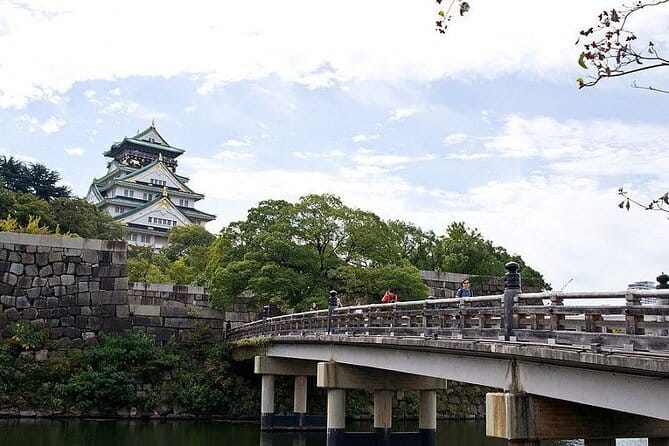
This is a 10-hour private day that’s designed for people who want two very different sides of Japan in one go. You’ll start in Osaka and work your way toward Nara, hitting major landmarks that are easy to recognize and easy to build a mental picture of.
The key to making this work for you is the timing. The day includes about 2 hours of travel time between places. That’s not a bad thing—just know it upfront—so you can plan to enjoy the ride (and use the vehicle hotspot if you need it), and then be ready to focus when you’re out at the sites.
Because it’s private, you’re not spending time waiting for other groups to finish a bathroom break or take photos in the wrong order. If you want a day where someone handles route logistics and you handle the fun part, this fits.
You can also read our reviews of more private tours in Osaka

Pickup From Osaka Station: Starting in the Right Place
Meeting at Osaka Station (Umeda area) is practical. It’s a big transit hub, and the start point puts you in the center of Osaka’s sightseeing orbit right away. The tour also returns you to the same meeting point, which is a big deal if you plan to continue shopping or eating after the official day ends.
What’s also helpful is that the tour includes air-conditioned transportation and child seats. If you’re traveling with kids, an AC ride is not a luxury—it’s often the difference between a pleasant day and a tired one.
Also, you’ll get a mobile ticket. That matters because it reduces last-minute confusion and keeps you from hunting for paper tickets or figuring out who has them.
Osaka Castle: The Famous Landmark With a Modern Reconstruction
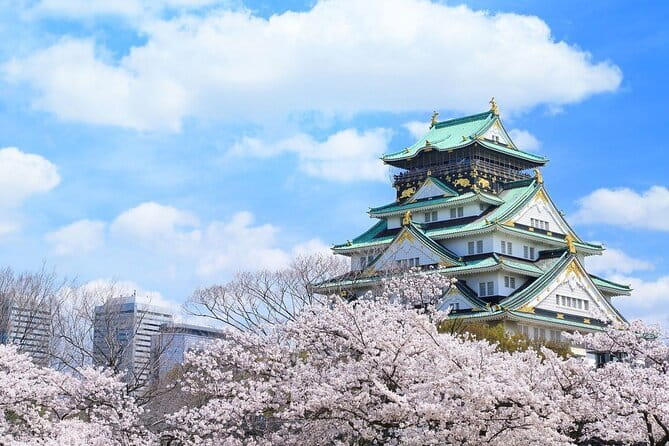
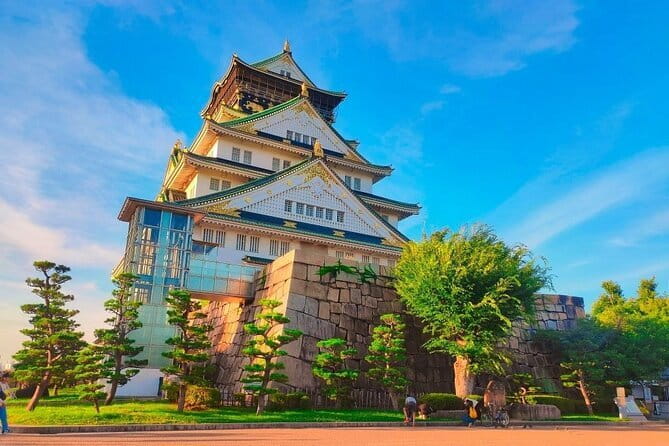
Osaka Castle is one of those places you recognize instantly, even from photos. It was originally built in the late 1500s under Toyotomi Hideyoshi, tied to Japan’s unification after a long civil war period. The castle also played a role in the Battle of Osaka (1614–1615), which helped end Toyotomi rule.
Here’s what you should know before you go: the current castle you’ll see is a modern reconstruction, completed in 1931 after earlier versions were destroyed multiple times. That doesn’t ruin the experience. It actually makes the stop more approachable for first-timers—you still get the iconic layout and the castle presence without needing deep expertise to enjoy it.
What I’d do during your 1 hour there:
- Prioritize the main castle structure and views from the grounds area
- Take note of how the castle’s design signals power and unification, not just “cute old buildings”
Admission is not included, and the fee is listed as about $5 USD, paid directly on arrival. The stop is worth it if you want a strong anchor point for Osaka’s identity.
Shitennoji Temple: An Old Temple Stop That Feels Timeless
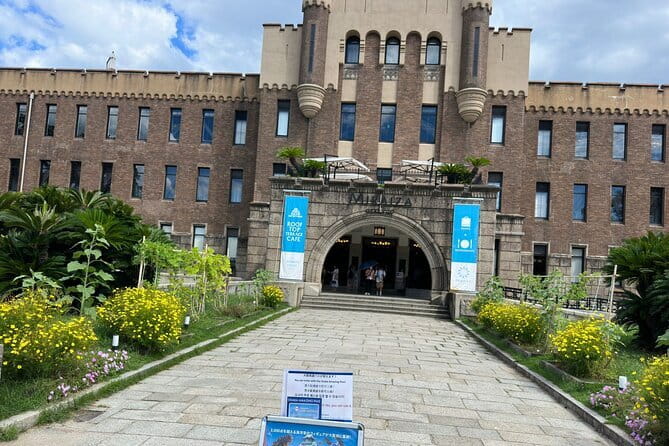
If Osaka Castle is about the public face of power, Shitennoji is about the long thread of Buddhism in Japan. It traces back to 593 AD, credited to Prince Shōtoku, and is often described as one of the earliest officially established Buddhist temples in Japan.
You’ll learn that the temple was built to honor the Four Heavenly Kings (Shiten), guardians meant to protect the world from evil. That’s a great detail because it gives you a clear idea of why the temple was designed the way it was.
This stop is marked as free admission and lasts about 1 hour. That combination is ideal: you get a major cultural site without feeling like you need a big budget plan. The five-story pagoda and the early-architecture symmetry are exactly the kind of things you’ll enjoy more when you slow down just a bit.
If you’re the type who likes seeing where a city’s religion and politics started, you’ll appreciate how this stop grounds the rest of the day.
Dotonbori at Ground Level: Neon, Canal Views, and Street Food Choices
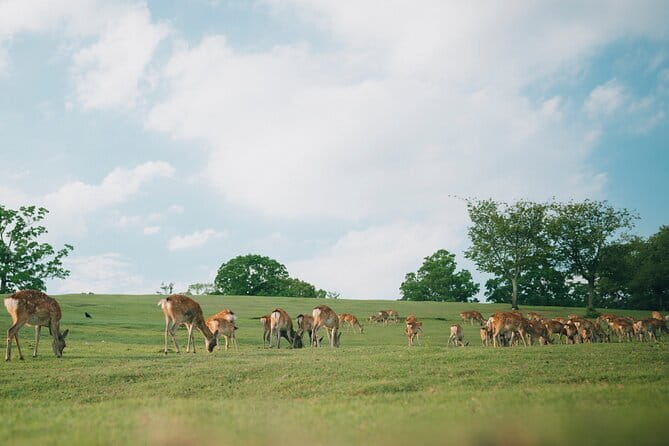
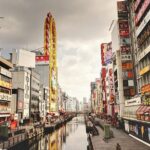
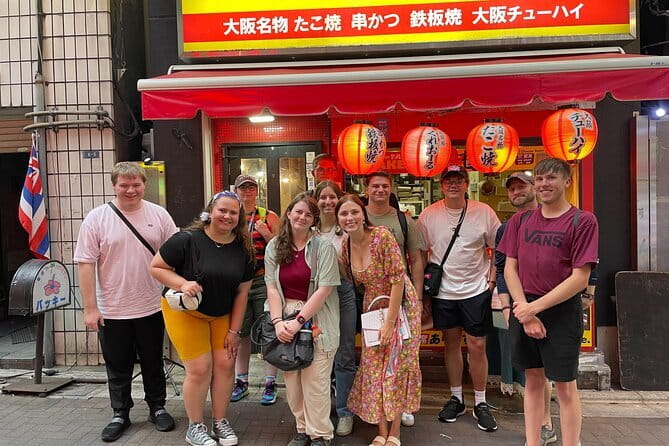
Dotonbori is where Osaka turns up the volume. This area is famous for neon signage, big illuminated billboards, and the canal setting that makes night photos look dramatic even if you don’t go chasing the perfect angles.
One of the landmark symbols is the Glico Running Man, a sign associated with the area since the 1930s. It’s the kind of detail that helps you understand why Dotonbori is more than a tourist strip—it has history in its branding too.
You’ll have about 2 hours here, and admission is free. That’s a nice setup because it gives you freedom. You can:
- Walk the canal-side stretch
- Choose street food based on what sounds best in the moment
- Keep your pace flexible instead of rushing a ticketed attraction
Osaka’s common hits show up in the area: takoyaki, savory pancakes, kushikatsu (fried skewers), ramen, and other local snacks. If you want one practical move, plan to try one or two things you can recognize, not five things you can’t pronounce. Your future self will thank you.
This is also a great place to use the private structure of the day. If your group prefers food and wandering over shopping, you can spend more time here without derailing the whole schedule.
You can also read our reviews of more tours and experiences in Osaka

Umeda Sky Building: City Views You Can Choose to Pay For
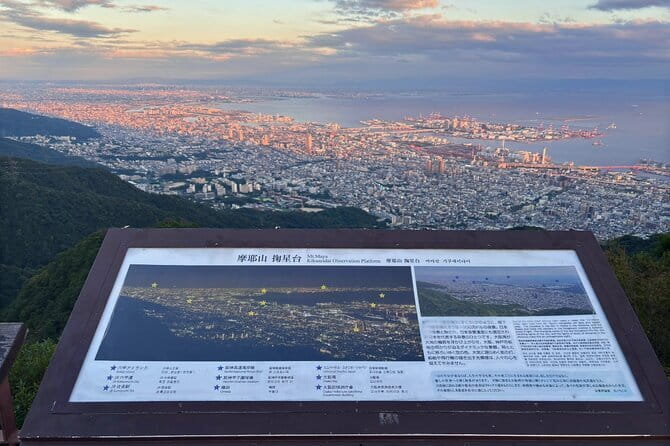
Umeda Sky Building is modern Osaka’s confidence statement. The building completed in 1993 reaches 173 meters, and the structure is made of two towers connected at the top. Between them sits a floating-garden style observatory area, and the top gives 360-degree panoramas over the city.
This is the kind of stop that works best when you care about understanding scale. Osaka is huge. Being able to look out helps you place where you’ve been and where you’ll go next.
You’ll spend about 1 hour here. Admission is not included, and the fee is listed as about $10 USD, paid on arrival. The description also notes glass-covered escalators that create a “floating” feeling as you go up—so if you’re sensitive to heights, keep that in mind.
My practical take: don’t treat Umeda Sky as mandatory. It’s a premium photo and orientation stop. If the weather’s bad or your energy is low, you can skip it and still get a strong Osaka day.
Todai-ji and the Great Buddha: The Nara Stop That Hits Hard
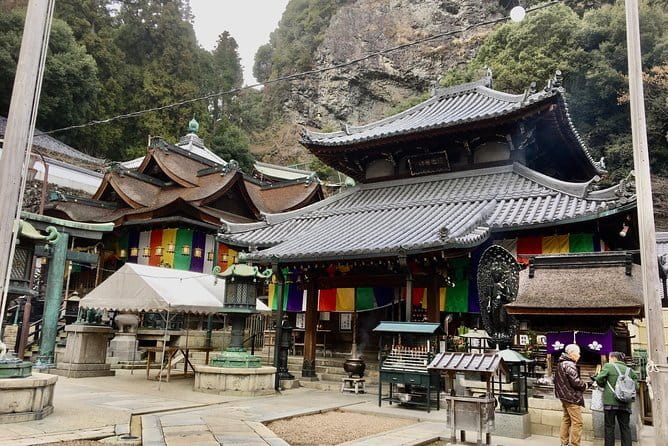
Now for the “can’t-miss” anchor of Nara: Tōdai-ji Temple. The headline is the Daibutsuden (Great Buddha Hall), which once held what was described as the largest wooden building in the world and still remains among the largest.
Inside is the real star: the Daibutsu, a massive bronze statue of Vairocana Buddha. It’s about 15 meters tall and weighs roughly 500 tons, and it’s linked to 8th-century casting (commissioned under Emperor Shōmu).
Even if you’re not deep into Buddhist art, this is one of those experiences that works on pure scale. It’s not just a statue you see. It’s a space built to hold the feeling of devotion and unity. That’s why it matters in a one-day visit: it gives you a strong emotional and visual memory.
The stop is listed as 2 hours, and admission is not included. The fee is given as about $2 USD paid on arrival. If you’re watching cost and want to keep the day flexible, this is one of the lowest paid admissions on the list while still being a major experience.
Nara Park: Deer Time, Easy Walking, and “No Ticket” Freedom
After the big hall of Tōdai-ji, Nara Park gives you space to breathe. Nara Park is a large public park set up around major historic sites, and it’s famous for the free-roaming deer.
You’ll be around 1 hour here, and admission is listed as free. Deer crackers (shika senbei) are mentioned as something you can buy to feed the deer. The deer are described as tame and accustomed to human interaction, and they’re even associated with Shinto belief as sacred messengers.
Practical advice for this stop:
- Keep your expectations simple: Nara Park is fun, but it’s also animal-friendly chaos
- Bring patience for close-up encounters and slow walking
- If you feed deer, do it thoughtfully and in the way you’re guided—don’t act like it’s a petting zoo
This final stretch is also a good “reset moment” before you head back toward Osaka. It’s the softer, open-air part of the day that makes the temples feel less heavy.
Price and Value: When $550 Works for Your Group
The price is $550 per group, up to 5 people. That matters because your per-person cost depends on how full your group is.
- If you book with 2 people, you’re closer to $275 each for private transport and a structured day.
- With 5 people, you’re around $110 each.
Compared to piecing together private taxis, separate guide time, and transit passes, private transportation can be a real value—especially with tolls/taxes included and AC already taken care of.
Also, most major walking/atmosphere stops in the day are free (Shitennoji, Dotonbori, Nara Park). The paid admissions are specifically called out:
- Osaka Castle: about $5 USD
- Umeda Sky Osaka: about $10 USD
- Todai-ji: about $2 USD
Those optional fees are low compared to the overall private-service cost, so you can choose how much you want to spend on top.
You’re essentially paying for:
- A private vehicle and route planning
- Time savings in moving between Osaka and Nara
- Comfort features like child seats and AC
- A guide-driver dynamic (and the reviews show guides like Ben, Malik, and Talha described as knowledgeable and accommodating)
What I Think This Tour Is Best For
This day trip works especially well if you’re:
- Traveling with family or a small group and want less stress
- Short on time and want a big “greatest hits” day across Osaka and Nara
- Interested in both modern city views and major temple culture
- The type who likes having structure but still wants freedom at Dotonbori and Nara Park
It’s less ideal if you want a very slow, wandering pace at every stop. With 2 hours of travel built in and set time blocks at each location, the day is meant to be efficient rather than leisurely.
Should You Book This Private Osaka and Nara Day?
Yes, I’d consider booking it if your priorities are comfort, efficiency, and hitting the most recognizable Osaka-and-Nara landmarks in one outing. The value is strongest for groups of 3 to 5, where the private transport cost makes sense.
If you’re the kind of traveler who hates paying for views or prefers only one paid attraction, you can still tailor the day since Osaka Castle, Umeda Sky, and Todai-ji admissions are paid on arrival. Todai-ji is usually the best “pay for it” choice because the Great Buddha experience is the emotional center of the whole Nara visit.
Finally, if you care about having a friendly, capable driver-guide, the tour’s guide performance seems to be a consistent strength in the feedback, with named drivers like Ben, Malik, and Talha showing up in positive notes.
FAQ
How long is the Osaka and Nara private tour?
It’s about 10 hours total, with roughly 2 hours of travel time between locations.
What does it cost, and how many people can fit in a group?
The price is $550 per group, and the group size can be up to 5 people.
Is pickup available, and where do we meet?
Pickup is offered. The meeting point is Osaka Station 3-chōme-1-1 Umeda, Kita Ward, Osaka 530-0001, Japan.
Are admission tickets included for every stop?
No. Osaka Castle, Umeda Sky Building, and Todai-ji are optional and their admission fees are paid directly on arrival (listed as about $5, $10, and $2 USD respectively).
Which stops are free to enter?
Shitennoji is listed as free, Dotonbori is free, and Nara Park is also free.
What transportation do I use during the day?
You’ll travel in an air-conditioned private vehicle with tolls and taxes included.
Is there anything included for kids?
Child seats are included, and the tour notes that most travelers can participate.
How does cancellation work for a full refund?
You can cancel for a full refund if you cancel at least 24 hours before the experience start time, and cancellation is listed as free under that condition.