Kyoto gets a lot easier when someone handles the moving parts. This private full-day tour is a smart way to hit the big hitters—Fushimi Inari, Golden Pavilion (Kinkakuji), Gion, and the bamboo forest—without spending your day figuring out trains and meeting points. I especially like the hotel pickup/drop-off from Osaka and the fact your English-speaking driver doubles as a guide and translator, with time saved for photo stops. One thing to consider: a small number of issues have come up around pickup communication, so you’ll want your meeting instructions crystal clear before you go.
You get a structured 9:30 am start and a realistic pace for 6 to 10 hours, with stops that mix iconic sights and neighborhood atmosphere. The route also stacks contrast well: bright vermilion gates at Fushimi Inari, quiet temple views, then the street-level mood of Gion. A possible drawback is that several major temples charge separate entrance fees, so you’ll want to budget for those on the day.
Key points at a glance
- Hotel pickup and drop-off from Osaka keeps the morning from turning into a navigation puzzle
- Private, just-your-group format means your guide can adjust stops if time allows
- A full lineup of Kyoto highlights: Fushimi Inari, Arashiyama bamboo, Kinkakuji, Kiyomizu-dera, Gion, and Hokan-ji
- Most entrance fees are add-ons (Kinkakuji, Kiyomizu-dera, Hokan-ji), so read the budget details before you roll out
- The guide can help with photos and translation, which matters when signage and rules are complex
In This Review
- A Private Kyoto Day From Osaka: the Real Reason It Feels Worth It
- Getting Picked Up (and Avoiding Meeting-Day Stress in Osaka)
- Stop 1: Fushimi Inari-Taisha Shrine and the Fox-Gate Walk
- Stop 2: Arashiyama Bamboo Forest Without the Unreal Expectations
- Stop 3: Kinkakuji (Golden Pavilion) and Budgeting the Entrance Fee
- Stop 4: Kiyomizu-dera and Its UNESCO Setting
- Stop 5: Gion District and the Calm After Temples
- Stop 6: Hokan-ji (Yasaka Pagoda) and a Different Kind of Kyoto Icon
- The Guide’s Job: Translation, Timing, and Photo Help
- Price and Value: Is $367 Per Person Fair for This Kyoto Mix?
- Who Should Book This Tour (and Who Might Feel Frustrated)
- Should You Book This Private Kyoto Tour From Osaka?
- FAQ
- Is this tour private?
- What time does the tour start?
- How long is the tour?
- Does the tour include hotel pickup and drop-off in Osaka?
- Is lunch included?
- Are entrance fees included for Kinkakuji, Kiyomizu-dera, and Hokan-ji?
- Can I add a kimono experience?
- Does the guide provide English support?
- Is a mobile ticket used?
- What if weather is poor?
A Private Kyoto Day From Osaka: the Real Reason It Feels Worth It
Kyoto can be a transport headache if you try to DIY every hop. This tour is built around the idea that you’ll spend your energy on sights, not schedules. Starting at 9:30 am, you get an organized route and a dedicated driver/guide in an air-conditioned vehicle, plus parking and tolls handled.
The private format is the other big reason I like it. If your group wants a slower walk at a shrine, or an extra photo at a temple angle, you don’t need to win a fight with a big bus timeline. And since it’s “only your group,” you’re not trying to herd anyone else or wait for strangers to return from a gift shop.
The value also comes from how the route is put together. You’re not just seeing monuments; you’re moving through distinct Kyoto moods. Fushimi Inari is a sensory start. Arashiyama brings greenery and a famous bamboo scene. Then you shift into golden and cliffside temple energy at Kinkakuji and Kiyomizu-dera, before ending with Gion streets and Hokan-ji’s pagoda.
Getting Picked Up (and Avoiding Meeting-Day Stress in Osaka)
This tour is designed for easy departure from Osaka hotels. It includes parking fees and uses a private vehicle, which reduces the chaos of trying to catch the right train connection with luggage or time pressure.
Still, do not assume pickup points are obvious. One experience involved a frustrating pickup situation where the driver struggled with basic communication and the meeting location. The good news: that same situation highlights what you can control. When you book, send clear details for where your guide should meet you and be ready to confirm location quickly if there are multiple entrances at a hotel.
If you’re joining from a place with confusing access (for example, cruise docks), plan extra care. In one account, a guide named Allan had a hard time matching an address to the correct dock area, but still managed to find the right spot so the group could meet and start. That’s a great example of what good follow-through looks like—but it also proves that you should help the process with exact pickup coordinates or a precise landmark.
Practical tip: before leaving your hotel, write down the pickup instructions in plain text for easy sharing with your driver on your phone. Even a short message like Meet at the main lobby entrance works wonders.
You can also read our reviews of more private tours in Osaka
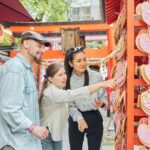
Stop 1: Fushimi Inari-Taisha Shrine and the Fox-Gate Walk
Fushimi Inari is the kind of place where it helps to have time and context, not just a photo mission. You’ll spend about one hour here, and it’s free to enter.
This shrine complex is dedicated to Inari, the Shinto god of rice, which explains the strong rice-related symbolism you’ll see throughout the area. The most famous visual is the long sequence of vermilion torii gates, which creates a tunnel effect as you move inward.
In one hour, you have to choose your level of walk. The full route can keep going well past the point where most people stop, so I recommend picking a goal: either enjoy the main gate corridor and a couple of side views, or go further if you’re comfortable with stairs and uneven ground.
Also, be aware that the area can feel busy during peak daylight. The advantage of a guided private format is simple: you’re more likely to get “good movement” through the crowds, rather than stopping randomly and wasting time.
Stop 2: Arashiyama Bamboo Forest Without the Unreal Expectations
Arashiyama is famous for its bamboo forest and also sits near other add-on experiences like the Sagano Romantic Train (seasonal changes make it extra popular). This stop is also about one hour and free to enter.
One-hour bamboo time is enough to see the signature scene and get a few strong photos, but you’ll want to manage expectations. The bamboo path is not a quiet private garden; it’s a world-famous walk with people everywhere at the same time.
What I like about this stop is that it’s not just “take a photo and leave.” The surroundings in Arashiyama can add a softer, greener Kyoto feel right after the shrine energy. If your schedule allows, use your guide’s time to decide whether to simply walk the bamboo section or pivot to a nearby viewpoint.
Practical photo tip: consider where the light hits. The bamboo stalks create strong vertical lines, so even simple phone framing can look good if you stand slightly off-center and let the path lead into the image.
Stop 3: Kinkakuji (Golden Pavilion) and Budgeting the Entrance Fee
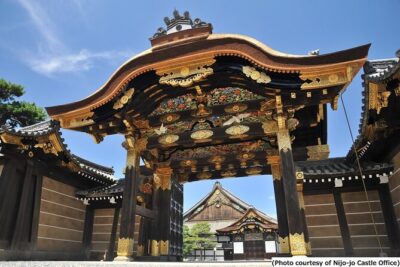
Kinkakuji is one of Kyoto’s most iconic temples: the top two floors of the Golden Pavilion are covered in gold leaf. You’ll have about one hour here.
The entrance fee isn’t included, so you’ll want to budget ahead. According to the tour details, Kinkakuji charges ¥500 per person.
This is the stop where I think a guide pays off in a very practical way. When you’re looking at gold leaf and mirrored ponds (and crowds), it’s easy to miss the layout that makes the view work. With guidance, you’re more likely to end up at the spots that help you understand why the temple looks the way it does from different angles.
Drawback to flag: this is a popular site, so your hour can be more about managing foot traffic than wandering. If the group is moving efficiently and you’re not waiting around, one hour is usually a solid fit. If you want slow photography time, ask early whether the guide can tighten the route elsewhere to give you breathing room here.
Stop 4: Kiyomizu-dera and Its UNESCO Setting
Kiyomizu-dera is one of those places that feels like a whole viewpoint in itself. The temple is part of the Historic Monuments of Ancient Kyoto UNESCO World Heritage site, and your tour includes about one hour here.
Like Kinkakuji, the entrance fee isn’t included. The details list ¥400 per person.
Kiyomizu-dera tends to be physically demanding compared to flat shrine corridors. You can run into stairs, uneven surfaces, and crowds that slow you down. That’s exactly why I prefer a timed stop with a guide: you get enough time to enjoy the big sights without feeling like you’re sprinting from one checkpoint to another.
What makes this stop worth your time is the way the temple structure interacts with the city views. Even if you’re not a hardcore architecture fan, the sheer “how does it look from here?” factor is strong. If you’re thinking about photos, spend the first part of your hour orienting yourself, then come back for your best framing before you move on.

Stop 5: Gion District and the Calm After Temples
After temples, Gion is your reset button. You’ll have about one hour here, and it’s free.
Gion is widely known as a famous geisha district, and even if you’re not seeing staged performances, the streets and atmosphere make the change of pace feel real. Instead of ceremonial spaces, you’re in Kyoto’s everyday-culture layer: traditional street views, small storefront energy, and a slower rhythm once you’re not climbing temple steps.
This hour works best if you keep it simple. Walk a few blocks, watch the street details, and don’t try to cram in every side alley. The guide can help you find safe, respectful viewing zones and avoid dead ends where crowds funnel you into poor angles.
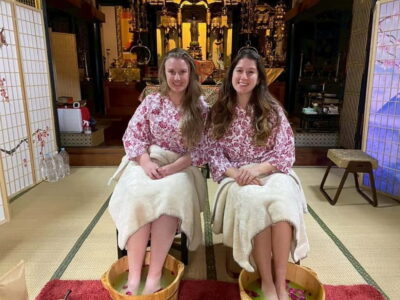
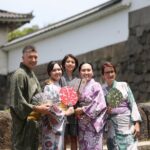
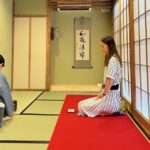
Also, if you’re tempted by the idea of kimono photos, this tour indicates there’s an optional kimono experience available at Kimono Forest with a stated price range of ¥3980 to ¥6000. That can be a fun add-on, but it’s also time-consuming. If you want kimono, coordinate it early so it doesn’t squeeze your temple time.
Stop 6: Hokan-ji (Yasaka Pagoda) and a Different Kind of Kyoto Icon
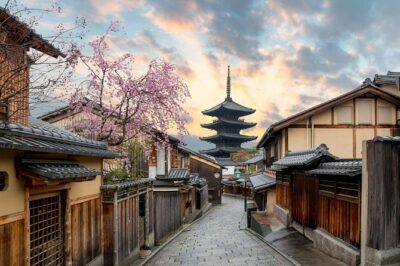
Hokan-ji is known colloquially as Yasaka-no-to, and it’s a temple pagoda that rises about 46 meters tall. Your tour allots about one hour for this stop, but admission isn’t included.
The listed entrance fee is ¥400 per person.
What I like about ending (or nearly ending) here is that you get an icon that feels less “postcard-famous” than Kinkakuji, but still visually strong. The pagoda’s multi-tiered structure with its sloping roofs is distinctive. Even if you’re not an expert on Buddhism or temple architecture, the silhouette tends to make a quick impact.
This is also a good stop for photos, especially when you want a change from the torii gates and gold leaf. A tall pagoda gives you vertical composition that’s easy to frame from different angles—use your guide’s help to find viewpoints where you can actually see the full structure without constant obstruction.
The Guide’s Job: Translation, Timing, and Photo Help
The tour notes that your guide can act as a translator and help with photography at destinations. That matters because Kyoto isn’t designed for you to easily read every sign, rule, and ticket desk on the fly. Even when English is available, it’s scattered. Having someone in your corner keeps your day moving.
The guide can also help you customize the route if there’s time left. That’s where the “value” becomes more than sightseeing. If one stop runs long due to crowds, the guide can often adjust the next piece so you don’t lose the whole day.
Just remember the other lesson from the communication issue mentioned earlier: your enjoyment depends on clear meeting behavior. If you communicate well and confirm details, a private guide can genuinely make a tough schedule feel calm.
Price and Value: Is $367 Per Person Fair for This Kyoto Mix?
The price listed is $367.07 per person. That sounds steep until you count what you’re getting.
You’re paying for:
- Private transportation between Osaka and Kyoto
- Air-conditioned vehicle comfort
- Parking fees, fuel surcharge, and toll fees
- An English-speaking driver/guide who stays with you at destinations
- Private pace, with the ability to customize when time allows
Entrance fees and lunch are extra. The tour lists:
- Kinkakuji: ¥500
- Kiyomizu-dera: ¥400
- Hokan-ji: ¥400
And it explicitly says lunch isn’t included.
So the “true cost” depends on how you handle meals and entrance budgeting. But even with the add-ons, the core value is the structure. You’re not trying to stack multiple temple tickets and transit transfers by yourself, and you’re not losing time hunting for the right platform.
When it’s best value: if you’re traveling as a pair or small group and you want a guided day that hits multiple major sites without planning. If you’re the kind of person who loves free-roaming with no schedule at all, you could do it cheaper on your own. But you’d likely spend more time in transit and less time at the best viewing points.
Also, note the stated start time and typical 6 to 10 hour duration. That’s a long day. A private guide helps you use those hours efficiently. If you’re trying to squeeze Kyoto into a rushed half-day, this format might actually save you from regret.
Who Should Book This Tour (and Who Might Feel Frustrated)
This tour is a good fit if you want:
- A private day with a guide who can translate and help with photos
- A strong lineup of major Kyoto stops in one schedule
- Hotel pickup/drop-off to reduce stress
- A pace that you can adjust if time remains
It might be less satisfying if:
- You strongly prefer self-paced wandering with no structure
- You dislike paying separate entrance fees at multiple sites
- Your group needs very specific guide credentials beyond standard English guidance (one cancellation report referenced licensing concerns, so confirm what you personally require before you go)
If you’re booking from a hotel, include your exact pickup spot. If you’re joining from a less-clear location, give the guide enough detail to find you quickly. That’s how you prevent the most common failure point: meeting-day confusion.
Should You Book This Private Kyoto Tour From Osaka?
I’d book it if you want a guided, efficient Kyoto day and you’re okay with separate temple entrance fees. The strongest part of this experience is the combination of private transport plus a guide who stays with you, which makes Kyoto feel manageable instead of overwhelming.
I would hesitate only if you hate the idea of extra charges at Kinkakuji, Kiyomizu-dera, and Hokan-ji, or if your group has zero tolerance for any pickup confusion. If that’s you, double-check your meeting instructions and be ready to confirm quickly.
For most people planning a first Kyoto visit from Osaka, this tour is a practical way to see the big sights with fewer logistics headaches.
FAQ
Is this tour private?
Yes. It’s a private tour, and only your group will participate.
What time does the tour start?
The start time is 9:30 am.
How long is the tour?
It runs about 6 to 10 hours.
Does the tour include hotel pickup and drop-off in Osaka?
Pickup is offered, and the tour is described as having hotel pickup and drop-off from Osaka.
Is lunch included?
No. Lunch is not included.
Are entrance fees included for Kinkakuji, Kiyomizu-dera, and Hokan-ji?
No. Kinkakuji entrance is listed as ¥500 per person, Kiyomizu-dera is ¥400 per person, and Hokan-ji is ¥400 per person.
Can I add a kimono experience?
Kimono dress is not included, but there is an optional kimono experience at Kimono Forest listed at ¥3980 to ¥6000.
Does the guide provide English support?
Yes. There’s an English-speaking driver, and the guide can also act as a translator.
Is a mobile ticket used?
Yes. The tour includes a mobile ticket.
What if weather is poor?
The experience requires good weather. If it’s canceled due to poor weather, you’ll be offered a different date or a full refund.
If you tell me your group size and whether you’re starting from a hotel or a cruise dock, I can help you decide how to budget the entrance fees and how much time to set aside for the optional kimono idea.