REVIEW · OSAKA
Sakura Magic and Nabana No Sato Day Tour From Osaka
Book on Viator →Operated by H.I.S.Co., Ltd. · Bookable on Viator
Cherry blossoms, trains, and lights in one day. I like this one-day flow because you get Wagyu sukiyaki lunch to start and the Yoro sakura tunnel train for big spring visuals. The main consideration: the time at Nabana no Sato is limited (about 1.5 hours), so if you want slow wandering and lots of photos, you’ll feel a bit rushed.
You’ll be picked up in Osaka at 10:30am from the Mainichi Newspaper building in Umeda and returned to the same place. Expect an air-conditioned bus, an English guide, and a group capped at 40 people, which keeps things manageable for a full day (still, it’s a long day).
This tour also plays fair with reality: it runs on a set schedule, traffic can shorten stops, and it depends on good weather for the best experience. If the Ogaki tranquil boat is canceled for bad weather, you’ll get the boarding fee refund and your guide will route you to Mitsui Outlet Park Jazz Dream Nagashima instead.
In This Review
- Key things to know before you go
- Sakura Magic and Nabana no Sato from Osaka: the day in plain terms
- Getting to the bus: comfortable ride, real timing rules
- Sekigahara-cho: Wagyu sukiyaki lunch and quick local browsing
- Yoro-cho sakura tunnel train: a short ride with high impact photos
- Ogaki tranquil river boat: cherry petals and the Basho connection
- Nabana no Sato Mt. Fuji lights: warmth, wonder, and time limits
- Price and value: what your $156-ish actually covers
- Comfort on the bus: small rules that affect your day
- Best for whom: the kind of traveler who will love this
- Who should think twice: one key tradeoff
- Should you book Sakura Magic and Nabana no Sato from Osaka?
- FAQ
- FAQ
- What time does the tour start in Osaka?
- Where is the meeting point?
- How long is the day trip?
- Is lunch included?
- Is there dinner included?
- What activities are included besides the light garden?
- Is the tour guided in English?
- Is this a mobile ticket tour?
- What happens if the Ogaki tranquil boat is canceled due to bad weather?
- What if there’s a typhoon or natural disaster?
- Will the bus wait for late arrivals?
Key things to know before you go
- Wagyu sukiyaki lunch is built into the day, so you’re not hunting for food between sites.
- A charter train through a cherry blossom tunnel gives you a truly Japan-only spring photo moment.
- Ogaki river boat ride is tied to the Matsuo Basho route, so it’s not just pretty scenery.
- Nabana no Sato is the highlight, with a Mt. Fuji light theme and cherry blossom elements.
- Weather and timing matter: you may lose the boat in bad weather, and Nabana is time-limited.
- Bus rules are strict (seatbelt, no smoking), and the bus won’t wait for late arrivals.
Sakura Magic and Nabana no Sato from Osaka: the day in plain terms
This is a classic “one-day spring sampler.” You’ll move from countryside-feeling spring spots (lunch, train, river) to one of Japan’s most famous illumination scenes at night (Nabana no Sato). The payoff is that you get both daytime charm and evening lights without needing to connect trains yourself.
What I like is the pacing: each stop is short enough to keep energy up, but long enough to actually enjoy the moment. The tour also does the thinking for you—English guidance, admissions handled, and bottled water included—so you can spend your brainpower on when to take photos and when to cool down.
The catch is that you’re still on a bus all day. Even with an efficient route, delays can happen, and there’s a real chance your time at the final light garden gets squeezed. If you come prepared to prioritize your must-see spots at Nabana, you’ll have a much better day.
You can also read our reviews of more tours and experiences in Osaka.

Getting to the bus: comfortable ride, real timing rules
Meeting point is the Mainichi Newspaper building (3-chōme-4-5 Umeda, Kita Ward) in Osaka, with departure at 10:30am. Plan to arrive about 15 minutes early, because the bus follows the schedule and won’t wait for late arrivals.
The bus itself is air-conditioned, and the tour is designed for a group size up to 40 people. That matters because you’re not stuck in a massive crowd mix while boarding and changing plans. You’ll also be expected to follow basic safety rules while traveling: seatbelts on when the bus is moving, no standing, and no smoking.
Two practical tips:
First, keep your essentials in a small bag you can grab quickly when you step off the bus. Second, set your expectations that traffic can shift timings. The tour notes that visit durations may be shortened, so I recommend you don’t schedule anything tight around this day trip back in Osaka.
Sekigahara-cho: Wagyu sukiyaki lunch and quick local browsing
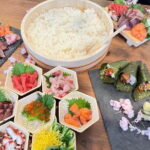
The first stop is Sekigahara-cho, with about 1 hour 30 minutes total. The big win here is lunch: you’ll get Wagyu beef sukiyaki as part of the package. For a full-day tour, that’s a big value. It means you’re not deciding between mediocre convenience meals and a long detour just to eat.
You’ll also have time for shopping at a local souvenir shop. This is one of those small add-ons that can be genuinely useful. If you like bringing home something specific to a region, this is a low-stress moment to do it without sacrificing the main photo stops later.
One thing to keep in mind: the tour asks you to inform them of allergies or dietary restrictions when booking, especially because lunch is included. If you have any dietary needs, say so early rather than assuming you can adjust on the spot.
Yoro-cho sakura tunnel train: a short ride with high impact photos
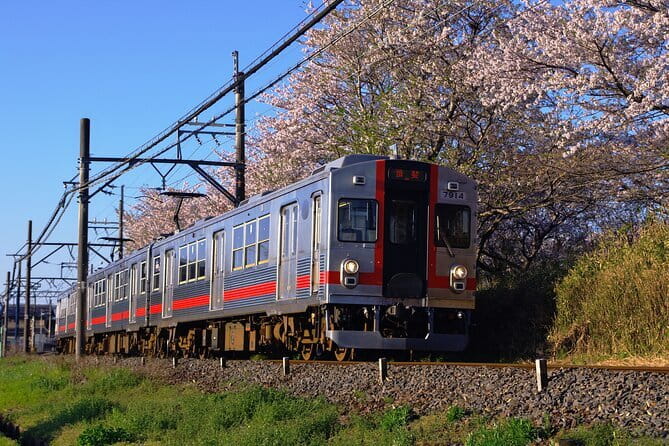
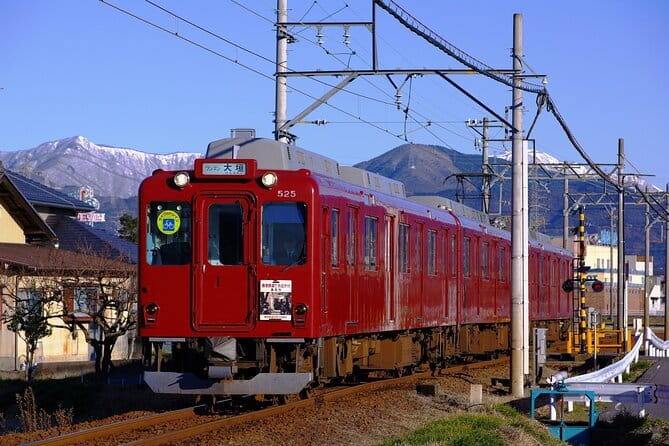
Next comes Yoro-cho for the Yoro Railway charter train experience. The time on this stop is about 35 minutes, and the highlight is the section between Hirokobe and Higashiakasaka that forms a cherry blossom tunnel.
This is the kind of experience you can’t really replicate on your own unless you plan carefully. A train through a tunnel of sakura petals gives you a moving perspective: the trees line up, the light changes as you pass, and the photos come out differently than a static viewpoint.
Also, because it’s a charter train as part of the tour, the logistics are handled. You don’t have to figure out where to stand, how to time your arrival, or whether you’re missing the exact window. You just show up, follow the guide’s instructions, and enjoy the ride.
The practical consideration is that you’re dealing with spring bloom timing. If petals aren’t at peak, the “tunnel” effect might look less intense. Still, you’ll be riding through the corridor the moment you’re supposed to, which is the best-case scenario for timing.
Ogaki tranquil river boat: cherry petals and the Basho connection

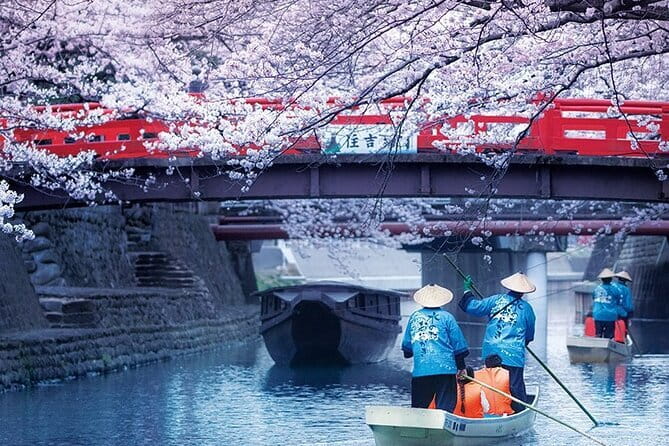
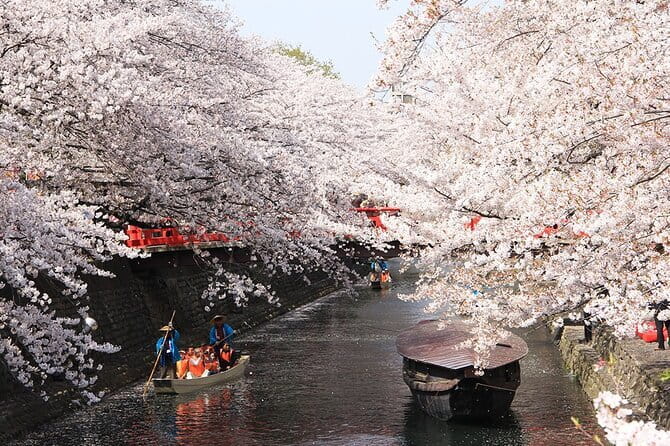
Ogaki is your next spring moment, with about 30 minutes for a tranquil boat ride along a river associated with Matsuo Basho’s Oku no Hosomichi. That literary tie is more than trivia. It hints at why this landscape has long been treated like something worth slowing down for.
The experience itself is simple and relaxing: you glide through scenery where cherry blossoms line the riverbanks. Even if the day is moving fast, this is the stop where your pace naturally drops.
Bad weather can affect this segment. If the Ogaki tranquil boat is canceled due to bad weather, you’ll get the boarding fee refunded (1,500 yen per person), and your guide will take you to Mitsui Outlet Park Jazz Dream Nagashima instead.
My advice: treat this stop as a gift even when it changes. If the boat runs, great—take it slowly. If it’s canceled, the outlet detour still gives you something to do rather than dead time. Either way, you avoid the frustration of trying to solve it yourself.
Nabana no Sato Mt. Fuji lights: warmth, wonder, and time limits

Nabana no Sato is where the tour shifts into evening illumination mode, and it’s the stop with the strongest “this is why we came” energy. You get about 1 hour 30 minutes here, with admission included. The theme is Mt. Fuji, paired with cherry blossoms and even Shinkansen train elements, plus the setting includes the Begonia Garden area.
This is also where you’ll likely feel the weather. One of the standout comments from past experiences is that it’s cold outside but you’re warmer when you’re inside the light-garden areas. So dress for real outdoor time even if you feel like you’re in a mostly lighted wonderland.
The reason I’m careful about the time limit: 90 minutes is enough to enjoy the main sights, but not enough to treat it like a leisurely night walk with no photos to worry about. If you love photography, you’ll want to be strategic. Pick your top viewpoints early, then spend the remaining time wandering rather than chasing everything at once.
If the sakura season isn’t fully peaked during your visit, don’t panic. The illumination theme and Mt. Fuji focus can still deliver a strong experience, and you’ll still get that feeling of spring plus lights.
Price and value: what your $156-ish actually covers

At about $156.07 per person, this tour is positioned as a bundled day: transport, guide, admissions, lunch, and a few set activities are included. You’re paying for convenience and for getting into multiple paid experiences without having to coordinate tickets and timing yourself.
Included items you should care about:
- Wagyu sukiyaki lunch
- Bottled water
- Air-conditioned vehicle
- Admission fees for the Yoro charter train
- Admission/fee for the Ogaki boat ride
- Admission to Nabana no Sato
- English guide
Not included:
- Dinner
For many people, the lunch + admissions combo is what makes the math work. If you try to piece together train tickets, river boat access, and Nabana entry independently, you’ll spend time and energy just getting the plan right. Here, you’re trading money for structure and time saved.
My practical suggestion: plan to eat dinner on your own after you get back to Osaka. The tour doesn’t include it, so bring some energy snacks or budget extra time to find something easy near your hotel.
Comfort on the bus: small rules that affect your day
This tour uses a bus for the long in-between stretches, and that means you’ll live by a few rules. You must wear a seatbelt while the bus is moving, smoking is strictly prohibited, and you shouldn’t stand while the bus is in motion.
These rules aren’t meant to spoil your fun; they just keep the ride safe. The bigger impact is psychological: when you know you’ll be sitting and following instructions for hours, you pack smarter. Bring a light layer for the bus ride (AC can be cool), and keep water handy since bottled water is included but you might drink more than you expect.
Also, the tour warns that if you leave belongings on the bus, they’ll be disposed of. So don’t treat your bag like it can be forgotten at the end. Quick check before you exit saves headaches.
Best for whom: the kind of traveler who will love this
This tour fits you if you want a curated spring-and-lights day without heavy planning. It’s also a good match if you enjoy Japanese seasonal themes but don’t want to spend time switching trains, buying multiple tickets, and figuring out where to stand.
You’ll probably be happiest with this format if:
- You want a full day structure with lunch and major entrances handled
- You like photo-focused seasonal experiences (train tunnel, river blossoms, light theme)
- You prefer guidance in English and a small-ish group size (up to 40)
If you’re the type who needs long, unhurried time at a single site, this might feel “too packed.” The Nabana stop is only 1 hour 30 minutes, so you can’t slow-walk every path without choices.
Who should think twice: one key tradeoff
The biggest tradeoff is time at the final illumination garden. If you want to linger until your shoes are numb and you’ve found every possible angle, you’ll want more than 90 minutes.
The second tradeoff is bloom uncertainty. Spring can be a moving target, so while the tour targets sakura-themed visuals, you might not always hit peak petal coverage. That said, the Mt. Fuji illumination theme gives you a strong backup experience even when cherry blossoms are less dramatic than expected.
Should you book Sakura Magic and Nabana no Sato from Osaka?
I’d book it if you want maximum spring atmosphere plus a famous light show, and you’re okay with a structured schedule. This is a solid value because lunch and multiple admissions are included, and the charter-style experiences remove a lot of guesswork.
I wouldn’t book it if your top priority is to spend hours at Nabana with zero time pressure. In that case, you might prefer a plan that gives you extra time on-site. But if you’re the type who can pick a few must-see zones and move with purpose, this tour is a fun, efficient way to experience Japan’s seasonal look—without spending your day doing logistics.
FAQ
FAQ
What time does the tour start in Osaka?
The tour starts at 10:30am.
Where is the meeting point?
The meeting point is the Mainichi Newspaper building, 3-chōme-4-5 Umeda, Kita Ward, Osaka (530-0001, Japan).
How long is the day trip?
The duration is about 11 hours (approximately).
Is lunch included?
Yes. Lunch includes Wagyu beef sukiyaki.
Is there dinner included?
No. Dinner is not included.
What activities are included besides the light garden?
You’ll include the Yoro Railway charter train section for a cherry blossom tunnel, an Ogaki tranquil boat ride, and admission to Nabana no Sato.
Is the tour guided in English?
Yes. An English guide is included.
Is this a mobile ticket tour?
Yes. It’s listed as having a mobile ticket.
What happens if the Ogaki tranquil boat is canceled due to bad weather?
If the boat is canceled, the boarding fee (1,500 yen per person) will be refunded, and your guide will take you to Mitsui Outlet Park Jazz Dream Nagashima.
What if there’s a typhoon or natural disaster?
The tour will be canceled and you’ll receive a full refund.
Will the bus wait for late arrivals?
No. The bus will depart according to the schedule and will not wait for late arrivals.