REVIEW · OSAKA
Eat Osaka: Street Food Cooking in an Authentic Kitchen!
Book on Viator →Operated by Eat Osaka · Bookable on Viator
Osaka street food, with a real cooking plan. You’ll cook like a local in an old Japanese house kitchen, working from a set menu that covers okonomiyaki and other Osaka favorites, then sitting down to eat what you made with drinks. The class runs about 2.5 hours and keeps things small (max 8), which matters when you’re learning sharp, hands-on techniques in a real kitchen.
What I like most is the hands-on coaching from the bilingual chef. Names that come up a lot in this setup include Miki and Nathalie, and the teaching style is patient, structured, and built around asking questions. Second, I really appreciate that everything is included: ingredients, instructions, and professional tools—so you can focus on cooking instead of guessing and improvising.
One possible drawback: it’s a time block. If you’re trying to cram in lots of food stops and need maximum flexibility, this class will take over a chunk of your day. Also, if you have strict dietary needs beyond what’s been mentioned for at least one vegetarian, you’ll want to check details ahead of time.
In This Review
- Key takeaways before you book
- Why an Osaka street-food cooking class beats eating your way around
- The kitchen setting: an old house in Higashinari
- What you’ll cook: okonomiyaki, udon noodles, tempura, yakitori, and dessert
- Okonomiyaki: building the pancake from scratch
- Hand-made udon noodles: the feel matters
- Osaka-style tempura and crisp vegetable work
- Yakitori skewers with the signature sauce
- Pickled cucumber: the palate reset you’ll actually notice
- Sweet mochi dessert: the friendly ending
- The meal setup: beer, sake, or green tea while you eat
- The guide experience: bilingual teaching that keeps questions welcome
- Timing and logistics: how to place 2.5 hours in your Osaka day
- Price and value: $79.28 makes sense if you compare like-for-like
- Practical tips so your class goes smoothly
- Who should book this Osaka street-food class
- Should you book Eat Osaka Street Food Cooking?
- FAQ
- How long is the Eat Osaka street food cooking class?
- How many people are in the group?
- What dishes will I learn to make?
- Are drinks included?
- Where does the class meet?
- Is it easy to get to using public transportation?
- Can I cancel and get a refund?
Key takeaways before you book
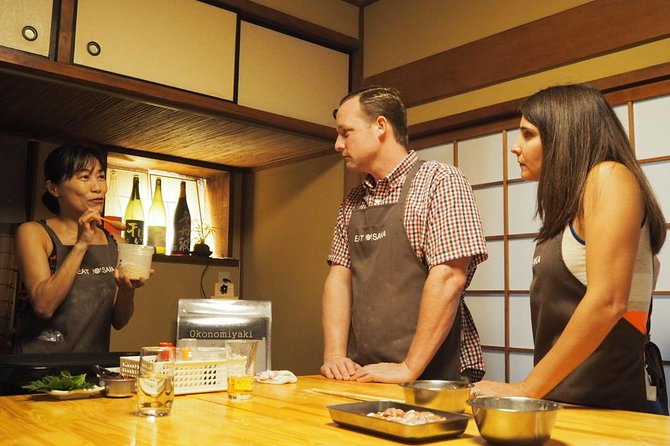
- Old Japanese house kitchen: you’re not cooking in a generic studio, which makes it feel more like Osaka.
- Max 8 people: smaller groups mean you get attention when your technique goes sideways.
- Full Osaka street-food menu: okonomiyaki from scratch, handmade udon, tempura, yakitori, pickled cucumber, and mochi.
- Professional tools and ingredients provided: you cook, you don’t just assemble.
- Beer, sake, or green tea included: you get the reward meal as part of the experience.
- Mobile ticket: easy to manage once you’re in Osaka.
Why an Osaka street-food cooking class beats eating your way around
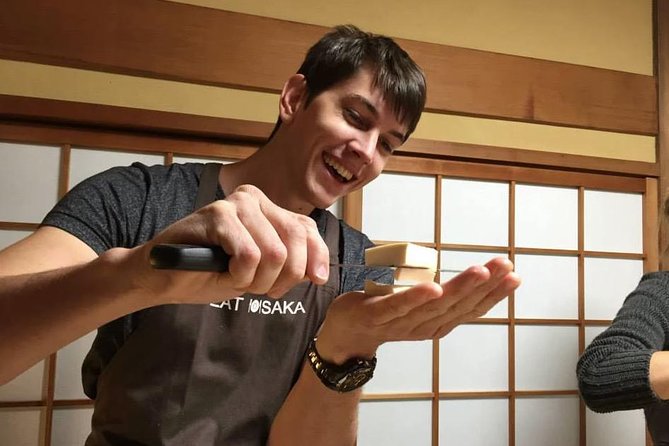
Osaka street food is the kind of food that rewards skill. It’s not just taste. It’s texture. It’s timing. It’s how a batter sets, how noodles feel in your hands, and how sauce clings when it hits heat.
That’s why a cooking class like Eat Osaka feels like a shortcut to understanding the city. You still get food pleasure, but you also learn the process. And when you can re-create what you cooked, you’ll notice it later at stalls and restaurants—what’s crisp, what’s soft, what’s balanced, and what’s just trying to be flashy.
You can also read our reviews of more food & drink experiences in Osaka


The kitchen setting: an old house in Higashinari
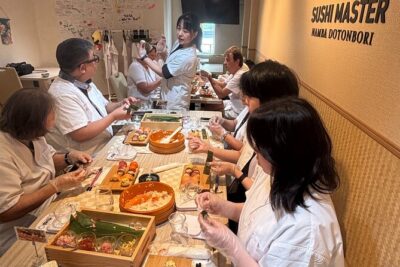
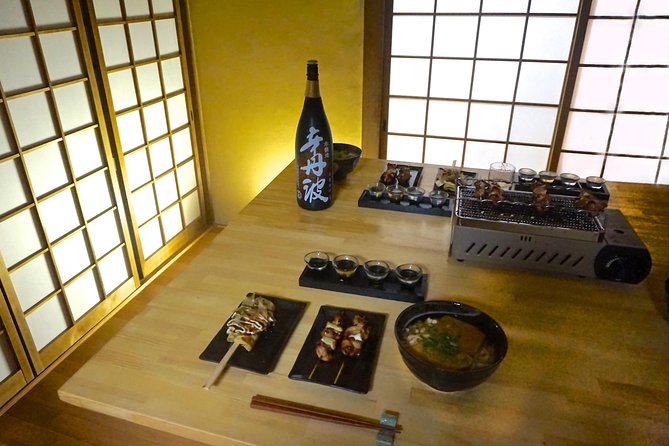
This class is run in a kitchen setup inside an old Japanese house, described as an old restaurant kitchen and a purpose-built cooking studio in an old home. For me, that combination is the point. It’s practical (you’re cooking with proper equipment), but it doesn’t feel like a factory lesson.
The group size is capped at 8 travelers, which changes the whole vibe. You can ask questions without yelling across the room. You can get a second look at a step when your pan work isn’t cooperating. And you’re more likely to actually taste what the food should be like while it’s still fresh and hot.
If you care about authenticity beyond a photo op, this is one of those experiences where the room itself helps you understand the meal.
What you’ll cook: okonomiyaki, udon noodles, tempura, yakitori, and dessert
The menu is the star, and it covers several core Osaka street-food styles. You’re not choosing from a buffet of random dishes. You’re learning a set of techniques that fit together like a city sampler.
Okonomiyaki: building the pancake from scratch
One highlight is Osaka-style okonomiyaki, made completely from scratch. That usually means you’re working through batter and toppings in a way that shows what makes Osaka-style different from other versions.
In a class like this, the value isn’t just the final pancake. It’s understanding the logic behind cooking it: how the batter behaves on the griddle, how heat affects texture, and how to manage flipping and timing without turning it into a sad omelet.
This is also one of the most fun dishes to learn because it’s tactile and forgiving enough to practice. If you want to impress yourself (and your future lunch crowd), okonomiyaki is your ticket.
Hand-made udon noodles: the feel matters
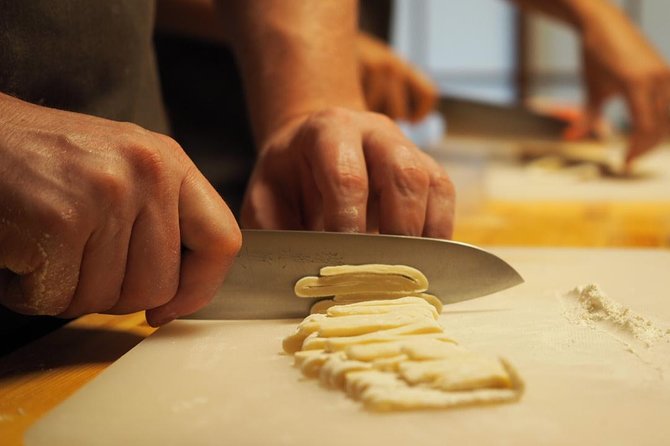
You’ll also learn the secrets of hand-made udon noodles. Noodle-making sounds like a big production until someone helps you understand the mechanics. When you shape and work dough yourself, you quickly learn that udon isn’t just a “carb.” It’s an elastic texture with a specific bite.
The practical payoff: you’ll better understand why udon restaurants can taste similar but feel different. And later, when you order udon in Osaka, you’ll know what to look for—chew, thickness, and how the broth clings.
You can also read our reviews of more tours and experiences in Osaka

Osaka-style tempura and crisp vegetable work
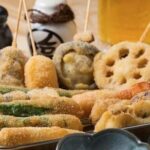
Osaka tempura in a street-food context often means fast heat and smart batter handling. This class includes learning to make Osaka-style tempura, with vegetable tempura showing up in the dish descriptions from the experience.
Why this matters: tempura is one of those foods where temperature control is everything. Even if you don’t become a fryer magician after one session, you’ll walk away with an instinct for crispness and how batter reacts when the oil is right.
Yakitori skewers with the signature sauce
Then come the yakitori skewers, paired with a signature sauce. Yakitori is simple in theory—meat, heat, sauce—but hard to get right consistently without knowing how to glaze and time it.
This is where guidance really pays off. You can’t just slap sauce on and hope. You learn the rhythm that keeps the flavor bold without burning.
Pickled cucumber: the palate reset you’ll actually notice
You’ll make pickled cucumber as part of the menu. It’s not the glamorous dish, but it’s the one that makes the whole meal feel balanced.
In a class setting, it also breaks up the rich flavors so your last bites of okonomiyaki, noodles, or tempura don’t blur together.
Sweet mochi dessert: the friendly ending
To close, you’ll make a sweet mochi dessert. Mochi is a nice finale because it’s chewy and gentle, so it doesn’t fight the savory dishes you’ve been cooking.
If you like desserts that are small and satisfying, mochi is a perfect end-of-meal target.
The meal setup: beer, sake, or green tea while you eat
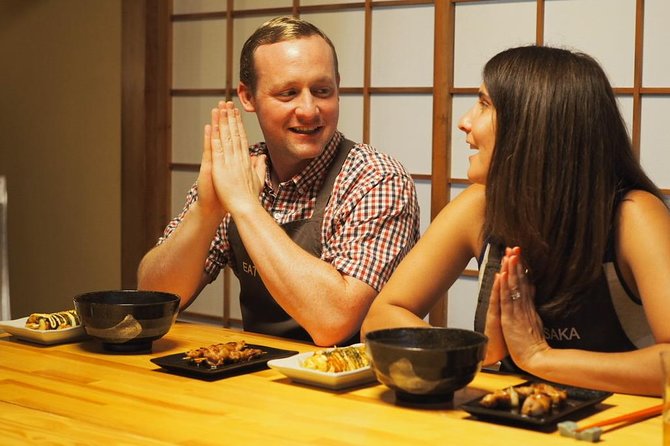
After you finish cooking, you sit down and enjoy what you made with beer, sake, or green tea.
This part is more than a perk. It’s how the experience stays grounded. In some classes, food is a prop. Here, the drinks and sit-down eating are part of the reward cycle: cook, then taste while everything is at its best.
If you’re the type who likes to eat with confidence, this helps. You can taste your food immediately after learning the technique, which makes the next day’s cravings come with context.
The guide experience: bilingual teaching that keeps questions welcome
The class is assisted by a local bilingual chef. In the way it’s run, the chef doesn’t just point at steps. They explain what you’re doing and why, so you can adjust if your first attempt isn’t perfect.
In particular, names like Miki and Nathalie show up in the guide write-ups, and the recurring theme is a calm, welcoming teaching style. That matters because cooking is partly nerves. When you know you can ask questions, your hands learn faster.
For your planning: if you’re worried about language, this kind of structured class helps. You don’t need to speak Japanese to cook. You need to watch, follow, and ask when something looks off.
Timing and logistics: how to place 2.5 hours in your Osaka day
The class runs about 2 hours 30 minutes. That’s long enough to learn multiple techniques, but not so long that you lose your entire evening.
Since the meeting point is near public transportation and you get a mobile ticket, you can treat this as a scheduled anchor in your day. I’d plan it like this:
- Go in with a bit of hunger (you’ll be eating what you cook).
- Don’t schedule a heavy dinner right after. You’ll already have your big meal.
- If you’re sightseeing that day, aim to be nearby so you’re not rushing across Osaka in the final 30 minutes.
The meeting point is:
Eat Osaka, Higashinari, 1丁目-2-10 東中本 東成区 大阪市 大阪府 537-0021, Japan
And the tour ends back at the meeting point, which makes it easier to continue your plans without backtracking.
Price and value: $79.28 makes sense if you compare like-for-like
At $79.28 per person, it’s not cheap. But in a cooking class, you’re paying for real instruction plus the ingredients and equipment used to make the meal.
Here’s what you’re getting that pushes it toward good value:
- A full menu (not just one dish).
- Ingredients and instructions included.
- Professional tools and guided technique.
- Welcome drinks included.
- A sit-down meal with beer, sake, or green tea.
If you tried to recreate this on your own, it wouldn’t be just the cost of food. You’d add time spent hunting ingredients, figuring out technique basics, and paying for equipment and workspace. For many visitors, that’s where the class becomes the smart choice.
If your goal is to taste only, street food stalls will feel cheaper. If your goal is to learn, eat, and take technique home, this price starts to look fair.
Practical tips so your class goes smoothly
A few things that help no matter your cooking skill level:
- Wear comfortable clothes you don’t mind getting splashed or smelling like fried batter. Cooking is messy in the best way.
- Bring a curious mindset. Some steps feel simple until you do them. Ask when you’re uncertain, especially during batter, noodle work, or timing.
- Expect to eat a lot. You’re making a full Osaka street-food plate plus dessert.
- If you have allergies or strict dietary requirements, confirm ahead of time. The only specific dietary mention in the available info is that vegetarian accommodation was reported, but you shouldn’t assume anything beyond that without checking.
Who should book this Osaka street-food class
This is a great fit if you:
- Want to learn how okonomiyaki, udon, tempura, and yakitori are put together.
- Like hands-on experiences more than lectures.
- Prefer a small group with real attention and Q&A.
- Want a meal experience that includes drinks, not just cooking instruction.
You might skip it if:
- You only have time for quick food stops and you hate scheduled activities.
- You need a very customized menu that isn’t described as part of the class setup.
Should you book Eat Osaka Street Food Cooking?
I’d book it if you want an Osaka experience that goes beyond eating. The old-house kitchen feel, the small-group teaching, and the full menu create a rare combo: you learn technique and you leave fed. The price also lines up well with what’s included—ingredients, tools, drinks, and the final meal.
If your travel style is more spontaneous and you hate time blocks, then street food strolling may fit better. But if you’re excited by cooking and want a memorable Osaka day that teaches you something real, Eat Osaka is a strong choice.
FAQ
How long is the Eat Osaka street food cooking class?
The class lasts about 2 hours 30 minutes.
How many people are in the group?
This experience has a maximum of 8 travelers.
What dishes will I learn to make?
You’ll learn Osaka street food including Osaka-style okonomiyaki, hand-made udon noodles, yakitori skewers, tempura, pickled cucumber, and a sweet mochi dessert.
Are drinks included?
Yes. Welcome drinks are included, and after cooking you can enjoy your creations with beer, sake, or green tea.
Where does the class meet?
The start location is Eat Osaka, Higashinari, 1丁目-2-10 東中本 東成区 大阪市 大阪府 537-0021, Japan, and the activity ends back at the meeting point.
Is it easy to get to using public transportation?
Yes, the meeting point is near public transportation.
Can I cancel and get a refund?
You can cancel for a full refund up to 24 hours in advance of the experience’s start time. Free cancellation is available, and changes within 24 hours aren’t accepted.