REVIEW · OSAKA
Ramen-Making Experience in the Osaka Castle Area with Souvenir
Book on Viator →Operated by Ramen Making Studio · Bookable on Viator
Your next ramen habit starts here. In a small studio near Osaka Castle, you’ll build ramen from scratch with real hands-on practice, English guidance, and a take-home souvenir.
I really like the choice of soup bases (tonkotsu, shoyu, or miso). I also love that you make key parts yourself, including noodles and chashu, instead of just assembling a bowl.
One consideration: this is an active cooking class for about two hours, so expect flour, heat, and some hands-on mess. Plan comfy clothes, not your best outfit.
In This Review
- Key highlights to look for
- Ramen-Making in Osaka Castle Country: What Makes This Class Fun and Practical
- Getting There: Osaka Castle Area Without the Headaches
- Inside the Studio: Where Photos Happen Naturally
- The Class Flow in 2 Hours: Noodles, Chashu, Soup
- Noodle making: ramen wheat flour to chewy noodles
- Chashu making: tender chicken simmered in original broth
- Soup making: choose your ramen identity
- Soup Base Choice: Tonkotsu vs Shoyu vs Miso
- The Bowl You Leave With: Taste Plus Technique
- Price and Value: What $85.39 Buys You in Real Life
- Who This Class Suits Best (and Who Might Skip It)
- Should You Book This Ramen-Making Experience Near Osaka Castle?
- FAQ
- How long is the ramen-making class?
- What is the price per person?
- Where is the studio, and how close is it to Osaka Castle?
- Can I choose the soup type?
- Is the class beginner-friendly and family-friendly?
- What’s the cancellation policy?
Key highlights to look for

- Near Osaka Castle, easy to reach by train or on foot
- Pick your ramen base: tonkotsu, shoyu, or miso
- Make fresh noodles using ramen-specific Japanese wheat flour
- Cook chashu yourself with chicken simmered in their original broth
- Small group size (max 8) with real-time Q&A from English-speaking instructors
- Photo-friendly studio details plus a souvenir at the end
Ramen-Making in Osaka Castle Country: What Makes This Class Fun and Practical
Osaka is serious about ramen, and this class gives you the good kind of homework: the kind where you learn by doing. You get a full process overview, from noodles to soup, in a compact studio setting near one of the city’s big sights.
What I’d tell you right away: this experience is designed for normal people, not food-show experts. You can come with zero ramen skills, and the instructors keep things moving so you’re not stuck staring at a counter for two hours.
The best part is the mix of technique and choice. You’re not only making ramen; you’re making a version that matches your taste, because you’ll pick your soup base (tonkotsu, shoyu, or miso). That one decision changes the whole personality of the bowl.
You can also read our reviews of more tours and experiences in Osaka.



Getting There: Osaka Castle Area Without the Headaches
The studio is within walking distance of Osaka Castle, about 20 minutes. If you’re sightseeing in that part of town, it’s a smooth add-on. If your feet are already tired, the area is well connected by train stations.
Here are the station options you can use to keep it easy:
- Tenmabashi Station, Tenmabashi ST exit 13 (about 10 minutes)
- Minamimorimachi Station, Minamimorimachi ST exit 6 (about 10 minutes)
- Tenmangu Station, Tenmangu ST exit 7 (about 5 minutes)
Also helpful for planning: Umeda Sky Building and Namba are each about 20–30 minutes away by train. That means you can pair the class with either area without feeling like you’re crossing the city twice.
You’ll arrive with a mobile ticket. That’s simple for day-of entry, especially if you’re bouncing between sights and don’t want extra papers.
Inside the Studio: Where Photos Happen Naturally

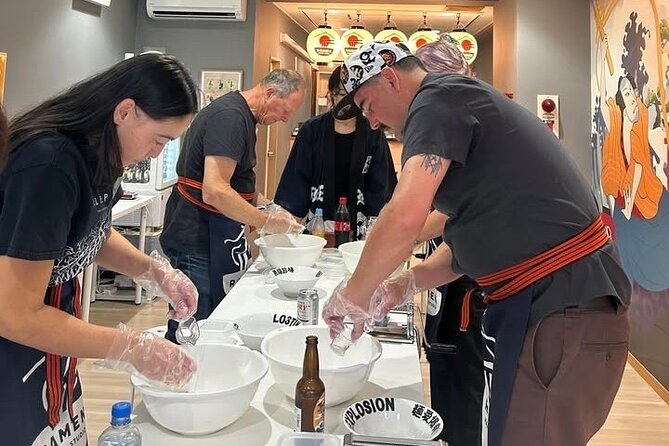
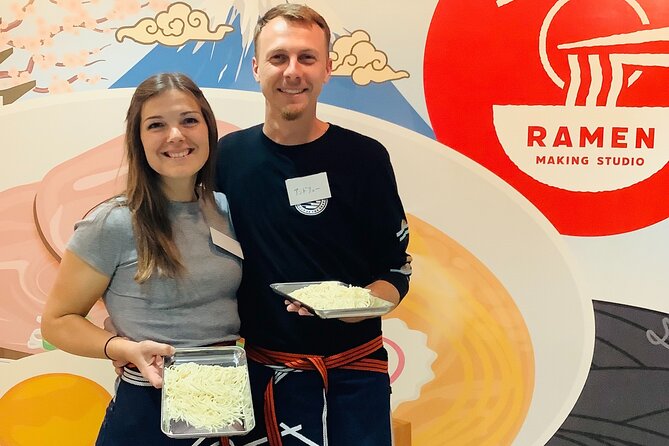
You’ll be in a real ramen-themed studio, not a generic classroom. The walls are decorated with ramen and Japanese motifs, so getting a few pictures is effortless. Even the entrance glass door is a standout: it’s more than 100 years old and made using a technique that no longer exists.
Inside, you’ll also see items reflecting Japanese culture, and the staff will introduce them during the visit. This matters because it keeps the experience from being only about cooking. You’re getting a bit of context while you work, which makes the food you create feel more connected to place.
One practical note: the staff may take photos or videos for social media or advertising. If that’s not your thing, tell the staff before the experience begins so you’re on the same page.
The Class Flow in 2 Hours: Noodles, Chashu, Soup
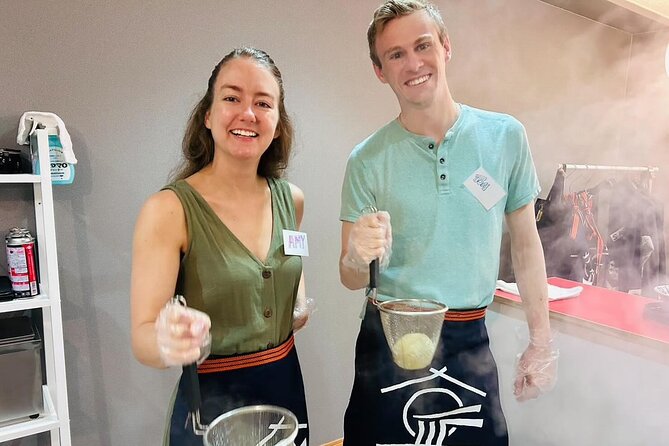
This is a hands-on, small-group class with a maximum of 8 people. That size is big enough to feel social, but small enough that the instructor can actually see what you’re doing and answer questions as you go.
The day runs in a clear sequence. You learn each step from scratch rather than hopping between random stations. Here’s the process focus.
Noodle making: ramen wheat flour to chewy noodles
You’ll use Japanese wheat flour made specifically for ramen, then create your own original noodles. Fresh noodles are taught as a key difference maker: chewy texture and fresher taste than dried noodles. This part is the backbone lesson because it teaches you how the dough behaves, not just the final bowl.

Chashu making: tender chicken simmered in original broth
Next comes chashu. You’ll prepare tender, juicy chashu using chicken simmered in the studio’s original broth. The takeaway here is technique: how simmering creates softness and how seasoning through simmering shapes flavor more deeply than last-minute toppings.
Soup making: choose your ramen identity
Then you’ll make the soup. You choose one of three bases:
- Tonkotsu
- Shoyu
- Miso
Each soup is based on secret recipes from well-known ramen shops, so you’re not only picking a flavor theme. You’re also learning how different styles rely on different building blocks. Expect the staff to guide you through what to do and what to look for, so you understand why each base tastes distinct.
Soup Base Choice: Tonkotsu vs Shoyu vs Miso
Picking between tonkotsu, shoyu, and miso is more than a menu decision. It’s a shortcut to learning how ramen styles differ.
- Tonkotsu tends to feel rich and deep, and it’s often the style people associate with classic Osaka ramen culture.
- Shoyu leans into soy sauce flavor, usually a bit lighter but still savory, so it’s a good choice if you want something familiar and balanced.
- Miso brings a stronger, more warming character. If you like hearty flavors, miso can feel like comfort food with attitude.
If you can’t decide, choose based on the rest of your day. After a lot of walking, tonkotsu or miso might feel like the most satisfying end point. If you want something easier to follow with more sightseeing afterward, shoyu can be the calmer option.
The Bowl You Leave With: Taste Plus Technique
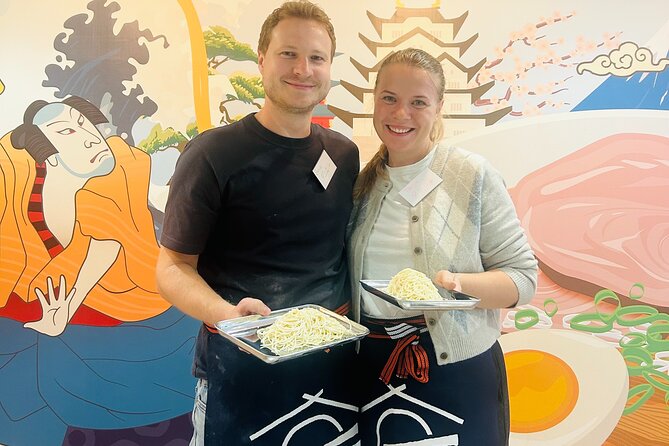
By the end of the class, you’ll have a yummy bowl of ramen you learned to make yourself. The value here is not only that you eat well in Osaka. You take home a process you can repeat.
Even if you don’t master every detail right away, you’ll remember the big lessons:
- What fresh noodles change in texture
- How chashu comes from simmering and timing
- How soup base choice drives the final character
And you’ll get a souvenir at the end, so there’s a physical reminder too.
Price and Value: What $85.39 Buys You in Real Life
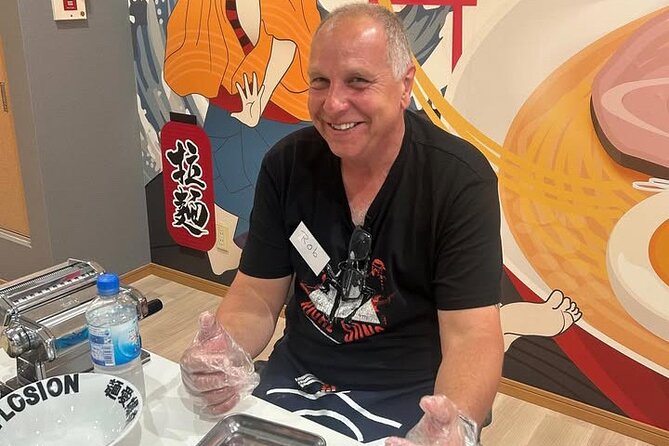
At $85.39 per person, this isn’t a cheap snack activity. But it’s also not just a casual cooking demo. You’re paying for several things you’d otherwise have to piece together:
- Ingredient-level learning (noodles, chashu, soup)
- English-speaking guidance with real-time questions
- A small-group format (max 8), so you’re not lost in a crowd
- A studio experience near a major landmark, so you’re not spending all your time commuting
Here’s how I’d decide if it’s worth it for you. If you love food and you want a real skill, you’ll get value from making multiple components from scratch. If you only want to eat ramen and have no interest in cooking, you can probably find cheaper meals elsewhere.
Who This Class Suits Best (and Who Might Skip It)
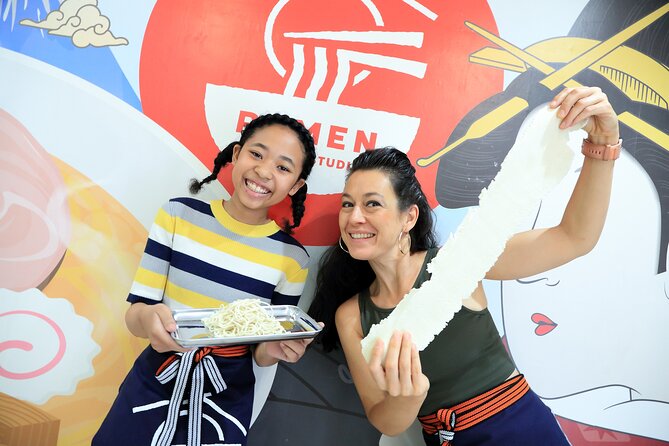
This is a great fit if you want an authentic Osaka activity that isn’t stuck in a rigid sightseeing script. It’s family-friendly and open to all skill levels, which makes it easier if you’re traveling with kids or friends who don’t think they can cook.
It also suits you if:
- You enjoy interactive classes more than museum-style experiences
- You want English-speaking instructions without guessing
- You want to bring home technique you can actually use
It might not be your best match if you strongly prefer passive experiences, or if you don’t want any chance of getting messy while working with dough and cooking steps.
Should You Book This Ramen-Making Experience Near Osaka Castle?
If you’re in Osaka with a ramen obsession, I’d book it. This class hits the sweet spot: hands-on cooking, strong instruction, and a location that keeps your day efficient.
Do it especially if you want to understand ramen as a system, not just a dish. You choose the soup base, you make noodles, you craft chashu, and you leave with something you can taste immediately. That combination is rare.
If you’re unsure, use this simple checklist:
- You’re okay spending about two hours cooking.
- You like the idea of tonkotsu, shoyu, or miso as a guided choice.
- You value an English-friendly, small-group setting near Osaka Castle.
If those fit, you’ll likely come away with both a full stomach and a new ramen skill.
FAQ
How long is the ramen-making class?
The experience runs for about 2 hours.
What is the price per person?
It costs $85.39 per person.
Where is the studio, and how close is it to Osaka Castle?
The studio is within walking distance of Osaka Castle, about 20 minutes on foot. It’s also near several train stations, including Tenmangu (exit 7, about 5 minutes), with other stations around 10 minutes.
Can I choose the soup type?
Yes. You can choose from tonkotsu, shoyu, or miso.
Is the class beginner-friendly and family-friendly?
Yes. It’s family-friendly and open to all skill levels.
What’s the cancellation policy?
Free cancellation is available up to 24 hours in advance for a full refund. If you cancel less than 24 hours before the start time, the amount paid is not refunded.