REVIEW · OSAKA
Kintsugi Workshop: Beauty in Brokenness
Book on Viator →Operated by Pinpoint Traveler, Inc · Bookable on Viator
Cracked pottery turns into gold lines. In this kintsugi workshop in Osaka, you learn how Japanese artisans treat breaks as part of a piece’s story, not a reason to toss it. You’ll work in a real artisan studio, guided step by step by Tomoko-san and her apprentice, using materials that mimic the classic look of lacquer-and-gold repairs.
I really like two things here: first, the instruction is practical, so you actually do the key steps yourself. Second, the setting stays calm and focused, which makes the 3-hour session feel more like a craft lesson than a quick tourist stop.
One consideration: the pottery you repair comes from a studio selection, so if you’re picky about color or shape, you might want to bring your own broken dish (if the workshop allows) or be ready to adapt.
In This Review
- Key Things That Make This Workshop Worth Your Time
- Kintsugi Workshop in Osaka: Why Broken Looks Beautiful
- Finding the Studio Near Public Transit (and Why It Makes the Day Easier)
- Your 3-Hour Flow: From Choosing a Piece to Adding Gold Veins
- What You’ll Actually Learn: Lacquer, Resin, and Metal Powder
- Value and Price: Is $97.73 Fair for a 3-Hour Craft?
- Logistics That Matter: Timing, Group Size, and Getting Home With a Fragile Item
- Should You Choose This Even If You’re Not a Craft Person?
- Who This Workshop Is Best For
- Practical Tips for a Smoother Workshop Day
- Should You Book Kintsugi: Beauty in Brokenness in Osaka?
- FAQ
- How long is the kintsugi workshop?
- What is the group size?
- Do I need prior experience with crafts?
- What techniques will I learn during the workshop?
- Will I be able to take my repaired item home?
- Where is the meeting point and when does it start?
- Is transportation to the venue included?
- What is included in the price?
- What if the weather is poor or I need to cancel?
Key Things That Make This Workshop Worth Your Time
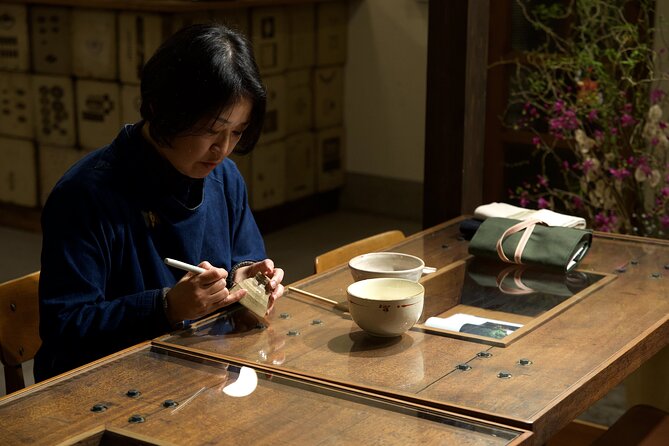
Gold-repair technique with modern materials
You’ll use synthetic lacquer, resin, and a silver-based gold powder for a clean, teachable process.
A small group cap (max 8)
That limit keeps the pace comfortable and makes it easier to get personal help.
Tomoko-san’s patient, step-by-step guidance
The vibe is welcoming and you’re shown what to do before you do it.
You leave with a completed piece
You’re not just watching. You take your repaired pottery home in safe wrapping.
Studio atmosphere with real tools and real work
This feels like learning in an artisan’s workspace, not in a generic classroom.
Kintsugi Workshop in Osaka: Why Broken Looks Beautiful
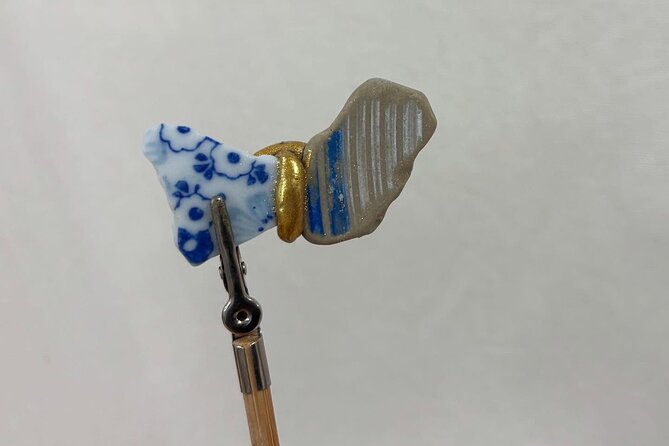
Kintsugi means joined by gold. It’s rooted in the Japanese idea that things change, break, and don’t have to be perfectly “fixed” to be valuable. Instead of hiding flaws, kintsugi turns them into visible lines—like a map of what happened to the object.
That philosophy matters here because you aren’t just making something decorative. You’re learning a mindset: repair as respect. In the studio, you’ll hear the cultural background—how this craft connects to wabi-sabi and the acceptance of impermanence—then you’ll put that idea into practice with your hands.
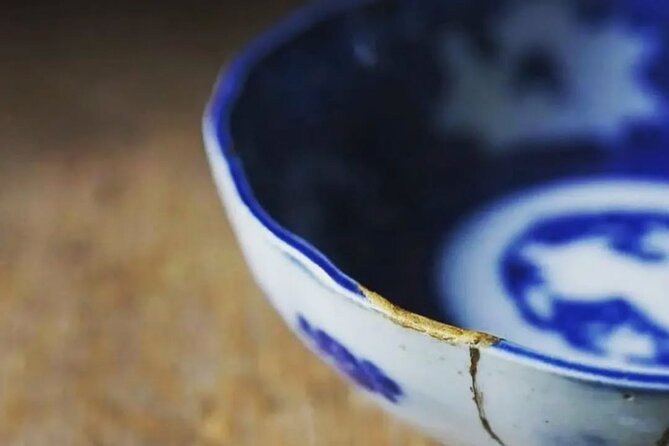
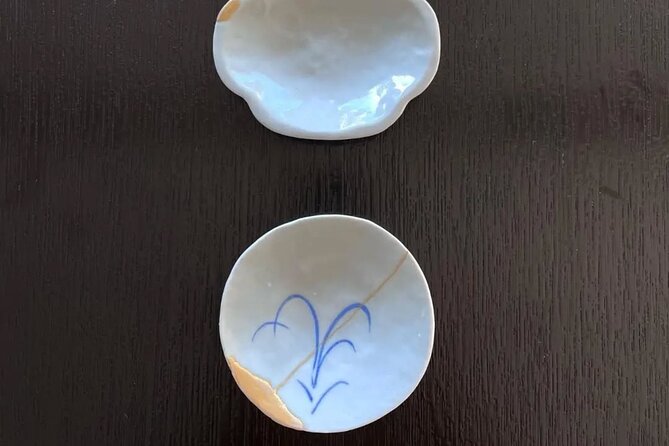
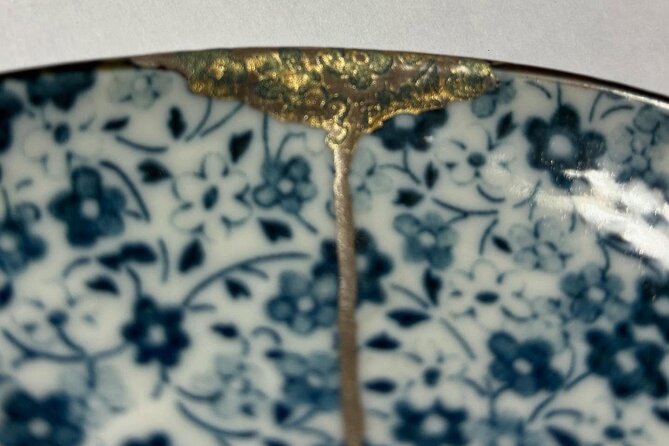
And yes, it’s also beautiful in a very tangible way. When you dust the repair areas with metal powder, you get that signature shimmer. The gold-like veins aren’t meant to look invisible; they’re meant to look intentional.
You can also read our reviews of more tours and experiences in Osaka


Finding the Studio Near Public Transit (and Why It Makes the Day Easier)
The workshop meets at 102, 1-chōme-4-18 Shigita, Joto Ward, Osaka. It’s listed as near public transportation, and in practice that’s a big deal. You’re spending your time working with materials and going home with a fragile item, so fewer transfers means less stress.
Start time is 3:00 pm, and the activity ends back at the meeting point. The 3 pm slot also works well if you’re already in Osaka exploring during the day. It’s a nice change from temples and markets: you get a hands-on break that still feels deeply Japanese.
Also, you get confirmation at booking and a mobile ticket is used. That keeps everything simple on the day.
Your 3-Hour Flow: From Choosing a Piece to Adding Gold Veins
This is built as a focused, step-by-step workshop, not a lecture marathon. Plan for about 3 hours total, hands-on from the moment you arrive.
Here’s how the session typically feels from start to finish:
1) Welcome + kintsugi context
You’ll get a quick overview of what kintsugi is, where it came from, and why artisans historically treated broken ceramics as worthy of repair. You’ll also learn what you’ll be doing in the workshop so nothing feels mysterious once you’re standing at your work station.
2) Pick from a selection of broken pottery
You’re given access to a selection of broken pieces to repair. This choice is part of the fun, but it’s also the one moment where you may need to adjust expectations if you’re very specific about shape or color.
3) Bond and align the broken parts
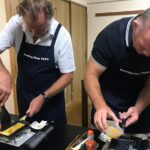
Using synthetic lacquer, you’ll bond the pottery pieces back together. This is where the craft becomes real: you’re aligning cracks, controlling the repair line, and learning the technique so the join looks clean.
4) Fill missing fragments with resin
Next, you’ll fill gaps with resin. This helps recreate the shape where ceramic is missing. It’s also the step that makes the final piece feel solid enough to be taken home safely.
5) Dust with silver-based gold powder
Finally, you’ll gently dust your piece with silver-based golden powder. The goal isn’t just shine. It’s the visual signature of kintsugi: a repair that shows character and history.
6) Final handling + taking it home
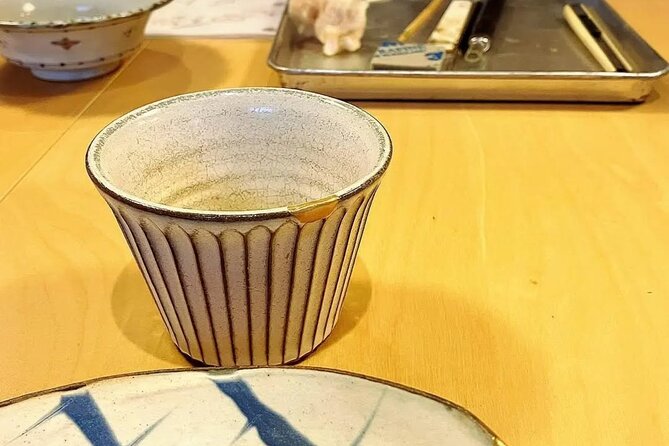
At the end, you’ll take your completed repaired item home. In at least one case, a participant specifically noted they could take a wrapped teacup safely. That safe wrapping detail is worth trusting—handling fragility is part of the craft’s practical reality.
What You’ll Actually Learn: Lacquer, Resin, and Metal Powder
If you’ve ever watched kintsugi videos online and thought, I could never do that, this workshop is a good reality check. The instruction is hands-on and designed for non-experts.
Here’s what each material step means for you:
Synthetic lacquer (the join)
Lacquer is the bonding layer. You’ll learn how to bring broken ceramic parts together so the repair line looks intentional instead of messy. Because the lacquer is part of a traditional method, you’re learning a process that connects directly to historical practice—just using modern materials for teaching and consistency.
Resin (the missing piece fixer)
Ceramics don’t always break cleanly. When fragments are missing, resin becomes your tool for restoring the object’s form. You’ll practice filling those gaps in a way that helps the piece feel complete.
Silver-based gold powder (the visual signature)
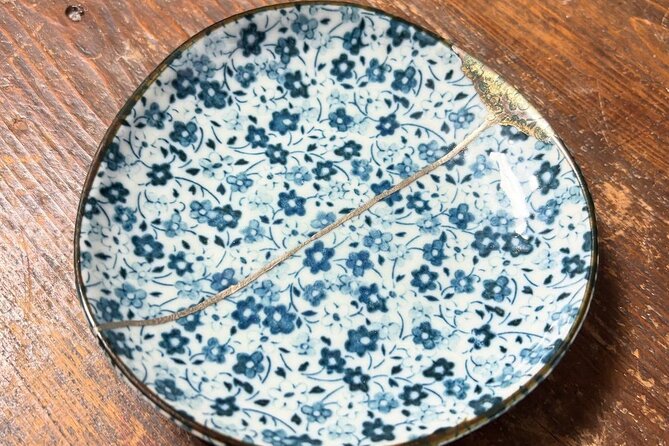
This step is where your work looks like kintsugi. Dusting the repair with metal powder creates the signature shimmering veins. It’s also the part where your piece becomes personal: your placement, your repair line, and your dusting style all shape the final look.
A nice bonus: the workshop includes the history, philosophy, and cultural significance alongside the technique. That means you’re not left with a shiny object but no context. You’ll understand why the repair is meant to be seen.
Value and Price: Is $97.73 Fair for a 3-Hour Craft?
At $97.73 per person, this isn’t a budget activity, but it’s also not trying to be a luxury show. For the price, you’re paying for three big things:
1) Expert instruction during the entire hands-on process
This is not one quick demonstration. You’re guided while you bond, fill, and finish.
2) All tools and materials provided
Brushes, resin, lacquer, powders—everything needed for the work is included. That’s a real part of value because buying materials for one project wouldn’t make sense.
3) You take home a completed repaired piece
That’s the end product. You’re not leaving with a certificate or just photos of your work.
It also helps that the group is capped at 8 travelers. A small group is often where the craft instruction quality improves—more time for questions, less waiting.
Finally, the booking pattern matters: the workshop is often booked about 20 days in advance on average. That’s a sign demand is solid and it’s worth securing your spot early rather than hoping a late decision works out.





Logistics That Matter: Timing, Group Size, and Getting Home With a Fragile Item
The workshop starts at 3:00 pm and runs about 3 hours. That means you should plan your Osaka day around it rather than squeezing it between other long activities.
You also need to think about the trip home with a repaired ceramic. Even with safe wrapping, treat it like what it is: a handcrafted item. A good approach is to keep your schedule light after the workshop so you don’t end up rushing on crowded trains or carrying extra bags.
Group size is maximum 8, which is genuinely helpful. It lowers the chance you’ll be left waiting for your turn, and it usually means the instructor can check your work as you go.
And if you’re the type who likes a “slow down” activity: this workshop fits. People have described the atmosphere as welcoming and relaxed, with guidance that includes patience if you’re new to crafts.
Should You Choose This Even If You’re Not a Craft Person?
Yes—this is one of those rare activities where you don’t need prior skill. The workshop explicitly says no experience is needed, and the materials are ready for you.
Here’s the part to be honest about: kintsugi does require attention. You’re working with bonding, filling, and finishing steps where precision helps the final result. If you’re the kind of person who enjoys careful tasks, you’ll probably have a great time.
Also, don’t ignore the pottery-selection detail. One practical tip from the workshop experience is worth repeating: there may not be a huge range of broken pieces to choose from. If you’re very particular about shape or color, plan accordingly—bring your own broken dish if it’s allowed, or be flexible about what’s available.
Who This Workshop Is Best For
This kintsugi workshop works especially well if you:
- Want a hands-on craft in Osaka with real cultural context
- Enjoy working with your hands and learning a step-by-step technique
- Like the idea of taking home an object with meaning, not just a souvenir
- Want a smaller group experience rather than a large, fast-moving class
It may not be the best fit if you:
- Need lots of choice in the piece you repair
- Are only looking for a quick look-and-leave activity
- Can’t handle carrying a wrapped ceramic item afterward
Practical Tips for a Smoother Workshop Day
These tips are simple, but they help:
- Arrive with time to settle in. A 3 pm start plus a hands-on process goes faster than you’d think.
- Keep your transport plan easy after the workshop. You’ll be taking a repaired item home.
- If you’re sensitive to strong smells, resin and lacquer products can have a scent. The workshop is set up for comfort, but it’s still good to be aware.
- If you have a specific style in mind for your repaired piece, ask about piece selection early when you book.
One neat detail: in at least one case, a participant received photos of the event the next day. So if you like having a memory trail beyond the object itself, keep an eye on your messages after the workshop.
Should You Book Kintsugi: Beauty in Brokenness in Osaka?
I’d book it if you want a meaningful Osaka experience that mixes art, philosophy, and practical skill. For the money, you’re getting more than a “craft demo.” You’ll learn the actual steps—lacquer joining, resin filling, and metal powder finishing—and you’ll leave with your own repaired pottery.
Book it sooner rather than later, since it’s commonly reserved about 20 days in advance and the group size is limited. And if you care a lot about the exact look of the finished item, consider whether the studio’s selection fits your preferences.
If you’re curious about wabi-sabi, resilience, and the idea that beauty can include visible repair lines, this workshop gives you more than a concept. It gives you a finished object you can put on a shelf and think about every time you see it.
FAQ
How long is the kintsugi workshop?
The workshop lasts about 3 hours.
What is the group size?
The workshop has a maximum of 8 travelers.
Do I need prior experience with crafts?
No experience is needed. The tools and materials are provided, and you’ll be guided by a professional artisan.
What techniques will I learn during the workshop?
You’ll learn traditional kintsugi techniques using modern materials, including bonding pottery with synthetic lacquer, filling missing pieces with resin, and dusting with a silver-based gold powder.
Will I be able to take my repaired item home?
Yes. The workshop includes your completed kintsugi piece to take home.
Where is the meeting point and when does it start?
The meeting point is 102, 1-chōme-4-18 Shigita, Joto Ward, Osaka, 536-0015, Japan, and it starts at 3:00 pm. The activity ends back at the meeting point.
Is transportation to the venue included?
No. Transportation to the venue is not included, so you’ll need to arrange your own way to the meeting point.
What is included in the price?
The price includes all necessary tools and equipment, hands-on instruction, access to broken pottery pieces to repair, and a history/philosophy overview. It also includes the completed piece you take home.
What if the weather is poor or I need to cancel?
The experience requires good weather. If it’s canceled due to poor weather, you’ll be offered a different date or a full refund. You can cancel for a full refund up to 24 hours in advance.