REVIEW · OSAKA
Osaka Highlights: 4-Hour Walking Tour with Castle
Book on Viator →Operated by Pinpoint Traveler, Inc · Bookable on Viator
Neon, history, and snacks in one loop. This 4-hour Osaka highlights walking tour mixes big-name stops with smaller neighborhood streets, and it ends in the Namba/Dotonbori area for an easy follow-on night out. What I like most is the simple, walkable flow between Osaka-jo and the city’s electric entertainment districts, plus the way the guide helps you make sense of what you’re seeing.
Two things I especially like: the focus on real neighborhoods like Shinsekai and Dotonbori backstreets (not just the main strip), and the on-the-ground help from guides such as Kevin, Oisin, Hugo, and Lito who keep the day moving while answering questions. The tour also feels flexible, with guides tailoring the route and pacing to your group, including families.
One consideration: expect a good amount of walking and subway stair time. The route is designed for people with moderate physical fitness, and you’ll want comfortable shoes from the start.
In This Review
- Key Points You’ll Feel Right Away
- The Route Starts at Tempozan and Finishes Near Namba
- Osaka Castle: Great Grounds, Skip the Interior Feeling
- Osaka Tsuruhashi Ichiba Market: Food and Fashion Collide
- Abeno Harukas Area: Getting a High View Without Paying for the Top
- Shinsekai and Dotonbori: Old Neon Fun Plus Backstreet Detours
- Why the Guide Makes This Tour Feel Worth It
- How Much Value You’re Getting for $80
- Who This Tour Is Best For
- Should You Book This Osaka Castle and Neighborhood Walking Tour?
- FAQ
- How long is the Osaka highlights tour?
- What does the tour cost?
- Is this tour private?
- Where does the tour start and end?
- Are morning and afternoon departures available?
- What’s included in the price?
- What’s not included?
- Do I need to buy tickets for the stops?
- Can solo travelers book this tour?
Key Points You’ll Feel Right Away
- Private tour, not a cattle line: only your group, with a fluent English (or selected language) guide.
- Two big layers of Osaka: Osaka Castle area plus market-and-neighborhood life in Dotonbori and Shinsekai.
- Tsuruhashi Ichiba market stop: a local-style time-warp where food and fashion mix in a way that feels distinctly Osaka.
- Abeno Harukas area view option: you get a high look without paying for the very top.
- Ends in Namba/Dotonbori: perfect location to continue eating, shopping, and people-watching on your own.
- Flexible departures: morning or afternoon start, so you can match the tour to your plans.
The Route Starts at Tempozan and Finishes Near Namba
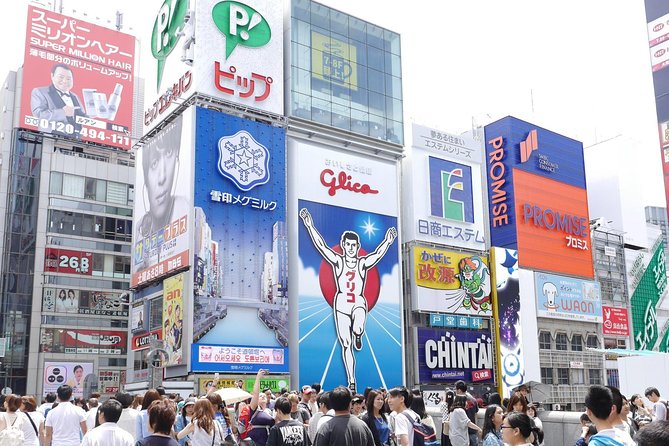
This tour is built around an easy half-day arc: you begin at the Tempozan Ferris Wheel area (Minato Ward) and finish around Namba Station / Dotonbori. That matters because Osaka can feel spread out—ending near Namba saves you the headache of figuring out how to get back into the action.
The tour is private and priced per person (listed at $80.00), and it’s designed so you can choose either a morning or afternoon departure. You’ll also get a mobile ticket, which is handy when you’re hopping between transit and street-level sights.
Transportation isn’t included in the price. The tour lists about ¥800 per person for getting around during the experience, plus hotel pickup/drop-off is available for ¥3,000 within central Osaka. If you’re staying outside central areas, you’ll probably prefer using transit rather than paying for pickup, but it’s nice that pickup exists as a fallback.
One practical note: the meeting spot is near public transportation, and the tour suggests using a subway day pass to reach Tempozan. Bring some cash just in case—one guide-led group specifically mentioned needing cash for subway tickets. Even if IC cards make things smoother, extra cash is cheap insurance.
You can also read our reviews of more walking tours in Osaka


Osaka Castle: Great Grounds, Skip the Interior Feeling
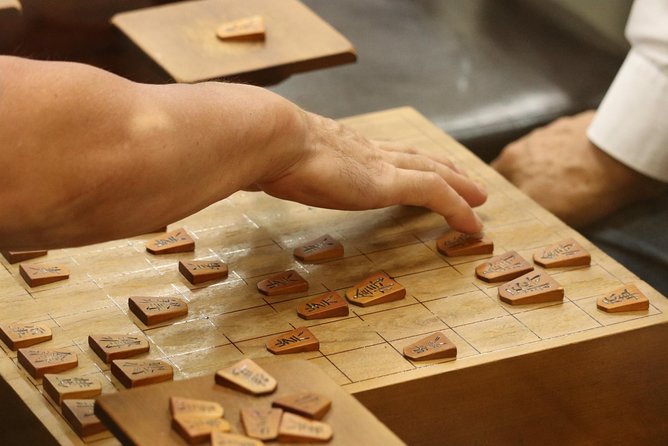
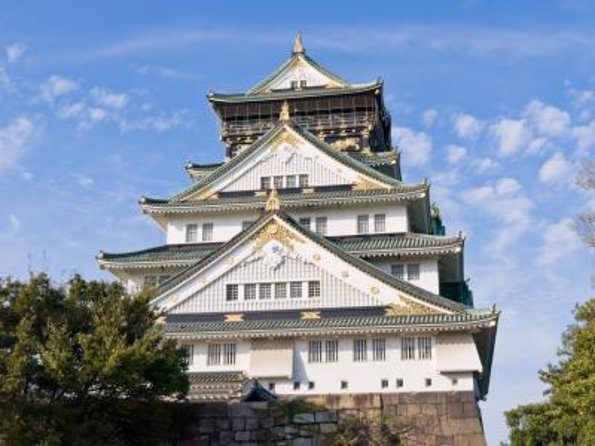
Osaka Castle is the headline, but the most valuable part of this stop is the setting. The park grounds and the exterior of Osaka-jo are where the payoff is. The tour guidance is very direct here: don’t feel like you must force your way into the interior if you’re not feeling it.
In practical terms, you’ll use about an hour at this first stop. That’s enough time to see the exterior views and walk the surrounding area, then reset before the day becomes more street-level and sensory (markets, signage, and neighborhood alleys).
If you’re a photo person, this is a strong start. Castle exteriors give you a recognizable Osaka frame, and it also helps you orient yourself later when you see different parts of the city. It’s like setting your bearings before you start chasing neon.
A balanced expectation to hold: if you love museum-style interiors, you may want more time inside. But if your travel style is “see the place, then move,” the tour’s approach makes sense. The admission is listed as free for this stop, so you’re not losing money by spending your time where you actually want it.
Osaka Tsuruhashi Ichiba Market: Food and Fashion Collide
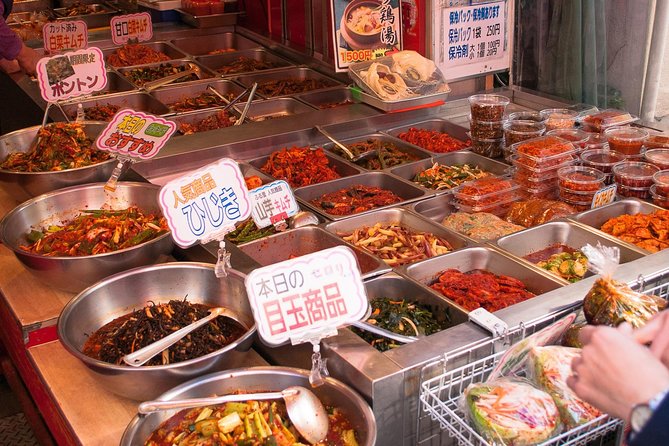
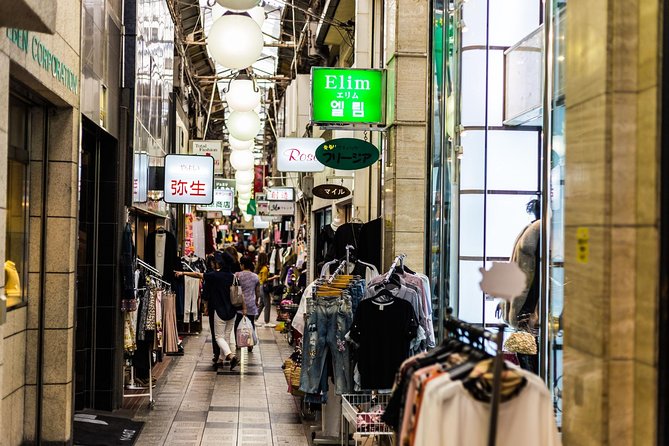
Next comes Osaka Tsuruhashi Ichiba, a market stop built for texture. This is one of those places where you can watch the city at work: stalls, snacks, clothing, and the constant motion of people shopping and browsing.
You’ll have about 30 minutes here. That short window works because the goal isn’t to tour every stall. It’s to experience the vibe and see what makes the market feel like a local institution rather than a staged tourist stop.
What I’d pay attention to during this segment:
- Look at how different sellers set up and how shoppers move through the aisles.
- Notice the mix of everyday food and fashion items—this market is known for that collision of categories.
- If you want snacks, this is a logical place to grab something light because the rest of the day keeps you walking.
One small downside: a market can turn into a “where do I look first” moment. With only 30 minutes, you’ll get the most from it if you decide in advance what you want: a quick taste, a visual browse, or both.
Also, you’re moving from castle grounds into an older, busier local environment. The guide’s pacing matters here, especially if your group wants to stop and talk to vendors or check out specific aisles.
Abeno Harukas Area: Getting a High View Without Paying for the Top
The third stop is the Abeno Harukas area, where the big feature is height and perspective. The tour’s approach is practical: you don’t pay to go to the very top. Instead, you get a view that’s almost as good, and you avoid long waits for the most expensive ticket option.
You’ll spend about 30 minutes here. That time is meant for photos, quick orientation, and a “now I get the city shape” moment. High points are useful in Osaka because it’s a layered place—rail lines, commercial zones, and dense neighborhoods can make it hard to build mental geography.
The admission is listed as free in the tour info for this stop, which adds value. But the real benefit is how the guide helps you avoid the expensive bottleneck. Waiting in line is time you could spend walking a neighborhood you actually chose.
If you’re someone who hates queues, this segment should feel like a win. If you’re a serious skyline-chaser and want the absolute top view, you’ll have to weigh whether that extra ticket is worth it for you. This tour is designed for balance, not extremes.
Shinsekai and Dotonbori: Old Neon Fun Plus Backstreet Detours
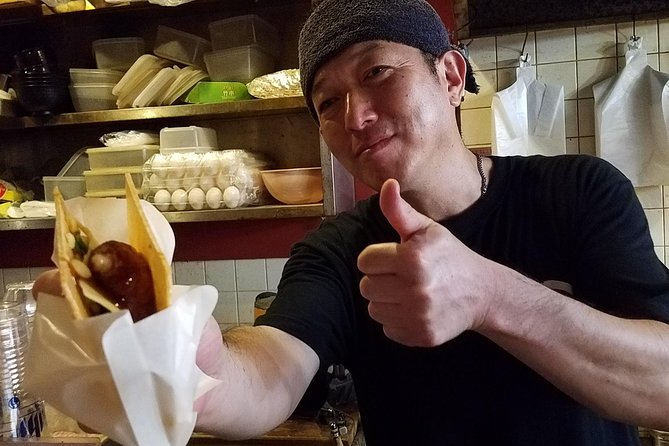
After the view stop, the tour leans hard into neighborhood energy. First comes Shinsekai, an entertainment district with about a hundred years of history. Here you’re meant to notice contrasts: parts that still look shiny and parts with worn patina. That mixture is the point—it gives the area character rather than a museum-clean vibe.
You get about 30 minutes in Shinsekai. With that amount of time, you won’t feel trapped in a single street. You’ll be able to scan the sights, take photos, and feel how the district works as a place for outings and casual fun.
Then it’s on to Dotonbori, where the tour does something smart: it includes the famous icons (like the running man area) while also guiding you into smaller backstreets. Those side streets are where the experience stops feeling like a straight line of crowds.
You’ll have about 30 minutes for Dotonbori too, which is enough to see the main chaos and still get a taste of the quieter lanes. This is where you can decide what kind of Osaka evening you want:
- If you want street food and lights, keep walking the bigger lanes.
- If you want shops and less crowded corridors, follow the backstreet energy the guide shows you.
The tour ends in the Namba/Dotonbori area, and the operator can point you toward the station. That’s a real practical win if you don’t want to waste your last hour of the day figuring out transit.


Why the Guide Makes This Tour Feel Worth It
A walking tour is only as good as the human running it. In the feedback for this experience, names like Hugo, Kevin, Oisin, Lito, Ferdinand, Vince, Alex, and Thomas come up again and again—and the common thread is how guides handle storytelling and pacing.
You’ll likely notice three guide moves on this itinerary:
- Clear explanations tied to what you’re seeing (castle context, market culture, district history).
- Photo-friendly timing so you don’t end up snapping pictures while walking uphill.
- Flexibility when your group wants more time in a specific place.
One pattern from guides in the comments: they adjust to crowds and can even keep a kid engaged when family schedules get tricky. That flexibility matters because a fixed group checklist can make you feel rushed. Here, the structure is strong, but the pacing is meant to stay human.
If you’re the kind of traveler who likes questions—history, food, why neighborhoods are arranged the way they are—this tour format makes that easy. You aren’t stuck listening at a bus stop. You’re walking through the answer.
How Much Value You’re Getting for $80
Let’s talk value in real terms. The listed price is $80 per person for a private tour. That sounds simple, but the value depends on what you’re comparing it to: an all-day tour, self-guided transit plus tickets, or a smaller one-stop tour.
Here’s the value logic:
- You’re paying for a fluent guide, private group time, and a plan that covers multiple areas in a short window.
- Stops include Osaka Castle, Tsuruhashi Ichiba, Abeno Harukas area viewpoints, Shinsekai, and Dotonbori—mixing big icons with local-feeling streets.
- Admission is listed as free for each stop in the itinerary notes, which helps keep costs predictable.
Costs you should plan for:
- Transit during the tour: about ¥800 per person (listed).
- Hotel pickup/drop-off: optional, ¥3,000 within central Osaka.
- Food and drinks: not included.
Is it expensive? Not if you’re using transit anyway and you want someone to connect the dots. But if you’re on a tight budget and don’t care about guidance, you could recreate the route alone. This tour is best when you want the streets interpreted—why they look that way, how people use them, and how to move efficiently between them.
Also, the tour info mentions group discounts and shows that it has been booked frequently recently. If you’re traveling with friends, the per-person value can get even better compared with solo scheduling.
Who This Tour Is Best For
This is a good match if you:
- Want a first-time Osaka overview without spending a full day.
- Like mixing famous sights with streets that feel lived-in.
- Prefer walking and transit over long car rides.
- Travel solo but still want a real local guide experience.
It’s also a strong option for families because guides can keep the day workable and flexible. If your group can handle stairs and around four hours of active movement, you’ll get the most from the route.
If you’re someone who hates walking, this might feel like too much. The itinerary is designed for movement between multiple districts, not for sitting down every 15 minutes.
Should You Book This Osaka Castle and Neighborhood Walking Tour?
I’d book it if your goal is to get bearings fast, then finish with an evening plan already in place. The ending near Namba/Dotonbori is a big deal. You walk out with momentum, not with a confusing transit problem.
Skip the tour (or rethink) if you want a slower pace, minimal stairs, or a museum-heavy day where you must go inside every ticketed feature. The castle stop is guided with a clear time plan, and it leans toward the grounds more than the interior.
For most people, though, the mix is exactly right: a start that gives Osaka a face (Osaka-jo), a market that shows daily life (Tsuruhashi Ichiba), a height moment that improves your mental map (Abeno Harukas area), and then the neon districts where Osaka feels like Osaka (Shinsekai and Dotonbori). Add in the flexible, photo-friendly guidance style attributed to guides like Kevin and Oisin, and you’re set up for a fun, efficient half-day.
FAQ
How long is the Osaka highlights tour?
It lasts about 4 hours.
What does the tour cost?
The price is listed as $80.00 per person.
Is this tour private?
Yes. It’s a private tour/activity, and only your group will participate.
Where does the tour start and end?
The meeting point is at Tempozan Ferris Wheel, and the tour ends in the Namba/Dotonbori area near Namba Station.
Are morning and afternoon departures available?
Yes. You can choose either a morning or an afternoon departure.
What’s included in the price?
The tour includes a private tour with a fluent English (or selected language) guide, plus a personalized itinerary with flexibility for your interests.
What’s not included?
Transportation during the tour is not included (listed as approx. ¥800 per person), and hotel pickup/drop-off is optional. Food and drinks are also not included.
Do I need to buy tickets for the stops?
The itinerary notes admission ticket free for the listed stops.
Can solo travelers book this tour?
Yes. Solo travelers are welcome.