REVIEW · OSAKA
Osaka: Okonomiyaki Cooking Class with Beer or Soft Drink
Book on GetYourGuide →Operated by Do co., Ltd · Bookable on GetYourGuide
Turn up, cook, and eat your own okonomiyaki. This Osaka class is a friendly, hands-on way to learn Japanese soul food without guessing your way through the recipe, and you get to hear about okonomiyaki history from the instructor along the way. The group stays small, so you’re not stuck watching from the sidelines.
I especially like the ingredient choice part, because it turns a standard dish into your own version instead of a one-size-fits-all meal. I also like that you eat what you make right away, hot off the cooking surface, with a choice of Japanese beer or a soft drink.
One possible drawback: the class is not suitable for people with gluten intolerance, and it’s not set up for wheelchair users, so check your needs before you book.
In This Review
- Key things to know before you go
- Why Osaka’s Okonomiyaki Class Feels Like Local Food School
- Meeting at Nakatsu Station (Exit No. 3): Easy to Find, Quick to Start
- Okonomiyaki Backstory While You Cook: Why This Dish Means Osaka
- Choosing Your Own Ingredients: 10 Variations That Actually Change the Dish
- Step-by-Step Cooking in a Small Group: Clear Guidance, Not Guesswork
- Eating Your Hot Okonomiyaki: What Comes After the Work
- How Well This Fits Kids, Couples, and Food Curious Solo Travelers
- Price and Value: Is $51 Worth It?
- A Few Things to Consider Before You Book
- Should You Book This Osaka Okonomiyaki Cooking Class?
- FAQ
- How long is the okonomiyaki cooking class?
- Where do we meet for the class?
- What is included in the price?
- Can kids and adults do this class together?
- Is this class suitable for people with gluten intolerance?
- What drink options are available with the meal?
- Is the class wheelchair-friendly?
Key things to know before you go

- Small group (up to 4): You get personal attention while you cook, not a rushed factory-style experience.
- 10 variations to customize: You’ll make choices that shape your final okonomiyaki instead of just following one script.
- History talk included: You’ll learn why okonomiyaki matters in Osaka while you cook, not after you’re done.
- English-speaking instructor: You can ask questions and actually understand the process.
- Beer or soft drink pairing: Your meal comes with a drink that fits the vibe and the flavors.
Why Osaka’s Okonomiyaki Class Feels Like Local Food School

There’s something great about learning food the way locals do—by making it. This class focuses on okonomiyaki, the Japanese savory pancake you’ll see across Osaka, and it turns the usual tourist approach (watch, walk, snack) into a proper hands-on lesson.
You’ll start with a short look at the dish’s background, then move into the fun part: building your own okonomiyaki using ingredients you can choose. That means you’re not just copying one version. You’re learning how the dish comes together so you can recreate it later, even if your toppings differ.
The best part for most people is the tone. The class is designed to be comfortable for both kids and adults, which usually means the pace is forgiving and the instructor is geared toward making sure you get it right.
You can also read our reviews of more food & drink experiences in Osaka


Meeting at Nakatsu Station (Exit No. 3): Easy to Find, Quick to Start
Logistics matter, especially when you’re trying to fit class time into a busy Osaka day. You’ll meet your English speaking guide at the ground floor of Nakatsu Station, Midosuji Subway Line, at Exit No. 3.
Because the class is only one hour, you’ll want to give yourself a little buffer when you arrive at the station. Osaka is easy, but stations can be confusing if you’re moving fast. Once you’re there, the rest of the time should feel straightforward: meet your instructor, choose your preferences, cook, and eat.
Also, since the class is limited to four participants, you’ll likely feel like the plan is organized around you, not around rotating through a crowd.
Okonomiyaki Backstory While You Cook: Why This Dish Means Osaka
This experience doesn’t treat okonomiyaki as just a tasty item on a menu. You’ll learn about the dish’s history from the instructor before you get too deep into cooking.
That little shift changes how you eat. Instead of thinking okonomiyaki is only a street food you happened to try, you understand why it’s associated with Osaka culture and everyday food life. And when you’re building your own pancake, the backstory gives you a reason to care about the details—texture, balance, and topping choices.
From the way the class is described, the instructor doesn’t just recite facts. You should expect a conversation style that keeps the story connected to the cooking. That also makes it easier for non-foodies to enjoy, because you’re not getting a lecture. You’re learning while you’re actively involved.
Choosing Your Own Ingredients: 10 Variations That Actually Change the Dish

Here’s the part you’ll feel most. You’ll pick your favorite ingredients and make an okonomiyaki that matches your taste. The class offers ten variations, and you’ll have enough guidance to choose confidently without stress.
This matters for two reasons:
First, okonomiyaki is personal. People enjoy different combinations of toppings and flavors, so the option to tailor your pancake means you’re more likely to end up with something you truly like.
Second, the customization helps you learn. Even if you don’t remember every detail later, you’ll understand the concept: how changing ingredients changes the overall experience.
The class structure is set up so you won’t be left to figure things out alone. The instructor will carefully teach you how to make your okonomiyaki, which is a big deal if you’ve never cooked Japanese food at home.
Step-by-Step Cooking in a Small Group: Clear Guidance, Not Guesswork
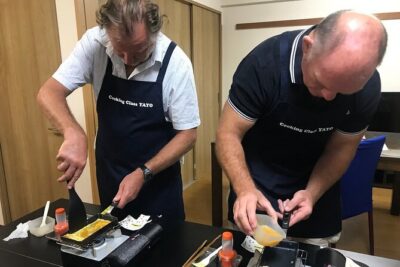
The class is built around hands-on cooking with personal guidance. You’ll each get what you need—all necessary ingredients for okonomiyaki are included—and you’ll make one okonomiyaki per participant.
You should expect a straightforward teaching flow: the instructor explains what you’re doing, you follow along, and you get corrected or helped if needed. The experience is described as suitable for kids and adults together, which usually means the teaching is patient and easy to follow.
Also, the small group size (up to four participants) makes a difference. In a bigger group, you often wait for attention. Here, you’re more likely to get quick answers when something feels unclear—how to handle your batter, how to assemble your toppings, and how to manage the cooking so it comes out hot and ready to eat.
If you’re the type who likes learning a process, this format is great. You’ll leave with more than a full stomach—you’ll leave with a clearer idea of how to recreate okonomiyaki at home.
You can also read our reviews of more cooking classes in Osaka



Eating Your Hot Okonomiyaki: What Comes After the Work
You won’t just cook and leave. Your finished okonomiyaki will be served hot, which makes the whole experience feel earned.
Then comes the pairing: you’ll enjoy your homemade okonomiyaki with a choice of Japanese beer or soft drinks. This is a sensible pairing in Japan because okonomiyaki is hearty and savory, and a cold drink cuts through the richness.
Even if you don’t drink alcohol, the soft drink option keeps things fun and simple. Either way, you’ll be able to enjoy the flavors while everything is at the right temperature.
The best part is that your final bite is your creation. So the taste feels immediate and personal, not like you’re eating something made for you.
How Well This Fits Kids, Couples, and Food Curious Solo Travelers
This class is designed for mixed groups—children and adults can enjoy it together. If you’re traveling with family, the format is usually a winner because kids get to participate instead of just watching.
If you’re a couple, it’s a good shared activity. You’ll both get hands-on time, plus the class setting gives you natural conversation topics (history of okonomiyaki, Osaka food culture, and what makes your own pancake choices work).
If you’re traveling solo and want to meet people without the awkwardness of a long group tour, the small size helps. You’ll likely feel included rather than blended into a crowd.
One more practical note: the class is run with English and Japanese in mind, so even if you only know a few Japanese words, you should still be able to follow along and ask questions.
Price and Value: Is $51 Worth It?
At $51 per person, the price is not just for a meal—it’s for instruction plus ingredients plus your drink.
Here’s what you’re getting included:
- the okonomiyaki cooking class
- all necessary ingredients
- choice among 10 variations
- personal guidance from the instructor
- one okonomiyaki per participant
- Japanese beer or soft drinks
When you add that up, the value makes sense for a one-hour class in a city like Osaka. Cooking classes can cost more when they don’t include drinks or ingredients, or when group sizes are large. Here, the class is short enough to fit into a travel schedule, and the included drink makes your meal feel complete.
You’re also paying for something less easy to price: the chance to learn the method and ask questions. That’s what helps you move from eating okonomiyaki as a visitor to understanding it as a cook.
A Few Things to Consider Before You Book

First, gluten intolerance is a no. If gluten is an issue for you, you’ll want to avoid this option.
Second, it’s not set up for wheelchair users and electric wheelchairs aren’t allowed. If mobility is part of your planning, check your situation before you go.
Finally, because it’s a one-hour class, you’ll get the full experience, but you won’t get extra time to linger. If you’re the kind of traveler who likes long breaks and slow pacing, plan a little breathing room before and after your class so you can enjoy it without rushing.
Should You Book This Osaka Okonomiyaki Cooking Class?
I’d book this if you want a compact, high-satisfaction food experience in Osaka. The biggest reasons are the small group size, the hands-on cooking, and the fact that you get to create a personalized okonomiyaki using 10 variations—then eat it hot with a Japanese beer or soft drink.
It’s also a smart choice if you care about more than just taste. Learning the dish’s history while you cook makes the meal feel connected to the place, not like a random food stop.
Skip it if you need gluten-free support or if wheelchair access matters for your trip.
If you want a class that feels friendly, practical, and built for real participation, this one fits the bill.
FAQ
How long is the okonomiyaki cooking class?
The class runs for 1 hour.
Where do we meet for the class?
Meet your English speaking guide on the ground floor of Nakatsu Station, Midosuji Subway Line, at Exit No. 3.
What is included in the price?
Your price includes the okonomiyaki cooking class, all necessary ingredients, guidance from the instructor, one okonomiyaki per participant, and a choice of Japanese beer or soft drinks.
Can kids and adults do this class together?
Yes. The class is designed to be suitable for both children and adults in the same group.
Is this class suitable for people with gluten intolerance?
No. It is not suitable for people with gluten intolerance.
What drink options are available with the meal?
You can choose Japanese beer or a soft drink to enjoy with your okonomiyaki.
Is the class wheelchair-friendly?
No. It is not suitable for wheelchair users, and electric wheelchairs are not allowed.