REVIEW · OSAKA
Osaka Okonomiyaki Cooking Class “Learn here and make it at home”
Book on Viator →Operated by WashokuYanen · Bookable on Viator
You’ll flip Osaka-style pancakes in a real kitchen. I like the hands-on rhythm here, plus the fact that you learn both okonomiyaki and takoyaki instead of just watching. The big trade-off is you’ll be cooking—so if you hate messy, hands-on food prep, this may feel like work instead of fun.
What makes it especially likable is the small-group feel (max 8) and the multilingual team. You get an English-speaking instructor, and Japanese or Spanish support is available if you request it. In a food class, that language coverage matters when you’re trying to get ratios right.
Location is another plus: the kitchen sits in the central Osaka area, a short walk from Shinsaibashi and Honmachi stations, but the street-level vibe stays calm. Plan on a relaxed 3-hour outing where you’ll cook first, then eat what you made with drinks.
In This Review
- Key Highlights
- Osaka Cooking Class: What You’re Really Learning
- Where the Class Happens Near Shinsaibashi and Honmachi
- The 3-Hour Flow: Orientation, Cooking, and a Real Tasting Hour
- Orientation and Prep (about 30 minutes)
- Cooking Time (about 1.5 hours)
- Tasting and Drinks (about 1 hour)
- Okonomiyaki: How to Think Beyond the Name
- Takoyaki: The Skill Behind the Octopus Balls
- Instructors and Language: Why That Matters for Real Results
- Small Group Size (Up to 8) Means More Time With the Griddle
- What You’ll Leave With: Recipes and Ingredient Notes
- Drinks and the Tasting Hour: Food Learning Without the Rush
- Practical Value: Is $70 a Good Deal?
- Who Should Book This Class (And Who Might Skip It)
- Should You Book This Osaka Okonomiyaki and Takoyaki Class?
- FAQ
- What dishes will I make in this class?
- How long is the cooking class?
- What does the class cost?
- Do I need to bring ingredients or cooking tools?
- Are drinks included?
- Is there an option for vegetarian or allergy needs?
- How many people are in the group?
- Where do I meet the instructor?
- Will the instructor speak English?
- Is transportation included to and from the class?
Key Highlights
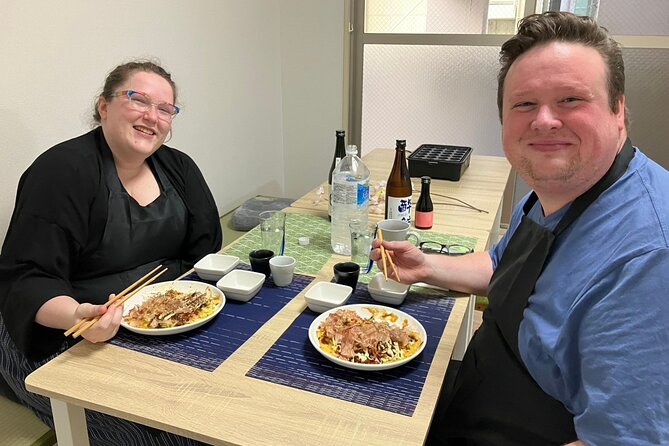
- Two Osaka classics made by you: okonomiyaki + takoyaki, from batter to final toppings
- Small group size (up to 8) for more coaching and less standing around
- Recipe handouts plus ingredient packaging tips so you can shop smarter later
- Drinks with your meal, including sake and beer for adults, plus soft drinks
- Everything supplied: ingredients, tools, aprons, and disposable gloves
Osaka Cooking Class: What You’re Really Learning
This class is built around Osaka’s favorite comfort foods: savory pancakes (okonomiyaki) and savory octopus balls (takoyaki). The point isn’t just eating well. It’s learning a repeatable method you can recreate later without guessing.
You’ll follow a step-by-step process, cook your own dishes, and then sit down to enjoy them. That “cook, then relax” structure is smart. It keeps the stress low while you’re still learning technique.
And because the instructors are comfortable coaching in multiple languages, you’re not stuck interpreting the room. When you can ask one quick question about doneness, batter thickness, or toppings, you get better results faster.
You can also read our reviews of more cooking classes in Osaka

Where the Class Happens Near Shinsaibashi and Honmachi
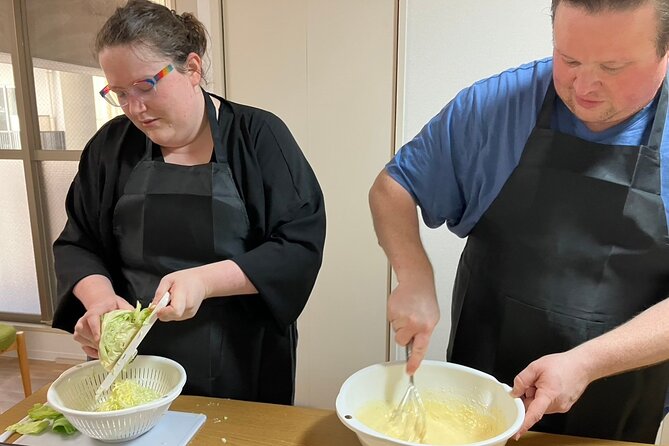
The kitchen is in central Osaka, about a 5-minute walk from Shinsaibashi and Honmachi stations on the Osaka Metro. That’s an easy location if you’re already doing the usual sightseeing loops in this part of town.
One practical bonus: the neighborhood is described as quiet, even though the area is central. So instead of a chaotic street storefront, you get a calmer kitchen environment for cooking.
You’ll meet at 南船場コレット9044-chōme-3-1 Bakurōmachi, Chuo Ward, Osaka, 541-0059, Japan. The activity ends back at the meeting point, which makes timing easy.
The 3-Hour Flow: Orientation, Cooking, and a Real Tasting Hour
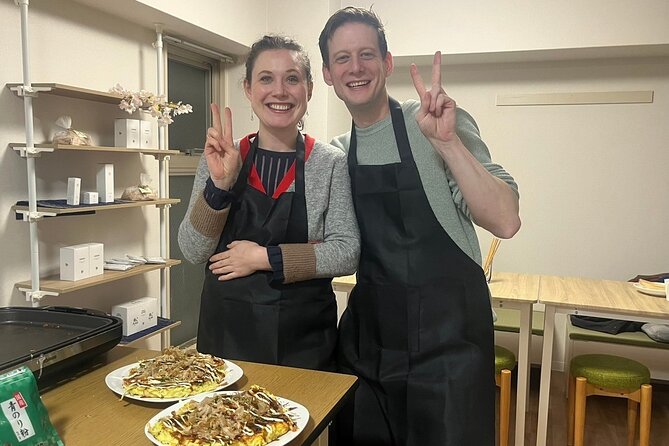
The schedule runs about 3 hours total. It’s split into three main phases:
Orientation and Prep (about 30 minutes)
You start with a quick orientation and preparation session. This isn’t just “here’s your apron.” It’s the setup stage that helps you cook confidently during the more hands-on part.
In this phase, you’ll get familiar with:
- how the ingredients work together
- what each part of the cooking process is aiming for
- how to move from raw batter to plated finished food
If you’re new to Japanese cooking, you’ll likely find this upfront guidance a relief. You’re less likely to feel lost once the griddle action starts.
Cooking Time (about 1.5 hours)
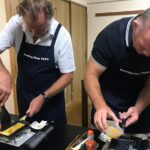
Next comes the main event: cooking your okonomiyaki and takoyaki. This is where you’ll do the work, not just watch it.
Expect a guided pace where the instructor can correct technique as you go. The class supplies the tools and ingredients, so your focus stays on learning the method.
You can also read our reviews of more tours and experiences in Osaka


Tasting and Drinks (about 1 hour)
After cooking, you get to relax and eat what you made. This tasting hour matters because okonomiyaki and takoyaki are all about texture and balance. Tasting at the end helps you connect what you did during cooking to the final result.
Drinks are included—sake and beer for travelers 20 and older, and soft drinks for everyone else. It turns the class into more of an evening experience than a rushed workshop.
Okonomiyaki: How to Think Beyond the Name
Okonomiyaki is often described as a pancake, but it’s better to think of it as a savory batter-and-cabbage platform with toppings and sauce doing the finishing work.
In this class, you’ll make okonomiyaki using:
- batter
- cabbage
- fillings like pork and seafood
- toppings like sauce and bonito flakes
The learning payoff isn’t only the final dish. It’s how you learn to build structure so the pancake cooks through without going soggy.
A helpful mindset: okonomiyaki isn’t one single formula. It’s a technique that you can adapt at home once you understand the basics. By cooking it here, you’ll see what consistency and heat control should feel like.
Takoyaki: The Skill Behind the Octopus Balls
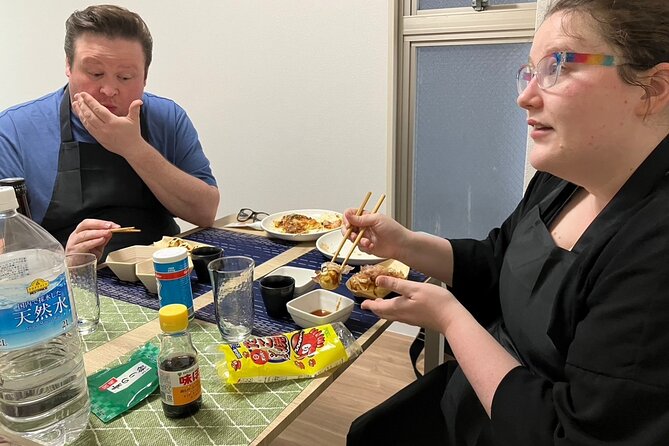
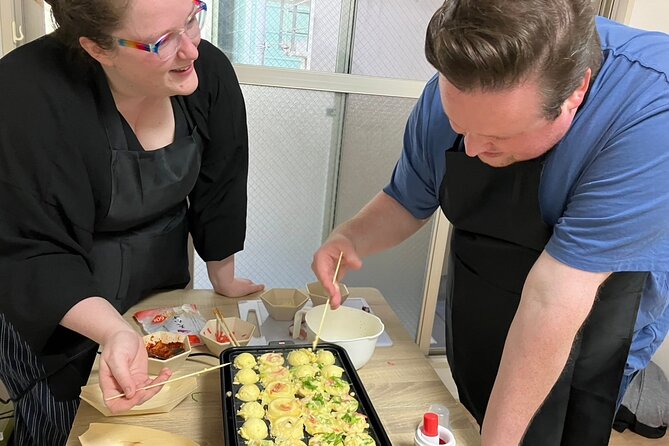
Takoyaki is the fun chaos of Japanese street-food style cooking—small dough balls with octopus inside, cooked in a special mold, then flipped until they turn into little browned orbs.
In this class, you’ll make takoyaki with:
- fried dough balls
- octopus filling
- toppings like sauce, bonito flakes, and seaweed powder
Takoyaki has a learning curve because the goal is even browning and full “shell” formation. The instructor guidance helps you time the cooking and flips so the outside sets while the inside stays properly cooked.
Even if you end up with a few misshapen pieces, the method makes sense once you’ve tried it. That’s the real value of doing takoyaki with a teacher present.
Instructors and Language: Why That Matters for Real Results
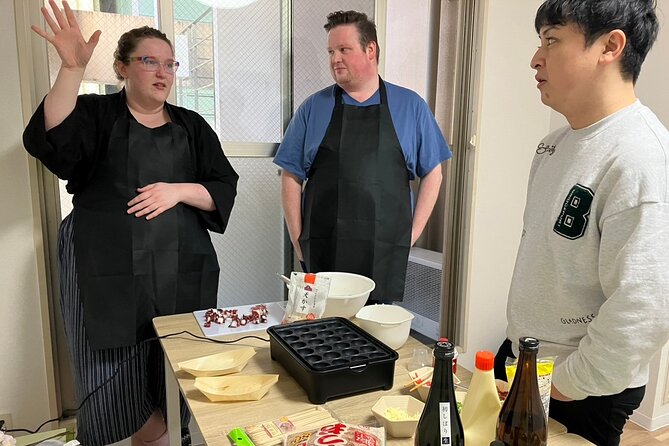
You’ll have a friendly instructor who speaks English, and they’ll be there step-by-step. In addition, Japanese and Spanish support is available upon request.
That’s important because cooking questions aren’t always simple. You might wonder:
- how thick the batter should look
- when the cabbage is cooked enough
- what “done” means for the dough balls
Having the language support reduces guesswork. It also makes the class feel more social. In the reviews tied to this experience, people appreciated conversation and the instructors being hospitable, which makes a big difference when you’re in a small group.
Small Group Size (Up to 8) Means More Time With the Griddle
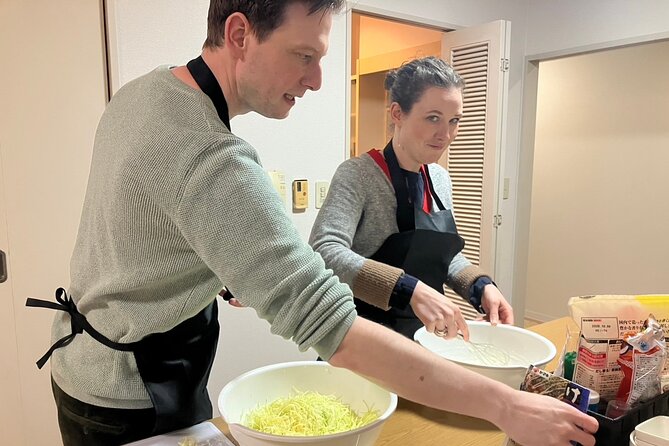
This is limited to a maximum of 8 travelers. That size changes the whole class dynamic.
Instead of waiting your turn or hopping between a few quick photo moments, you’re more likely to get hands-on help. You can ask a question without shouting across a room, and you can learn technique rather than just timing.
One extra benefit: when the group is very small, the experience can feel more personal and flexible. The class environment is described as intimate and interactive, which makes sense given the cap.
What You’ll Leave With: Recipes and Ingredient Notes
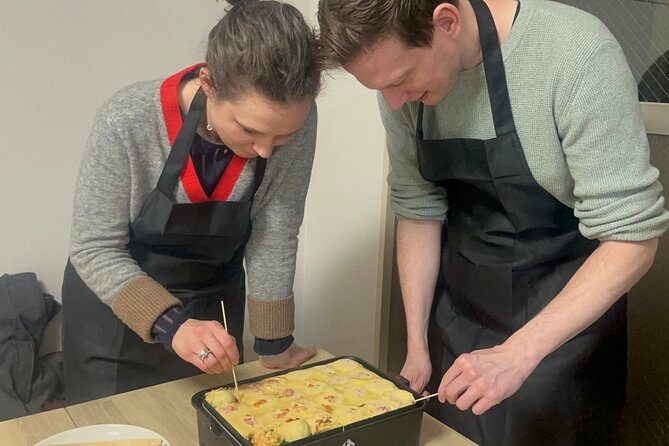
A cooking class only counts if you can recreate it later. One standout element is that you get written recipes and practical cues for sourcing ingredients.
I like this approach because it lowers the biggest home-cooking headache in Japan: not knowing what to buy, or buying the wrong thing because the packaging is unfamiliar.
In particular, the class includes an opportunity to see the packaging for different ingredients. That makes it much easier to find the same items in a supermarket later, rather than relying on memory or vague descriptions.
So yes, you’ll eat well during the class—but you’ll also have better odds of getting good results when you cook again back home.
Drinks and the Tasting Hour: Food Learning Without the Rush
The tasting part lasts about 1 hour, and drinks are included. Alcohol options include sake and beer for adults aged 20+, while soft drinks are available as well.
This is a smart pairing. Okonomiyaki and takoyaki are best evaluated in a relaxed setting. You can compare texture, sauce balance, and topping distribution without feeling like you’re still working.
It also turns the class into a true Osaka evening plan. Instead of fitting cooking into your schedule like an appointment, you get to treat it like a meal experience with instruction.
Practical Value: Is $70 a Good Deal?
At $70 per person for a roughly 3-hour experience, this class is priced like a serious food activity, not a casual demo. The value comes from what’s included:
- ingredients and cooking tools
- aprons and disposable gloves
- an English-speaking instructor
- extra language support (Japanese/Spanish) if requested
- sake and beer (for adults 20+) plus soft drinks
- the okonomiyaki and takoyaki cooking + a tasting hour
You’re not paying extra for shopping time or guesswork. The class handles the logistics of sourcing and supplying ingredients and tools so you can focus on learning.
If you’ve got even a mild interest in cooking, you’ll likely feel it’s worth it. If you just want a snack, you might find it pricey compared to buying takoyaki at a stand and moving on.
Who Should Book This Class (And Who Might Skip It)
This is a great fit if you:
- want an interactive Osaka experience beyond walking and eating
- like cooking or want to learn a method you can repeat
- enjoy learning from written recipes and ingredient cues
- prefer small groups with real instruction
It may be less ideal if you:
- hate hands-on food prep (batter, griddles, and toppings get messy)
- only want a quick bite and don’t care about learning
- are very sensitive to cooking smells or active heat around stoves
It also works well when the group includes younger kids, since the class has been described as accommodating in practice. Still, you should expect a cooking environment where everyone participates.
Should You Book This Osaka Okonomiyaki and Takoyaki Class?
Yes, I’d book it if you want something that feels local and practical. Okonomiyaki and takoyaki are iconic Osaka foods, but this class is what converts them from street-food novelty into skills you can bring home.
Choose it when you value method + recipes, not just the meal. With the small group size, English instruction, and the included tasting with drinks, you’re getting a complete evening plan that’s more satisfying than a quick food tour stop.
Skip it only if you’re looking for a passive activity. This one asks you to cook. If you’re okay with that, it’s a fun way to learn how Osaka tastes are built—then recreate them later.
FAQ
What dishes will I make in this class?
You’ll make both okonomiyaki (Japanese savory pancakes) and takoyaki (Japanese savory dough balls). You’ll cook them during the cooking portion and then taste what you made.
How long is the cooking class?
The class is about 3 hours total, with about 30 minutes for orientation and prep, about 1.5 hours for cooking, and about 1 hour for tasting.
What does the class cost?
The price is $70.00 per person.
Do I need to bring ingredients or cooking tools?
No. The class provides all ingredients and the tools for the cooking session, plus aprons and disposable plastic gloves.
Are drinks included?
Yes. Alcoholic drinks (sake and beer) and soft drinks are included. Sake and beer are served only to travelers 20 years old and above.
Is there an option for vegetarian or allergy needs?
Vegetarian or food allergy options are available if you contact the provider after booking (you can message once your booking is complete).
How many people are in the group?
The class has a maximum of 8 travelers.
Where do I meet the instructor?
You’ll meet at 南船場コレット9044-chōme-3-1 Bakurōmachi, Chuo Ward, Osaka, 541-0059, Japan, and the activity ends back at the meeting point.
Will the instructor speak English?
Yes. An English-speaking instructor is included. Japanese-speaking or Spanish-speaking instructors are available upon request.
Is transportation included to and from the class?
Private transportation is not included.