REVIEW · OSAKA
【Family Friendly】Traditional Mochi Pounding Experience
Book on Viator →Operated by Theosaka · Bookable on Viator
Pound rice, then eat it warm. In Osaka, this mochi pounding (mochitsuki) experience turns a Japanese tradition into a hands-on 1-hour activity you can do as a family, with freshly made results at the end. You’ll learn why people gather to pound glutinous rice into chewy mochi, then you’ll get to do the pounding yourself using traditional tools.
I love two things most: the patient instruction (so kids and first-timers aren’t left guessing), and the fact that the tasting feels like part of the workshop, not an afterthought. You finish with mochi served with multiple classic toppings like kinako and sweet soy sauce, plus a cup of tea.
One drawback to plan around: the experience requires good weather, and mochi is chewy. The organizers specifically note that older diners should eat in small portions to reduce choking risk.
In This Review
- Quick highlights before you book
- Mochi pounding in Osaka: what makes this tradition practical (and fun)
- The full flow: your 1-hour mochitsuki timeline
- A 10-minute history and cultural talk
- Steaming glutinous rice (the dough starts as a process)
- Pounding with traditional mortar and pestle
- Shaping and tasting right away
- Toppings and tea: why this part feels like a reward, not filler
- Price in context: what $32.29 buys you (and what to compare it to)
- Location and timing: using Dotonbori as your backdrop
- Family-friendly details that matter in real life
- Dietary needs: can you participate as a vegan or vegetarian?
- Language and communication: English plus Chinese support
- Small group energy: why max 10 travelers feels better
- Should you book this mochi pounding experience?
- FAQ
- How long is the mochi pounding experience?
- Can children join this tour?
- What languages are offered?
- What will we do during the activity?
- What comes with the mochi tasting?
- How many people are in a group?
- Where is the meeting point?
- Is it suitable for vegetarians or vegans?
- What should I know about weather and cancellation, and for older diners?
Quick highlights before you book
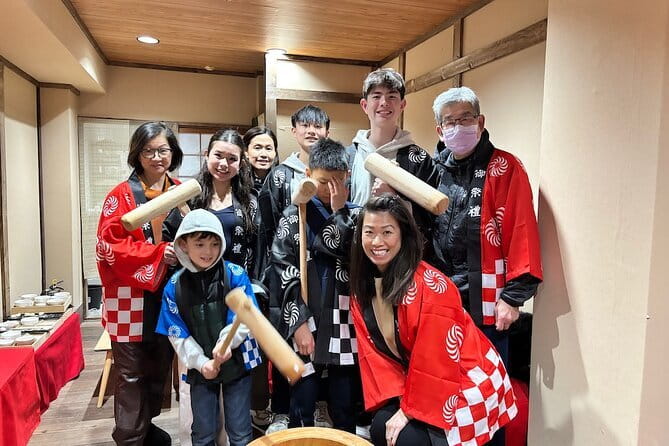
- Small groups (max 10 travelers) make it easier for kids to participate.
- A short 10-minute history talk gives context before you start pounding.
- Traditional tools put you in the real rhythm of mochitsuki.
- Fresh mochi tasting with classic toppings plus tea.
- English and Chinese support, with Chinese delivered via slides or interpretation through ChatGPT.
- Dotonbori location means you can pair it with sightseeing nearby.
Mochi pounding in Osaka: what makes this tradition practical (and fun)
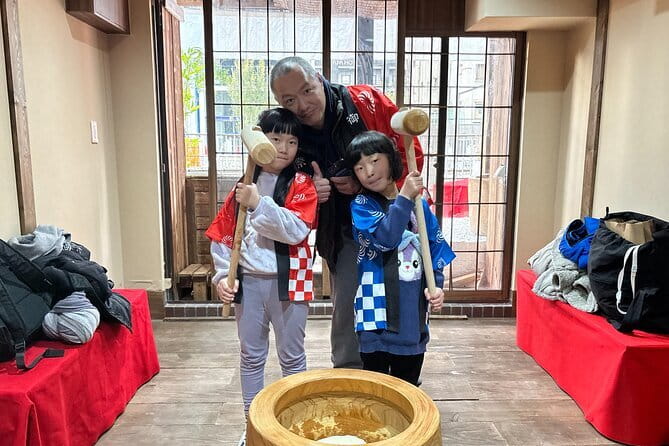
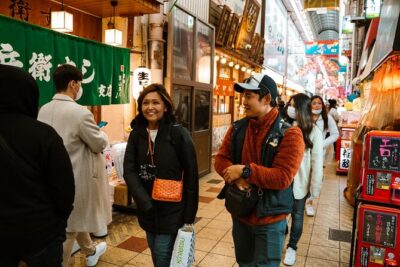
Osaka’s Dotonbori is famous for food, lights, and people-watching. This experience adds something more personal than another snack stop: you get to make the snack in front of you. Mochi pounding is one of those activities that turns Japanese culture into a physical memory. You don’t just read about it; you steam the rice, pound the dough, shape it, and then eat it.
The best part for families is that it’s not just a demo. The format is built for participation, with experienced instructors teaching step by step. Even if you’ve never handled a mortar and pestle before, you’ll have guidance for timing and technique, so you can focus on the fun parts: working together and trying the final flavors.
Another practical win: it’s designed to be manageable in the middle of a busy day. About 1 hour is a sweet spot. You can fit it without wrecking your schedule, and you’ll still have time to explore Dotonbori afterward.
You can also read our reviews of more tours and experiences in Osaka.



The full flow: your 1-hour mochitsuki timeline
Here’s what you can expect, in the order you’ll experience it.
A 10-minute history and cultural talk
You start with an introduction to mochi pounding—why it matters, and how the tradition connects to everyday Japanese life. It’s not a long lecture. It’s just enough context to make the pounding feel intentional rather than random.
This short setup also helps kids. They get the story first, then the activity clicks into place. That’s a big reason this format works so well for groups with mixed ages.
Steaming glutinous rice (the dough starts as a process)
Next comes the rice steaming step. Mochi begins with glutinous rice turning soft enough to work into a dough. You won’t have to guess what’s happening in the kitchen. You’ll follow along as the event transitions from explanation into action.
If you’re used to buying mochi wrapped in plastic, this part changes your perspective. You’ll see that mochi is about texture and timing—how it’s handled matters.
Pounding with traditional mortar and pestle
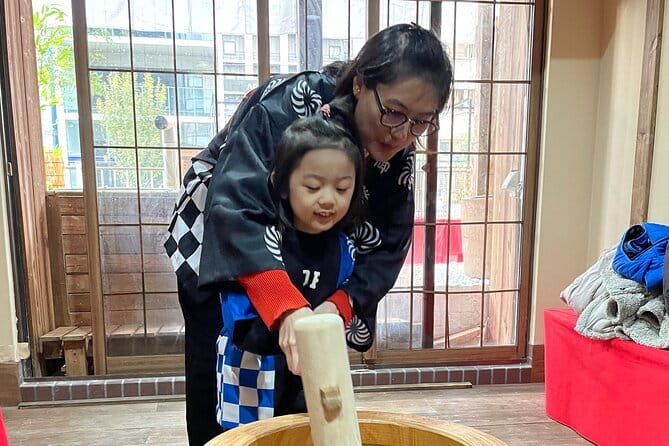
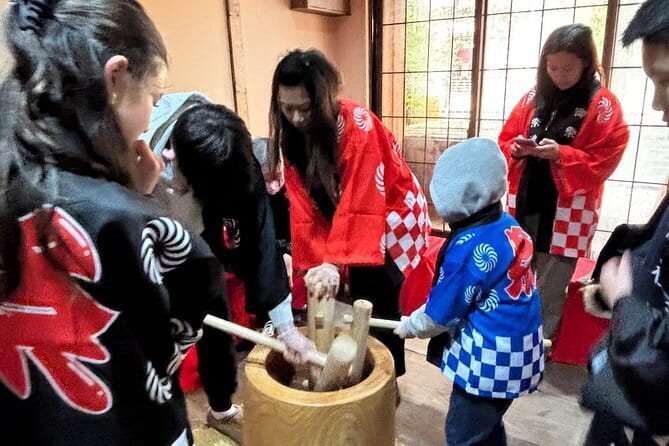
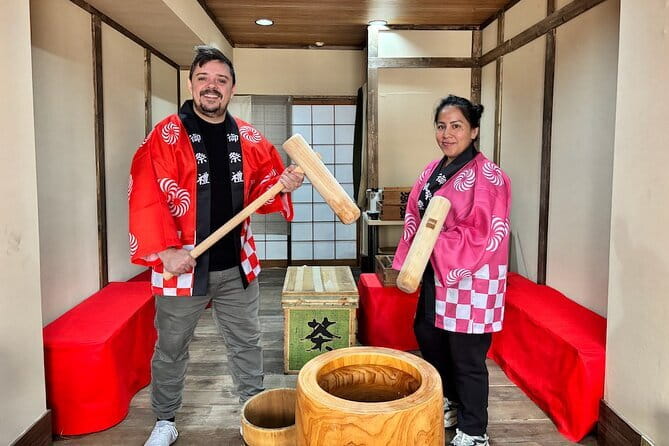
Then you’ll use traditional tools to pound the steamed rice into mochi. This is the main event, and it’s where the energy builds.
One detail that often makes this moment memorable is the rhythm people share during pounding. In the experience, you may chant yo shoi while working the dough. It’s simple, but it helps create teamwork fast—especially for kids, teens, and families who haven’t spent time together learning something new.

Shaping and tasting right away
After pounding, you’ll get freshly made mochi, served plain or topped. You’ll also get tea, which balances the sweetness and chewy texture.
Some versions of the tasting emphasize multiple topping choices. From the information you’re given, you can expect options including:
- kinako (roasted soybean powder)
- sweet red bean paste
- nori (seaweed)
- sweet soy sauce
The session is described as including five beloved seasonings and ingredients, served alongside tea, so you’ll likely get a mix of flavors rather than only one or two.
Toppings and tea: why this part feels like a reward, not filler
A lot of food activities end with something you barely have time to enjoy. Here, the tasting feels like the finish line. The mochi is made as part of the workshop, so eating it doesn’t feel like you’re chewing pre-made samples.
The variety matters too. Mochi can be sweet, salty, nutty, and even seaweed-forward depending on the topping. Using flavors like kinako, red bean, nori, and sweet soy sauce gives you a quick tasting tour of mochi personalities in one go.
The cup of tea is also a smart inclusion. Chewy sweets can get heavy if you just keep eating. Tea helps you reset your palate, and it keeps the experience from becoming purely dessert-focused.
Price in context: what $32.29 buys you (and what to compare it to)
At $32.29 per person, this is priced like a hands-on food workshop, not a casual snack. The value comes from three things that cheaper tastings often skip:
- Instruction and participation (you actively pound and shape)
- Freshly made mochi tied to your group
- Tasting with multiple toppings plus tea
If you’re comparing this to buying mochi in a shop, the difference is obvious: retail mochi gives you taste but not the process. Compared with other cultural classes, this one is short and direct. You don’t need advanced language skills, and you don’t need to commit a half day.
Is it a bargain? It’s fair, especially given the small group size (max 10 travelers) and the fact that children are welcome. For families, one paid ticket can keep everyone busy and included at the same time—usually the hardest part of travel spending with kids.
Location and timing: using Dotonbori as your backdrop

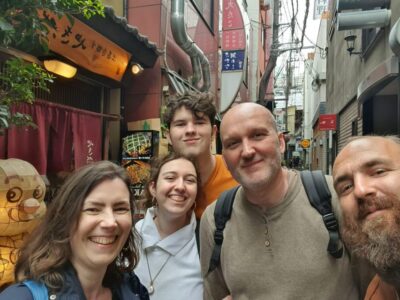
Your meeting point is Mochi Pounding Experience Osaka Oh Mochi, 2-chōme-4-11 Dōtonbori, Chuo Ward, Osaka, 542-0071. It’s also described as being near public transportation, which helps if you’re juggling a day of walking and eating.
Because the experience ends back at the meeting point, it’s easy to plan around. You can treat it like a scheduled “culture stop” in the middle of a Dotonbori crawl. The area is naturally geared for food and wandering, so after your mochi tasting, you can keep exploring without needing complicated transfers.
Timing-wise, aim to do it earlier rather than at the end of an overstuffed day. You’ll get more enjoyment when you’re not already stuffed from ten snacks.
Family-friendly details that matter in real life
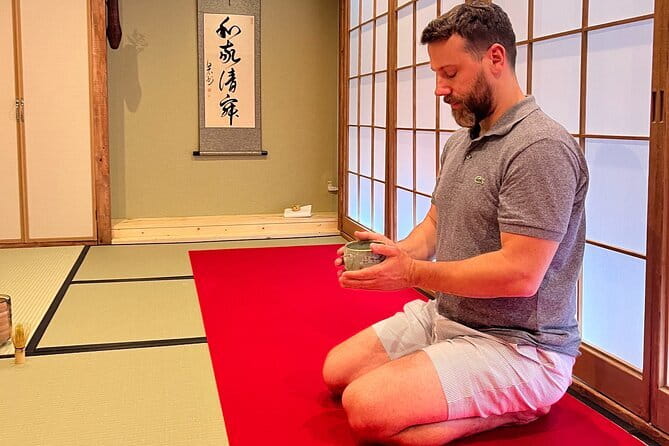
This experience is explicitly family friendly, and children under 13 are welcome. Adults can also join if they want the full experience without kids.
Here’s why it works well for families:
- Kids can participate with guidance, not just watch.
- The activity is short enough to hold attention.
- Everyone ends with a shared reward: warm, freshly made mochi with toppings.
It’s also a good multi-generational option. The notes and feedback emphasize that mixed ages—from grandparents to teens—can handle the activity together with instruction and portions that make sense.
Still, remember the safety note: mochi is chewy. The organizers recommend small portions for older people to reduce choking risk. If you’re traveling with seniors, it’s wise to follow that guidance and not treat mochi like candy.
Dietary needs: can you participate as a vegan or vegetarian?

The experience states it can accommodate dietary preferences, including vegetarians and vegans. That’s a big plus, because mochi is made from glutinous rice, but toppings and sauces are where restrictions can get tricky.
What you should do: when booking, follow any prompts related to dietary needs so the team can help you participate smoothly. Since the tasting includes multiple toppings, accommodations may depend on what’s chosen for each person.
Language and communication: English plus Chinese support
The experience offers English and Chinese support. The information notes that Chinese is provided through slides or interpretation using ChatGPT. So you can expect a structured explanation, not total reliance on live conversation alone.
If your group has mixed language levels, the step-by-step nature helps. Even when you don’t catch every word, you can still follow the process: steaming, pounding, shaping, tasting.
Small group energy: why max 10 travelers feels better
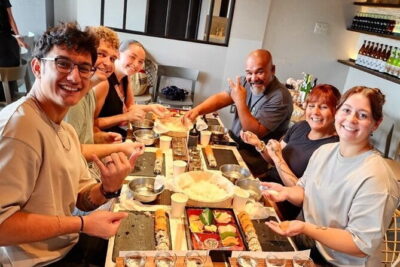
A group size capped at 10 travelers changes the feel of the activity. You’re less likely to stand around waiting your turn, and instructors can give more attention when needed.
For families, that matters. Kids especially benefit when they can move into the action quickly. For adults, it means you’re not lost in a big crowd—you get the full workshop experience rather than being one of many.
Should you book this mochi pounding experience?
I think you should book if you want:
- a hands-on Osaka food experience that’s not just eating
- a short activity that still feels meaningful (about 1 hour)
- something that works for kids and mixed-age groups
- fresh mochi with several classic topping styles and tea
You might skip it if:
- you’re worried about weather disruptions (it requires good weather)
- you don’t like chewy foods or the idea of eating mochi right after pounding it
- you’re traveling with seniors who may struggle with chewy textures unless they follow the small-portion guidance
If you’re already planning a Dotonbori day, this is one of the easiest ways to add a cultural activity that’s both fun and edible—something you can’t pick up from a menu.
FAQ
How long is the mochi pounding experience?
It lasts about 1 hour (approx.).
Can children join this tour?
Yes. The experience is available for children under 13, and adults can join as well.
What languages are offered?
You can expect English and Chinese. Chinese support is provided through slides or interpretation via ChatGPT.
What will we do during the activity?
You’ll get a short 10-minute talk on mochi pounding, participate in steaming glutinous rice, use traditional tools to pound the rice into mochi, and then taste freshly made mochi.
What comes with the mochi tasting?
Fresh mochi is served with multiple toppings and ingredients (including options like kinako, sweet red bean paste, nori, and sweet soy sauce) along with a cup of tea.
How many people are in a group?
The group is capped at 10 travelers.
Where is the meeting point?
It’s at Mochi Pounding Experience Osaka「Oh Mochi」, 2-chōme-4-11 Dōtonbori, Chuo Ward, Osaka, 542-0071, Japan.
Is it suitable for vegetarians or vegans?
Yes. The experience states it can accommodate vegetarians and vegans, based on dietary preferences.
What should I know about weather and cancellation, and for older diners?
The experience requires good weather. If it’s canceled due to poor weather, you’ll be offered a different date or a full refund. For cancellation, there’s free cancellation up to 24 hours before. Also, older people should eat rice cakes in small portions because mochi can pose choking risk.