REVIEW · OSAKA
Osaka: Five Must-See Highlights Walking Tour & Ramen Lunch
Book on GetYourGuide →Operated by LOTUS DMC Co., Ltd · Bookable on GetYourGuide
Osaka feels different at walking speed. This 7-hour small-group tour strings together five top sights across the city, using subway and footwork, with lunch handled for you. You’ll also get photo help along the way, so you’re not just herding yourself from place to place.
I especially like the way the day mixes big landmarks with real Osaka street scenes, from Osaka Castle down to Dotonbori. And the included ramen lunch is a practical win: you get to eat at a popular shop without hunting for one when you’re already tired. The main drawback is simple: it’s a long day with lots of walking and stairs, so it’s not a great fit if you have mobility limits or health concerns.
In This Review
- Key Highlights You’ll Actually Feel
- Why This 7-Hour Osaka Highlights Route Works
- Meeting Up in Tanimachi: Start Time, Shoes, and Rain Gear
- Osaka Castle Museum: City Views and Sengoku-Era Context
- Shitennoji Temple: A 593 Temple With State-Built Origins
- Shinsekai and Tsutenkaku: Retro Streets, Street Food Energy, and Photos
- Kuromon Ichiba Market: A Covered Market Stroll That’s Built for Snacking
- Dotonbori: Running-Man Photo Spot and the Neon-To-Quiet Shift
- Ramen Lunch: Why Included Food Changes the Whole Day
- The Guide Makes It Feel Easy: Taka’s Timing and Flexibility
- Price and Value: What $56 Includes and What You’ll Pay Later
- Who This Tour Is Best For (and Who Should Skip)
- Should You Book This Osaka Highlights and Ramen Day?
Key Highlights You’ll Actually Feel
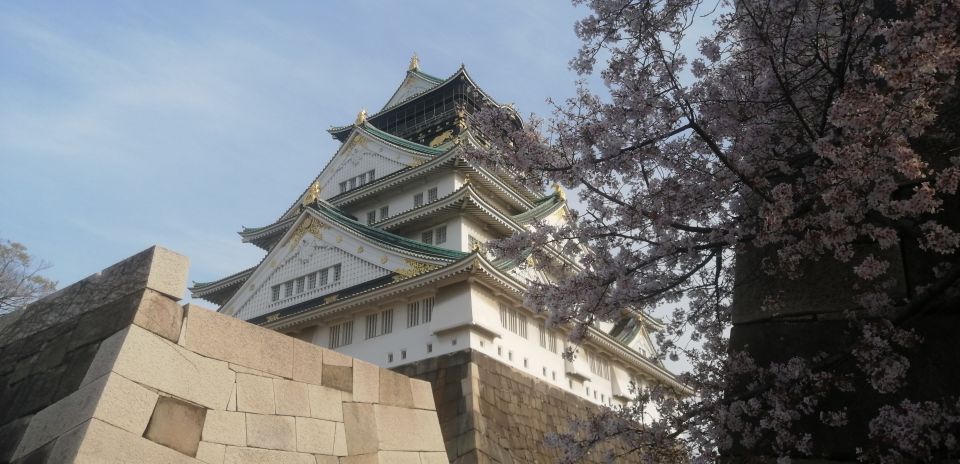
- Skip-the-line Osaka Castle tower access plus a museum stop that ties the views to the Sengoku era
- Shitennoji’s 593 founding story in a temple that’s among Japan’s oldest major Buddhist sites
- Shinsekai + Tsutenkaku photo moment in a retro neighborhood known for street food
- Kuromon Ichiba Market with guided street-food picks in a covered market with Edo-period roots
- Dotonbori’s Ebisu Bridge running-man sign followed by a calmer finish at Hozenji
- English guidance with real-world problem-solving (timing, trains, and keeping the group comfortable)
Why This 7-Hour Osaka Highlights Route Works
If you’re visiting Osaka for a short time, this style of tour is a smart move. You’re not only seeing famous places—you’re also learning the city’s logic: which neighborhoods feel like the old Osaka era, which streets turn into food alleys, and how to move between them using subway plus walking.
I like that the route isn’t just “one temple, one tower.” It’s a mix: history at Osaka Castle and Shitennoji, retro street energy at Shinsekai, food scouting at Kuromon Market, and full-on neon Osaka at Dotonbori. In other words, you get contrast, not repetition.
Also, the group size is limited to 8. That matters in Osaka, where train changes and station navigation can be confusing. With fewer people, you spend more time looking around and less time waiting at gates.
You can also read our reviews of more walking tours in Osaka


Meeting Up in Tanimachi: Start Time, Shoes, and Rain Gear
You meet at 9:00AM near Osaka Metro Tanimachi Line, Tanimachi 4-chome Station, Exit 4, in front of a FamilyMart. Look for a man wearing green glasses.
Plan for an active day. The tour asks you to bring hiking shoes and rain gear. Osaka weather can flip fast, and the walking portions plus subway stairs mean you’ll want footwear that won’t punish you by mid-afternoon.
One more reality check: the tour isn’t suitable for children under 12, pregnant women, people with mobility impairments, people with heart problems, or anyone with a cold. Even if you’re not in those categories, you should still expect plenty of steps and uphill stair climbs typical of subway stations.
Osaka Castle Museum: City Views and Sengoku-Era Context
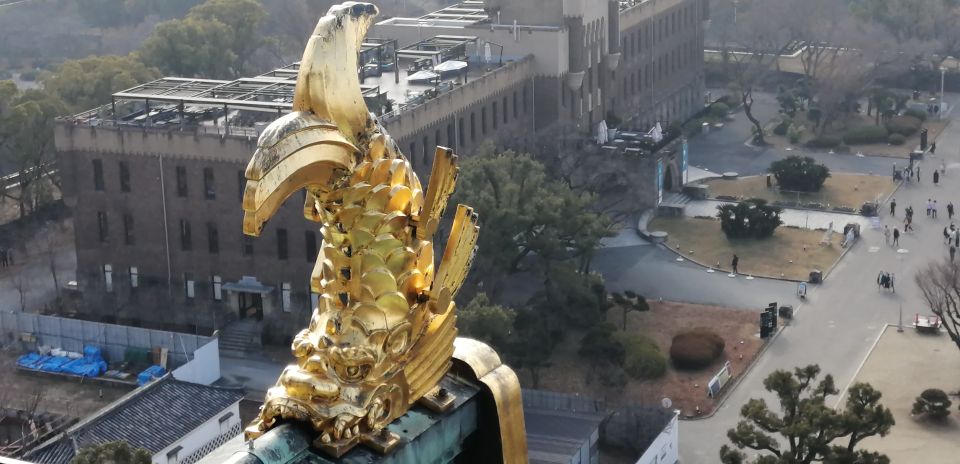
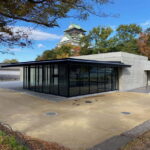
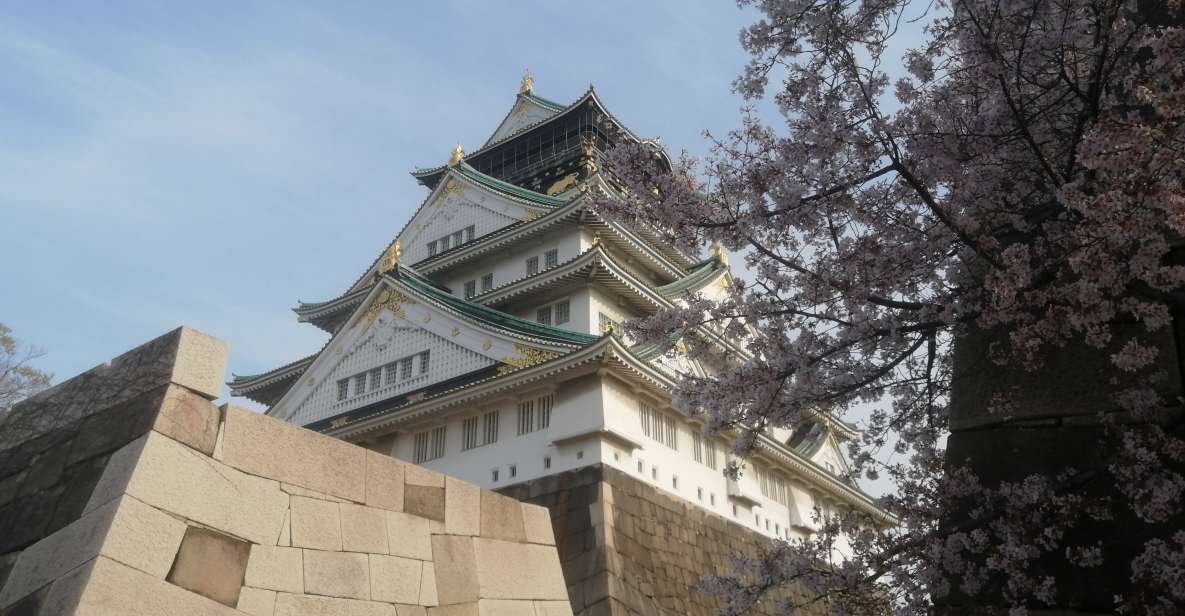
Osaka Castle is where your day starts with a big “wow” view. You’ll tour the castle museum area and go up to the castle tower for wide city photos—an easy way to orient yourself for the neighborhoods you’ll see later.
What makes this stop more than a photo-op is the museum component. You’ll get context about Osaka Castle and the Sengoku period—the kind of background that makes later sightseeing click. It’s not just “look at old walls,” it’s “here’s why this location mattered.”
Two practical notes:
- Entrance fees for Osaka Castle aren’t included, so expect to pay separately (JPY 1,080–1,430 depending on season/day).
- You’ll skip the line through a separate entrance, which can save you time when crowds are heavy.
Time on site is about 75 minutes, so it’s enough to take pictures, read a good chunk, and still have energy for lunch afterward.
Shitennoji Temple: A 593 Temple With State-Built Origins
Next up is Shitennoji, founded in 593 and often described as one of the oldest Buddhist temples in Japan. The tour framing here is important: you’re not just wandering through an old site—you’re learning what the temple represents and how it connects to Japan’s early state structure.
Your guide explains the temple’s derivation and the achievements of its founder during that era. That kind of story turns architecture into meaning. Instead of guessing why certain features are present, you have a reason.
Practical things to know:
- Shitennoji has an entrance fee not included (JPY 400–600 depending on season/day).
- You’ll spend about 45 minutes here, with a guided visit.
If you’re the type who likes history but doesn’t want a slow museum marathon, this is a good balance: old site, clear explanations, and then you move on.
Shinsekai and Tsutenkaku: Retro Streets, Street Food Energy, and Photos
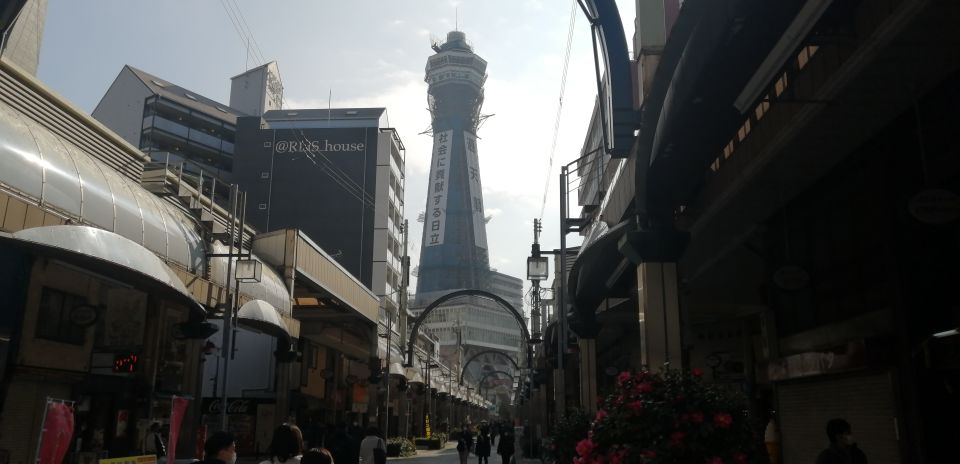
After temples, the tour shifts gears to a neighborhood that feels like time travel—Shinsekai. This area is known for a retro atmosphere, colorful streets, and the iconic Tsutenkaku Tower. The setting traces back to the early 20th century, and that old-school vibe still shows up in the street layout and the mood.
This stop is also where the tour loosens slightly. You’ll get a break with free time for shopping, photos, and exploring, roughly 45 minutes. It’s enough time to grab something small, wander side streets, and do that classic Tsutenkaku photo.
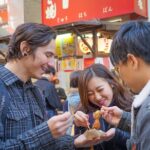
The guide may point you toward local street food ideas like kushikatsu (deep-fried skewers), which is part of why Shinsekai has such a food-centered reputation. Food here usually costs extra, but the value is that you’re not guessing—your guide helps you focus on what’s typical and worth your time.
You can also read our reviews of more tours and experiences in Osaka


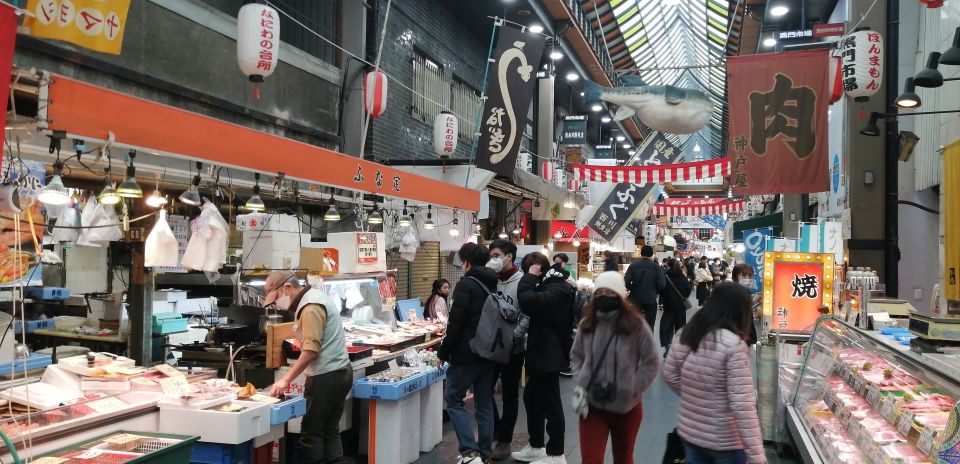
Kuromon Ichiba Market: A Covered Market Stroll That’s Built for Snacking
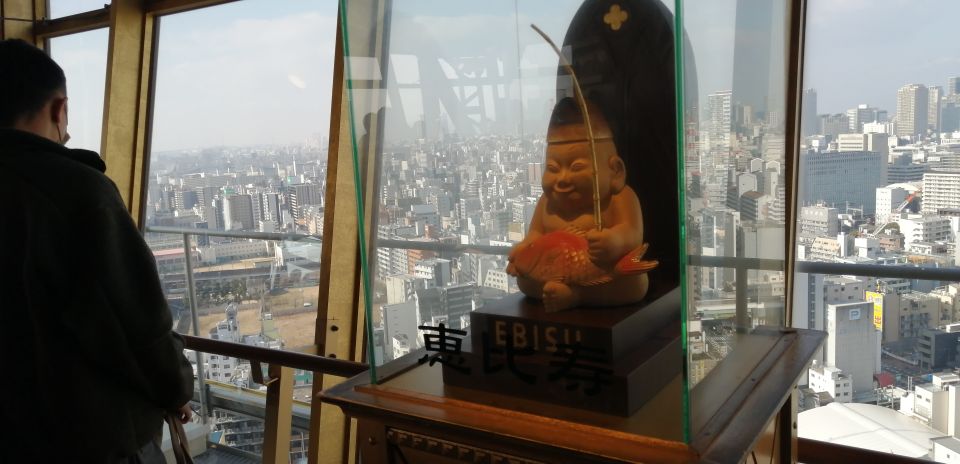
Then you hit Kuromon Ichiba Market, a lively covered market that’s been around for more than 200 years and dates back to Edo-period history. This is a very “Osaka” kind of place: people come for food, not souvenirs.
Your guide leads a portion of the market visit and recommends street foods along the way. The point isn’t to force a meal—it’s to show you what locals go for and how to move through the stalls without feeling overwhelmed.
This segment includes both guided time and free time, about 45 minutes total. You’ll likely buy a couple of small bites rather than one big sit-down meal, so it’s a good idea to pace yourself—especially since you already ate ramen earlier.
Dotonbori: Running-Man Photo Spot and the Neon-To-Quiet Shift
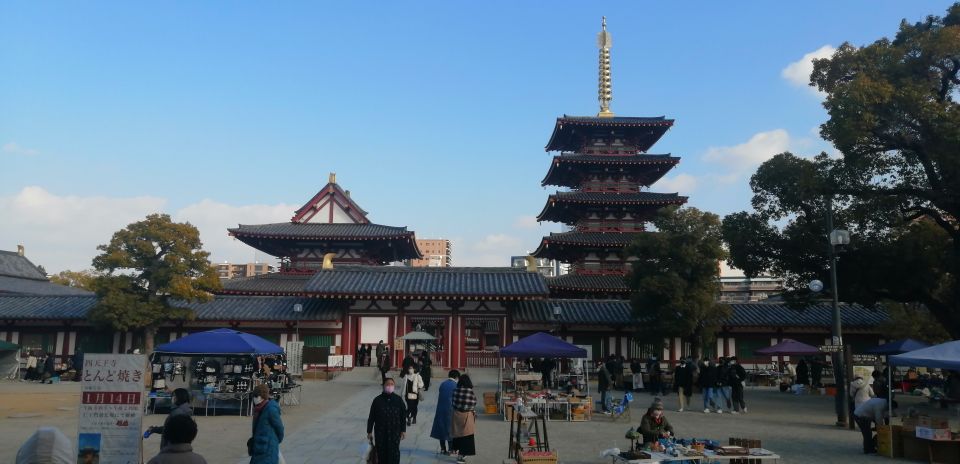
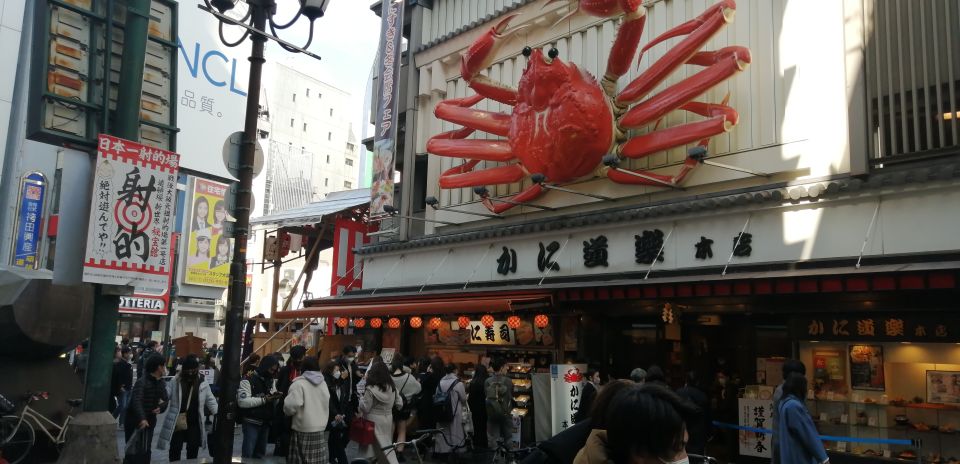
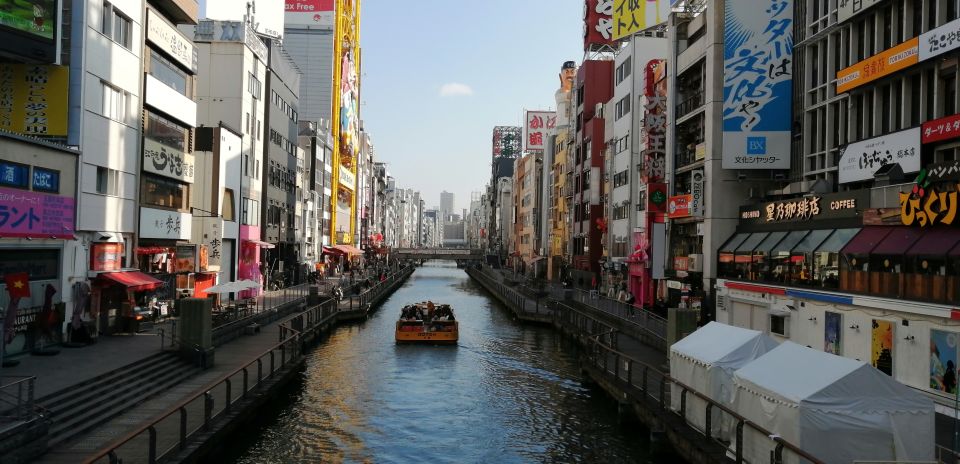
Dotonbori is the Osaka postcard section: busy streets, bright signage, and that unmistakable energy around the canals. You’ll spend about 45 minutes here with sightseeing and guided context.
One very specific photo cue: the Running Man above Ebisu-bashi bridge. It’s the kind of detail your eyes might miss if you’re walking on your own, so having a guide call it out saves you time.
And then there’s a nice contrast built into the route. After Dotonbori, you finish at Hozenji (the Tenryu-zan Hozenji area). It’s only a short walk (about 5 minutes), but the mood shift can feel refreshing—neon Osaka to a calmer temple setting.
For me, that ending is part of the tour’s charm. You don’t just end where the crowds are loudest. You end somewhere quieter that helps Osaka feel more human.
Ramen Lunch: Why Included Food Changes the Whole Day
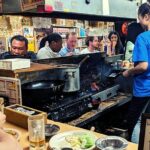
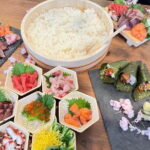
Here’s why I consider the included ramen lunch a real value, not just a freebie. When you’re trying to cover five sights in seven hours, the biggest risk is time loss—standing in lines, searching for a place you can’t find, or choosing something disappointing because you’re hungry and rushed.
So having lunch already built into the schedule is a big deal. Lunch happens around Temmabashi Station and lasts about 45 minutes. Since ramen is included in the tour price, you can plan your day around it instead of making a last-minute decision.
Also, this ramen stop is described as a very popular ramen shop. In the feedback you’ll read from other visitors, ramen quality is frequently praised, and that lines up with what you want from a tour-included meal: not bland “tour food,” but something you’d seek out even if you weren’t in a group.
The Guide Makes It Feel Easy: Taka’s Timing and Flexibility
This tour lives or dies by the guide. In this case, the local English guides are often described as friendly and careful with the group’s comfort, and you’ll likely hear the name Taka or Takanobu mentioned.
What stands out in the experience details:
- The guide helps you navigate trains and stations without wasting time.
- There’s photo shoot assistance, which makes it easier to get good shots at each key spot.
- In hot or rainy conditions, the guide works to keep you in shade or out of weather when possible.
- You get practical guidance at each stop, from what to look for to where to go next.
One extra plus I’d underline: when something goes wrong, the guide is ready to help. One story involved a lost wallet during the tour, and the guide actively assisted in trying to locate it. That’s not something you can guarantee, but it reflects how seriously the tour team takes their role.
Do remember the trade-off: you’re still walking. Even with a great guide, stairs and long stretches are part of the deal.
Price and Value: What $56 Includes and What You’ll Pay Later
At $56 per person, you’re paying for five sightseeing stops with a local English guide, ramen lunch, and photo help. You’re also getting skip-line access at Osaka Castle via a separate entrance, which can be a time-saver.
What isn’t included:
- Public transport pass (Osaka Metro 1-day Pass), roughly JPY 620–820 depending on day
- Osaka Castle entrance fee: JPY 1,080–1,430
- Shitennoji entrance fee: JPY 400–600
When you add up the paid entry fees, the tour price doesn’t feel like you’re just paying for a walk. You’re paying for guidance, timing, and a pre-planned path between major sights, plus that included ramen meal.
If you’re on the fence, think like this: would you pay for castle and Shitennoji anyway? If yes, then this becomes a “you’re already doing the paid sights, so pay for the help moving between them” situation—which is exactly how to get value out of a half-day or full-day itinerary.
Who This Tour Is Best For (and Who Should Skip)
This is a strong fit if:
- It’s your first time in Osaka and you want a structured intro
- You like mixing food stops with major sights
- You’re short on time and want to see five areas across the city
- You want a guide who handles trains and station navigation
Expect a lot of movement. One participant estimated around 11 km of walking, which lines up with the itinerary’s subway-and-on-foot pattern. Even if your total differs, you should plan for a serious step count day.
Skip it if you’re not comfortable with stairs and long walking, or if you fall into the tour’s stated non-suitable categories (under 12, pregnant, mobility impairments, heart problems, or a cold).
Should You Book This Osaka Highlights and Ramen Day?
I’d book this tour if your goal is efficient Osaka with real local guidance—especially if you want the included ramen and don’t want to spend your limited time picking where to eat and how to route yourself.
I’d think twice if you dislike long walking days or you’re sensitive to stairs. Even with weather care and thoughtful pacing, this is still an active itinerary.
If you want a fast way to understand Osaka—castle views, centuries-old temple context, retro street energy, market snacks, and Dotonbori neon—this one-day plan is a solid bet.