REVIEW · OSAKA
Ancient Capital Tour: Kyoto and Nara Highlights from Kyoto/Osaka
Book on Viator →Operated by LIMON Tours · Bookable on Viator
Kyoto in one day can be chaos. This tour keeps it simple with Arashiyama and Kinkaku-ji plus the deer at Nara Park. I like that you skip the public-transport puzzle and travel in a comfortable bus with an English guide. The trade-off is timing: it’s a full day with a fair amount of walking, and some stops can feel a bit rushed.
You’re basically getting the big “greatest hits” of Japan’s old capital system: palace-era nature at Arashiyama, the gold-leaf glamour of Kinkaku-ji, then the massive Buddha presence at Todaiji in Nara. You’ll also get tickets for key sights on most departure options, so you’re not stuck hunting for timed entry or paying multiple counters yourself.
Before you book, I’d consider your expectations. If you want slow wandering and deep explanations, this is more of a highlights circuit than a long-form cultural deep dive. But if you want Kyoto and Nara together in one smooth day, this one hits the sweet spot.
In This Review
- Key points worth knowing
- Price and value: what $90.75 buys you
- Getting started: Osaka vs Kyoto pickup times that matter
- Stop 1: Arashiyama, bamboo forest walks, and a real lunch pause
- Stop 2: Kinkaku-ji Golden Pavilion and the garden design you can notice
- Stop 3: Nara Park deer time and Todaiji’s Great Buddha presence
- Transport and timing: why the day can feel packed
- Food and lunch choices: optional meal upgrade, real limits
- Who this tour fits best (and who should look elsewhere)
- A quick packing checklist for a smoother Kyoto-Nara day
- Should you book this Kyoto and Nara highlights day trip?
- FAQ
- What’s included in the tour?
- Where do I meet the group in Osaka and Kyoto?
- How long is the Kyoto and Nara tour?
- Is lunch available, and can the tour handle special diets?
- Are entrance fees to Kinkaku-ji and Todai-ji always covered?
- Can I cancel for a full refund?
Key points worth knowing
- Smart combo day plan: Kyoto’s Arashiyama and Kinkaku-ji plus Nara’s deer park and Todaiji—no transfers to figure out.
- Tickets built in on most options: Entry to Kinkaku-ji and Todaiji is included unless you choose a last-minute style option.
- Arashiyama seasonal scenery: Cherry blossoms in April, fall colors in November, and summer cormorant fishing observations.
- Comfort-focused logistics: Air-conditioned bus plus free Wi‑Fi, with pickup at major hubs in Osaka or Kyoto.
- Guides can make or break the day: Prior groups praised guides like Yuki, Haru, Maria, and Riku for being helpful and keeping the schedule moving.
- Walking is real: The itinerary is doable for most people, but you’ll want comfortable shoes and a snack-ready attitude.
Price and value: what $90.75 buys you
This tour is listed at $90.75 per person for an about 9-hour day. That price isn’t just sightseeing—it’s bundled logistics: an English-speaking guide, an air-conditioned vehicle with free Wi‑Fi, and guided time at three standout locations. For many people, the real value is the shortcut: you don’t have to assemble routes, buy multiple individual tickets, or worry about missing connections.
Most options also include entry to Kinkaku-ji and Todai-ji (the Great Buddha). That matters because these are popular sites, and the included ticket reduces your mental load. If you choose the last-minute option, those entry tickets may not be included, so you’ll need to plan for extra ticket costs or payment on the spot.
Group size is capped at 42 travelers, so you’re not getting a private-car treatment, but it also shouldn’t feel like a school bus with a single shared voice. In practice, this size can help you move efficiently while still hearing the guide without shouting across a stadium.
You can also read our reviews of more tours and experiences in Osaka.

Getting started: Osaka vs Kyoto pickup times that matter
This tour runs from either central Osaka or central Kyoto, and you should choose your departure point carefully. Dates differ by departure city, so double-check you’re booking the right version for where you’re staying.
Your Osaka meeting point is at Namba (OCAT 1F, near Daiso) with a meeting time of 8:50 AM. Your Kyoto meeting point is at Kyoto Station Hachijo Exit, in the tourist bus parking area, with a meeting time of 9:05 AM. Check in 10 minutes before the booked start time, because the bus departs on schedule and late arrivals aren’t eligible for refunds.
One small detail that can save stress: in past experiences, some people noted confusion about where to stand and how to identify the guide. My practical advice is simple—arrive early, look for staff guidance at the entrance area, and be ready to spot guides in a consistent, visible look when your group assembles.
Stop 1: Arashiyama, bamboo forest walks, and a real lunch pause
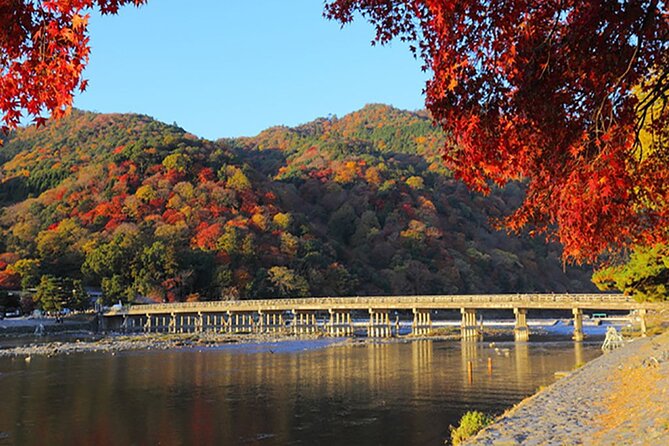
Arashiyama is where Kyoto feels like Kyoto. You get the classic scene—temples nearby, a river atmosphere, and that slow rhythm that makes the area popular even when the streets are crowded.
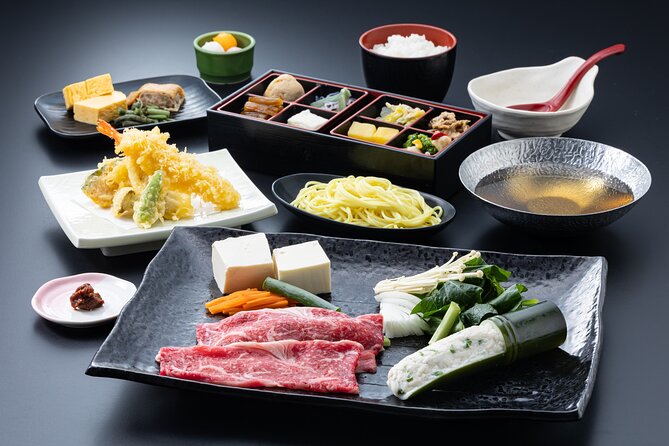
The tour begins with a guided visit to Arashiyama, with an optional lunch upgrade if you select it. If you do take the lunch option, you’ll be eating a traditional Japanese meal with seasonal Kyoto-style specialties. If you skip lunch, you can use the free time to pick something closer to where you are, which is often easier and cheaper.
What you’re aiming to experience here includes a few specific highlights:
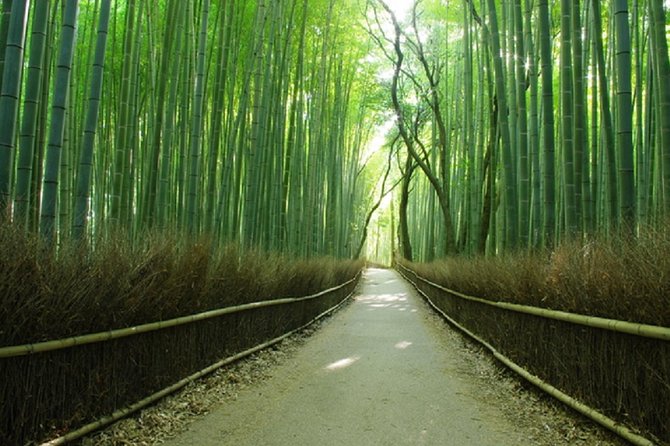
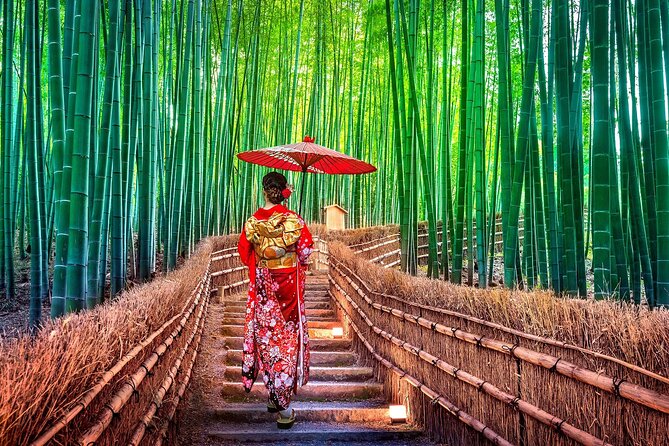
- Sagano Bamboo Forest: a walk along the edge of Tenryuji Temple, known as a destination since the Heian Period.
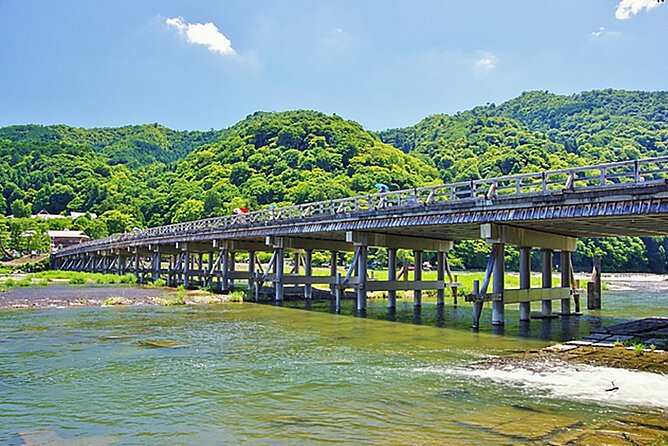
- Togetsukyo (moon-crossing bridge): a signature bridge you can spot as you move through the area.
- Katsura River views: the river area helps make the bamboo walk feel less like a straight line and more like a scenic stroll.
Seasonal notes help you set expectations. In April, cherry blossoms can turn the area into a pink-and-green photo zone. In November, expect fall colors. And in summer, you might even observe cormorant fishing, which is one of those small-but-distinct local traditions that makes travel feel less like a museum.
The big practical note: this is where your day will start to ask for energy. The walking is part of the charm, but bamboo paths and river-adjacent areas still mean shoes and stamina. If you’re sensitive to steps or uneven pavement, wear supportive footwear from the start.
Stop 2: Kinkaku-ji Golden Pavilion and the garden design you can notice
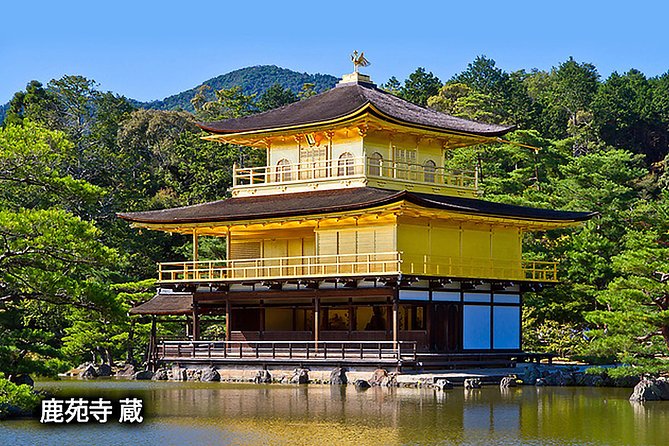
Next up is Kinkaku-ji (the Golden Pavilion), one of Kyoto’s most famous temple complexes. The tour puts this stop after you’ve settled into the day, so you’re not rushing straight from pickup into a packed ticket line.
What makes Kinkaku-ji special is easy to spot even if you’re not a temple expert. The building’s gold-leaf look catches the sun and reflects in the mirror-like pond in front of it. Even when you’re surrounded by cameras, there’s a reason the view keeps being repeated: the scene is built for reflection, symmetry, and quick photogenic moments.
Inside the grounds, you also get time to wander. The gardens are known for preserving elements of their 14th-century design, which gives you a chance to slow down and actually look at how the space was planned for visitors to experience the temple from different angles.
If you choose an option where entry tickets aren’t included (the tour notes that some last-minute packages exclude tickets), make sure you understand that before you arrive. With entry included, you can focus on timing inside the site rather than handling purchase details while everyone else moves through the bus-to-temple flow.
A balanced way to enjoy this stop: treat Kinkaku-ji as both a sight and a lesson. You don’t need to memorize names to appreciate it—you just need to notice how water, gardens, and the gold-leaf building work together as one designed composition.
Stop 3: Nara Park deer time and Todaiji’s Great Buddha presence
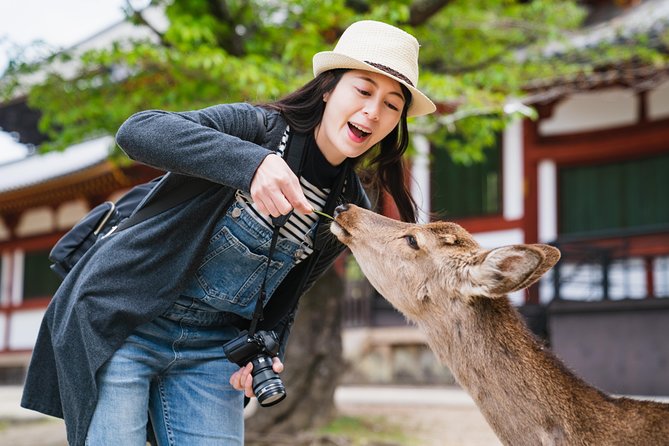
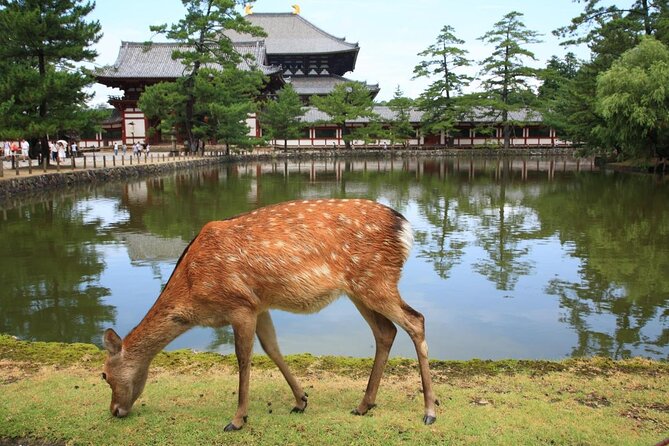
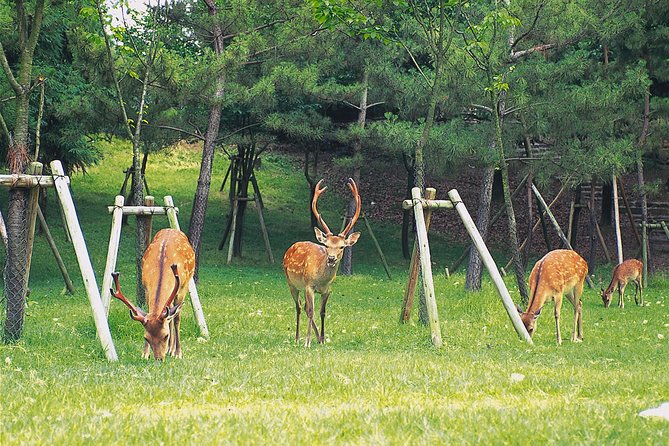
Then the day shifts from Kyoto’s old-capital calm to Nara’s wild-life-charged atmosphere. Your route takes you to Nara Park, where about 1,200 wild deer roam freely.
This is one of those experiences where your behavior matters. If you want to feed the deer, you can buy senbei snacks (the tour notes special shika-senbei). The deer are known for bowing, which is part of the playful interaction visitors notice. Practically speaking, keep the snacks handled carefully and be aware that the deer are not background animals—they’re right in the action.
After the park walk, you continue on to Todai-ji Temple, famous for housing one of the Great Buddha statues. Todai-ji is also recognized as a UNESCO World Heritage site, and it’s a place where “big” is literal. Even if you’ve seen other large statues before, the scale here has a weight that’s hard to capture in photos.
If you’re sensitive to crowds, this is the part of the day where you may feel the most energy from other visitors—Nara Park is popular, and deer add a certain natural chaos. The good news is the guided structure helps you stay oriented and not waste time trying to guess the best route through the park and temple area.

Transport and timing: why the day can feel packed
This is a full-day tour, about 9 hours, and it covers three major areas across two cities. That structure is convenient, but it also explains why some people find the schedule tight.
The itinerary has set blocks: around 2 hours for Arashiyama, about 45 minutes at Kinkaku-ji, and roughly 1 hour 30 minutes for the Nara walk and Todai-ji visit. Those are reasonable for a highlights tour, but they don’t leave much room for long museum-style pauses, especially around peak visiting times.
Also remember that schedules can change due to traffic or weather for safety. This is not a private car that re-times to your pace; it’s a group day plan, so you’ll follow the guide’s timing and bus departures.
My advice: plan your expectations like you’re on a good day trip, not an open-ended wander. If you want to take extra photos at Kinkaku-ji, do it intentionally. Spend more time snapping from a few strong angles, then move on—trying to photograph everything can make the schedule feel stressful fast.
Food and lunch choices: optional meal upgrade, real limits
Lunch is optional through an upgrade, and it’s one of the easiest places to align the tour with your preferences.
If you choose the lunch option, you’ll get a traditional meal with seasonal Kyoto specialties. If you skip it, you’ll have the opportunity to use that time to find something near where you are during Arashiyama.
There are also dietary limits you should know up front. The tour cannot provide vegan or halal meals. Vegetarian requests may be possible, but you need to contact the operator directly at least 3 days before the tour. If you’re not sure, booking an option without lunch is often the safest way to avoid a menu mismatch.
If you’re the type who likes to pick your own food spots, skipping the lunch upgrade might keep you flexible. If you’d rather just focus on temple and nature time with fewer decisions, the included lunch can be a relief—especially when the schedule keeps moving.
Who this tour fits best (and who should look elsewhere)
This day trip is a strong match for you if:
- You want a Kyoto + Nara combo day from Osaka without public-transport stress.
- You care more about hitting top sights than spending half-days on one neighborhood.
- You like a structured plan with an English-speaking guide and ticket handling on most options.
It may not be the best fit if:
- You want deep historical context at each stop and long guided lectures.
- You hate walking and prefer minimal stairs or uneven paths.
- You’re easily annoyed by schedule pressure. This tour moves. Even when it feels well-paced, it’s still a highlights plan.
The walking isn’t described as extreme, and the tour states that most people can participate. Still, the safest move is to assume you’ll be on your feet for hours and bring supportive shoes.
A quick packing checklist for a smoother Kyoto-Nara day
You’ll thank yourself for the basics:
- Comfortable walking shoes (seriously—this day includes multiple sightseeing walks).
- A small bag for your senbei snack if you plan to feed deer.
- A layer for changing weather (Kyoto’s outdoor areas can feel different from inside temple structures).
- Your mobile ticket ready to show, since the tour uses mobile tickets.
And because timing matters, it’s smart to keep your essentials easy to access so you’re not searching for your phone or wallet while the group is regrouping.
Should you book this Kyoto and Nara highlights day trip?
I’d book it if you’re in the Osaka/Kyoto area and want the cleanest path to seeing Arashiyama, Kinkaku-ji, Nara Park, and Todaiji in one day. The value is strongest when you appreciate structure: the bus, the guide, and the included tickets on most options make the day feel effortless compared to independent planning.
Skip it or rethink it if your top priority is slow, detailed exploration. This tour compresses major sights into a single run, and even when things are well paced, you’ll have less time than you’d get if you based yourself in one city and stretched your visit out.
If you’re deciding, here’s the simplest way to judge it: if you want convenience and classic highlights with minimal route headaches, this is the right type of day trip. If you want long lingering and lots of breathing room, you’ll probably feel the day is too full.
FAQ
What’s included in the tour?
The tour includes an English-speaking guide, an air-conditioned vehicle with free Wi‑Fi, and lunch if you select the lunch option. Entry tickets to Kinkaku-ji and Todai-ji are included on most package options, but they are not included if you choose the last minute option.
Where do I meet the group in Osaka and Kyoto?
In Osaka, you meet at Namba (OCAT 1F near Daiso) at 8:50 AM. In Kyoto, you meet at Kyoto Station Hachijo Exit in the tourist bus parking area at 9:05 AM.
How long is the Kyoto and Nara tour?
The tour is listed as approximately 9 hours.
Is lunch available, and can the tour handle special diets?
Lunch is available as an optional upgrade. Vegan and halal meals cannot be provided. Vegetarian requests may be possible if you contact the operator at least 3 days before the tour, and you can also book an option without lunch.
Are entrance fees to Kinkaku-ji and Todai-ji always covered?
They’re included on most tour package options, but not included if you choose the last minute option.
Can I cancel for a full refund?
Yes, you can cancel for a full refund up to 24 hours before the experience starts. If you cancel less than 24 hours before the start time, the amount paid is not refundable.