REVIEW · NAMBA
Osaka 6hr Private Walking Tour with Government Licensed Guide
Book on Viator →Operated by Japan Guide Agency · Bookable on Viator
Osaka hits fast, then keeps going. This private walking tour is built for the way you actually travel: a government-licensed English-speaking guide, a custom route, and a smooth mix of street food energy and serious spiritual sites.
I like the way the day is flexible. You pick 3 to 4 stops from the menu (food streets, shopping arcades, markets, temples, and big landmarks), so it feels less like a checklist and more like an Osaka plan made for your group.
The main drawback is the walking pace. Reviews often praise how much gets packed in, but one comment complained the guide walked quickly and didn’t always match the group’s speed. If you have mobility limits, make your pace preference clear early.
In This Review
- Key Highlights You’ll Notice Right Away
- A Private, Custom 6-Hour Plan (That Doesn’t Feel Generic)
- Quick tip
- Price and Value: What $155 Buys on a Walking Day
- If you’re trying to maximize value
- Walking Day Reality: Pace, Pace, Pace
- Dotonbori: Osaka’s Giant Billboard Food Street
- What I’d watch for
- Kitchenware and Shopping Arcades: Doguyasuji and Shinsaibashi-suji
- Sennichimae Doguyasuji Shopping Street
- Shinsaibashi-suji Shopping Street
- Kuromon Market: Seafood Energy With Seasonal Clues
- How to enjoy it without stressing
- Sumiyoshi Taisha: Old Shrine, Clear Etiquette, Real Atmosphere
- Shitennoji and Osaka Castle: Two Big Icons, Two Different Moods
- Shitennoji (about 30 minutes)
- Osaka Castle (about 60 minutes, but tickets extra)
- Umeda Sky Building and the National Museum of Art: When You Want a View
- Umeda Sky Building (about 30 minutes)
- National Museum of Art, Osaka (about 30 minutes)
- Shinsekai and Keitakuen Garden: Old Osaka With a Quick Reset
- Shinsekai (about 25 minutes)
- Keitaku-en Garden (about 5 minutes)
- Guides You’ll Actually Enjoy: English, Humor, and Fixing Problems Fast
- The one caution
- Who Should Choose This Tour (and Who Might Not)
- If you might want a different plan
- Should You Book This Osaka Private Walking Tour?
- FAQ
- How long is the Osaka private walking tour?
- What does the tour cost?
- Is this a walking tour, and do I get pickup?
- Is the tour private?
- Can I customize which stops you visit?
- Are entrance fees included?
- Is transportation included?
- What’s included in the price?
- Is lunch included?
Key Highlights You’ll Notice Right Away
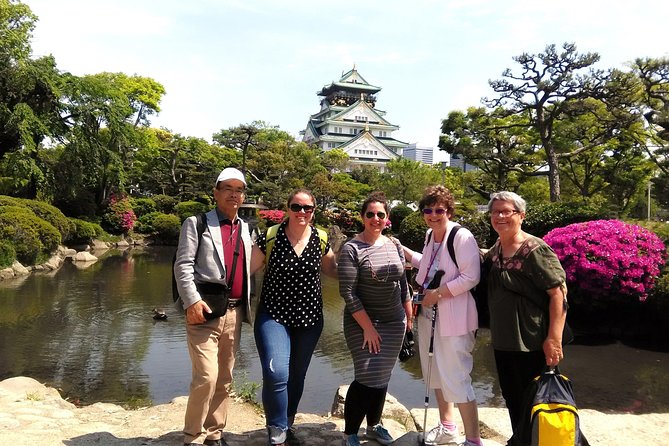
- Government-licensed English guide: You get context as you move, not just directions to the next photo spot.
- Pick 3–4 sites from the Osaka menu: Food, shopping, shrines, temples, castle—your day, your order.
- Private means truly yours: Only your group participates, so you can ask questions and linger if it fits.
- Food streets meet food-buying streets: Dotonbori plus market time helps you understand Osaka’s everyday appetite.
- Culture stops that make sense: Shrines and temples are explained with practical etiquette and clear background.
- Route support for real life: Guides often help with trains/subways and navigating the city efficiently.
A Private, Custom 6-Hour Plan (That Doesn’t Feel Generic)
This tour is priced as a private experience—about $155.26 per person—and the value is in what private time buys you in Osaka. The big win is not just having someone walk beside you. It’s having a guide who can steer the day: where you start, which stops matter most, and what you skip if it’s not your vibe.
You’ll also feel the difference in how the day is structured. Instead of forcing you through every single highlight, you customize around 3 to 4 stops from a set list. That matters in Osaka because the city can be overwhelming fast—signs, crowds, train changes, and decision fatigue. A private guide cuts through that.
Most guides are also great at handling communication ahead of time. In the feedback, I saw repeated mentions of clear planning and helpful coordination—one guide even helped guests get from their hotel to Shin-Osaka Station to catch a Shinkansen after the tour.
You can also read our reviews of more walking tours in Namba

Quick tip
If you’re traveling with teens, grandparents, or anyone who tires easily, tell the guide your target pace and energy level before you lock in your stop choices.
Price and Value: What $155 Buys on a Walking Day
At $155.26 per person, you’re paying for a licensed local guide plus private time, not for transportation or admissions. That’s the trade.
Here’s what you should expect to pay extra for:
- Transportation fees (the tour itself doesn’t include rides)
- Entrance fees (some stops list not included)
- Lunch and personal expenses
But here’s why the value can still be strong. A good private guide can save hours of decision-making, help you avoid the most annoying bottlenecks, and translate what you’re seeing into something you actually understand. One review specifically praised the tour as the best value compared with other shore excursions, because it covered a lot without feeling like a rushed cattle line.
Also, the itinerary includes several stops that list free admission—like Dotonbori, Sennichimae Doguyasuji, Shinsaibashi-suji, Kuromon Market (market time), and Sumiyoshi Taisha and Shinsekai as time stops. So even though admissions aren’t included across the board, you’re not forced to buy tickets for every single stop.
If you’re trying to maximize value
Pick at least one “ticket likely” landmark (like Osaka Castle or Umeda Sky Building) and pair it with free-access street culture (Dotonbori/arcades/market). That gives you both paid and free moments without draining your budget.
Walking Day Reality: Pace, Pace, Pace
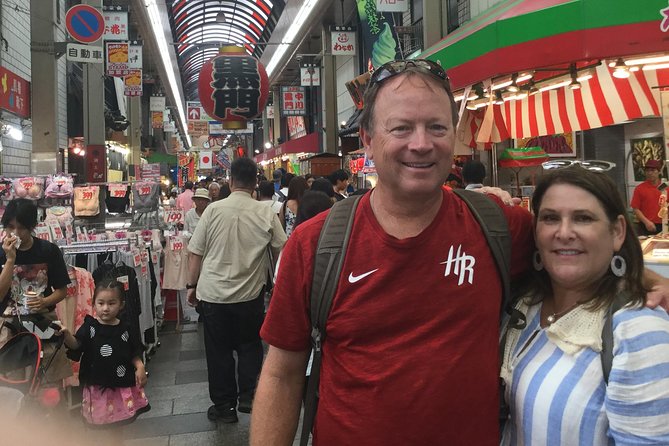
This is a walking tour. That’s the point. Osaka rewards people who move through it slowly enough to notice small details, but not so slowly that you miss everything.
In one less-perfect review, the guide walked quickly and paused less often to let the guest catch up. That’s fixable if you communicate early. On a private tour, you’re not stuck with the default group rhythm.
Bring:
- Comfortable shoes (you’re on your feet for much of the day)
- Water (easy to forget in shopping areas)
- A simple plan for breaks (even 5 minutes helps)
And during the first stop, set the tone:
- Ask for a slightly slower pace if needed
- Say whether you prefer photos, shopping time, or quiet cultural moments
You can also read our reviews of more guided tours in Namba

Dotonbori: Osaka’s Giant Billboard Food Street
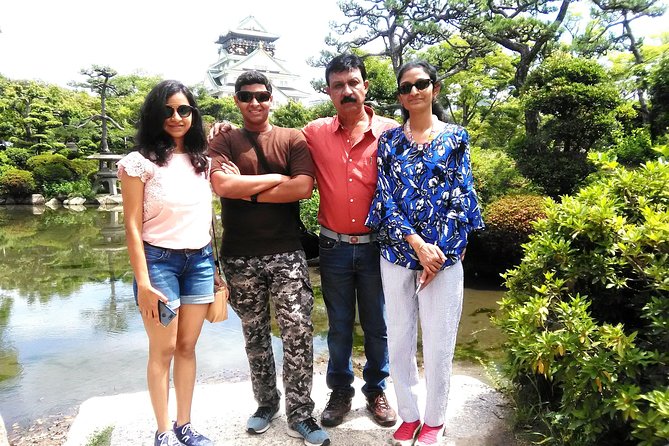
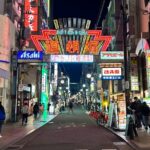
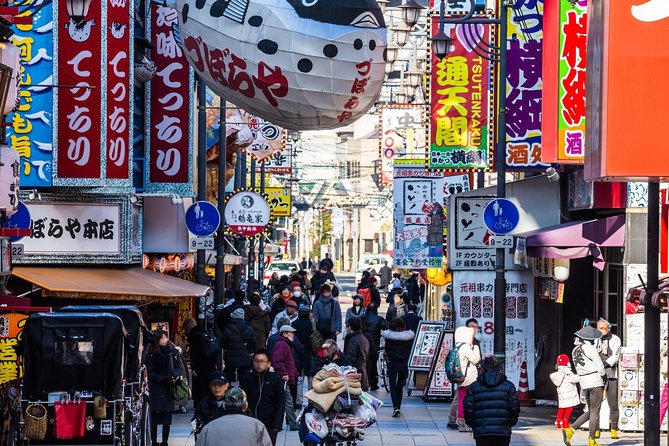
The tour often starts (or quickly lands) at Dotombori District, and that makes sense. This is where Osaka’s street identity shows up loud and fast: huge billboards, restaurants packed along the lanes, and food stalls built for snacking and sharing.
You’ll walk Dotonbori street for about an hour. The focus is local favorites like takoyaki (octopus balls) and okonomiyaki (savory pancakes). The guide’s job here is practical: where to go, what to try, and how not to waste time hunting when you’re hungry.
What I’d watch for
If you want the best food value, go hungry enough to try something—but not so hungry you can’t enjoy the rest of the day. One strong theme in the reviews: guides help with food ordering and local choices, and some even lead guests to great noodle spots (lunch isn’t included, but the recommendation can be excellent).
Admission-wise, this stop is listed as free.
Kitchenware and Shopping Arcades: Doguyasuji and Shinsaibashi-suji
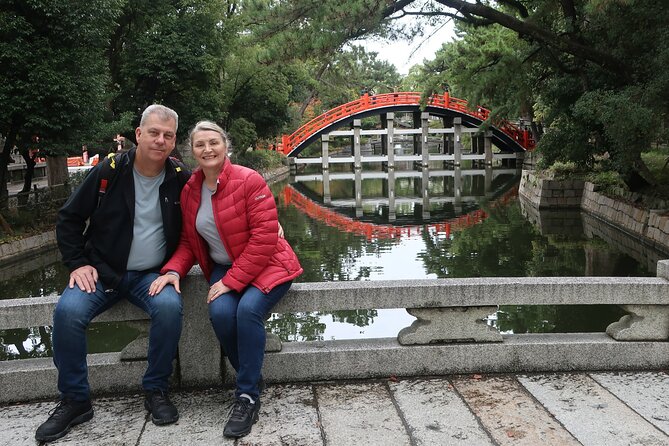
Osaka isn’t only about eating. It’s also about buying—specifically, buying stuff you didn’t know you needed until you see it in the right place.
Sennichimae Doguyasuji Shopping Street
About 30 minutes here makes a lot of sense. This is a narrow shopping street (around 150 meters) packed with specialty stores selling kitchen utensils and cooking items. If you like souvenirs that feel useful—knives, tools, dishware—this is the zone.
Even if you don’t shop, it’s a fun stop because you can see how locals think about cooking gear. The guide can explain what types of shops sell what, and what’s worth paying attention to.
Admission is listed as free for this stop.
Shinsaibashi-suji Shopping Street
Another 30 minutes at Shinsaibashi-suji, a long shopping arcade (about 600 meters), gives you the big Osaka retail feel: cosmetics, apparel, restaurants, and all the side streets feeding into it.
This is also where the guide’s job shifts toward navigation:
- finding the easiest path between shops
- pointing out the kinds of places locals actually use
- keeping your group from losing time zigzagging
Admission is listed as free here too.
Kuromon Market: Seafood Energy With Seasonal Clues

Kuromon Market is one of those places where your senses take the lead. It’s a roofed market stretching along a busy corridor, and you’ll spend about 30 minutes there.
This market is especially tied to seafood seasons. The menu info points out that you’ll see:
- conger pike in summer
- fugu (pufferfish) in winter
It also notes that many seafood shops specialize in fugu and hamo.
How to enjoy it without stressing
This is a “see, smell, and sample if you want” stop. If you love food, ask your guide what’s best right now and how to order. If you’re not big on seafood, you can still enjoy the market atmosphere and focus on non-seafood snack options, but the tour isn’t designed as a vegetarian-first route.
One less-satisfied review said the fish-market focus didn’t fit their preferences. So if you’re vegetarian or seafood-avoidant, tell your guide before you choose Kuromon as a stop—or ask what alternatives they can build into your 3 to 4 site plan.
Admission is listed as free for the market time.
Sumiyoshi Taisha: Old Shrine, Clear Etiquette, Real Atmosphere
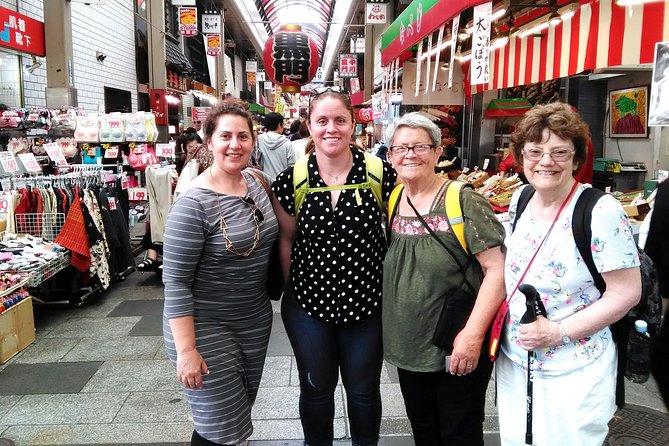
Sumiyoshi Taisha Shrine is one of Osaka’s older spiritual anchors. The tour description highlights that it dates back to the 3rd century before Buddhism arrived, and that it has a unique shrine architectural style.
You’re usually there about 30 minutes, and this is where your guide helps you slow down. It’s not just seeing buildings. It’s understanding why the space is arranged the way it is—and how to behave without being awkward.
One of the most memorable moments from feedback: a guest’s group encountered a traditional Shinto wedding party taking photos during the visit. You might not get that exact moment, but it’s a reminder that these sites are not theme parks. They’re used.
Admission is listed as free in the itinerary.
Shitennoji and Osaka Castle: Two Big Icons, Two Different Moods
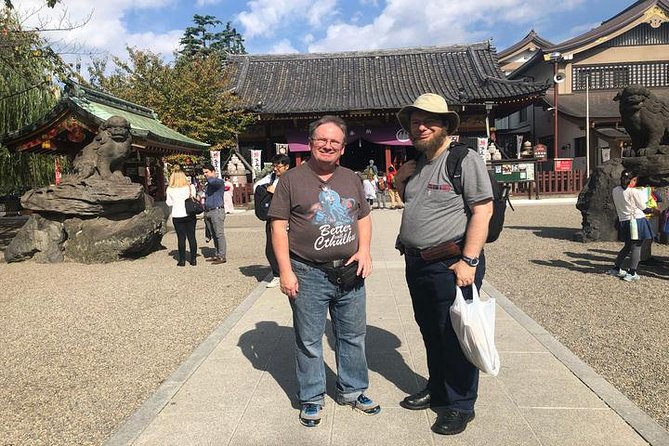
This is the “Osaka meaning” part of the day: temple age and castle power.
Shitennoji (about 30 minutes)
Shitennoji is described as one of Japan’s oldest temples and the first to be built by the state. It traces back to Prince Shotoku in 593, tied to early Buddhism in Japan.
Expect the guide to walk you through:
- what the main temple significance is
- how it connects to broader Japanese religious history
- how to respect the space while still asking questions
Admission for this stop is listed as not included.
Osaka Castle (about 60 minutes, but tickets extra)
Osaka Castle is a major landmark, with a five-story structure and a history reaching almost 450 years. The itinerary lists it as an hour stop, but entrance is not included.
Here’s the practical consideration: if you skip the inside ticket, you’ll still get the dramatic grounds and exterior atmosphere, but your total payoff might feel different. One review noted Osaka Castle from the outside, which shows that groups may sometimes keep the stop focused on the exterior and nearby areas rather than the interior exhibit route.
Either way, the guide’s job is to put the castle in context, including why it became such an enduring symbol.
Umeda Sky Building and the National Museum of Art: When You Want a View
Not every 3–4 stop plan will include these, but both are great options if your group likes skyline views or indoor cultural time.
Umeda Sky Building (about 30 minutes)
The Umeda Sky Building is a high-rise in the Kita district near Osaka and Umeda Stations. It’s described as 173 meters tall and known as the New Umeda City.
Admission isn’t included. If your group loves city views and you have daylight timing that works, this can be a strong late-day stop.
National Museum of Art, Osaka (about 30 minutes)
This museum is described as an underground museum on Nakanoshima Island, in central Osaka. It’s a good “break from the streets” option within the 6-hour structure.
Admission isn’t included, so choose this based on your group’s interest in art versus another outdoor stop.
Shinsekai and Keitakuen Garden: Old Osaka With a Quick Reset
Shinsekai (about 25 minutes)
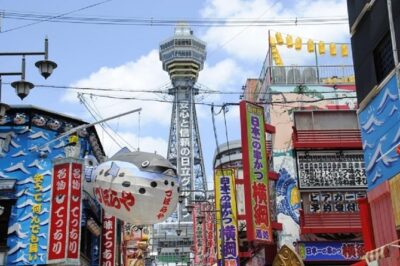
Shinsekai, meaning New World, is associated with Tsutenkaku (sometimes called the Osaka Eiffel tower), plus street foods like kushikatsu and the Billiken figure, described as a god of wealth and money.
There’s also mention of Spa World, a large bath complex. In other words, Shinsekai isn’t only a photo stop. It’s an area tied to everyday local leisure and snack culture.
Admission is listed as free for the stop time.
Keitaku-en Garden (about 5 minutes)
Keitakuen Garden is a traditional Japanese landscape garden in Tennoji Park. The description highlights a central pond, carefully arranged rocks, and seasonal elements, designed in the early 20th century.
Admission isn’t included, but the key value is a short reset: a quiet, green pause after food and shopping streets. Because it’s only about 5 minutes in the typical menu timing, it works best when your group wants a small calm break, not a long walk-through.
Guides You’ll Actually Enjoy: English, Humor, and Fixing Problems Fast
One of the strongest repeated themes across feedback is how well the guides handle English and explanations. Guides named in the reviews include Yama, Miyuki Ogawa, Haru, Shogo, Sachiko, Noriko, Yuki, Yoshii Kenichi, Saori, Rie, and Yuka.
What makes that important for you:
- Clear English means fewer moments where you smile and nod but miss the meaning.
- Humor helps you stay relaxed in crowded areas.
- Customization keeps the route from feeling forced.
- Guides often help with public transport confidence. One review praised getting a handle on the train system so the guest could extend their own travel afterward.
There’s also practical problem-solving. One guide helped hunt down a very specific souvenir: Ohtani jerseys for a group with half-Japanese kids. That’s the kind of thing a private guide can do because they can move faster and ask the right questions in local stores.
The one caution
If you’re very sensitive to pace, say so. One review complained a guide didn’t slow down. Another review praised guides who sensed when to shift gears. That means the best outcome depends on how clearly your group’s needs are communicated.
Who Should Choose This Tour (and Who Might Not)
This tour fits best if you want a guided mix of:
- street food culture and markets
- shopping arcades and practical local places
- shrines, temples, and major Osaka landmarks
- a private route you can tailor
It can be a great option for couples and families, including teens—one review even called out a family with two teenage boys. It also works if you’re short on time and want to avoid spending hours planning.
If you might want a different plan
If your group isn’t interested in fish-heavy market culture, you may want to skip Kuromon Market. One review explicitly said fish-market focus didn’t fit their vegetarian preferences.
Also, if you dislike walking, or if your group needs frequent, long breaks, pick your stop combination carefully. Since the day is built around moving, you’ll get more comfort by choosing fewer “high effort” stops and adding a garden or museum break.
Should You Book This Osaka Private Walking Tour?
Yes, if you want a guided Osaka that makes sense—food streets plus temple-and-castle context, all with a private guide who can tailor the order of stops. The standout value here is not the number of sites. It’s the way the day is built around your interests and how confidently you navigate Osaka afterward.
Book it when:
- you like history and culture, but you also want food and street life
- you want a private guide rather than a rigid group route
- you’d benefit from help with trains, timing, and what to prioritize
Think twice (or customize hard) if:
- your group has strong dietary limits around seafood
- walking pace is a concern and you don’t want a fast day
If you go in with clear preferences—food vs. temples, shopping vs. views, slow vs. brisk—this is the kind of Osaka day that leaves you feeling oriented, not just entertained.
FAQ
How long is the Osaka private walking tour?
It lasts about 6 hours.
What does the tour cost?
The price is listed as $155.26 per person.
Is this a walking tour, and do I get pickup?
It is a walking tour. Pickup is offered from your hotel in the Osaka area, but the tour also notes meet up with the guide on foot within a designated area.
Is the tour private?
Yes. It is a private tour/activity, and only your group participates.
Can I customize which stops you visit?
Yes. You can customize the itinerary by choosing 3 to 4 sites from the stops listed in the tour’s options.
Are entrance fees included?
No. Entrance fees are listed as not included, and several stops specifically note admission is not included.
Is transportation included?
No. Transportation fees are not included.
What’s included in the price?
A licensed local English-speaking guide is included, along with the customizable choice of 3 to 4 sites and meeting up with the guide on foot.
Is lunch included?
No. Lunch is listed as not included.