REVIEW · OSAKA PREFECTURE
Cook Homestyle Ramen and Gyoza from scratch
Book on Viator →Operated by Japanese Cooking Studio -WA- · Bookable on Viator
Making ramen at home in Osaka is magic.
This class turns out a full bowl of ramen and a plate of gyoza, built from scratch with a real step-by-step kitchen approach. You learn both ramen and gyoza, including how to make ramen broth fast and how to wrap and grill gyoza. It’s also small—up to 5 people—so the lesson feels like a focused cook-along, not a show.
I love that you’re not just watching. You practice the prep, the wrapping, and the cooking, then you eat what you make and chat afterward. I also like that Seiki’s recipes are designed to be repeatable at home, including advice for when Japanese ingredients are hard to find abroad.
One consideration: the class is 3 hours, so it moves at a good pace. If you’re extremely slow with chopping or dough work, you’ll still want to follow along closely to finish everything.
In This Review
- Key Highlights You’ll Actually Use
- Senri-Chuo Meetup and the Walk to a Real Home Kitchen
- Welcome Tea, Ingredient Basics, and Practical Substitutions
- Chicken Ramen Broth Fast: Creamy, Homemade, and Built Without Instant Stock
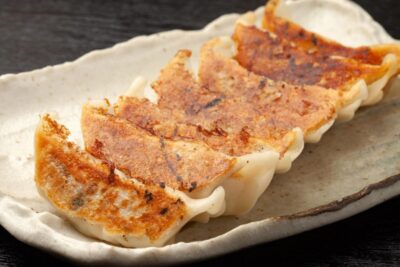
- Gyoza From Scratch: Skin, Filling, Wrapping, and the Grill Finish
- Cooking Together, Then Eating: Why the End Part Matters
- Price and Value: $78 for 3 Hours, Scratch Skills, and a Max-5 Kitchen
- Who Should Book This Ramen and Gyoza Class
- Quick Practical Tips Before You Go
- Should You Book It?
- FAQ
- What’s included in the class?
- How long is the experience?
- Where do I meet the instructor?
- What time does the class start?
- How big is the group?
- Is the ramen broth made with instant stock?
- Do I learn only ramen or also gyoza?
- Do I get recipes I can use at home?
- What ticket format do I receive?
- What’s the cancellation policy?
Key Highlights You’ll Actually Use
- Chicken ramen broth from scratch in about 30 minutes, no instant soup stock
- Gyoza from zero: skin + filling + wrapping + grilling
- Home-kitchen format with welcome tea and ingredient walkthrough first
- Small group (max 5), so you get hands-on help while you cook
- Easy-at-home recipes, plus ingredient swap ideas for life outside Japan
- You eat together at the end, so the skills land immediately on your plate
Senri-Chuo Meetup and the Walk to a Real Home Kitchen
This experience starts in Osaka at Senri-Chuo Station, then you walk a few minutes to the home kitchen. That short walk matters more than it sounds. It’s one of those “this isn’t a big venue” signs that you’ll be cooking in a lived-in space where the workflow is already set.
You meet at:
Senri-Chuo 1 Chome-3 Shinsenri Higashimachi, Toyonaka, Osaka 560-0082
It begins at 10:00am, and it ends back at the meeting point.
Small group size—up to 5 travelers—is a big deal for cooking classes. In a bigger group, you often get stuck waiting for a turn. Here, the format is built around you doing the work while the teacher keeps an eye on what you’re doing.
You can also read our reviews of more tours and experiences in Osaka Prefecture.



Welcome Tea, Ingredient Basics, and Practical Substitutions
When you arrive, you get welcome tea and a rundown of the ingredients before any cooking starts. This isn’t filler. It’s the foundation that helps you understand what you’re building—so later, when you cook at home, you’re not just copying steps blindly.
One of the most useful parts is learning basic Japanese ingredients. The class is designed so you understand what those ingredients do in the finished dish—so substitutions make more sense, not less. And Seiki goes beyond “use the Japanese version if you can.” The approach includes suggestions for which ingredients are better alternatives if you struggled to find certain items living abroad.
That’s the kind of help that saves you money and time after the class. If you only learn the technique but not the ingredient logic, you’ll hit a wall when you get home. Here, you get both.
Chicken Ramen Broth Fast: Creamy, Homemade, and Built Without Instant Stock
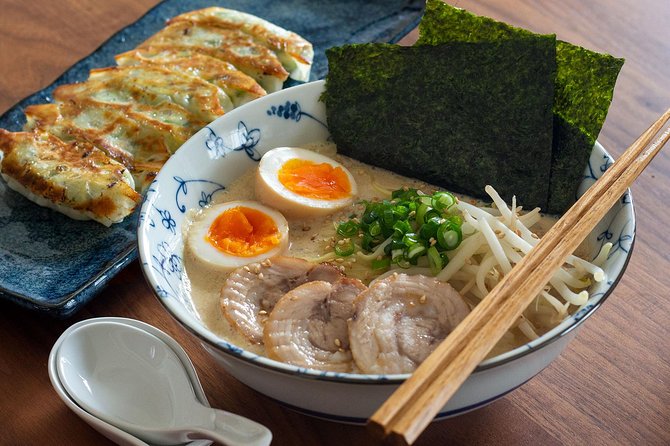
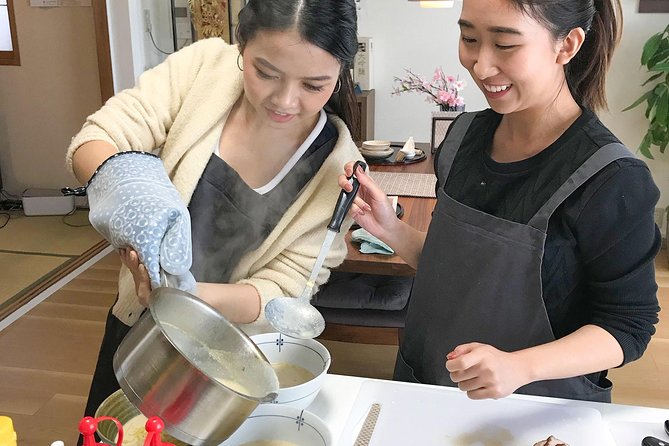
The ramen focus is home-style and comfort-driven. You’ll work on a creamy ramen broth made from chicken, and the goal is doing it within about 30 minutes without using instant soup stock.
That “no instant stock” detail is what makes the class feel like a real skill, not a shortcut. It forces you to understand how flavor develops during cooking—so the broth tastes like ramen, not like water plus a packet. And since you’re making it in a time-boxed lesson, you learn how to move efficiently without turning the whole afternoon into a broth marathon.
After the broth foundation, you’ll learn to prepare ramen garnishes and toppings. Expect items like:
- Grilled pork
- Seasoned egg
- Other toppings (you’ll prepare these as part of building the full ramen bowl)
What you’re really learning here is assembly. A good bowl isn’t only broth. It’s how toppings add texture, saltiness, and richness on top of the base. By the time you eat, the ramen is a complete system.
Gyoza From Scratch: Skin, Filling, Wrapping, and the Grill Finish
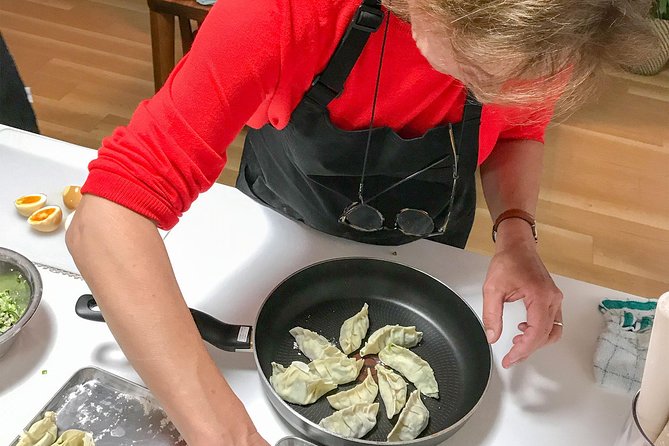
Gyoza is where the hands-on part gets real. This class teaches you to make gyoza in full, not just assemble frozen dumplings.
You’ll learn:
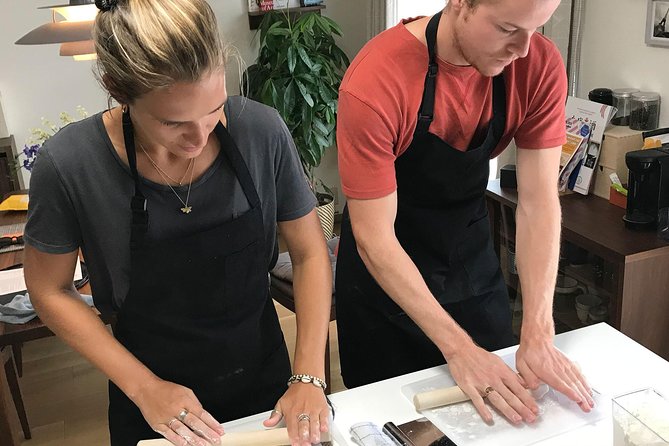
- How to make gyoza skin
- How to make the gyoza filling
- How to wrap gyoza
- How to grill them
This sequence matters. Most home cooks can do steps 1–2 (mix dough, mix filling). The real trick is step 3 and 4—getting the wrap sealed and then cooking so the outside turns out right while the filling stays juicy.
The wrapping technique is also a confidence-builder. Once you see the pattern and practice a few, it stops feeling mysterious. It becomes repeatable.
And then you grill. That final step helps you understand what “done” looks like beyond time. You’ll connect technique to outcome—crisp edges, proper browning, and a dumpling that feels like something you’d happily order.
Cooking Together, Then Eating: Why the End Part Matters
After cooking, you eat what you made and enjoy chatting. This part is worth protecting in your schedule.
Why? Because ramen and gyoza are flavor memories. If you just learn how to cook without tasting your version immediately, you might not notice what needs adjustment for next time—thickness, seasoning, or balance between broth and toppings. Here, you taste at the finish line, while it’s fresh in your head.
Also, the class is friendly and patient. One past participant noted that Seiki is enthusiastic and patient, and that kids stayed engaged through the whole class. That tells you the teaching style is approachable, not scolding or rushed.





Price and Value: $78 for 3 Hours, Scratch Skills, and a Max-5 Kitchen
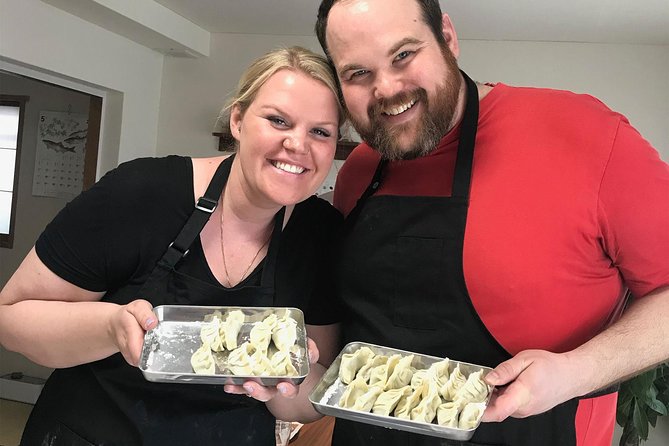
At $78 for about 3 hours, this isn’t a bargain class. It’s also not a luxury experience pretending to be cooking. It’s priced like a serious hands-on lesson—because you’re doing the whole workflow.
Here’s what you’re paying for, based on what the class includes:
- Scratch ramen broth (chicken-based, no instant stock)
- Toppings like grilled pork and a seasoned egg
- Gyoza from scratch, including skin + filling + wrapping + grilling
- Welcome tea
- Small group size (max 5), which directly affects how much help you can get
For many travelers, the real value is what happens after. If you can reproduce these dishes at home, this class becomes a tool you’ll use repeatedly. The fact that Seiki’s recipes are created to recreate easily at home—and include ingredient swap ideas—pushes the value higher than a class where you only learn a technique you can’t repeat.
Who Should Book This Ramen and Gyoza Class
This fits best if you want real kitchen skills, not just a fun activity.
You’ll likely enjoy it if:
- You like ramen and gyoza and want to understand what makes them taste right
- You’re a beginner who benefits from step-by-step practice
- You want recipes you can bring home and use again
- You’re traveling with kids and want something structured with hands-on tasks (the class has worked well for ages around 10 and 12, based on feedback)
It might be less ideal if:
- You want a totally passive experience or prefer restaurant-style tasting over cooking
- You’re short on time and can’t spare the full 3 hours
- You’re counting on very specific dietary accommodations, since the details provided don’t cover allergies or substitutions beyond general ingredient availability
Quick Practical Tips Before You Go
- Plan to arrive a few minutes early at Senri-Chuo Station so the walk to the kitchen doesn’t stress you out.
- Wear shoes you’re comfortable in. Home kitchens can mean more standing than you expect.
- Come hungry, but don’t eat a huge heavy meal beforehand. The class ends with you eating what you cooked.
Should You Book It?
If your goal is to take home skills you can actually repeat, this is an easy yes. Hands-on ramen broth (no instant stock) plus gyoza from scratch is a lot of cooking for one session, and the small group size helps you stay on track.
Book it if you want a practical Osaka food experience built around doing—under a patient teacher like Seiki—with recipes designed for real life after your trip.
If you’re only looking for a casual food stop where you taste and move on, you might prefer a tasting-focused option. But if you want to cook, this class delivers.
FAQ
What’s included in the class?
You’ll cook home-style creamy chicken ramen broth and ramen toppings like grilled pork and a seasoned egg, then make gyoza from scratch (skin and filling), wrap it, and grill it. You also eat the dishes at the end, with welcome tea served when you arrive.
How long is the experience?
It’s about 3 hours.
Where do I meet the instructor?
You meet at Senri-Chuo Station at 1 Chome-3 Shinsenri Higashimachi, Toyonaka, Osaka 560-0082, Japan, and you walk a few minutes to the home kitchen.
What time does the class start?
The start time is 10:00am.
How big is the group?
The class has a maximum of 5 travelers.
Is the ramen broth made with instant stock?
No. You learn how to make chicken ramen broth within 30 minutes without instant soup stock.
Do I learn only ramen or also gyoza?
You learn both. The class includes ramen broth and garnishes, plus gyoza skin, filling, wrapping, and grilling.
Do I get recipes I can use at home?
Yes. The recipes are created to recreate easily at home, and Seiki can suggest ingredient swaps for items that may be hard to find abroad.
What ticket format do I receive?
You receive a mobile ticket.
What’s the cancellation policy?
The experience is non-refundable and cannot be changed for any reason.