REVIEW · OSAKA
Osaka Castle & Temple Walking Tour with Multilingual Audio Guide
Book on Viator →Operated by N.E.C.O. Walking Tour · Bookable on Viator
Old Osaka has a quiet way of showing up. This Osaka Castle & Temple walking tour strings together Shitennoji Temple, Tennoji Park sites, and Osaka Castle with a local host plus multilingual QR audio you can stream on your phone using nearby free WiFi. It’s a simple plan with a lot of payoff, especially if you want history you can actually follow at street level.
I love that you step into Shitennoji’s Central Complex, not just view the buildings from the outside. You walk close to the Five-Story Pagoda and the Golden Hall layout, and the host keeps the first explanations in simple English before you switch to your chosen language on the audio guide.
I also like the Osaka Castle portion because you get guided viewpoints and photo spots for the Main Tower exterior, not random wandering. The one consideration: you’ll do a fair amount of walking for about 3 hours 45 minutes and there’s a short subway ride (about 5 minutes), plus the tour depends on good weather.
In This Review
- Key highlights worth planning around
- Why Shitennoji + Osaka Castle feels like one story
- Chausuyama and Isshinji: small stops that set the tone
- Stepping into Shitennoji’s Central Complex (where the tour earns its keep)
- The short subway shift to Osaka Castle Park
- Osaka Castle Park: Main Tower photo viewpoints and guided stories
- Multilingual audio + local host: how the format actually helps
- What’s included, what costs extra, and why $35.77 makes sense
- Timing and stamina: how to prepare for a 3h45 walking day
- If you want goshuin stamps, plan smart
- Who should book this tour (and who might skip it)
- Should you book this Osaka Castle & Temple Walking Tour?
- FAQ
- How long is the Osaka Castle & Temple walking tour?
- What does the price include?
- Which language options are available for the audio guide?
- Is Goshuin stamp collecting included?
- Where does the tour start and end?
- Is there an additional cost during the tour?
Key highlights worth planning around
- Multilingual audio on your phone (English, French, Spanish, German, Dutch, Japanese) via QR scans at key locations
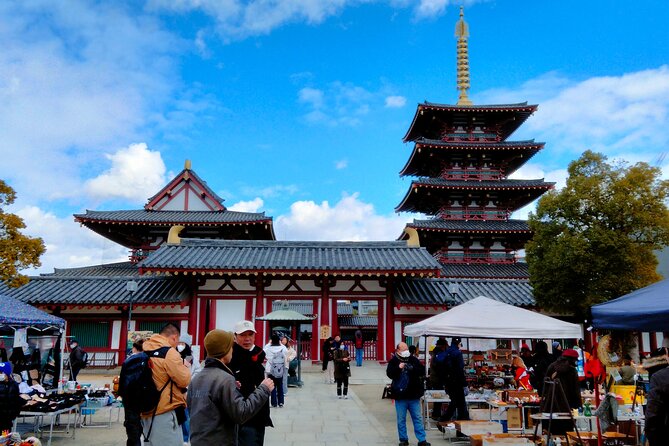
- Inside Shitennoji’s Central Complex, with close sightlines to the Five-Story Pagoda and the Golden Hall area
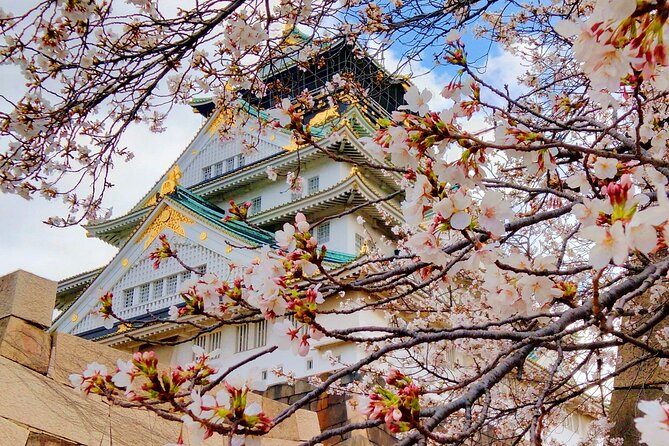
- Photo-first guidance at Osaka Castle Park, aimed at getting the best exterior views of the Main Tower
- Tennoji Park temple stops that don’t feel rushed, including Chausuyama’s three spots and Isshinji’s statue hall
- Small group size (up to 5 people), which makes it easier to ask questions and keep together
- Practical inclusions like a rain poncho and bottled water, plus free WiFi near the host
Why Shitennoji + Osaka Castle feels like one story
Osaka often gets treated like a food and nightlife stop. This tour nudges you toward something older and more spiritual—then ties that feeling straight into the city’s grand, symbolic landmark.
What makes it work is the flow. You start in the Tennoji area, move through temple spaces you can enter, then shift to Osaka Castle Park for the big visuals. The audio guide structure also helps: you get a short live intro from the local host, then you continue deeper in your preferred language without needing to ask the same questions twice.
You’ll also get a rhythm that fits real travel life. The walking sections are timed, the temple viewing windows are short enough to keep energy up, and the castle time is longer so you can settle into photos and viewpoints.
You can also read our reviews of more walking tours in Osaka


Chausuyama and Isshinji: small stops that set the tone
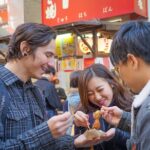
The first part of your walk goes through Tennoji Park’s Chausuyama area. You visit three spots connected with Chausuyama, and the good news is not everything is just “look around.” You’ll have detailed audio guidance at two of the spots, so you’re not left guessing what you’re seeing.
Even with short time blocks—about 15 minutes here—these stops matter because they prepare you for Shitennoji. Temple architecture and layout can feel abstract until someone explains the logic behind it. This tour does that in small steps, with the host guiding you in simple English first, then letting the audio guide take over in your language.
Next comes Isshinji Temple’s branch site, where you focus on Buddhist statues in Sanzenbuddha Hall. It’s a quick, focused look—around 10 minutes—but it gives you a different angle from what you’ll see later. Instead of the big layout questions, you’re looking at faces, figures, and sacred space in a more direct way.
A practical tip: keep your phone charged early. The plan uses QR scans at key locations, and you’ll want the audio guide ready when you move from one spot to the next.
Stepping into Shitennoji’s Central Complex (where the tour earns its keep)
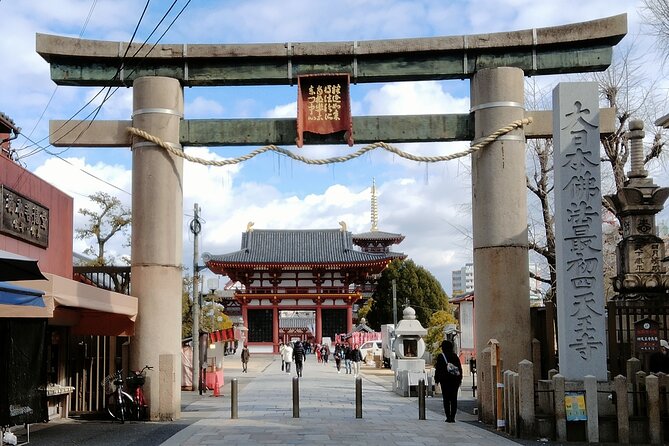
This is the heart of the experience. At Shitennoji, you enter the Central Complex, meaning you experience the temple space from inside—where the layout makes more sense than it does from street-level sightseeing.
Shitennoji is famous for being one of the older temple spaces in Japan, but the value on this tour is how it becomes understandable. The host gives an intro in simple English, then you can listen to more detailed explanations through the multilingual audio guide. That matters because temple terms and layout details can be tough when you’re rushing or when the group is moving fast.
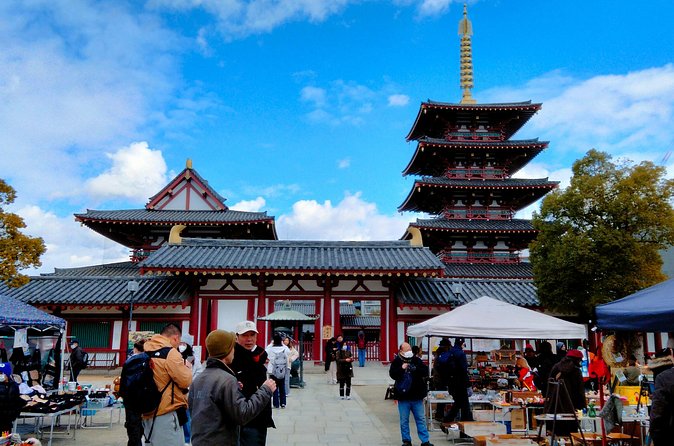
Inside, you get close to the Five-Story Pagoda and the Golden Hall area. The walk isn’t just ceremonial. You’re guided toward viewpoints where you can actually see how the buildings relate to each other—how sightlines, courtyards, and sacred structures work together as a designed space.
Time here is about 30 minutes. That’s long enough to slow down for photos and to switch languages on the audio guide if you want. It’s also short enough that you don’t feel stuck in one place while everyone else waits.
If you care about getting good temple photos without turning it into a stress-fest, this portion is built for you. The host also helps point out photo angles and moments, including viewpoints that are not just the obvious postcard view.
The short subway shift to Osaka Castle Park
After Shitennoji, the tour makes a clean move to the castle area. You take the Tanimachi Line, with a ride time of about 5 minutes, then you start the Osaka Castle Park portion.
This transfer is one of those “small” details that makes the whole day easier. Instead of burning energy on complicated route planning, you use public transit as designed by the tour. It also lets you keep your mental pacing: you can listen to the audio guide while you’re on the move, then switch back to live guidance when you arrive.
When you reach Osaka Castle Park, the tour shifts from temple layout storytelling to exterior landmark viewpoints. You’ll have time—about 2 hours—for the castle highlights, so it’s not a quick photo slap-and-go.
One small consideration: because you’re on foot and on transit, keep your shoes comfortable. Osaka’s stone and smooth walking surfaces can feel different depending on the area, and you’ll appreciate shoes that let you change pace without thinking about it.
Osaka Castle Park: Main Tower photo viewpoints and guided stories
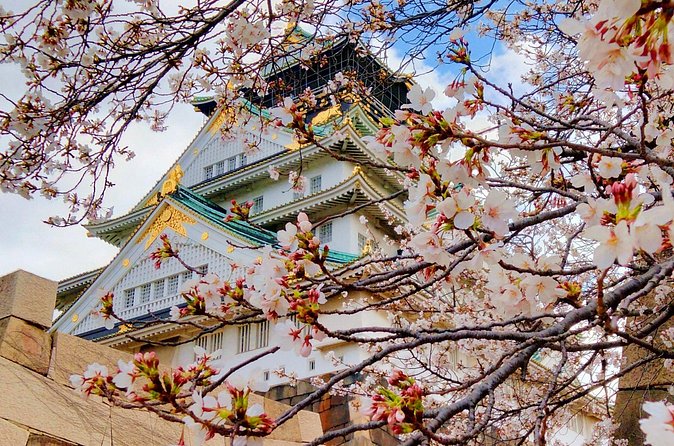
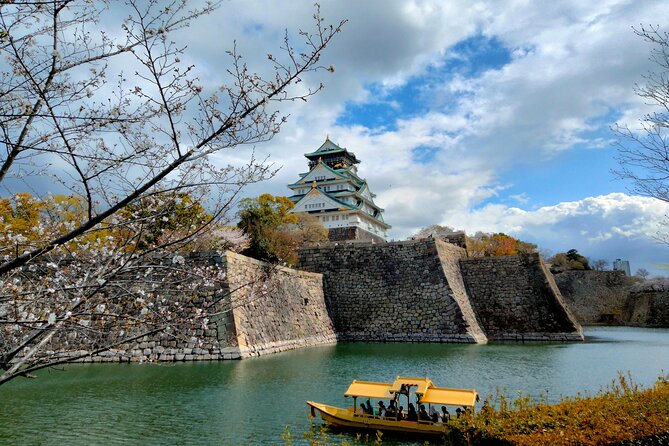
Once you’re in Osaka Castle Park, the focus turns to the big symbol: Osaka Castle and the Main Tower exterior. This is where the tour’s “local viewpoints” angle really pays off.
You’ll visit highlights of the castle and listen to in-depth stories through the audio guide. The host also leads you to key viewpoints, including the best photo spots for exterior views of the Main Tower. That’s the difference between watching tourists scramble for angles and knowing which direction and distance give you the cleanest framing.
You get about 2 hours here. That’s a gift because castle viewing often works better with time. You can take a few photos, listen to one longer story segment, then come back to the viewpoint if you want a different angle. You’re not rushed out in 20 minutes.
Photo tip that helps in practice: stand where the host points first, then take one wide photo, one mid shot, and one detail shot of any ornament or roofline you see. The tour guidance is mainly about getting you lined up, and your extra photos are about playing with composition after that.
Also, if you like learning while walking, this part is structured so you can keep listening without losing your place. Scanning the audio QR points at key locations keeps the flow going even when you step away for pictures.
You can also read our reviews of more guided tours in Osaka





Multilingual audio + local host: how the format actually helps
This tour’s best trick isn’t the sites—it’s how the information is delivered.
At each stop, your local host gives a short introduction in simple English. Then you switch to the audio guide for more detail in the language you selected (English, French, Spanish, German, Dutch, or Japanese). The audio guide was created by locals, and you can stream it on your smartphone using free WiFi near the host.
That structure gives you two advantages:
- You get human context first, so the audio doesn’t feel like random facts.
- You can choose your language without slowing down the group or relying on a perfect knowledge of English.
In the best-case scenario, your host also helps you connect what you’re hearing to what you see. For example, guides on this route—including AJ Kajiiwara, who has been singled out for thorough history and clever viewpoint choices—are known for sharing detailed stories and pointing out photo spots that many people miss.
Whether or not AJ Kajiiwara is your guide, the format stays the same. You’ll still get that “first the big idea, then the details” rhythm.
What’s included, what costs extra, and why $35.77 makes sense
At $35.77 per person, this isn’t trying to be a luxury private guide. It’s priced like a smart mid-range walking tour with real value baked in.
Included highlights:
- Central Complex admission at Shitennoji
- A rain poncho and bottled water
- WiFi environment near the host
- Audio guide access via QR scanning at key locations
- Guidance and navigation by a local Japanese host in simple English
Not included:
- Metro fare for the Tanimachi Line (190 JPY)
Here’s how to think about the value. You’re getting a host for the full arc of the day (temples plus castle), plus admission for the one spot where it matters most. You’re also getting practical comfort items for weather and hydration, which keeps small problems from ruining your pace. On a day like this—temples inside, castle viewpoints outside—those small extras matter.
The small group size (maximum of 5 travelers) also helps the price feel fair. You’re not one person in a crowd of 30 being herded along. You can hear explanations better, and your host can adjust to questions without breaking the tour’s timing.
Timing and stamina: how to prepare for a 3h45 walking day
The tour runs about 3 hours 45 minutes. That includes short viewing windows at each temple stop and a longer castle segment, plus transit time.
Your physical fitness level should be moderate. This doesn’t mean it’s a hike. It means you’ll be standing, walking, and moving between viewpoints often enough that you’ll want to feel comfortable doing it.
To prepare:
- Wear shoes you can stand in for a while.
- Bring a phone power bank if you’re the type to take lots of photos.
- If you’re sensitive to sun or cold, plan accordingly since parts of the castle park are outdoors.
Weather matters too. The experience is described as requiring good weather. If it’s canceled due to poor weather, you’ll be offered a different date or a full refund. In light rain, you’re covered with a rain poncho.
If you want goshuin stamps, plan smart
Goshuin stamp collecting is not included in this tour. Your host supports stamp collecting when possible, but it can’t be guaranteed during busy periods.
So if goshuin is a major goal, treat this as a bonus. Build your day around temple viewing, and ask your host about opportunities as you go rather than assuming every stop will be available for stamps.
Who should book this tour (and who might skip it)
This tour is a strong fit if you:
- Want temple and castle in one connected day without complicated navigation
- Prefer guided viewpoints and explanations you can follow in your language
- Like small-group experiences where you can ask quick questions
- Want practical help with photos, especially at Osaka Castle’s Main Tower exterior viewpoints
You might consider another option if:
- You want a long, unbroken lesson in one place (this route is intentionally paced across multiple stops)
- You don’t like walking or standing for extended periods
- You need guaranteed goshuin stamp time slots
Should you book this Osaka Castle & Temple Walking Tour?
If you want Osaka beyond food—temples you can enter and a castle experience with purposeful photo guidance—this is an easy yes. The audio system plus a local host in simple English makes it accessible, and the included Shitennoji admission is a real cost-saver.
Book it if you like structure: timed stops, QR audio prompts, and a route that covers the main highlights without turning into guesswork. For best results, come with comfortable shoes, a charged phone, and a willingness to slow down at viewpoints for a few minutes at a time.
FAQ
How long is the Osaka Castle & Temple walking tour?
The tour lasts about 3 hours 45 minutes.
What does the price include?
It includes bottled water, a rain poncho, WiFi environment near the host, audio guide access via QR code, navigation and guidance by a local host in simple English, and admission to the Central Complex at Shitennoji Temple.
Which language options are available for the audio guide?
The audio guide can be streamed in English, French, Spanish, German, Dutch, and Japanese.
Is Goshuin stamp collecting included?
Goshuin stamp collecting is not included, but the host will support it when possible. It cannot be guaranteed during busy periods.
Where does the tour start and end?
It starts at Tennōji Station JR Ticket Office (10-45 Hideninchō, Tennoji Ward, Osaka) and finishes in front of Tanimachi 4-chome Station.
Is there an additional cost during the tour?
You may need to pay the metro fare for the Tanimachi Line (190 JPY). The rest of the included admissions and core tour services are covered.