REVIEW · OSAKA
Nostalgic Osaka, walk in totally different from Dotonbori
Book on GetYourGuide →Operated by Four-Leaves · Bookable on GetYourGuide
Forget Dotonbori. Try this old-street Osaka walk. In Karahori, you’ll see a different city face: old mercantile houses, lane after lane of side streets, and daily life that feels far removed from the neon downtown. My favorite part is the way hidden alleys turn the stroll into real discovery, not a checklist.
I also like the small group setup (limited to 6), because it keeps things calm and lets the local guide steer you into places you wouldn’t stumble upon alone. With English or Korean support, the route moves smoothly from market street to backroads, with photo stops that help you notice details as you walk. The tone is practical and local, which I think is the point of the whole experience.
One consideration: this is a tight schedule and you must be on time. If you’re late by more than 15 minutes, it can be hard to join mid-stream, and some lanes are close to residents’ homes—so respecting people’s privacy is not optional.
In This Review
- Quick takeaways before you go
- Why Karahori feels like old Osaka (not Dotonbori)
- Getting oriented at Tanimachi-6Chome (and why it matters)
- The market street start: seeing Osaka by what’s for sale
- Hidden alleys and old mercantile houses: how the “maze” works
- Tatami mat shop and the small-world feel of local crafts
- Cozy cafés and side-street shops: food is optional, but very easy
- Finding Osaka Castle moat ruins by following the lanes
- The 2-hour flow: when to watch the clock
- Price and value for a 2-hour Karahori walk
- Who this tour is best for
- Should you book this Nostalgic Osaka walk?
- FAQ
- Where is the meeting point?
- How long is the tour?
- How much does it cost?
- What’s included in the price?
- Is food included?
- What language is the guide?
- How big is the group?
- Is the tour wheelchair accessible?
- Is it okay if I arrive late?
- Are under-18 participants allowed?
- What’s the dress/behavior expectation?
Quick takeaways before you go
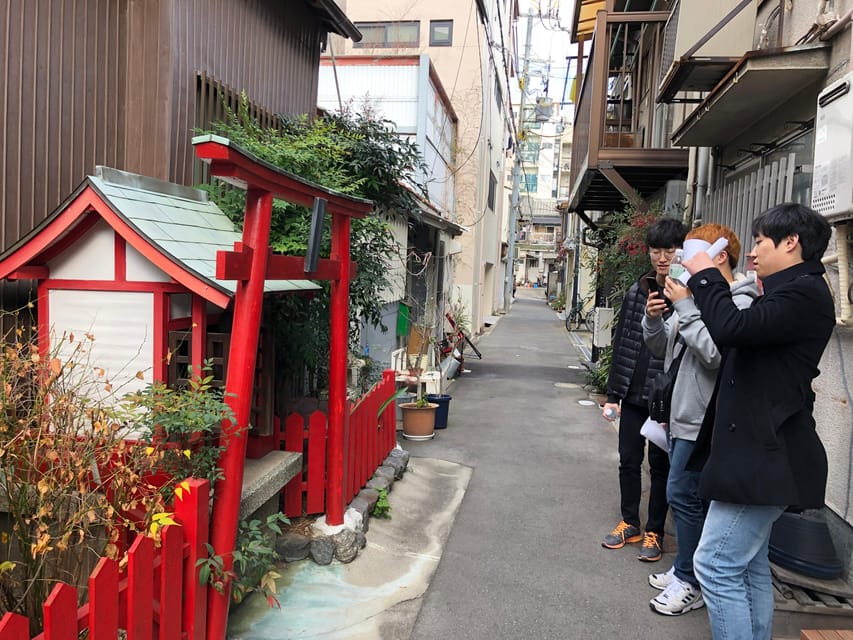
- Nostalgic Karahori feels like Osaka that survived World War II fire, with maze-like backstreets.
- Hidden alley walking is guided, including some areas that aren’t clearly marked for entry.
- Old commercial houses (100–200 years) sometimes still have residents or have been converted into cafés and shops.
- Tatami-focused stop gives you a hands-on look at everyday Japanese craft life.
- Osaka Castle moat remnants and tiny shrines appear in surprising alley locations.
Why Karahori feels like old Osaka (not Dotonbori)
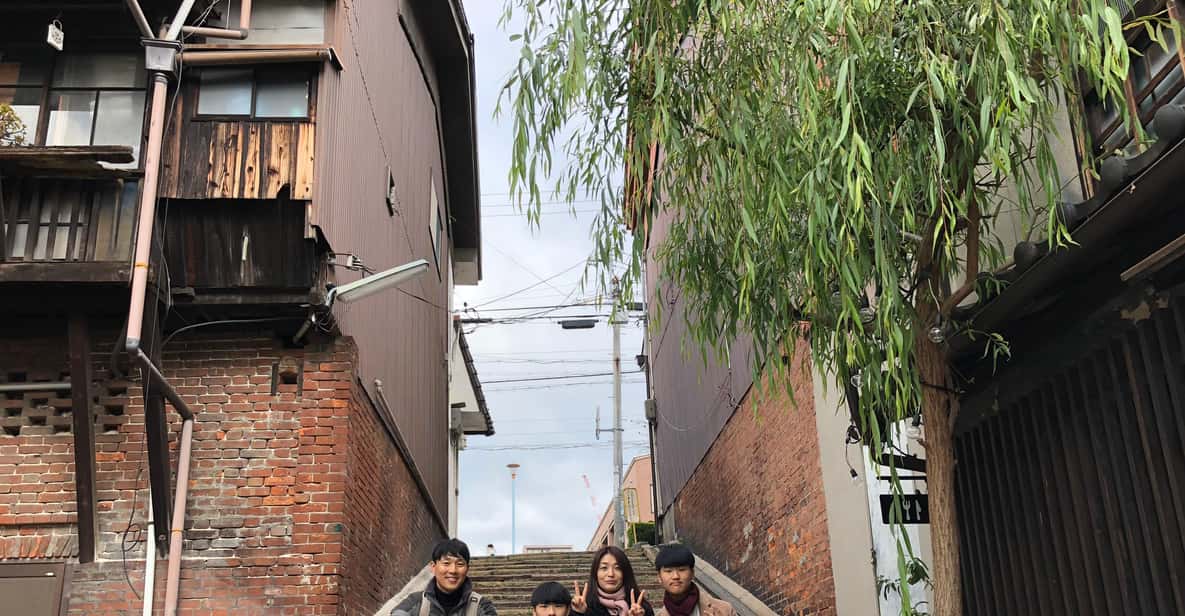
Osaka’s famous area—Dotonbori—tends to shout. Karahori whispers. This neighborhood is about three subway stops from Namba, but the vibe can feel like a different town. It carries traces of the older Osaka layout, including areas that survived the World War II fire, which is why you’ll notice older streetscapes still holding their shape.
What makes this worthwhile is not just “old buildings.” It’s the texture of daily life: narrow lanes that force slower walking, small storefronts that look like they’ve always been here, and the sense that people live alongside the history. You get the feeling that you’re passing through real neighborhoods, not a staged tourism corridor.
You can also read our reviews of more walking tours in Osaka



Getting oriented at Tanimachi-6Chome (and why it matters)
You start at 6-chōme-9-1 Tanimachi, meeting at Osaka Metro Tanimachi-6Chome Station (Exit No. 3), street level. Exit No. 3 is on the Tanimachi Line side, even though the station is a crossing hub—so give yourself a couple extra minutes to find the right side of the platform when you arrive.
The first minutes include a welcome refreshment, plus a bottle of water and a small snack later as part of what’s included. For a 2-hour walk, that little bit helps a lot. You won’t be hunting for a drink early on, and you can focus on what the guide is pointing out—signs, entrances, old house details, and alley geometry.
Because it’s a small group (up to 6), your timing affects everyone. If you want the best flow, arrive before the start so you’re not rushing at the exact moment the group is moving out.
The market street start: seeing Osaka by what’s for sale
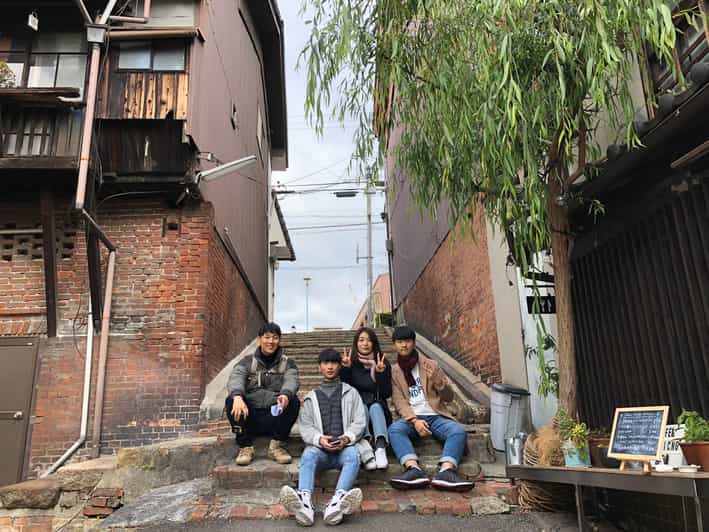
The route begins by going through a local market street, then shifts into slower, off-the-main-path areas. This first segment is about getting your bearings: where locals shop, how streets look when they’re built for walking day to day, and what kinds of businesses still serve the neighborhood.
You’ll also have an early photo stop. The goal isn’t just a picture—it’s a moment to slow down and look at the street pattern. Once you get that visual rhythm, the later alleys make more sense. You start noticing transitions: from open lanes to narrower corridors, from storefront frontage to side-door life behind the scenes.
There’s a shopping element here too. If something catches your eye, you’ll have chances to browse—just remember that anything you buy is paid by you.
Hidden alleys and old mercantile houses: how the “maze” works
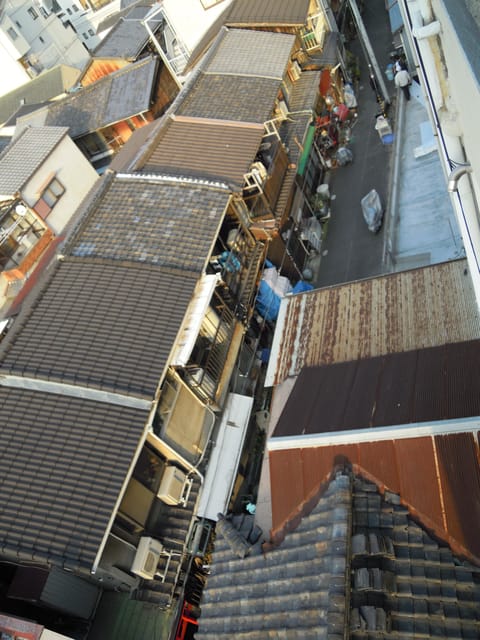
This is the big reason to book. You’ll walk into hidden alleys and off-the-beaten paths that aren’t the kind of thing most visitors ever find on their own. Karahori includes old traditional mercantile houses—some reportedly 100 to 200 years old—and that age shows up in how the spaces connect.
The alleys can feel like a maze, and the guide’s job is crucial: she knows the area map well and leads you through the lanes you can walk. Some alleys are private but don’t always come with clear signage about access. So the rule you should follow is simple: if the path looks like it belongs to residents, treat it as sensitive space. Don’t test boundaries. Don’t linger in doorways.
One more thing I appreciated: the tour explicitly encourages you not to disturb residents during hidden-path walking. The area includes older people who still live here—grandpa and grandma—so keep your voice low, stay moving, and don’t do anything that interrupts everyday life.
Tatami mat shop and the small-world feel of local crafts
Next up, you visit a Japanese tatami mat shop. This stop matters because it’s not just sightseeing from the outside. Tatami connects to how Japanese rooms work—how homes are built, how spaces are used, and how everyday culture shows up in objects you might otherwise only see in photos.
It also breaks the walking rhythm in a useful way. After time on alley streets, you get a chance to stop, look, and ask questions if the guide brings them up. Even if you don’t buy anything, this kind of shop stop gives you context for what you’re seeing in traditional houses around Karahori.
As with other shops, if you want to purchase anything, you pay on your own.





Cozy cafés and side-street shops: food is optional, but very easy
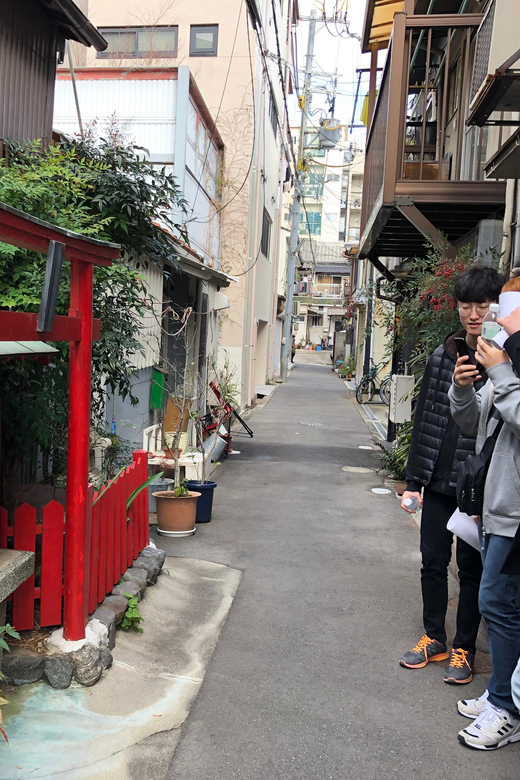
During the tour you’ll also visit hidden shops, including a select shop and café style stops. In Karahori, one charming pattern is that a cute café or small shop can appear suddenly between older mercantile houses—so the contrast feels real, not forced.
There’s also built-in time where you can rest. The tour includes a break time, and the guide can direct you to cozy cafés or yummy restaurants if you want to sit down. The important practical note: you’ll need to pay your meal expense yourself if you eat or drink at shops.
If you’re trying to travel light, you can keep it simple—snack and water included, and skip extras. If you want to experience the neighborhood through food, this is one of the easiest chances to do it without leaving the route.
Finding Osaka Castle moat ruins by following the lanes
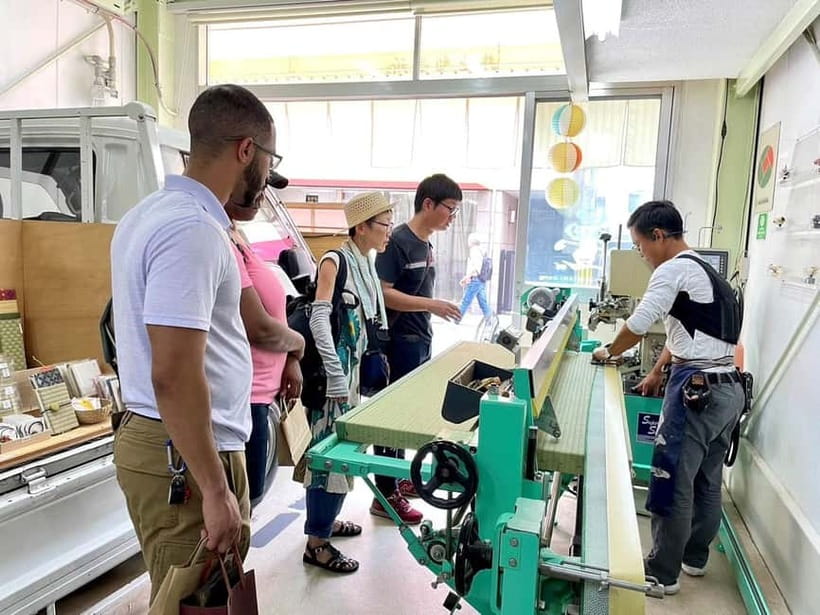
One of the coolest surprises is the ruin of Osaka Castle moat tucked into an alley area, described as an around 15D moated ruin without water. It’s the kind of landmark that would be easy to miss if you were walking alone, because it doesn’t announce itself from a main street.
You’ll also see tiny shrines in the same general hidden-lane environment. These small details are exactly why this kind of guided walk beats a self-guided wander: you get help noticing what the area is trying to preserve, and where the significance is tucked away.
There’s another photo stop tied to this part of the route, which gives you a moment to frame what you’re seeing. Don’t rush it—this section rewards slow eyes.
The 2-hour flow: when to watch the clock
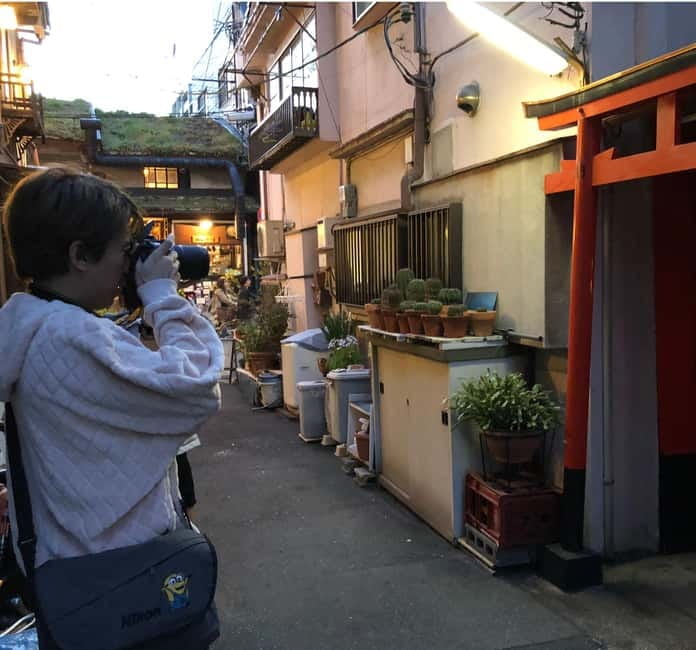
The tour is designed to fit into a tight window: about 2 hours total. Your pacing includes:
- a first photo stop early on (about 15 minutes),
- a longer walk segment around the market area (about 1 hour),
- additional time for sightseeing and walking (another photo stop later around 30 minutes),
- then a break time and final shopping/sightseeing (about 15 minutes),
- and finally back to the meeting address.
The main reason time matters: if you’re late by over 15 minutes, joining can be difficult for the group. So if you’re coming from another part of town, give yourself buffer for train transfers and station exits.
Price and value for a 2-hour Karahori walk
The price is about $35 per person for a 2-hour guided experience with a small group cap. What you’re paying for is the guide’s local navigation and the access to places that are not obvious from guidebooks—especially the alley navigation and the respectful approach to resident areas.
Included items are straightforward: a bottle of water and a small snack. Meals and drinks at cafés and restaurants, plus shopping at stores, are not included, so you should expect an extra budget if you plan to eat or buy souvenirs.
Is it good value? For me, yes—if you want a guided “see the real neighborhood” walk rather than a generic sightseeing route. If you only want postcard photos from major streets, then a simpler self-walk might be enough. But if you want the how and why behind old street life, the guide time is the value.
Who this tour is best for
This fits best if you like:
- old streets and neighborhood-scale history over big-ticket monuments,
- walking with a local guide who knows the small lanes,
- learning from everyday crafts like tatami,
- and eating as part of the experience (with your own budget).
It’s also a good match for couples, friends, and solo travelers who don’t want to get stuck behind crowds. The English and Korean guide option is a plus if you’re more comfortable in those languages.
Should you book this Nostalgic Osaka walk?
I’d book it if you want Osaka beyond Dotonbori—specifically the Karahori side that feels older, calmer, and more lived-in. The route’s mix of market street, hidden alleys, 100–200 year mercantile houses, a tatami shop, and the castle moat ruins makes it feel like a genuine neighborhood story.
Skip it (or consider a different style) if you dislike tight schedules, don’t like walking through residential-adjacent areas, or you plan to arrive late and wing it. When you’re on time and respectful, this kind of tour delivers the best payoff: you leave with a real sense of how Osaka everyday life fits into the city’s older bones.
FAQ
Where is the meeting point?
Meet at Osaka Metro Tanimachi-6Chome Station, Exit No. 3 at street level. The address listed is 6-chōme-9-1 Tanimachi.
How long is the tour?
The tour lasts about 2 hours.
How much does it cost?
It’s listed at about $35 per person.
What’s included in the price?
A bottle of water and a small snack are included, plus welcome refreshments at the start.
Is food included?
Food and drinks at shops or cafés are not included. If you eat or drink during shop stops, you pay yourself.
What language is the guide?
The live guide offers English and Korean.
How big is the group?
It’s a small group limited to 6 participants.
Is the tour wheelchair accessible?
Yes, it’s listed as wheelchair accessible.
Is it okay if I arrive late?
If you’re late by more than 15 minutes, it can be difficult to join to keep the rest of the group on schedule.
Are under-18 participants allowed?
Participation by persons under age 18 is not permitted unless they participate with a guardian.
What’s the dress/behavior expectation?
There are rules like no drones, no smoking indoors, no intoxication, and you should not make noise or disturb people during hidden-path walking.