REVIEW · OSAKA
Osaka Explore Every Bit of Osaka Castle in 3 Hours
Book on Viator →Operated by DeepExperience · Bookable on Viator
Three hours at Osaka Castle can be enough. You get a guided route that connects the Otemon Gate to the Toyotomi story and then lands you inside the Osaka Castle Keep for big payoff views. I especially like how the time is paced: you’re not just walking, you’re getting clear context at each stop. The other win is the focus on the castle grounds highlights you can actually use for photos and orientation. One drawback to think about: this is a tight, highlight-based route, and lunch is not included.
It runs about 3 hours, and it’s set up as a private tour for your group. You’ll start at Lawson S Otemae Rest House and finish at Ōsakajōkōen Station, which makes it easy to roll into the rest of your day with less fuss. There’s also a mobile ticket and group discounts, which helps if you’re coming with friends.
In This Review
- Key Highlights You’ll Actually Feel in Your Time
- Why Osaka Castle in Three Hours Works
- Meet at Lawson S Otemae Rest House, Finish at Ōsakajōkōen Station
- Otemon Gate: The Main Entrance With a 400-Year Timeline
- Hokoku Shrine / Toyokuni Shrine: Hideyoshi’s Connection to This Site
- Osaka Castle Keep Tower: The Real Highlight and Why It Matters
- Yamasatomaru ( 山里丸跡 ) and Gokuraku-bashi: Small Stops With Big Layout Value
- Guide Quality: Why the Best Part Is Usually the Person Talking
- Price and Value: What $97.87 Buys in Real Terms
- Timing, Comfort, and How to Get the Most From the Walk
- Who Should Book This Osaka Castle Tour
- Should You Book Osaka Explore Every Bit of Osaka Castle in 3 Hours?
- FAQ
- How long is the Osaka Castle tour?
- What does the tour cost?
- What is included in the price?
- Is lunch included?
- Where do I meet the tour?
- Where does the tour end?
- Is the keep admission included?
- Is this tour private?
- Can I cancel for a full refund?
- Is it near public transportation?
Key Highlights You’ll Actually Feel in Your Time
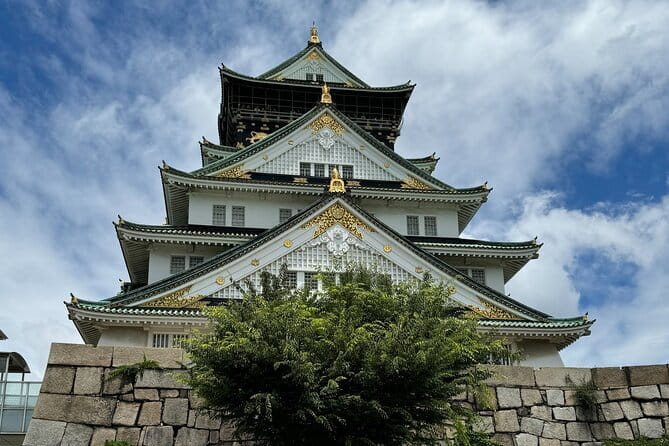
- Fast, story-led route across the castle grounds so you don’t waste your 3-hour window guessing what you’re seeing
- Otemon Gate with 400-plus years of context right at the start, before you even reach the keep
- Toyokuni Shrine stop focused on Hideyoshi’s role in building the first Osaka Castle on this site
- Osaka Castle Tower included (the keep is the highlight), with time for the views
- Careful little add-ons like Yamasatomaru and Gokuraku-bashi Bridge that explain the layout beyond the main building
- Private-group feel plus a guide who keeps things moving without turning it into a lecture
Why Osaka Castle in Three Hours Works
Osaka Castle is one of those sights where you can easily spend half a day and still feel like you only saw the postcard version. This tour is built for the opposite problem. In roughly three hours, you hit the essentials around the castle complex and get enough background to make the stones, gates, and shrines make sense.
I like this approach because it respects how travel days really work. If you’re in Osaka for a limited time, you want your effort to pay off fast. The tour is also structured so your eyes get guided along the right lines: start with the main entrance, learn the Toyotomi connection, then concentrate on the keep tower as the centerpiece.
The pacing also matters. You’re not rushed through everything, but you are kept moving. That helps you avoid the common trap of getting stuck reading every sign and then running out of energy before the keep.
You can also read our reviews of more tours and experiences in Osaka

Meet at Lawson S Otemae Rest House, Finish at Ōsakajōkōen Station
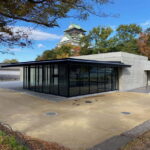
One practical win is the meeting and ending setup. You start at Lawson S Otemae Rest House (3-21 Ōsakajō, Chuo Ward, Osaka), and you finish at Ōsakajōkōen Station (3 Osakajo, Chuo Ward, Osaka). That end point is convenient because it links you directly back to transit.
In practice, this matters because Osaka Castle is a big campus-like area. If you’re traveling with luggage, with kids, or just trying to stay energy-efficient, a start-to-finish route helps you avoid dead-end wandering.
You’ll be using a mobile ticket, which cuts down on the hassle of printouts. It’s a small thing, but it makes day-of logistics smoother.
Otemon Gate: The Main Entrance With a 400-Year Timeline
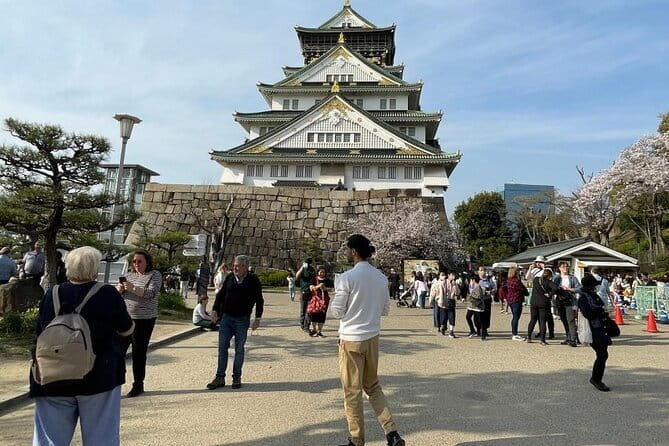
Your tour begins at Ōte-mon Gate, the main gate of Osaka Castle. The reason this start works is simple: a castle is easiest to understand from the front door. This gate was built at the same time as the current Osaka Castle, and it carries a history of more than 400 years.
At this stop, the guide’s job is to do two things. First, help you read the gate as more than an attractive photo spot. Second, set the timeline so you understand why later areas connect back to the earlier storyline.
Even if you’ve seen castle gates before, Ōte-mon Gate has a particular role. It’s the symbolic threshold. When you know that, the rest of the walk feels more intentional, not random.
How to use this stop well: slow down for a few minutes and look at how the gate frames what’s next. The better you orient here, the easier it is to interpret what you’ll see in the keep later.
Hokoku Shrine / Toyokuni Shrine: Hideyoshi’s Connection to This Site
From the gate, you head to the shrine dedicated to Toyotomi Hideyoshi, the man tied to the first Osaka Castle built on this location. In the tour flow, this stop comes right after the main entrance, which is smart. You’re transitioning from the exterior military look to the spiritual and political symbolism behind the castle.
The shrine visit is short, but it’s focused. You’re told who Hideyoshi was and why his role matters. That background makes the later keep experience land better, because you’re no longer seeing the castle as just walls and towers.
Why I think this is a strong inclusion: Japanese castles aren’t only architecture. They also represent power networks, legitimacy, and the stories leaders wanted remembered. Even if you only catch a few key details here, it changes how you process everything you see at the keep.
Practical note: shrines can be calmer spaces in a busy day. Use the moment to reset your pace before the main event.
Osaka Castle Keep Tower: The Real Highlight and Why It Matters

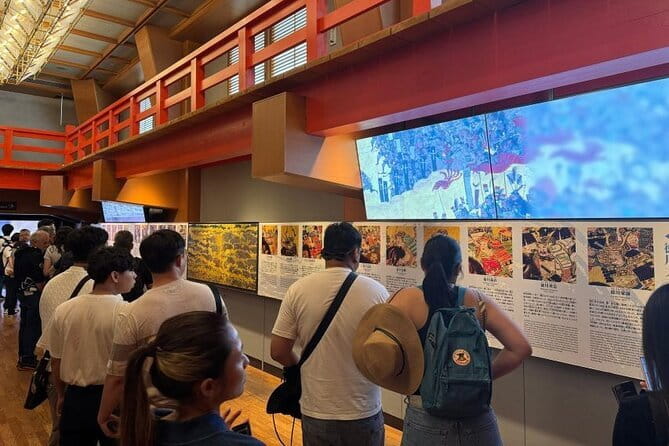
Then you get to what most people came for: the Osaka Castle Keep, where the tower time is included. The keep is described as built about 400 years ago, later falling during the war and then being rebuilt. That build-and-rebuild cycle matters, because it shapes what you’re looking at now.
You’ll spend about 1 hour 30 minutes at the keep. That’s long enough to do more than just rush to the highest floor. It gives you time to absorb the structure, then slow down when the views open up.
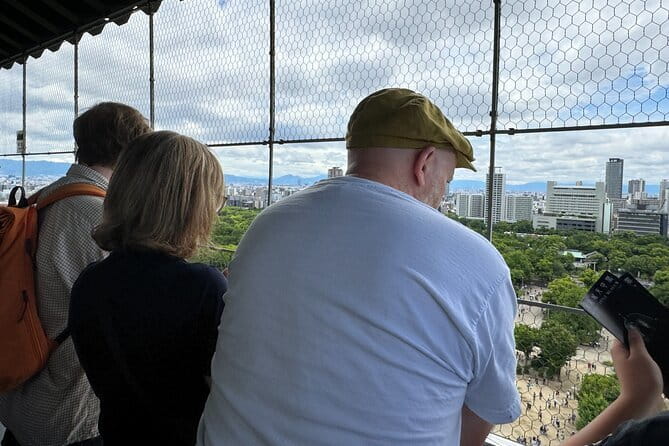
From the top floor, the tour notes a great view. I like that this is built into the schedule instead of being an afterthought. A castle tower without enough time to actually enjoy the perspective can feel like a missed opportunity.
If you’re into photography, this is your main shot. You’ll get the best chance to frame the Osaka Castle grounds from above and spot how the layout works across the complex. If you’re traveling with mixed interests, this stop also tends to keep everyone happy because it combines story, architecture, and views.
A possible drawback: tower time can mean stairs and indoor walking, depending on where you end up. If you’re prone to fatigue, plan to take your breaks during the keep rather than saving your energy only for later.



Yamasatomaru ( 山里丸跡 ) and Gokuraku-bashi: Small Stops With Big Layout Value
After the keep, the tour shifts to the opposite side of the main gate for two smaller stops that make the whole complex feel more real.
First is 山里丸跡, called Yamasatomaru, meaning mountain village. The name is tied to the idea that Hideyoshi’s domain included a village-like area on the mountain side. That short explanation helps you connect the castle grounds to daily life around power, not just defense.
Next comes Gokuraku-bashi Bridge, crossed while heading in an easterly direction from the keep. What makes this quick bridge stop worth your attention is the detail that the parapets and fences were reproduced using wood. That matters because it signals how much care goes into representing the castle’s historical atmosphere, not just its skyline.
These two stops are brief—about 15 minutes and 5 minutes respectively—but they do a lot of work. They fill in the gaps between the main gate and the tower. Without them, Osaka Castle can feel like two landmarks connected by scenery. With them, you get a clearer sense of movement and space.
If you want a practical strategy: treat these stops as orientation. Don’t try to read everything or force long stays. Just let the explanations help you understand where you are and how the complex is meant to be walked.
Guide Quality: Why the Best Part Is Usually the Person Talking
This tour is built around an expert guide, and the value difference shows up in how the information is delivered. In the experience writeups, guides like Yuta and Kaoru are singled out for being kind and for giving background in a way that stays interesting instead of turning into a nonstop lecture.
What I pay attention to with any history tour is pacing and selection. You want the guide to hit the key points that change how you look, then stop before you’re overloaded. The praise for guides giving just enough history is exactly what you hope for: context that helps you understand what you’re seeing, without burying you.
There’s also a practical kindness angle noted in the feedback: walking you back toward your train station so you don’t feel stuck figuring things out. That’s not just sweet. It’s useful travel service, especially when you’re tired after a few hours of walking.
Since this is a private tour for your group, you also have more flexibility to ask questions in the moment. If something at the keep catches your eye—stonework, layout, or the way paths connect—this structure gives you a chance to get an answer while it still matters.
Price and Value: What $97.87 Buys in Real Terms
The price is listed as $97.87 per person, and the tour runs about 3 hours. On paper, that can look steep or normal depending on what you usually pay for guides.
Here’s how I’d judge the value based on what’s included:
- Expert guide time for a full 3-hour route
- Admission to the Osaka Castle Tower (the keep)
- A walking tour of the castle park
Lunch is not included, and private transportation is not included. So you’re paying mainly for guided time and the key admission.
The value logic is this: you’re essentially buying (1) interpretation and (2) time efficiency. With castles, the difference between a good day and a frustrating day is often whether you understand what you’re seeing. If you’re the type who likes to read labels but still wants a story thread, this tour is designed to do that in a limited time window.
Also, the tour includes multiple stops that are free entry in the tour notes, like Ōte-mon Gate and the shrine/bridge areas. That means your money isn’t only going to one building. You get a connected walk through the major touchpoints rather than one ticket and a walk by yourself.
If you’re traveling with a group, group discounts are listed. That can make a big difference, since private, guided time tends to cost more when you split it.
Timing, Comfort, and How to Get the Most From the Walk
The whole route is designed to fit an active 3-hour visit. That doesn’t mean it’s a “no walking” tour. You’ll be moving between gates, shrine areas, the keep, and the smaller corners.
So I’d plan like this:
- Wear comfortable shoes. Castle grounds are uneven in places, and the keep experience typically involves lots of walking.
- Bring water if you tend to get dry on walks. Lunch isn’t included, so hydration matters even if you’re not staying all day.
- If you care about photos, know that your best chance is around the keep and viewpoint time.
One more timing detail: since the keep tower admission is included, you won’t need to sort tickets on the fly for the main highlight. That reduces the chance of losing time during the one stop that really needs you to be fresh.
Who Should Book This Osaka Castle Tour
This tour is a strong fit if:
- You want a clear storyline through the castle without spending your whole visit trying to figure out what’s what
- You’re short on time but still want the keep tower experience
- You like samurai-era context and the Toyotomi Hideyoshi connection
- You prefer a private group feel, even if the route is shared with your small party
It may be less ideal if:
- You want to wander independently for much longer than three hours
- You’re hoping for a meal included with the ticket
- You expect deep, slow museum-style reading at every nook and cranny
Think of it as a guided, efficient route designed to help you leave with a better understanding than you’d get from a casual stroll.
Should You Book Osaka Explore Every Bit of Osaka Castle in 3 Hours?
If your main goal is to see Osaka Castle’s key areas with enough context to actually remember them, I’d book it. The biggest reason is the combination of tower admission included and a guided walk that connects the gates, shrine, and smaller layout points into one story. Three hours is also a good length: long enough for meaningful time in the keep, short enough to still feel like you can enjoy the rest of Osaka the same day.
If you’re on a tight schedule and you’d rather pay for clarity than spend your time piecing things together, this tour is built for you. If you hate walking and you want long pauses for browsing, you might prefer a self-guided visit where you can move at your own pace.
My rule: if you want the keep views and a guided explanation of what you’re standing in front of, this is a practical way to spend your time.
FAQ
How long is the Osaka Castle tour?
The tour lasts about 3 hours.
What does the tour cost?
It costs $97.87 per person.
What is included in the price?
Included are an expert guide, admission to the Osaka Castle Tower, and a walking tour of the castle park.
Is lunch included?
No, lunch is not included.
Where do I meet the tour?
The start location is Lawson S Otemae Rest House, 3-21 Ōsakajō, Chuo Ward, Osaka, 540-0002, Japan.
Where does the tour end?
The tour ends at Ōsakajōkōen Station, 3 Osakajo, Chuo Ward, Osaka, 540-0002, Japan.
Is the keep admission included?
Yes, admission to the Osaka Castle Tower is included.
Is this tour private?
Yes. Only your group participates.
Can I cancel for a full refund?
Yes. Free cancellation is offered up to 24 hours in advance for a full refund.
Is it near public transportation?
Yes, it’s near public transportation.