REVIEW · OSAKA
Full Day Walking Tour in Osaka Castle Temples and Ukiyoe
Book on Viator →Operated by Snow Monkey Resorts Tours (Machinovate Japan Ltd.) · Bookable on Viator
Osaka can feel like overload fast. This full-day walk helps you put the pieces together, mixing big historic sights with everyday Osaka streets and an ukiyo-e art stop. You also get a clear structure, so you’re not wandering for hours without a plan.
What I like most is the way the day pairs Osaka Castle with Shitennoji. You’ll move from the story of a castle that was completed in 1597 (then rebuilt after repeated destruction) to a temple that traces Buddhism’s route from India to China and on to Japan. It’s a satisfying shift, and it gives you context for what you’re seeing.
One possible downside: food isn’t included. If you’re the type who hates making decisions mid-walk, budget time and yen for stops around Kuromon Market and Dotonbori after the scheduled sights.
In This Review
- Key Points to Know Before You Go
- A Smart Way to See Osaka: Temples, Markets, and Ukiyo-e
- Osana Castle Museum: Big Frames, Big History, and Clear Context
- Shitennoji Temple: A First Stop for Buddhism’s Osaka-to-Japan Story
- Kuromon Market: Where the City Feels Like It’s Breathing
- Dotonbori and Shinsaibashi: Neon-Era Osaka Meets Traditional Art
- The Guide Factor: Why Wingki Changes the Day
- Price and Value: Is $165.19 Worth It?
- Who This Tour Fits Best
- Quick Planning Tips So Your Day Runs Smoothly
- Should You Book This Osaka Castle Temples and Ukiyo-e Walking Tour?
- FAQ
- How long is the tour?
- What is included in the price?
- Is food included?
- Are admission tickets included for Osaka Castle and Shitennoji?
- Is the Kuromon Market stop free?
- Does the tour include an ukiyo-e experience?
- How many people are in the group?
- Do I get a mobile ticket?
- What is the cancellation policy?
Key Points to Know Before You Go
- Osaka Castle museum entry included with the full timeline, including the 1995 government rebuild.
- Shitennoji Temple visit focused on how Buddhism spread into Japan.
- Kuromon Market stop timed well for quick snacks and browsing, with admission free.
- Ukiyo-e experience during the Minami/Dotonbori area for hands-on culture beyond photos.
- Small group size (max 20) plus an English-speaking guide, so questions don’t get lost.
- Train tickets included and the tour runs about 8 hours, so it’s easier to keep your day moving.
A Smart Way to See Osaka: Temples, Markets, and Ukiyo-e
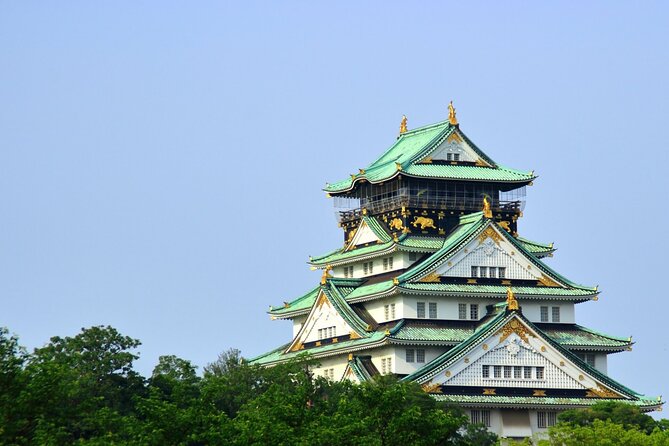
This tour is built for the way most visitors actually experience Osaka: you see a few headline sights, then you want the street-level stuff that explains the city. Here, you get both. The day is organized around four anchors—Osaka Castle, Shitennoji, Kuromon Market, and the Dotonbori/Minami area—with walking between them so the city feels connected instead of chopped into separate attractions.
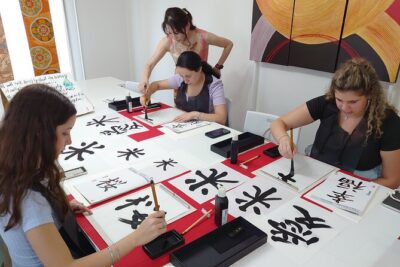
You’ll also get something that photo stops can’t do: the ukiyo-e session. Ukiyo-e isn’t just a souvenir style. It’s an art tradition tied to how people pictured city life centuries ago. When you make or practice something yourself, you stop seeing it as a random shop item and start noticing the logic behind the designs—how figures are composed, how scenes are simplified, and why certain themes repeat across time.
I also appreciate that the plan isn’t overly complicated on paper. Tickets for entrances and trains are covered, and it runs around 8 hours. That matters because Osaka is great, but it can be a lot to manage solo—especially if you want history and fun in the same day.
You can also read our reviews of more walking tours in Osaka


Osana Castle Museum: Big Frames, Big History, and Clear Context
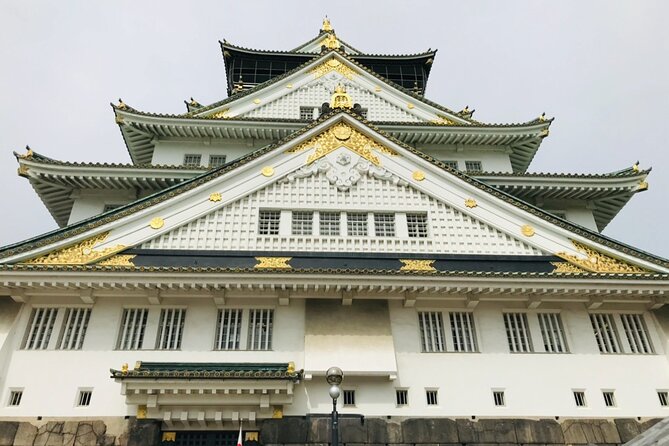
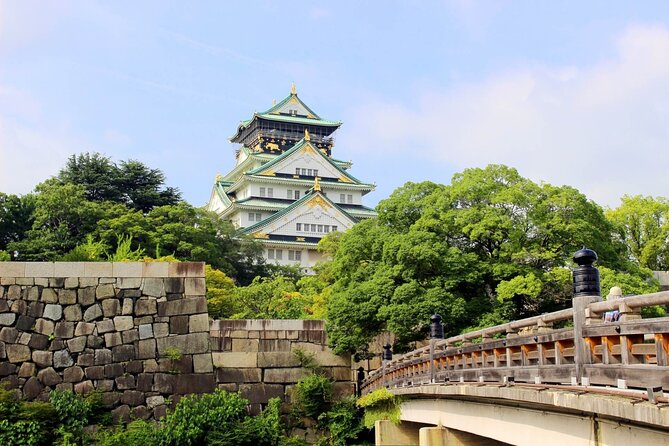
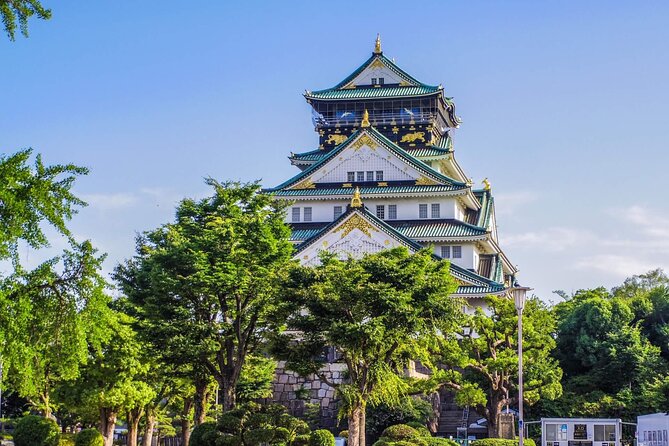
Osaka Castle is one of those places where even if you’ve seen pictures, the scale hits different in person. The tour’s start at the Osaka Castle Museum is a good call because you get the background first, before you fully absorb the site.
You’ll learn how the castle’s story moves through time: it was completed in 1597, then faced repeated destruction, and later was rebuilt by the Japanese government in 1995. That rebuild detail matters. You’re not just being handed a postcard version of the past—you’re being shown that even famous landmarks have layered histories, and what you see today has a reason.
The tour allocates about 2 hours for this stop, and that’s enough time to slow down. You can read, look at displays, and form a mental picture of Osaka’s historical role without feeling rushed.
One practical note: you may do best if you wear comfortable shoes from the start. The day has several walking segments, and castle grounds are not “just a quick photo.” You’ll likely appreciate having your legs ready early rather than paying for it later.
Shitennoji Temple: A First Stop for Buddhism’s Osaka-to-Japan Story
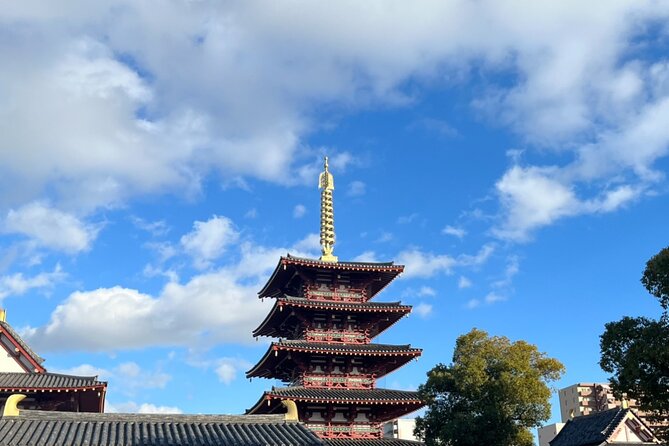
After the castle, you head to Shitennoji, described as the first Buddhist temple in Japan. This stop works well because it reframes what you might think you know about temples. It’s not only about architecture or prayer spaces; it’s also about travel and transmission—how Buddhism moved from India to China and eventually landed in Japan.
The tour gives this stop about 2 hours, which is the right length for a temple visit where you actually want to look around. You’ll have time to understand what you’re seeing rather than treating it like a checkbox.
This is also a nice rhythm change from a fortress setting. A castle can be about power and defense. A temple is about spiritual life and cultural exchange. When you put them back-to-back, the day gains meaning.
Kuromon Market: Where the City Feels Like It’s Breathing
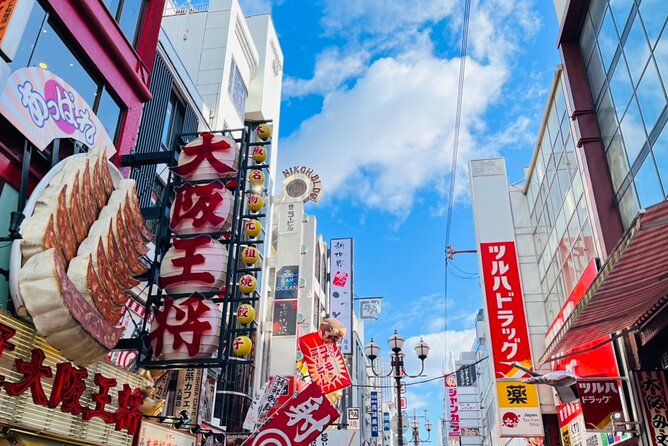
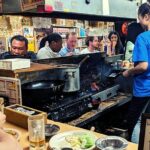
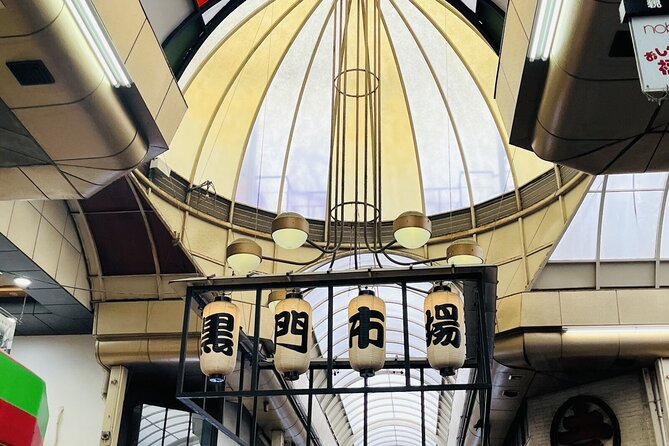
Then you shift gears—straight into a market area where the city’s everyday energy takes over. The Kuromon Market stop is about 1 hour and covers an area where you’ll find fresh seafood, vegetables, fruits, and more. It’s also one of Osaka’s leading food markets, with roughly 150 stores in the broader area.
What’s valuable here isn’t only eating (though you’ll probably be tempted). It’s seeing how Osaka shops. Markets teach you a local pattern: people pop in, browse, compare, and move on. The tour keeps this portion short enough that it doesn’t swallow your entire day, but long enough that you can do real exploring.
Since the tour does not include food and drinks, plan for this stop like an appetizer round. If you’re hungry, use Kuromon to grab a couple items you can eat while walking or standing, rather than committing to a full meal unless your schedule works out.
A quick reality check: one hour in a market can feel fast. If you’re someone who likes slow wandering, focus your attention—pick a few sections or a few types of food instead of trying to cover everything.
Dotonbori and Shinsaibashi: Neon-Era Osaka Meets Traditional Art
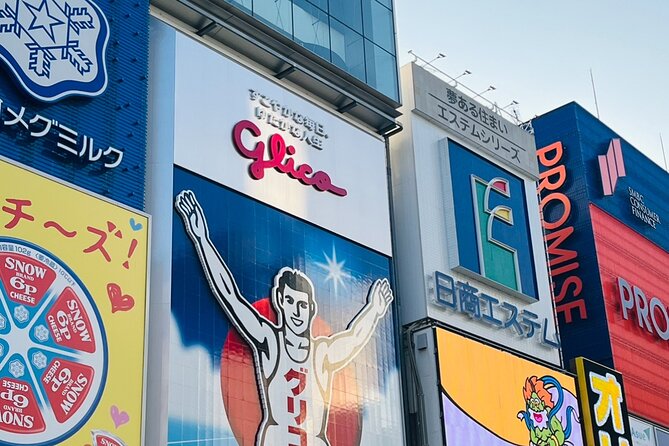
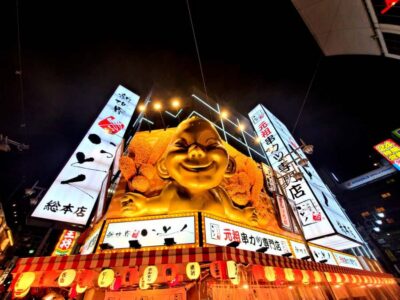
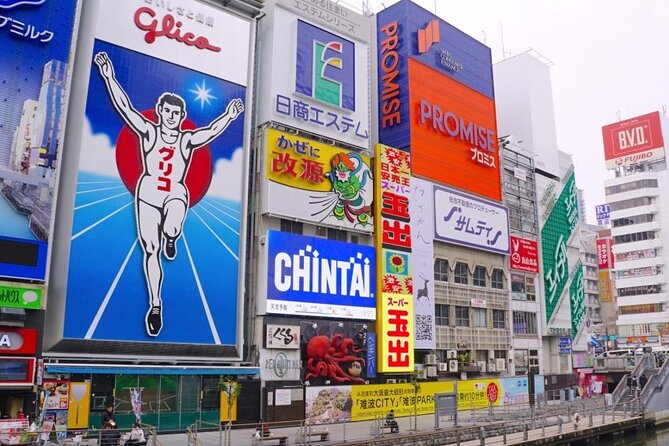
After Kuromon, you reach the Dotonbori area, which is famous for its downtown energy and those huge three-dimensional billboards. This is the part of Osaka that tends to show up in your camera roll. It’s also the part that explains why Osaka feels different from quieter cities—you see the mix of commerce, street life, and visual branding right in front of you.
The tour includes time at Dotonbori Tsuribori, plus a unique shrine nearby. This adds a grounding element. You’re not only walking past lights and signs; you’re also stepping into a place with a more grounded spiritual reference point.
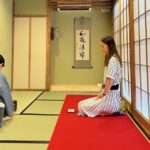
Then comes the big culture bonus: an ukiyo-e experience during the Dotonbori/Minami time. The traditional ukiyo-e timeline is part of what you learn—works were found starting around the 1670s, and the art flourished from the 17th to the 19th centuries. When you’re actually making or participating, you feel how this art style connects to everyday life scenes, not only elite culture.
After that, you’ll walk through Shinsaibashi, the city’s main shopping area, before returning toward Osaka and Shin-Osaka Station. For many people, this is the best “end-of-day” combo: history earlier, street Osaka in the middle, then a shopping walk that’s flexible if you want to buy something small to remember the day.
You can also read our reviews of more tours and experiences in Osaka
The Guide Factor: Why Wingki Changes the Day
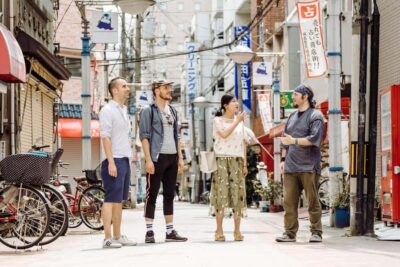
A walking tour lives or dies by the guide, and this one has real human energy. In the experiences tied to this tour, the guide—often named Wingki—shows up as the kind of person who can adjust when plans get messy.
One theme from real guide feedback is how accommodating she is if you’re running late or find the meeting point confusing. That matters more than people think. In Japan, small delays can cascade, and it’s a relief when the guide is calm and responsive instead of rigid.
Wingki is also praised for answering first-time Japan questions. If you’re brand new to the country, that alone is worth something. You get practical guidance that helps you enjoy Osaka, not just survive it.
Small group size (max 20) also plays into this. You can ask questions and get answers without feeling like you’re shouting over a crowd.
Price and Value: Is $165.19 Worth It?
At $165.19 per person, this isn’t a budget-only tour. But it bundles the stuff that usually costs time and money when you plan solo.
Here’s what’s included:
- Entrance fees for each scheduled spot
- Train tickets needed for the route
- The ukiyo-e experience fee
- A guided tour with an English-speaking guide
And what’s not included:
- Food and drinks
So the real value question is this: do you want to do the planning work yourself? If you’re spending half a day figuring out trains, managing multiple entrances, and hunting down the art experience on your own, the price starts making sense. Even more so if you’re trying to pack history + local life into a single day without losing momentum.
If you already know Osaka well and you’re comfortable building your own route with a museum/temple/market mix, you could probably do it cheaper. But if you want a day that feels ordered, with transportation and admissions handled, this price can be fair—especially with active time with a guide rather than only a stand-and-stare route.
Who This Tour Fits Best
This tour is a strong match if you:
- Want a full-day overview without having to design the whole plan
- Like history, but also need street-level Osaka to balance it out
- Want hands-on cultural time with ukiyo-e, not only museum reading
- Prefer small groups (max 20) and real Q&A time
It may be less ideal if you:
- Don’t like walking all day and would rather stay put more often
- Expect food to be included (it’s not)
- Need a super-individual pace with long free time at each stop
Quick Planning Tips So Your Day Runs Smoothly
A few practical moves will make this kind of day much easier:
- Wear comfortable shoes and plan for continuous walking.
- Keep some cash or card ready for Kuromon Market and the Dotonbori/Minami area since food isn’t included.
- If you’re worried about meeting points, give yourself extra time. The guide has handled late arrivals well, but it still helps to reduce stress.
- If you’re into ukiyo-e, treat it like part of your itinerary, not an optional stop. You’ll get more from it if you’re mentally ready to participate.
Should You Book This Osaka Castle Temples and Ukiyo-e Walking Tour?
I’d book it if you want one day that gives you the Osaka you came for—castle history, temple spirituality, market life, and Minami street energy—plus an art activity that turns a culture stop into a memory you carry home.
I’d skip it or reconsider if your priority is only one area of Osaka. This is a multi-stop day, so it works best when you’re happy moving through the city and letting the day build momentum.
If you’re on the fence, here’s a simple test: if you’d rather spend your effort enjoying Osaka than organizing Osaka, this tour is built for you.
FAQ
How long is the tour?
The duration is about 8 hours.
What is included in the price?
Entrance fees for the tour stops, train tickets required for the tour, the ukiyo-e experience fee, and a guided tour with an English-speaking guide are included.
Is food included?
No. Food and drinks are not included, so you’ll want to budget for meals and snacks during the market and downtown time.
Are admission tickets included for Osaka Castle and Shitennoji?
Yes. Admission tickets are included for both Osaka Castle and Shitennoji.
Is the Kuromon Market stop free?
Yes. The Kuromon Market stop is listed as admission ticket free.
Does the tour include an ukiyo-e experience?
Yes. The tour includes an ukiyo-e experience, and the fee for it is included.
How many people are in the group?
The tour has a maximum of 20 travelers.
Do I get a mobile ticket?
Yes. The tour uses a mobile ticket.
What is the cancellation policy?
Free cancellation is available up to 24 hours in advance for a full refund. Changes made less than 24 hours before the experience start time aren’t accepted.