You can feel the discipline in every bow. This one-hour samurai sword trial near Osaka Castle turns Bushidō concepts into practical kata, plus trial slashing with a real Japanese sword. My favorite part is how the class blends manners and technique in the same hour, and the photo service makes the moment easy to remember. One thing to plan for: you’ll be using a blade system where drawing without permission is dangerous, so follow instructions closely.
If you like hands-on culture (not museum culture), this fits. You start with a calm introduction to swords and samurai etiquette, then practice the fundamentals using an iaï practice sword before stepping up to the real cut. The group stays small (max 5), which helps you get correction fast—especially if you’re new to martial arts.
In This Review
- Key Highlights Worth Your Time
- Samurai Sword Trial Beside Osaka Castle Park
- Price and What You Actually Get in One Hour
- Meeting Point by Osaka-jo Koen Station
- Suit Up as a Samurai: Dogi, Hakama, and the First Bow
- Bushidō Through Samurai Etiquette and Samurai Language
- Iai Basics: Battō, Chiburui, and Not-tō
- Trial Slashing With a Real Japanese Sword
- Photos, Souvenirs, and Keeping the Moment
- Is This Worth It for You?
- Should You Book Samurai Honor Trial Slashing in Osaka?
- FAQ
- Where is the meeting point?
- How long is the experience?
- What’s included in the price?
- Do I use a real Japanese sword?
- What do I practice before the trial slashing?
- What will I cut during trial slashing?
- How many people are in the class?
- Can I cancel for free?
Key Highlights Worth Your Time
- Osaka-jo Koen Station location: a quick walk from the Osaka Castle area, easy to pair with your sightseeing day
- Real Japanese sword trial slashing: you cut a prepared target, not props
- Iaï fundamentals first: stance, battō (drawing/pulling), chiburui (blade cleaning gesture), and not-tō (returning to the sheath)
- Bushidō and samurai language context: etiquette and values are part of the lesson, not an afterthought
- Photo data sent to email: you get visuals of your serious face moments without having to manage a camera
- Certified professional instructor + small group: more attention than big group demos
Samurai Sword Trial Beside Osaka Castle Park
Osaka’s Osaka Castle area is a good place to do something like this. You’ve got historic setting outside, and you step into a controlled training space inside, where you’re taught to move like a samurai rather than just swing a sword around. The lesson is short—about one hour—so you get value without blowing up your whole day.
What makes this experience work for most people is the pacing. You’re not thrown straight into cutting. You learn how swords are handled, how samurai show respect through movement and timing, and how the sequence connects: bow, stance, draw mechanics, cutting, and closing gestures. That structure turns the “cool sword moment” into something you can actually repeat with better form next time.
If you’re a first-timer, this is also reassuring. The class is designed for beginners who want guidance. If you already know a bit, you’ll still appreciate the clarity of the kata-style breakdown and the insistence on manners—because in Bushidō, technique and behavior are supposed to match.
You can also read our reviews of more tours and experiences in Osaka.



Price and What You Actually Get in One Hour
At $78.83 per person, this sits in the “experiences” category, not the “quick photo booth” category. Here’s where the value shows up: the price includes the samurai outfit (dogi and hakama), an instructor, and photography data sent to your designated email. It also includes gratuities, which matters more than people think in Japan—less mental math, more showing up and training.
What’s not included is also clear. You handle public transportation (no station or hotel transfers), and bottled water is not included. There’s also an optional paid add-on for movie shooting at ¥33,000 per person—so if you only want the lesson and photos, you can keep it simple.
A nice detail: the sword practice focuses on safety and permissions. Your instructor sets the rules, and the class includes reminders about not drawing the sword unless permitted. That’s a big deal for peace of mind, especially if you’re traveling with limited martial arts experience.
Meeting Point by Osaka-jo Koen Station
You’ll meet near Osaka-jo Koen Station on the JR Osaka Loop Line, about a one-minute walk from the station and at the entrance area for Osaka Castle. That’s practical: you can plan this as part of your Osaka Castle visit, instead of commuting across town.
The meeting address listed is:
Japan, 536-0014 Osaka, Joto Ward, Shiginonishi, 2-chōme319 エクセレンス高山
In practice, the easiest way to avoid stress is to get to Osaka Castle area early and give yourself a little buffer. The class is not a long tour, so arriving calmly matters.
You’ll get a mobile ticket, and confirmation is received when you book. The group size is capped at 5 travelers, so if you’re the type who likes quiet, focused instruction, this setup makes sense.
Suit Up as a Samurai: Dogi, Hakama, and the First Bow
The experience starts with a role change. You switch into a samurai costume—dogi (top) and hakama (pants)—and then you move from visitor mode into training mode. It sounds theatrical, but there’s a reason: costumes put you into the right body posture and mental frame fast. You’re being trained to treat the sword as a serious object tied to manners.
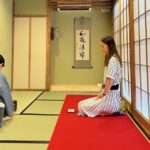
Then comes the first lesson in respect: you begin with a bow. This isn’t random politeness. In samurai practice, bowing sets the tone for attention and humility. You’re basically signaling that you’re ready to learn and ready to follow instructions, not perform.
One practical note: wearing the outfit doesn’t replace common sense. Your movements still need control. You’ll be practicing draw-and-return motions and cut sequences, so follow the instructor’s guidance on where your hands go and how you stand. If you’re visiting from a hot day of walking, bring extra focus—your attention will be your best safety tool.
Bushidō Through Samurai Etiquette and Samurai Language
A big chunk of this lesson is cultural context, especially the Bushidō angle. You’ll get explanations about swords, manners, and how samurai conduct themselves around authority and discipline.
The tour also includes a concept called samurai language, tied to the Warring States period. The idea is simple: language wasn’t casual. Samurai valued loyalty to their lord, discipline, and the spirit of Bushidō, and that mindset showed up in how they spoke and when they spoke.
In the lesson approach, that often comes through as etiquette rules. One lesson you may pick up is the seriousness of speech: the notion that speaking can carry weight, and samurai didn’t talk without the right permission from a superior. The instructor may share example phrases used in that spirit—short, direct words that signal you understand rank and timing.
If you care about Japan beyond photos, this part is worth it. It turns the sword from a prop into a symbol. And when you later do the movements—draw, cut, and closing gestures—you’ll understand why the lesson keeps returning to discipline.


Iai Basics: Battō, Chiburui, and Not-tō
Before you cut anything, you practice with an iaï practice sword. This is where you learn the mechanics without the stress of a real blade in your hands. The class builds in a clear sequence:
- Swing from the stance: how the sword’s motion starts from your posture
- Battō: pulling/drawing the sword from the scabbard as part of the cut sequence
- Chiburui: the symbolic blade-clearing gesture after a cut
- Not-tō: returning the sword to the sheath, completing the cycle
Even if you’ve seen sword training online, this is helpful because you’re being coached on timing. Iai is not about speed alone. It’s about control: the draw happens with a purpose, the cut happens in the right moment, and then the finishing gestures bring the sequence to closure.
This is also where the small group size helps. With a max of 5 travelers, you’re more likely to get correction when your posture or hand position slips. And the instructor being calm and patient really matters here—you’re not just memorizing steps, you’re learning how your body should feel while doing them.
Trial Slashing With a Real Japanese Sword
Now the part everyone books for: trial slashing. You try cutting a rolled straw target using a real Japanese sword. This is not a “wave a sword near a target” demo. You’re practicing an actual cut with a serious focus on form and safety.
You should treat this as controlled skill practice, not a stunt. The experience includes reminders that the act of drawing a sword is dangerous, and you should not do it unless you’re explicitly given permission. That’s an important boundary—your job is to listen, move when the instructor tells you, and keep the process tidy.
What you’ll likely feel in the moment is how the class connects the earlier parts. When your posture is set from the stance, battō becomes cleaner. When your draw is correct, the cut follows through more naturally. And when chiburui and not-tō are done with intention, the whole sequence feels complete rather than like disconnected tricks.
It’s also a moment you’ll remember because it’s physical and immediate. For many people, it’s the first time they’ve moved in a kata structure with a real blade system—and done it safely.
Photos, Souvenirs, and Keeping the Moment
The class includes photography service. You’ll get photo data sent to your designated email address within both days. That timing is helpful when you’re traveling—your phone stays free for the rest of the day, and you don’t have to negotiate angles while focusing on your own technique.
The photos are also a nice storytelling tool. Samurai training has a serious visual style, and seeing your posture in still images makes it easier to remember what you learned. If you tend to forget the specifics after a day of sightseeing, this helps.
You also get souvenirs from your teacher tied to samurai language. While the exact format isn’t specified, the intent is clear: take away a piece of the cultural lesson, not just a sticker or postcard. For anyone who likes souvenirs with meaning, this is a thoughtful touch.
Is This Worth It for You?
This experience is best for people who want a short, focused activity that connects technique with culture. It’s a strong fit if you enjoy:
- learning by doing, with guidance
- seeing how etiquette connects to movement
- adding something unique to an Osaka Castle day
It’s also a good choice for couples and small groups thanks to the cap of 5 travelers. If you want more personal attention, small group size usually means more chances to correct mistakes.
You might want to skip or consider carefully if you don’t enjoy structured physical instruction. The class asks for a moderate physical fitness level. Also, because it involves sword handling sequences, it’s not the place for distracted behavior. You’ll do best if you can follow safety instructions and keep your focus for the full hour.
Should You Book Samurai Honor Trial Slashing in Osaka?
Book it if you want the Osaka Castle area to do more than look pretty. This is hands-on, short, and designed so you leave with a real skill sequence in your head: bowing, iai basics, and a trial cut with a real Japanese sword. The included outfit and photo data add up, and the small group size helps the instructor keep things on track.
Don’t book it if your idea of a great travel day is purely passive sightseeing. This is training time—physical attention, instruction, and follow-through. It’s also not the best choice if you’re hoping for a long deep lecture. The format is one hour, and it moves.
FAQ
Where is the meeting point?
The lesson is held at Samurai Honor, about a one-minute walk from Osaka-jo Koen Station on the JR Osaka Loop Line. An address is also provided: Japan, 536-0014 Osaka, Joto Ward, Shiginonishi, 2-chōme319 エクセレンス高山.
How long is the experience?
The experience lasts about 1 hour.
What’s included in the price?
Included are the samurai outfit (dogi and hakama), a certified professional instructor, photography data sent to your email, gratuities, and default language instruction in English (with other languages available by inquiry).
Do I use a real Japanese sword?
Yes. The trial slashing is done with a real Japanese sword, and you’ll practice the sequence taught by the instructor.
What do I practice before the trial slashing?
You’ll start with bowing, explanations of swords and manners, and basic practice using an iai practice sword. The lesson includes stance work and the sequence elements: battō, chiburui, and not-tō.
What will I cut during trial slashing?
You’ll try cutting a rolled straw.
How many people are in the class?
The experience has a maximum of 5 travelers.
Can I cancel for free?
Yes. You can cancel for a full refund if you cancel at least 24 hours in advance of the experience start time.