REVIEW · OSAKA
Traditional Japanese Music show & Experience Tour in Osaka
Book on Viator →Operated by Harmony in Japan Tour · Bookable on Viator
Live music in a small room changes everything. In Osaka, you get a hands-on traditional Japanese music show with professional players, plus a chance to try instruments yourself. It’s a simple, low-stress way to experience hogaku without needing any background.
I especially liked how close the performance feels, with instruments sounding big even when you’re sitting near the action. Second, the best part is the switch from listening to doing: you can handle and play the instruments during your hands-on slot. One consideration: the whole experience is short at about 60 minutes, so you’ll enjoy it most if you want a focused taste, not a long workshop.
This is also a small-group set-up, capped at 7 people, and it uses a mobile ticket. Sessions run on Wednesday at 11:00 and Friday at 18:30, and the instrument lineup can vary by day.
In This Review
- Key things I think you’ll care about
- One Hour That Doesn’t Waste Your Time in Osaka
- What you’ll hear and why it feels different live
- Concert First: What the 25 Minutes Actually Gives You
- Day-to-day variation (and why that’s a plus)
- Hands-On Time: Trying Shamisen, Koto, and Wadaiko
- How the hands-on segment tends to work
- What to do to get the most out of your try
- Learn by Asking: Q&A With Professional Musicians
- Photo Time With Instruments and Performers
- Where to Go in Osaka: The Meeting Point in Minamisenba
- Practical arrival advice
- Price and Value: Is $46.12 Worth It?
- Who pays $46.12 and feels happy?
- Who This Osaka Traditional Music Experience Fits Best
- Scheduling: Wednesday at 11:00 and Friday at 18:30
- Booking, Cancellations, and the Mobile Ticket (Quick Facts Only)
- Should You Book This Osaka Traditional Japanese Music Tour?
- FAQ
- How long is the Traditional Japanese Music show & Experience Tour?
- What instruments will I get to experience?
- Do I only watch, or can I play the instruments?
- Are photos included?
- Is transportation included in the price?
- Where do I meet for the tour?
- What’s the group size limit?
- Are there set days and times?
- Is a mobile ticket used?
- What is the cancellation policy?
Key things I think you’ll care about
- A 25-minute live concert: you hear traditional instruments played in a real performance setting, not a demo.
- A 25-minute hands-on instrument try: you don’t just watch—you get time to play.
- Shamisen, koto, wadaiko (and more): expect a mix, including drums and string instruments.
- Q&A with professionals: you can ask questions during the session.
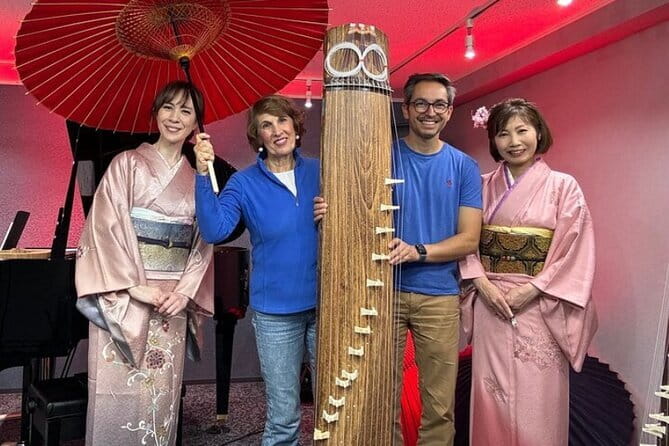
- Photos included at the end: you get a 10-minute window for pictures with the instruments and performers.
- Small group size (max 7): you’re close enough to notice details and interact.
One Hour That Doesn’t Waste Your Time in Osaka
This Traditional Japanese Music show & Experience Tour in Osaka is built around one clean idea: watch real professional music first, then move quickly into trying it. The schedule is tidy—25 minutes for the concert, 25 minutes for the instrument experience, and 10 minutes for photos. Total time is about an hour.
That timing matters. If you’ve been walking around Osaka all day (or you’re planning a tight itinerary), a one-hour cultural stop is easier to fit than a half-day class. You get enough time to feel the music in your ears, then switch gears before you lose attention or energy.
The pacing also keeps expectations honest. You’re not signing up for a full training journey. Instead, you’re getting a well-structured introduction to traditional Japanese instruments and how they work as live performance instruments.
You can also read our reviews of more tours and experiences in Osaka



What you’ll hear and why it feels different live
Traditional Japanese music—often grouped under hogaku—is all about sound texture: plucked strings, resonant drums, and the physical way the instruments get played. Watching shamisen or koto from a distance can be nice. Being close enough to see hands, pick movement, and rhythm cues makes it click faster.
And because the musicians are professional, you’re hearing the instruments as music, not as props.
Concert First: What the 25 Minutes Actually Gives You
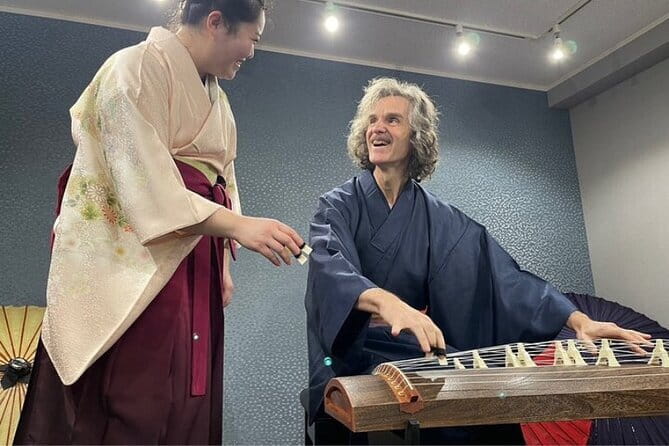
The first half of the experience is an authentic Japanese music concert. Expect multiple instruments rather than one single-act performance. The instruments named for this experience include shamisen, koto, and wadaiko (Japanese drum), plus more that can vary depending on the day.
Even if you don’t know the names of pieces, you can still follow along. The musicians’ body language and timing do a lot of teaching. You’ll notice how the rhythm holds steady during the music, and you’ll hear how each instrument contributes a different layer—strings for tone color and drums for drive.
Day-to-day variation (and why that’s a plus)
The content varies depending on the day, so Wednesday and Friday won’t necessarily feel identical. That’s good for repeat visits and also good if you’re choosing between time slots. It also means you shouldn’t treat the session like a guaranteed checklist of exact songs.
If you’re the type who loves spontaneity, this format suits you. If you want the most predictable experience possible, you’ll still enjoy it—you’ll just go in with the mindset of sampling a few instruments and techniques live.
Hands-On Time: Trying Shamisen, Koto, and Wadaiko
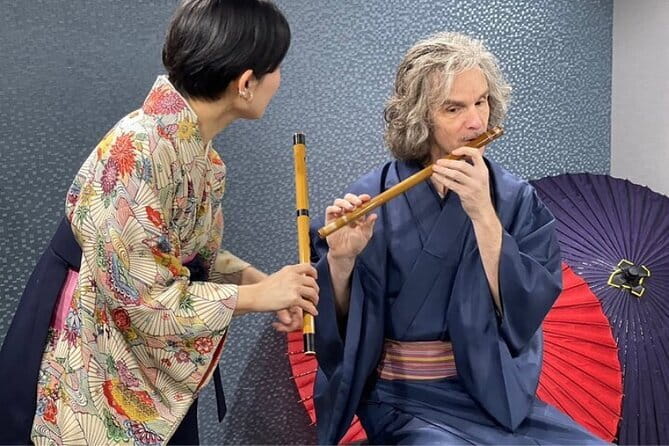
Then you switch from listening to doing. The second half is your hands-on instrument experience, again about 25 minutes.
This is the part many people remember most. One review specifically called out how surprising it was to hear beautiful instruments up close—and even rarer, to actually play them. That’s the core value here: you get real contact time, not just a brief touch.




How the hands-on segment tends to work
The tour includes a Japanese musical instrument for your experience. That strongly suggests you’ll be given an instrument (or instruments) to try during the session—organized by the musicians and the experience flow.
Because the listed instruments include shamisen, koto, and wadaiko, it’s reasonable to expect you’ll try at least some combination of those, depending on schedule and the day’s program. You should also expect someone guiding you so you’re not left to figure it out by guesswork for the full 25 minutes.
What to do to get the most out of your try
Go in ready to participate, not perform. You’re not trying to impress anyone. You’re trying to understand what the instrument asks for:
- Watch how the musician positions hands or holds the pick before you try.
- Start slow. Rhythm comes from consistency, not speed.
- If you mess up, don’t panic. This is exactly the kind of moment where questions help.
And yes, photos are part of this experience too—so plan to be comfortable holding positions and moving carefully when it’s time.
Learn by Asking: Q&A With Professional Musicians
One of the most practical features is that you can ask questions as many times as you like. That turns the experience from entertainment into learning you can use.
You can ask things like how an instrument is tuned, how players control tone, or what makes a rhythm pattern feel right. Even basic questions can deepen what you heard in the first half of the show.
This is also why the small-group format matters. In a large room, Q&A often gets swallowed by timing. Here, with a maximum group size of 7, you’re more likely to get a clear answer.
Photo Time With Instruments and Performers

In the last 10 minutes, you take photos with the instruments and performers. This is included, and it’s timed—so the session won’t just run past the point where you expected photos to happen.
For me, this is a genuinely useful finish because it converts a sound-heavy experience into something you can remember visually. You’ll be able to see the instrument shapes up close and get a photo that feels like you were part of the event, not just an observer.
Tip: bring your phone settings ready. If your camera app takes too long to open, you’ll feel rushed at the end.
Where to Go in Osaka: The Meeting Point in Minamisenba
The meeting point is in Osaka’s Chuo Ward, Minamisenba area:
アルファ 心斎橋3-chōme-5-27 Minamisenba, Chuo Ward, Osaka, 542-0081, Japan.
The activity ends back at the meeting point. That matters for planning. You don’t need to build a complicated route afterward.
The tour is also described as near public transportation. So if you’re already using trains or walking between Minami sights, this is the kind of cultural stop that slots in without requiring private transport.
Practical arrival advice
Show up early enough to settle in. Even with a 60-minute total schedule, your time can vanish fast if you’re late or still figuring out the exact location. If your phone has your mobile ticket ready, keep it accessible so check-in is quick.
Price and Value: Is $46.12 Worth It?
At $46.12 per person, this tour sits in the category of paid experiences that should justify themselves fast. The good news is that the structure is clearly built around value:
- You get a live concert with multiple instruments.
- You get hands-on instrument time.
- You get Q&A with professional musicians.
- You get a photo session.
You’re paying for access: access to real performance, real instruments, and a guided try session. If you’ve ever watched performances where you’re stuck in observer mode, the instrument try component is the big reason this cost can feel fair.
Also, small group size helps you feel included. With a max of 7, the experience isn’t swallowed by crowds.
Who pays $46.12 and feels happy?
You’ll likely feel good about the price if you:
- Want something authentic that’s still easy to book.
- Like short, focused activities.
- Enjoy learning by doing, not only watching.
You might think twice if you’re expecting a long lesson, private tutoring, or a full-day immersion program. This is built for an hour, with a clear arc.
Who This Osaka Traditional Music Experience Fits Best

This experience works especially well for:
- Music lovers who want to hear multiple traditional instruments live.
- First-timers who want a guided introduction to hogaku without studying beforehand.
- People who enjoy interactive cultural activities, especially ones where you physically try the instruments.
- Anyone traveling in a small group and wants something different from food or shopping-heavy plans.
The minimum group requirement is 2 participants. That means the organizer needs enough people to run the activity. If you’re booking solo, you may still be fine, but your date depends on group size.
The experience also states service animals are allowed, and it says most people can participate. That’s a useful baseline for planning.
Scheduling: Wednesday at 11:00 and Friday at 18:30
Sessions run on Wednesday at 11:00 and Friday at 18:30. Choosing between them is mostly about timing with the rest of your Osaka day.
- The 11:00 session fits nicely if you want a daytime cultural break.
- The 18:30 session can work as an evening activity—especially if you’ve spent your afternoon exploring and want something calm and indoor.
Also note the average booking timing: it’s typically booked about 31 days in advance. That doesn’t mean you must plan that far out, but it’s a hint not to wait until the last minute if the schedule matters to you.
Booking, Cancellations, and the Mobile Ticket (Quick Facts Only)
You’ll receive confirmation at booking time, and the ticket is mobile. That keeps things simple on arrival.
Cancellation is free up to 24 hours before the experience start time, with a full refund if you cancel at least 24 hours in advance. If you cancel within 24 hours, the amount paid isn’t refunded.
In other words: if your plans might shift, just don’t wait until the final day.
Should You Book This Osaka Traditional Japanese Music Tour?
I’d book it if you want a short, real, guided experience that mixes listening and hands-on playing. The value isn’t just that it’s a concert—it’s that you get time to handle the instruments, ask questions, and take photos with the musicians.
It’s also a nice fit if you’re in Osaka for food and sights but want one cultural activity that feels personal without taking over your schedule.
One last note for expectations: it’s about 60 minutes, so treat it like an effective introduction. If you want a long-term instrument learning journey, you’ll eventually look for classes. If you want a fun, structured taste of hogaku you can actually participate in, this is a strong choice.
FAQ
How long is the Traditional Japanese Music show & Experience Tour?
It lasts about 1 hour total, split into 25 minutes concert, 25 minutes hands-on instrument experience, and 10 minutes for photos.
What instruments will I get to experience?
The experience includes traditional Japanese instruments such as shamisen, koto, and wadaiko, plus other instruments that may vary depending on the day.
Do I only watch, or can I play the instruments?
You can try playing the instruments during the hands-on portion of the tour.
Are photos included?
Yes. There is a 10-minute photo time with the instruments and performers.
Is transportation included in the price?
No. Private transportation is not included.
Where do I meet for the tour?
The meeting point is アルファ 心斎橋3-chōme-5-27 Minamisenba, Chuo Ward, Osaka, 542-0081, Japan. The tour ends back at the same meeting point.
What’s the group size limit?
The tour has a maximum of 7 travelers.
Are there set days and times?
Yes. Wednesday at 11:00 and Friday at 18:30.
Is a mobile ticket used?
Yes, the tour uses a mobile ticket.
What is the cancellation policy?
You can cancel for a full refund if you cancel at least 24 hours before the experience start time. If you cancel less than 24 hours before, the amount paid is not refunded.