REVIEW · OSAKA
Osaka Sumo Experience with Live Show and Audience Challenge
Book on Viator →Operated by Local Guide Stars · Bookable on Viator
Sumo in Osaka is a sport you can feel. This experience mixes a live show with audience participation, so you’re not just watching from the sidelines. You’ll learn the rules while the action stays up close.
Two things I really like: the English-speaking guide keeps it clear, and the interactive ring challenge turns sumo from trivia into muscle memory. You get enough context to understand why the moves matter, not just what happens.
One consideration: the in-ring gear is borrowed, and a review specifically flagged that the clothes and sandals may not come in larger sizes. If you know you need bigger fits, keep that in mind before you commit.
In This Review
- Key Things I’d Call Out Before You Go
- What You’re Really Paying for in Osaka Sumo
- Where to Meet: Nishinari Ward and the AI Building
- The 90-Minute Flow: What Happens After You Check In
- Learning the Rules Without Turning It Into Homework
- Training Demonstrations: Seeing Technique Up Close
- The Tachiai Moment: The Stand-Up Clash That Hooks You
- The Audience Challenge: Step In If You Want the Real Test
- Staff and Atmosphere: Why the Session Feels Welcoming
- Price and Value: Is $55.50 a Good Deal?
- Practical Tips That Make the Experience Easier
- Who This Sumo Experience Fits Best (and Who Might Not)
- Should You Book This Osaka Sumo Experience?
- FAQ
- How long is the Osaka sumo show and experience?
- What is the price per person?
- What’s included in the ticket?
- What is not included?
- Where do I meet for the experience?
- Do I need a paper ticket?
- Is there a chance to participate in the ring?
- How many people are in a group?
- What is the cancellation policy?
- Is the experience suitable for most travelers?
Key Things I’d Call Out Before You Go
- English explanation that actually sticks: you’re guided through what you’re seeing, not left guessing.
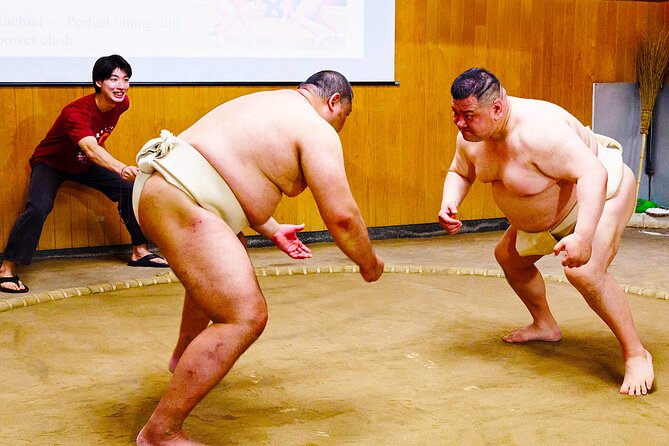
- Tachiai-style showdown: dramatic, fast, and built around the stand-up clash sumo is known for.
- Retired wrestlers’ demonstration: the techniques feel grounded and real, not just a performance.
- Limited audience challenge: you can step in if spots are available, but it’s not guaranteed.
- Small-group feel: with a maximum of 50 people, the vibe stays friendly and watchable.
- Mobile ticket convenience: easier check-in than paper in a busy city.
What You’re Really Paying for in Osaka Sumo
At $55.50 per person for about 1 hour 30 minutes, the price makes sense if you want more than a standard show ticket. You’re paying for interpretation (an English guide) plus a chance to join in, which is where the value really hits.
The event is focused and timed. That matters in Osaka, where you’ll often want to stack activities without spending your whole day on one venue. This one is long enough to teach you the basics, then show sumo’s big moments, then try a match yourself.
And because it ends back at the meeting point, you won’t lose time figuring out where to go next. It’s the kind of plan that works well if you like short, high-impact experiences.
You can also read our reviews of more tours and experiences in Osaka


Where to Meet: Nishinari Ward and the AI Building
Your meeting point is in Nishinari Ward, Asahi 1-chōme, at the listed address on the activity info: 557-0032 Osaka, Nishinari Ward, Asahi, 1-chōme51 AIビル. It’s also described as being near public transportation, so you should be able to reach it without a car.
Practical tip: copy the address carefully into your map app before you leave your hotel. This area can be busy, and having the exact wording helps you spot the correct building faster.
Once you arrive, your check-in is straightforward. The experience uses a mobile ticket, so you likely won’t need extra paperwork in your pocket.
The 90-Minute Flow: What Happens After You Check In
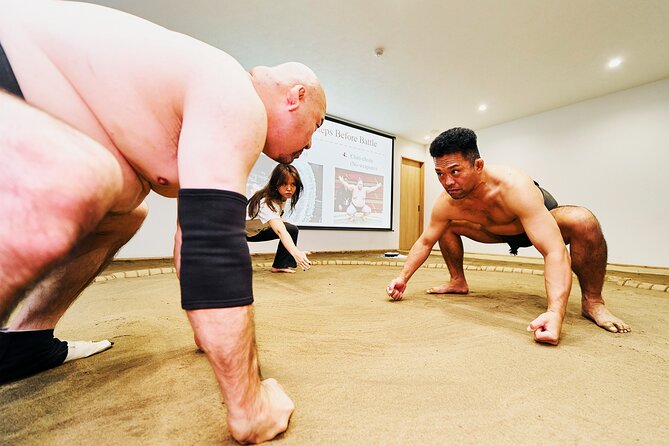
The experience is built like a mini crash course with a show attached. You start in the Osaka venue and then move through a structured mix of explanation and demonstration.
Expect the guide to set you up with the basics first—how sumo works, what to look for, and why certain moments matter. Then you’ll see techniques shown clearly enough that you can track them in real time.
This is one of the most praised parts. People rate it extremely high for being educational and interactive, and that fits the way the session is designed. If you’ve ever watched combat sports and thought, I don’t get what I’m looking at, this format fixes that.
Learning the Rules Without Turning It Into Homework
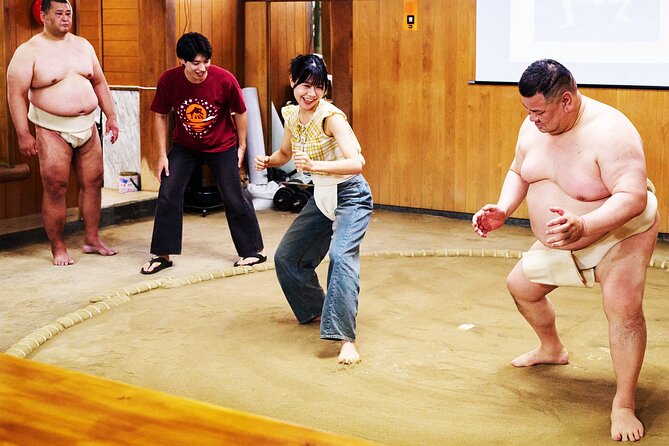
A big reason this gets near-perfect scores is how the instruction lands. The guide’s English is described as excellent, and the explanations are timed to what you’re watching.
Here’s what that means for you: you won’t be stuck with a dry rules lecture before anything happens. Instead, you learn key ideas, then you see the sport demonstrate those ideas immediately.
From the reviews, the teaching style includes history and rules, plus practical context about how sumo has evolved into what it is today. That combination helps you understand both the sport and the cultural weight behind it.
Training Demonstrations: Seeing Technique Up Close
After the setup, the show shifts into training demonstrations. This is where sumo stops feeling abstract.
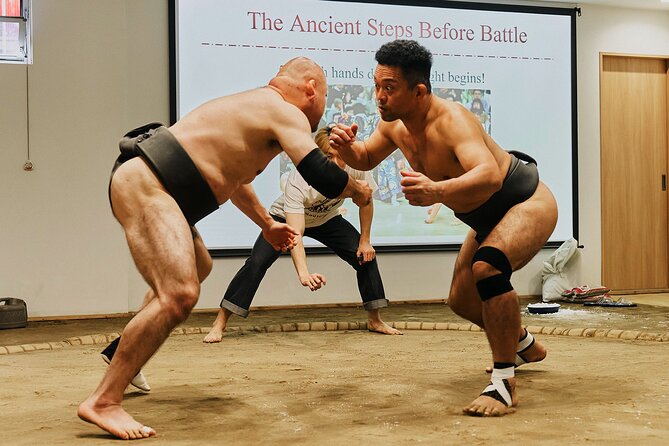
You’ll see wrestlers demonstrate movement and engagement—how they position, how they create balance, and how they try to take control. The point isn’t that you become a wrestler in 90 minutes. The point is that you start recognizing patterns.
A review highlights how the wrestlers are talented and respectful. That kind of professionalism matters here. When performers treat the sport seriously, the audience pays attention. And when the guide keeps translating, the whole thing stays easy to follow.





The Tachiai Moment: The Stand-Up Clash That Hooks You
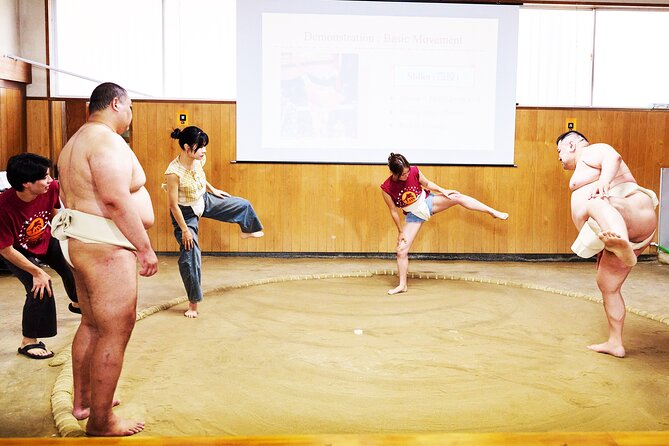
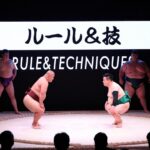
One of the most exciting pieces is the dramatic tachiai match featuring retired sumo wrestlers. Tachiai is the stand-up charge that sets the tone. It’s fast, physical, and designed to tell you who controls the exchange first.
This part is often the turning point in the experience. Before tachiai, you’re learning the framework. During tachiai, you suddenly see why the framework matters.
Even if you’re new to sumo, you can usually read it instantly: bodies collide, feet plant, leverage gets tested, and control shifts. The show makes sure you understand what that control looks like.
And because these are retired wrestlers, the demonstration can feel both authentic and accessible. You get the real mechanics without needing tickets for a full tournament week.
The Audience Challenge: Step In If You Want the Real Test
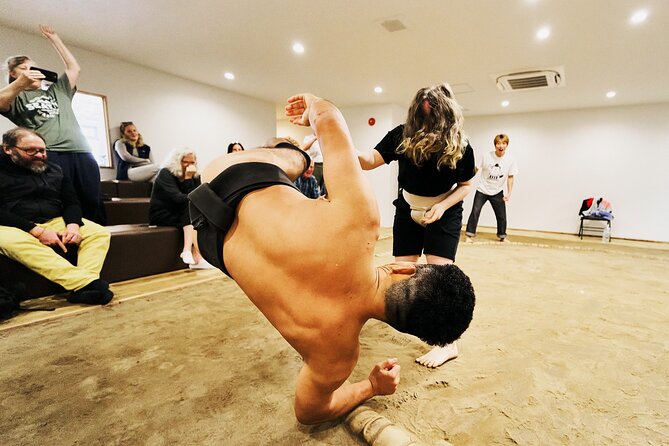
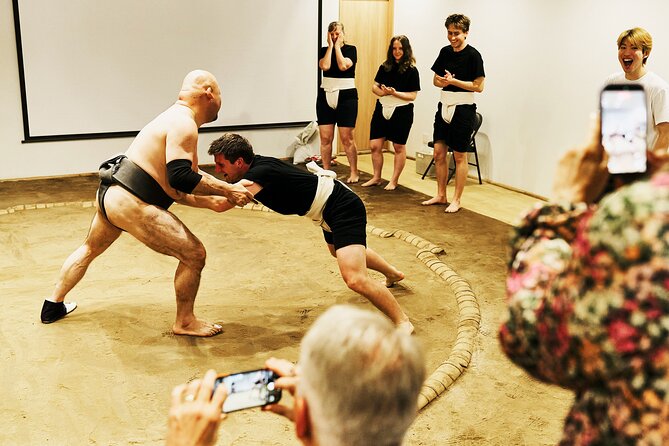
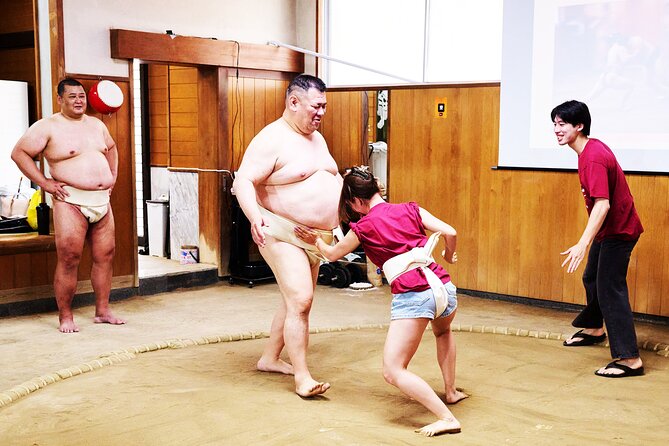
For the adventurous part of the show, there are limited spots where you can step into the ring and face a sumo wrestler yourself. This is the portion people get the biggest smiles from—part training, part comic reality check.
The best advice I can give is to treat this like a chance to try, not a performance. You’re not expected to be strong or athletic beforehand. What you’ll learn is how quickly sumo’s timing and balance dominate the moment.
One review calls the practice fun and says it’s harder than it looks. That tracks with how sumo works: lots of people can push, but fewer can stay rooted while pressure changes.
Gear matters too. At least one review specifically suggested the organizers should supply larger clothes and sandals in the future. So here’s your practical takeaway: if you’re tall, have bigger feet, or know you don’t fit standard rental sizes well, be mentally ready for that possibility.
Staff and Atmosphere: Why the Session Feels Welcoming
The guide and staff come up repeatedly in the reviews. People mention that the staff are kind and welcoming, and the atmosphere blends comedy with seriousness.
That balance is important. If the staff leaned only toward entertainment, you’d miss the point. If it leaned only toward instruction, it would feel long. The session seems built to do both without wasting time.
Group size also helps the mood. With a maximum of 50 travelers, you’re not swallowed by a huge crowd. That makes it easier to feel included, especially if you’re hoping to be considered for the challenge portion.
Price and Value: Is $55.50 a Good Deal?
Let’s talk value in plain terms. You’re paying for:
- A guided sumo show in Osaka
- English-speaking guidance
- Demonstrations including tachiai
- A chance for an audience challenge in limited spots
Meals aren’t included, and private transportation isn’t included. That’s fine because the experience is about ninety minutes, so you can plan dinner right afterward.
The value question is simple: will you enjoy sumo more with context and participation? If the answer is yes, this is a strong buy. If you only want to watch and you know you’ll never join the ring challenge, it may feel more like a ticketed performance.
But even if you skip the challenge, the teaching and tachiai demonstration are the core draw. And the reviews back that up with extremely high recommendation rates.
Practical Tips That Make the Experience Easier
These are small things, but they add up:
1) Arrive a touch early so check-in doesn’t stress you. You’re starting at a specific Osaka address in Nishinari, and being early buys you breathing room.
2) Plan for borrowed gear sizing if you want to participate. One review specifically called out sandal and clothing size concerns. You’ll probably be fine if standard sizes work for you, but don’t ignore that warning.
3) Wear practical shoes on your feet. While the event provides ring footwear options, comfortable, easy-to-change clothing helps you handle any quick gear transition.
4) Listen for the guide’s key words. The guide’s English is a big part of why people love it. If you focus on a few rules or cues, the show makes more sense immediately.
Who This Sumo Experience Fits Best (and Who Might Not)
This works especially well if you:
- Are visiting Osaka and want something distinctly Japanese without a huge time commitment
- Like hands-on experiences, not just seated observation
- Prefer guided context so you can actually follow what’s going on
You might reconsider if:
- You only want passive viewing and don’t care about explanations
- You strongly need specific rental sizing (because at least one review flagged size gaps)
If you’re traveling with a friend or family member, it can also be a great shared moment. The ring challenge is the kind of memory you’ll talk about later, and the tone is upbeat.
Should You Book This Osaka Sumo Experience?
My take: yes, if you want sumo that’s understandable, interactive, and time-smart. The strongest reasons are consistent—the English guidance, the high-energy demonstrations, and the chance for audience participation.
If the ring challenge is your must-do, remember the spots are limited. Booking sooner rather than later is your best move.
If you’re sensitive about gear fit, take seriously the note about sandals and clothing sizing. That doesn’t mean you shouldn’t go. It just means you should be prepared and realistic about the rental experience.
FAQ
How long is the Osaka sumo show and experience?
It lasts about 1 hour 30 minutes.
What is the price per person?
The price is $55.50 per person.
What’s included in the ticket?
You get the sumo show and an English-speaking guide.
What is not included?
Meals and private transportation are not included.
Where do I meet for the experience?
The meeting point is at Japan, 557-0032 Osaka, Nishinari Ward, Asahi, 1-chōme51 AIビル. The experience ends back at the meeting point.
Do I need a paper ticket?
No. It uses a mobile ticket.
Is there a chance to participate in the ring?
Yes, but it’s limited. Some spots are available to step into the ring and face a sumo wrestler.
How many people are in a group?
The experience has a maximum of 50 travelers.
What is the cancellation policy?
Free cancellation is available up to 24 hours before the experience start time for a full refund.
Is the experience suitable for most travelers?
Most travelers can participate. Confirmation is received at the time of booking.