REVIEW · OSAKA
Osaka: UTAGE Japanese Taiko Live Show
Book on GetYourGuide →Operated by 株式会社TryHard Japan · Bookable on GetYourGuide
In This Review
- Osaka’s UTAGE show is loud, close, and surprisingly personal
- Key things that make UTAGE worth your time
- Entering the Osaka Cultural Center: where the show starts and why it matters
- The core experience: TRAinnovation and the 180 cm taiko up close
- How the show mixes shamisen, shakuhachi, and shinobue with computer music
- The audience participation moment: how you get a one-song stage role
- What the show experience feels like from start to finish
- Photos, meet-and-photo time, and the downstairs picture spot
- Price and value: what $40 buys you in Osaka
- Who should book UTAGE (and who might want to skip it)
- Quick FAQ before you decide
- Should you book UTAGE Japanese Taiko Live Show?
- FAQ
- Where is the UTAGE show located in Osaka?
- What time should I arrive?
- Can I enter after the show begins?
- How much does the ticket cost?
- Is the show in English?
- What instruments are included in the performance?
- Is there any participation for the audience?
- Are photos allowed during the show?
- Is there anything to do after the show ends?
- Can I cancel and get a refund?
Osaka’s UTAGE show is loud, close, and surprisingly personal
A tiny theatre, one gigantic 180 cm taiko, and hands-on audience moments make this Osaka night feel special. I especially like the way traditional instruments (like shamisen and shakuhachi) get paired with computer-driven sound, so it lands for modern ears. One thing to consider: the show runs in Japanese, and once the performance starts, late entry isn’t allowed.
You get a front-row feel without needing to “know” anything about Japanese music first. The band TRAinnovation leads the energy, mixing tight musicianship with fast visual pacing, and the whole setup makes you feel part of the room, not just a spectator.
Key things that make UTAGE worth your time
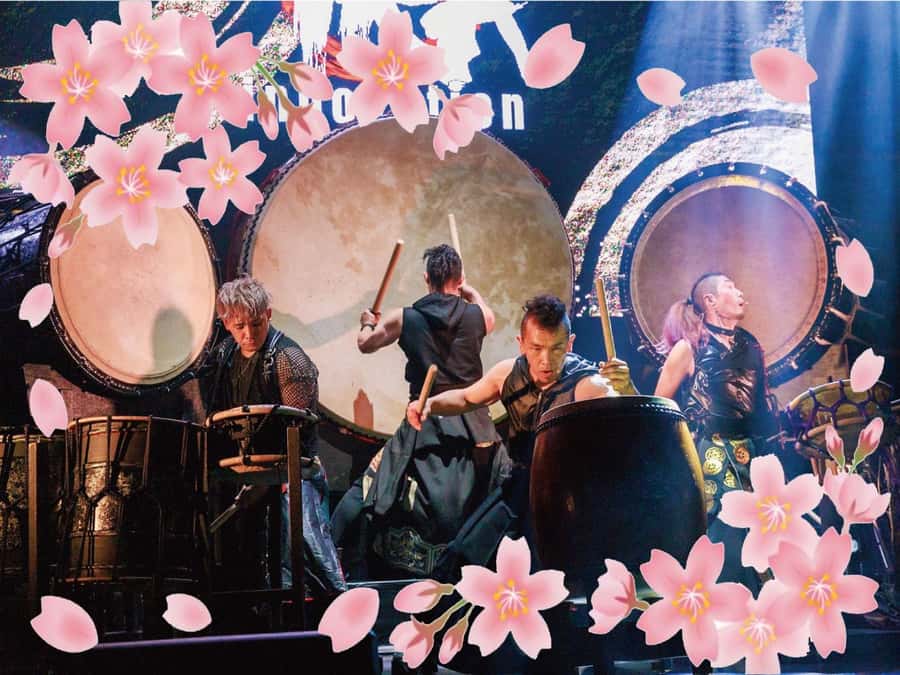
- A Kansai-sized drum you can’t ignore: a 180 cm diameter taiko takes center stage.
- Traditional instruments meet computer music: shamisen, shakuhachi, shinobue, and more get a modern audio framework.
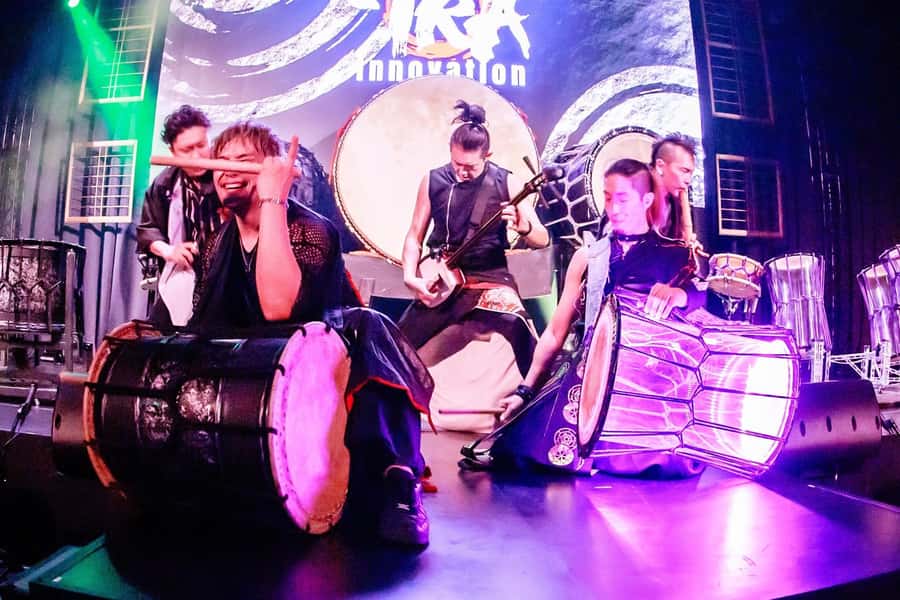
- Live performance by TRAinnovation: a high-energy group built around performance and crowd engagement.
- You can perform for one song: limited-time participation gives the show a fun, try-it-yourself moment.
- Photo moments before and after: pictures during the show are allowed, and there’s an afterward meet-and-photo setup.
You can also read our reviews of more tours and experiences in Osaka


Entering the Osaka Cultural Center: where the show starts and why it matters
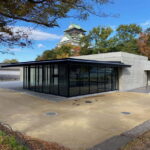
The show meets at Osaka Cultural Center. It also ends back at the same meeting point, which makes the night plan easy: you’re not trying to catch a last train from a distant area.
Arrive at least 5 minutes early. The timing rule is strict: once the show begins, you won’t be allowed to enter due to production reasons. That sounds small, but it affects your day—so treat this like a ticketed performance with real doors, not a casual drop-in.
The core experience: TRAinnovation and the 180 cm taiko up close

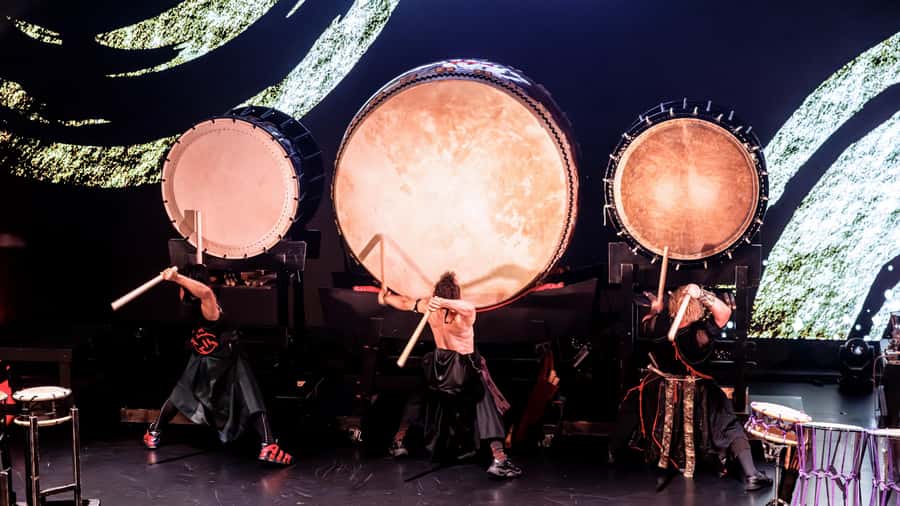
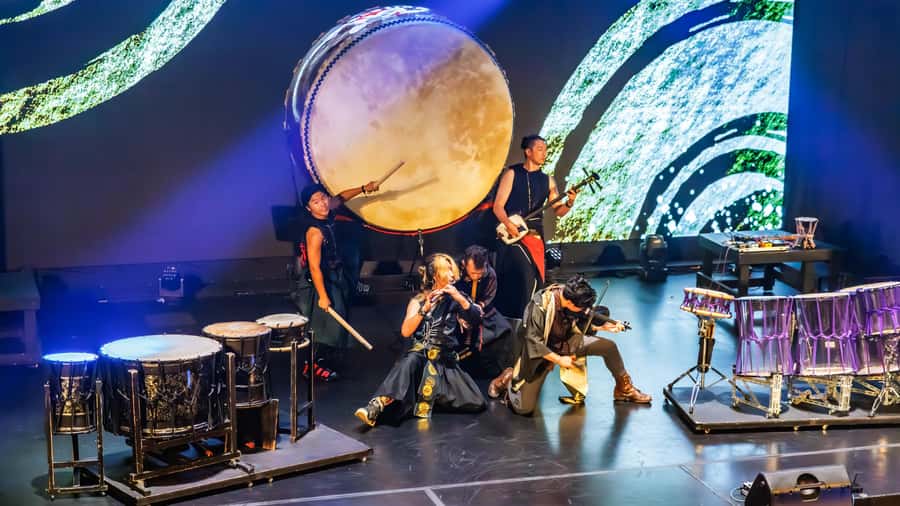
UTAGE is built around a lineup of Japanese instruments, including a very large taiko drum with a 180 cm diameter. In practice, this means the sound isn’t just something you hear—it’s something you feel in the room. The drum becomes the anchor of the show, around which the other instruments and the modern sound design orbit.
The setting is intentionally intimate. One visitor described about thirty people seated in three rows, with the band a few meters away. That distance matters because it makes the performance feel immediate: you catch facial expressions, you see how musicians physically coordinate, and you notice the pauses that make the hits land harder.
How the show mixes shamisen, shakuhachi, and shinobue with computer music
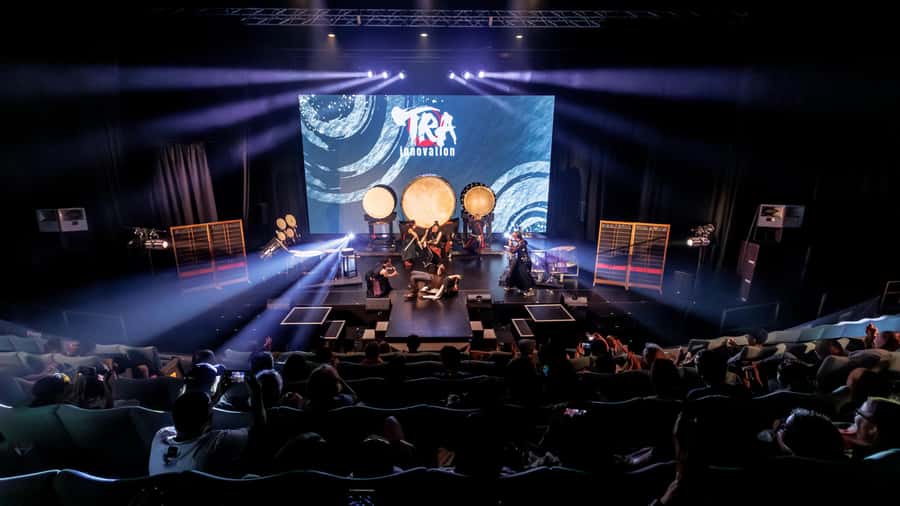
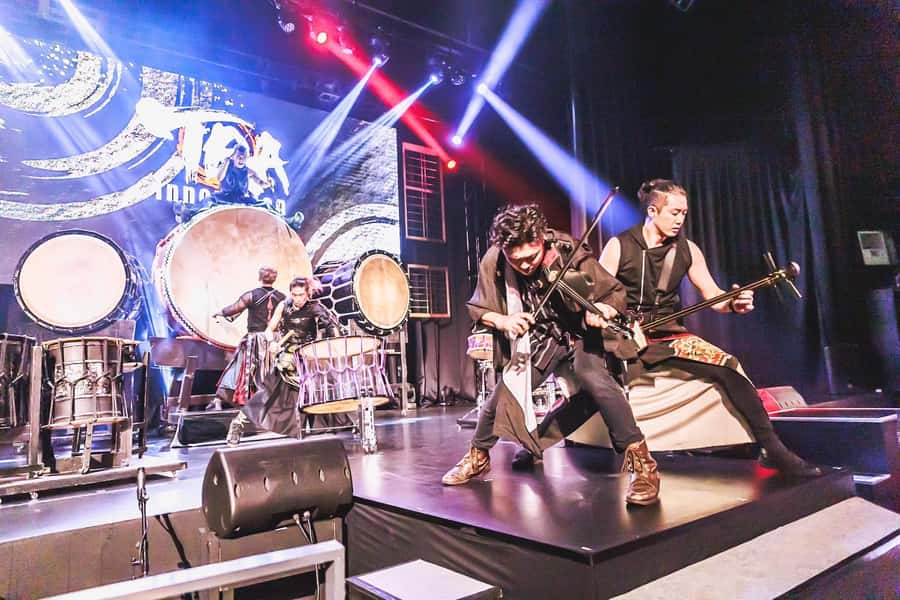
You’ll hear a mix of classic Japanese instruments—like shamisen, shakuhachi, and shinobue—alongside computer music. The result isn’t “tradition versus modern.” It’s more like two languages of rhythm meeting in the same conversation.
Here’s what I think makes that fusion work for you, even if you don’t speak Japanese or read music:
- Japanese instruments can be detailed and subtle, but rhythm carries emotion fast.
- Computer music adds structure and drive, so transitions feel clear rather than random.
- Visual staging keeps you oriented, so you’re following the “story” with your eyes as much as your ears.
In other words, this isn’t a quiet museum-style demo. It’s a performance built to keep your attention.
The audience participation moment: how you get a one-song stage role
One of UTAGE’s best perks is the chance to participate as a performer for one song for a limited time. That turns the show from something you watch into something you do, even if you’re only up there briefly.
In the real-world feel of this kind of setup, that moment tends to boost the energy for everyone in the room. You see the performers shift from full audience mode to a direct back-and-forth with people in the seats. If you like interactive shows—ones where you don’t just clap at the end—this is the part you’ll remember.
A small practical note: since the show is in Japanese, the cues are likely spoken in Japanese. But the participation is still music-first and movement-based, so you can figure out what’s happening from the stage direction and the band’s timing.




What the show experience feels like from start to finish
Expect a performance with strong momentum from the beginning. People talk about the energy being high all the way through, and the format supports that: instruments come in and out, the big drum creates weight in the sound, and TRAinnovation keeps the room engaged.
The show also includes visual elements. That matters because it helps you track what’s happening even if you don’t understand every spoken cue. When traditional instruments show up in a modern arrangement, the visual staging is what makes the switch feel intentional instead of confusing.
And yes, it’s a night that works for different ages. Some reviews specifically point out it’s suitable for families and for adults who want fun more than textbook information.
Photos, meet-and-photo time, and the downstairs picture spot

After the performance, you can take photos during the show (if the moment is right and staff allow it). Then there’s an afterward photo chance with the performers.
There’s also an extra bonus step that’s easy to miss if you assume the night ends onstage. One visitor noted that the experience continues at a shop downstairs, where you can pose for complimentary photos with props like samurai swords and traditional Japanese umbrellas. If you like souvenir photos that don’t feel tacky, this is the kind of add-on that makes the ticket feel more complete.
Price and value: what $40 buys you in Osaka
The price is listed at $40 per person. For Osaka entertainment, that’s not the cheapest option—but the value looks strong for three reasons:
First, you’re not paying just for a concert. You’re paying for an instrument-heavy show with a massive taiko centerpiece, modern computer-music production, and a built-in audience participation moment.
Second, the show is structured to feel close. When the band is just a few meters away and the room is relatively small (around thirty people is one estimate you’ll hear), your ticket buys proximity, not just sound.
Third, you get photo opportunities that go beyond a standard show. Between performance photos, meet-and-photo time, and complimentary prop photos downstairs, the experience has more “takeaway” than a typical one-time performance.
So if you want something different from temple circuits and shopping streets, UTAGE is a direct hit: music, energy, and interaction in one hour-ish evening slot.
Who should book UTAGE (and who might want to skip it)
Book this if you want:
- A hands-on music performance, not passive sightseeing
- Japanese instruments with a modern production layer
- A compact, easy-to-plan Osaka evening that starts and ends at the same place
You might hesitate if:
- You prefer shows with lots of spoken explanation in English (this one is Japanese)
- You hate strict timing rules, since late entry after start isn’t allowed
Quick FAQ before you decide
Arrive early and you’ll be fine. Miss it and you’ll lose your seat.
Should you book UTAGE Japanese Taiko Live Show?
If you’re deciding between another evening option, I’d lean UTAGE for most people who like live performance and want a fun, cultural night without studying anything first. The 180 cm taiko, the modern computer-music angle, and the chance to join for a one-song moment give it a rare mix of spectacle and participation.
My practical advice: book it when you still have energy for interaction, and plan to arrive early at Osaka Cultural Center so you don’t get stuck on the wrong side of the doors policy. If you’re willing to be in the room—rather than just watching from afar—UTAGE is exactly the kind of Osaka night that sticks.
FAQ
Where is the UTAGE show located in Osaka?
The show starts at Osaka Cultural Center and ends back at the same meeting point.
What time should I arrive?
Plan to arrive at least 5 minutes before the start time.
Can I enter after the show begins?
No. Once the show begins, entry isn’t allowed due to production reasons.
How much does the ticket cost?
The price is $40 per person.
Is the show in English?
The listed language for the experience is Japanese.
What instruments are included in the performance?
The lineup includes Japanese drums (including a large 180 cm taiko), shamisen, shakuhachi, shinobue, and it also uses computer music.
Is there any participation for the audience?
Yes. You can participate as a performer for one song for a limited time.
Are photos allowed during the show?
Yes. People are welcome to take photos during the performance, based on the experience description.
Is there anything to do after the show ends?
Yes. There’s an after-performance photo opportunity with the performers, and an experience continues at a shop downstairs with complimentary prop photo options.
Can I cancel and get a refund?
You can cancel up to 24 hours in advance for a full refund.