REVIEW · OSAKA
Osaka: English Stand Up Comedy Show at Osaka Comedy Club
Book on GetYourGuide →Operated by ROR Comedy Club · Bookable on GetYourGuide
Laugh in English, right in Osaka.
This show is interesting because Osaka Comedy Club is built for English speakers, yet it still feels like real Osaka nightlife: small room, close-up jokes, and comics focused on daily life here and abroad.
I really like the intimate format. With a room small enough to feel almost private, the comedy lands faster and the vibe stays relaxed instead of stiff. The second thing I like is the social side: you get an easy way to meet other English speakers while you wait for the first joke, thanks to the bar and the friendly crowd energy.
One thing to consider: crowd work is part of the evening. If you hate being singled out, you may want to think twice, because audience members can get asked where they’re from or what they do, then gently teased.
In This Review
- Key things to know
- Osaka Comedy Club: A smart way to enjoy Osaka with English jokes
- Inside the club: what the pre-show bar time is really for
- The show flow: MC, multiple comedians, and a very human pace
- Crowd work: how far it goes
- The comedy itself: why English jokes land better in Japan
- What you’ll learn about Japan (without it feeling like a lecture)
- Price and value: is $19 for a comedy show a good deal?
- Practical tips for your night in Osaka
- Choose your mindset
- Decide on seating with crowd work in mind
- Budget for drinks if you want them
- Use the English guide support
- Who this show fits best
- Should you book Osaka Comedy Club?
- FAQ
- How long is the Osaka English stand-up comedy show?
- How much does it cost?
- Is the show in English?
- What’s included in the ticket price?
- Are drinks included?
- Is the venue small?
- Will I be asked questions during the show?
- Is ticket-line access included?
- Are there multiple starting times?
- What is the cancellation policy and can I pay later?
Key things to know
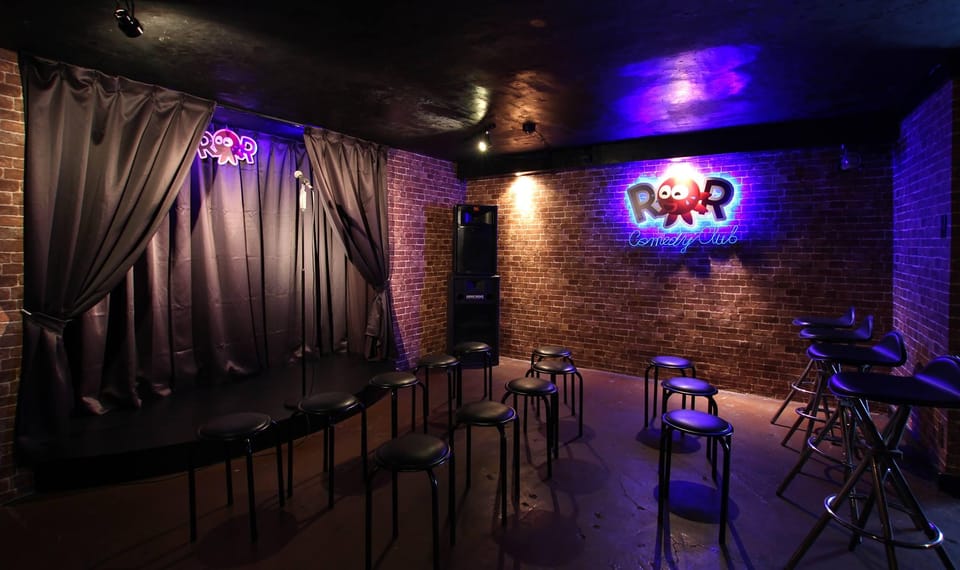
- Dedicated English stand-up in Osaka, with an international lineup
- Small audience energy, often described as under 20 people
- MC-led crowd interaction, including light callouts during the show
- Fun social bar atmosphere in a purpose-built room
- English guide support to help you settle in and follow along
- Great value at $19 for an entry-included, two-hour comedy night
Osaka Comedy Club: A smart way to enjoy Osaka with English jokes

Osaka is full of ways to experience Japanese culture, but comedy is one of the quickest. It doesn’t require a lot of translation if you choose the right setting, and that’s the core appeal here. Osaka Comedy Club runs as a dedicated English-language stand up comedy club, so the humor is built to be understood right away, not explained afterward.
What makes it feel more authentic than a generic comedy night is the subject matter. The jokes are typically framed around life in Japan and cultural observations—how things work, what surprises visitors, and what daily habits look like from the outside. You get laughs, but you also get a clearer sense of how international visitors and expats read Japanese life.
And because this is a dedicated venue with a steady reputation going back years, the show doesn’t feel like a one-off performance put together for tourists. It feels like a real part of Osaka’s entertainment scene that happens to be in English.
You can also read our reviews of more tours and experiences in Osaka



Inside the club: what the pre-show bar time is really for

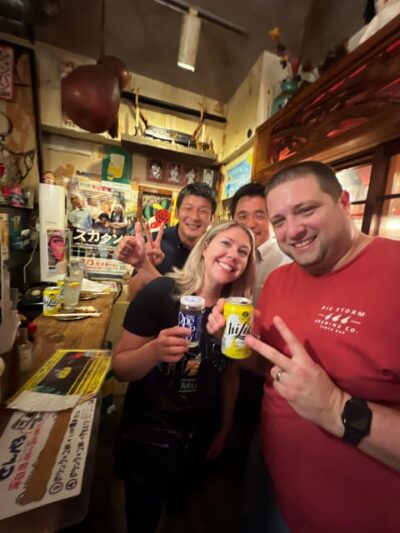
Before the first comic steps onstage, plan on using the time like you would in a neighborhood bar. This room is purpose-built for comedy, so you’re not just passing time while you wait. You’re part of the atmosphere—people chat, you get your bearings fast, and it becomes easier to relax into the show.
The bar matters here because it keeps the night from feeling formal. Drinks aren’t included with entry, but the venue does offer a range of drinks that are described as reasonably priced. That gives you options if you want something light (or just water) before you sit down for two hours of laughs.
Another practical point: the ticket line is designed to be easy. You can skip the ticket line, which means less standing around, more time enjoying the room. Since crowd work is a possibility later, the less rushed you feel at the start, the better.
The show flow: MC, multiple comedians, and a very human pace

This is a two-hour stand-up show in English. The exact lineup changes, but the format is consistent enough that you can know what kind of night you’re buying.
Most performances follow a clear structure:
- An MC hosts the evening and sets expectations for the humor style.
- Multiple comics perform, typically several distinct sets.
- The show keeps moving at a tight pace, which is why it works in a small space.
From past show descriptions, you’ll often see an MC plus around four comedians. You may recognize names mentioned by guests like Dan (an MC who earned strong praise), and highlights have included performers such as Edd and Tony. There are also references to comedians described by background, like a comic billed as Kenya and another described as Italian Canadian. You shouldn’t expect the exact same people on your date, but those names show the kind of talent level and international mix that tends to show up.
Crowd work: how far it goes
Here’s the one part I treat with extra caution: audience participation. Several people specifically noted being asked questions (like where you’re from or your job) and then being teased for laughs. That doesn’t automatically mean anything uncomfortable, and many guests say the energy stays fun and interactive.
Still, if you’re the type who hates attention, or if you’re traveling with someone who gets flustered easily, do yourself a favor: sit in a spot where you feel comfortable, and mentally prepare for the possibility of being pulled into the bit.
The comedy itself: why English jokes land better in Japan

You might be wondering why an English stand-up show in Japan is such a good idea instead of just going to a comedy club back home. The answer is in the angle. The best jokes come from misunderstandings, comparisons, and tiny social details—exactly the stuff you’ll notice in Osaka once you start living the rhythm of the city.
The comedy style here tends to be light enough for many groups, and guests repeatedly describe the laughs as frequent and strong. A common thread in the feedback is that the humor is accessible and geared toward real audiences, not just inside jokes for locals.
At the same time, it’s still stand-up. One caution from a smaller number of comments: some humor can edge into cruder territory depending on the comedian. I’d treat that as a reason to pick your seat wisely if you’re sensitive about certain topics. You’re not walking into a kids show, but the overall tone is often described as enjoyable and not overly hostile.




What you’ll learn about Japan (without it feeling like a lecture)
This is one of the underrated values of comedy: it teaches you through patterns. Even when the subject is silly, the jokes reveal how people interpret norms, rules, and everyday behaviors.
Based on what guests highlighted, you can expect to pick up things like:
- How people talk about Japanese culture from an outsider perspective (and how that differs from what you assume).
- Small social habits that visitors don’t notice at first.
- How English-speaking communities in Osaka compare day-to-day life.
One guest framed it as learning a lot about Japanese culture through laughter—and that matches what I look for in entertainment. You’re not cramming facts. You’re building instincts. After a show like this, you’ll often feel more comfortable with what you see on the street because your brain has an easier way to interpret it.
Also, because the host and comics interact with the audience, the jokes can feel tailored to the mix of people in the room—nationalities, ages, and travel habits. That makes the show feel less scripted and more like a snapshot of how international Osaka audiences experience the city.
Price and value: is $19 for a comedy show a good deal?
At about $19 per person for entry into a two-hour performance, this is usually strong value for a night out in an international city. The key is what you get for that price:
- You’re paying for access to live stand-up in English.
- The show time is long enough to feel like a full evening activity, not a quick stop.
- Entry is included, and the venue itself is the experience.
Drinks are not included, so you’ll likely want to budget a bit extra if you plan to order alcohol or several non-alcoholic drinks. Still, the venue’s drinks are described as reasonably priced, which helps soften that add-on cost.
If you compare this to other evening entertainment that can run more expensive without much language payoff, the English factor is the real value driver. Understanding everything matters. Comedy is one of those experiences where half-understanding is frustrating. Here, the language is the point, so you’re more likely to get full value from the ticket.
Practical tips for your night in Osaka

A comedy club works best when you make it easy on yourself. Here are the practical moves that help most people enjoy the show more.
Choose your mindset
Go in ready to laugh, not ready to judge. Even if your sense of humor is selective, the room is built for fun. If you’re open to being part of the energy, the show gets better fast.
Decide on seating with crowd work in mind
If you want a lower chance of being singled out, pick a seat that feels stable and not too close to where the MC would naturally roam. Since audience participation is a known possibility, your comfort level matters as much as your ticket price.
Budget for drinks if you want them
Entry doesn’t include drinks. The bar is there for the vibe, and it’s a common place to pre-game lightly or just take the edge off the Osaka humidity. But be aware that you’ll pay extra at the counter.
Use the English guide support
The show is in English and includes live English guide support. If you feel unsure about how the night is structured—where to go, when to take your seat, and what to expect—that guidance is part of what makes this easy for first-timers.
Who this show fits best
This is a good match if you want a low-effort evening that still feels local. It’s also ideal for:
- Solo travelers who want a friendly social scene.
- Couples looking for a shared laugh without language barriers.
- Families with older kids who can handle stand-up content (the show is not described as kid-specific).
- Anyone new to Osaka who wants a quick cultural read without a museum day.
It’s less ideal if:
- You strongly dislike any audience participation.
- You prefer comedy that never gets edgy.
- You’re tired and want something purely passive and quiet.
Should you book Osaka Comedy Club?

If you want an English-speaking night that feels like real Osaka entertainment, this is a smart book. The intimate room, the English-only setup, and the strong track record (rated highly with lots of past show feedback) make it a dependable choice for a fun evening. The main question is whether you’re comfortable with possible crowd interaction. If you are, you’ll likely walk out with that rare travel souvenir: a head full of fresh jokes and a lighter mood for the rest of your Osaka days.
FAQ
How long is the Osaka English stand-up comedy show?
The show runs for 2 hours.
How much does it cost?
It’s $19 per person.
Is the show in English?
Yes. The show and the live tour guide are in English.
What’s included in the ticket price?
Entry to the show is included.
Are drinks included?
No. Drinks are not included, though there is a bar on site.
Is the venue small?
It’s described as intimate, and at least one verified booking noted fewer than 20 people in the audience.
Will I be asked questions during the show?
Audience participation can happen, including questions about where you’re from or your job, followed by teasing.
Is ticket-line access included?
Yes. You can skip the ticket line.
Are there multiple starting times?
The show lasts 2 hours, and you can check availability to see starting times.
What is the cancellation policy and can I pay later?
You can cancel up to 24 hours in advance for a full refund. There’s also a reserve now & pay later option.
If you want, tell me your travel dates and who you’re going with (solo, couple, friends), and I’ll suggest the best type of seating approach based on how you feel about crowd work.