REVIEW · OSAKA
Real Kimono experience and Tsumami Kanzashi Workshop
Book on Viator →Operated by Kimono and Japanese culture Experience · Bookable on Viator
Osaka has a way of turning normal sightseeing into something you can actually wear. This kimono and Tsumami-zaiku workshop lets you make a tiny flower accessory, get dressed the same way, and then walk and photo in the Shinsekai and Tsutenkaku area. I love that you are not just putting on a costume. You’re learning a real Japanese craft step by step. I also love the amount of choice you get, from your accessory colors to the kimono and obi you wear. A possible drawback: the whole experience is short (about 2 hours), so you’ll want to treat it like a focused creative session, not a long kimono tour.
Here’s the tradeoff you should know up front: the kimonos are temporary. You’ll return them within 1 hour, then you can take your finished Tsumami accessory home. If you hate time limits, this might feel a bit rushed. If you like doing something hands-on and walking away with a souvenir that’s genuinely yours, it’s a great match.
In This Review
- Key things to know before you go
- Entering Osaka through kimono and a real craft
- Tsumami-zaiku: what you’re actually making
- Step-by-step itinerary: from colors to finished accessory
- 1) Orientation and the technique basics
- 2) Choose your colors and flower design
- 3) Create the accessory with guidance and tea/coffee
- 4) Pick your kimono and obi and get dressed
- 5) Photos with your accessory, then a Shinsekai stroll
- 6) Return the kimono within 1 hour, take your accessory home
- Why Shinsekai and Tsutenkaku are the right backdrop
- Price and value: why $52.03 can be a good deal
- Who should book this workshop
- Practical advice that makes the day smoother
- Plan your timing around the 2-hour window
- Wear comfortable basics underneath
- Think of your accessory as your real souvenir
- Use the craft time to your advantage
- Should you book this kimono + Tsumami-zaiku experience?
- FAQ
- What is included in the Real Kimono experience and Tsumami Kanzashi Workshop?
- How long does the experience take?
- What do I take home at the end?
- Where does the experience meet?
- Is this a private activity?
- Is there a dress option, or do you just wear what’s provided?
- What is the price and cancellation option?
Key things to know before you go
- You make a Tsumami-zaiku Kanzashi (hair clip or brooch) using Chirimen cloth
- You get guided help through the technique, so you don’t need craft experience
- Kimono and obi selection is part of the activity, not just a backdrop
- You’ll take photos with the accessory you made
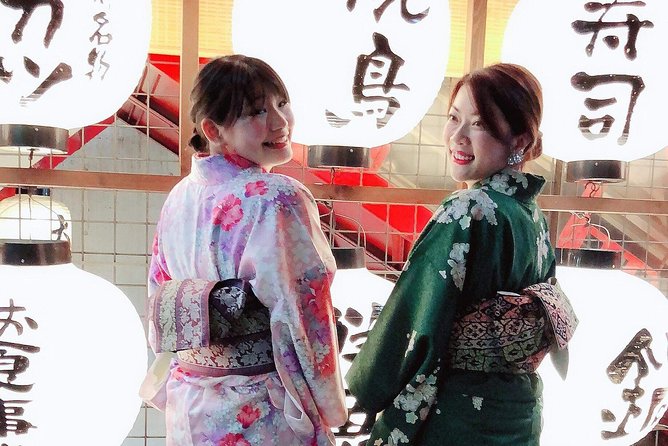
- You stroll Shinsekai and Tsutenkaku wearing the kimono
- Tea or coffee is served during the workshop
Entering Osaka through kimono and a real craft
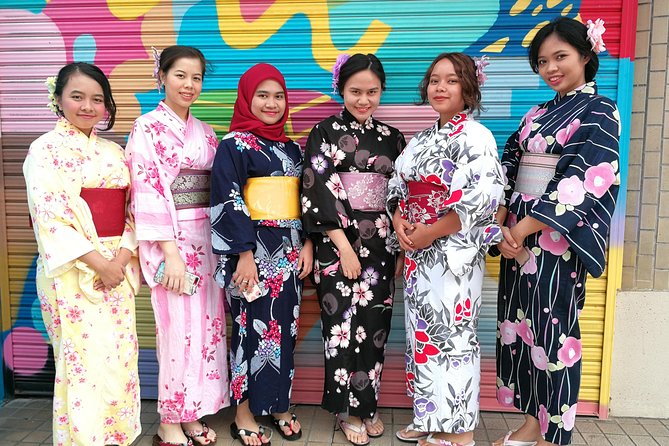
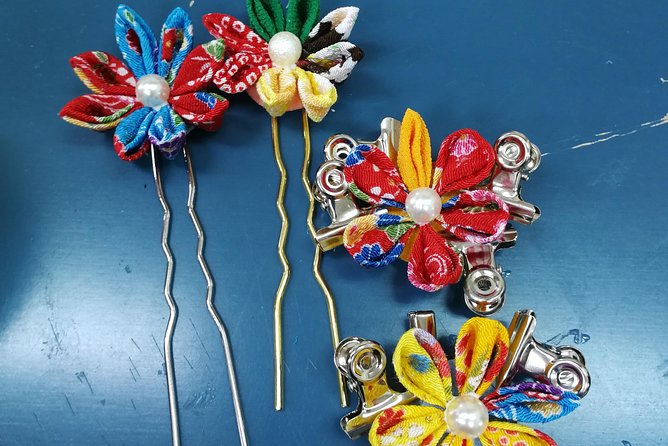
If you’re the type of traveler who likes photos, this experience gives you those fast. But the real value is that you’re doing something tactile while you’re in Osaka. Tsumami-zaiku is a Japanese traditional hand craft, and in this workshop you create a Kanzashi-style accessory (a hair clip or brooch) using Japanese Chirimen cloth.
That matters because it turns “I saw kimono” into “I made something that looks like kimono culture.” You’re not relying on a souvenir store version of tradition. You’re learning the basics, choosing your colors, and assembling your own flower design. Then you get dressed in kimono and obi and use your accessory as the centerpiece for photos.
The pacing is also very practical. You’re in and out in about 2 hours (approx.). That’s long enough to feel like an experience, but short enough that it won’t hijack your entire day.
You can also read our reviews of more tours and experiences in Osaka


Tsumami-zaiku: what you’re actually making
Tsumami-zaiku means you create pieces by handcrafting small cloth details and shaping them into floral forms. In this workshop, you start from Chirimen cloth, which is the textured Japanese crepe-like fabric used for lots of traditional craft items.
Your output is a Kanzashi accessory that you can wear as a hair clip or use as a brooch. Either way, you’re making something that works as a personal souvenir. It’s not just a picture souvenir. It’s something you can keep and actually use on future trips or for special occasions.
The instruction includes:
- An explanation paper to read along with what you learn
- A brief lecture on the basic technique
- Step-by-step help as you work
That last part is key. Even if you’re not naturally handy, you’ll be guided through each stage. You get to focus on your design choices and let the instructor help with the tricky bits.
Step-by-step itinerary: from colors to finished accessory
Here’s how the flow works, in the order you’ll experience it.
1) Orientation and the technique basics
You start with paper handouts and a short teaching session on the basics of Tsumami-zaiku. This isn’t a massive lecture. It’s enough to get your hands moving without feeling lost.
You’ll learn what to aim for with your cloth pieces, and how the small steps add up into the flower shape. If you’ve ever tried a craft workshop that assumes you already know the basics, you’ll appreciate that this one doesn’t.
2) Choose your colors and flower design
Next, you pick your accessory colors and design—specifically the flower look you want to create. This is your chance to make the accessory feel like it belongs to you instead of looking like something everyone else made.
Think about where you’ll wear it:
- Lighter colors often look delicate in photos
- Deeper colors can look more dramatic against kimono fabric
- Pattern choices can make it look more detailed when it’s worn
You won’t have to be a designer. You just choose what you like.





3) Create the accessory with guidance and tea/coffee
Now comes the hands-on part. You make your Tsumami accessory while an instructor helps you step by step. During the work, you’re served Japanese tea or coffee.
This timing matters. You’re not just standing in a workshop watching. You’ll spend real time crafting, and the beverage break helps keep the session comfortable, especially if you’re doing it on a busy Osaka day.
One more practical point: because the workshop is designed to fit into a short window, you should expect the process to be guided and time-managed. That’s a good thing. It keeps you from getting stuck.
4) Pick your kimono and obi and get dressed
After the accessory is done, the experience shifts to dressing. You choose a kimono and obi you like from a selection, and the instructor dresses you.
This is where the experience feels like more than a craft class. You’re stepping into the visual side of the culture you just learned about. And because you choose the kimono and obi, your accessory and outfit can match in mood—soft, bold, traditional, or playful.
5) Photos with your accessory, then a Shinsekai stroll
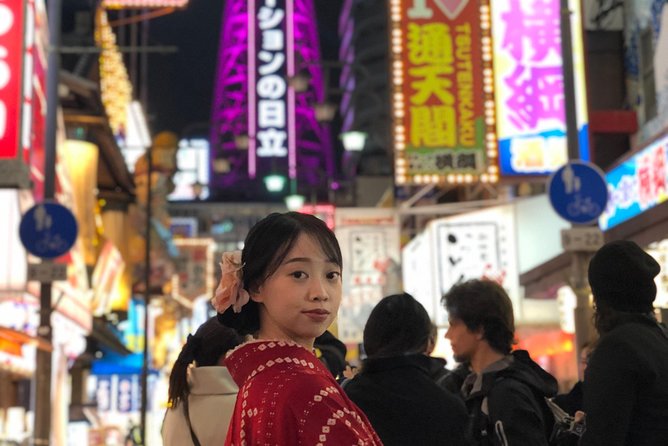
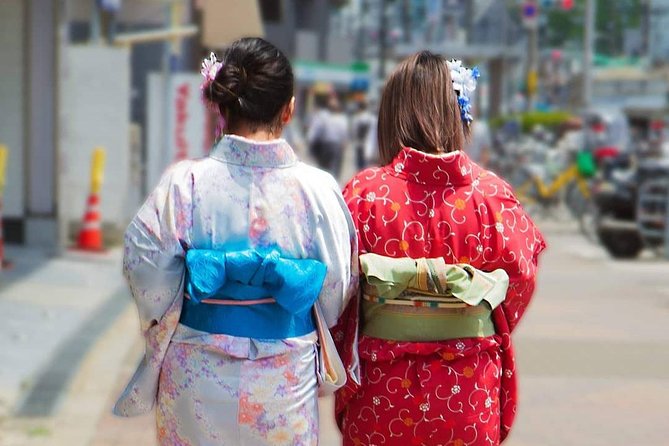
Once you’re dressed, you enjoy photo shooting using the accessory you made. Then you stroll around the Shinsekai and Tsutenkaku tower area in your kimono.
This part is the payoff for people who love atmosphere. Shinsekai is the kind of neighborhood where you can get iconic Osaka visuals quickly. Wearing kimono makes it feel like you’re stepping into a different Osaka era, without needing to travel far.
Also, Tsutenkaku tower is the anchor point here. You’ll get the satisfaction of moving through the area while wearing the look you created with your own hands.
6) Return the kimono within 1 hour, take your accessory home
You’ll return the kimonos within 1 hour. After that, you take your Tsumami accessory home as your special Japanese souvenir.
That’s the correct mindset shift: the kimono is the temporary experience, and the accessory is your keepsake.
Why Shinsekai and Tsutenkaku are the right backdrop
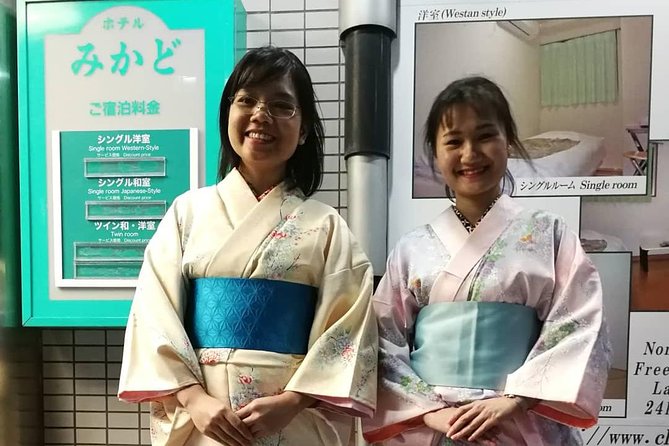
People often choose kimono sessions for pretty streets. This one uses a very specific Osaka slice: Shinsekai and the Tsutenkaku area.
That’s a smart pairing because:
- You get clear landmark visuals for your photos when the route includes Tsutenkaku
- You’re walking, not just posing in one spot after you’re dressed
- You can experience the neighborhood vibe while still having a structured activity
If you want a kimono experience that feels like an active part of your day rather than a quick photo booth moment, this fits.
Just remember the timing: because the kimonos must be returned within 1 hour, you won’t be doing a long wandering day in kimono. You’ll do the walking that counts inside the planned window.
Price and value: why $52.03 can be a good deal
At $52.03 per person for about 2 hours, this sits in a price range where you should ask: what’s included, and does it feel worth your time?
Here’s what you’re getting that justifies the cost:
- You make a real craft item (Tsumami-zaiku Kanzashi) with instructor help
- You receive tea or coffee
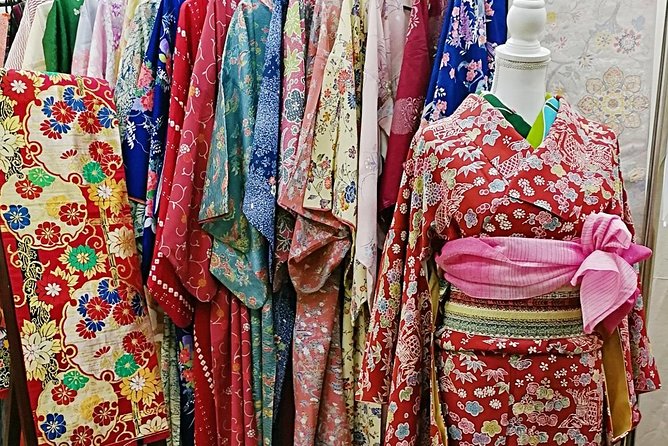
- You get dressed in kimono and obi from a selection
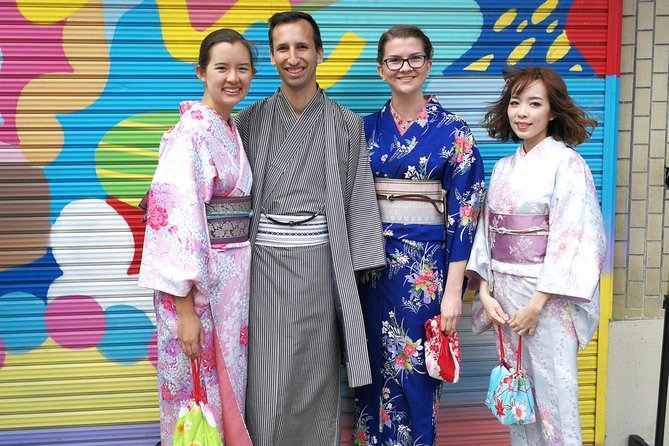
- You do photo shooting while wearing the look
- You get time to stroll Shinsekai/Tsutenkaku in kimono
- You finish with a souvenir you keep (the accessory)
Many cheaper experiences focus mostly on dressing and photos. In this one, the craft piece is the core. That shifts the value from a costume activity to a “learn and make” experience.
Also, the experience offers group discounts and a mobile ticket, which can help if you’re planning with friends or family. If you’re traveling as a group, this is one of those activities where coordinating everyone’s schedules is easier when the ticket and timing are handled efficiently.
Who should book this workshop
This workshop is a strong fit for:
- First-timers to kimono who want more than just wearing one for photos
- People who like arts and crafts but want guided instruction
- Travelers who want a souvenir with meaning, not just a shop-bought item
- Groups who want a structured activity everyone can enjoy (it’s a private group activity)
It’s also described as suitable for most travelers. That’s consistent with the step-by-step help and a guided pace.
If you’re a hardcore kimono enthusiast who wants deep historical immersion and lots of time in the outfit, you might find this short. But if you want a practical, hands-on experience in the center of Osaka, it’s ideal.
Practical advice that makes the day smoother
A few small things can make a big difference with kimono workshops.
Plan your timing around the 2-hour window
You’re looking at about 2 hours (approx.) total. Don’t stack it against something that requires you to be rushed. Give yourself a little buffer before and after so you can enjoy the stroll without feeling like you’re sprinting.
Wear comfortable basics underneath
You’ll be dressed into kimono and obi. Even though you won’t be told specific outfit rules here, you’ll be happier if you start with comfortable clothing and shoes that are easy to move in. The goal is simple: enjoy photos and walking without fuss.
Think of your accessory as your real souvenir
Because you return the kimono and take home the Tsumami accessory, treat the accessory like your main keepsake. If you want it to stay in great shape, plan to keep it secure after you finish.
Use the craft time to your advantage
The workshop includes tea or coffee while you work, so the vibe is meant to be relaxed. Use that time to focus on colors and flower shape. The final accessory is what you’ll remember when you’re back home.
Should you book this kimono + Tsumami-zaiku experience?
Book it if you want an Osaka activity that combines handcraft learning with kimono dressing and a real neighborhood walk. The best reason is simple: you create something you keep, and you get to wear it immediately in photos and as part of your stroll.
Skip it (or consider another option) if you hate time limits or you’re only interested in a long, leisurely kimono tour. This is a short, structured session designed for making and then moving on.
If you’re on the fence, remember this: the combination is exactly what makes it compelling—craft first, then outfit and photos, then a neighborhood experience you can point to with Tsutenkaku in the background.
FAQ
What is included in the Real Kimono experience and Tsumami Kanzashi Workshop?
You’ll learn the basics of Tsumami-zaiku, make a Kanzashi-style hair clip or brooch using Chirimen cloth, choose a kimono and obi and get dressed, do photo shooting with your accessory, and then stroll in the Shinsekai/Tsutenkaku area in kimono. Tea or coffee is served during the workshop.
How long does the experience take?
It lasts about 2 hours (approx.).
What do I take home at the end?
You take home your finished Tsumami accessory (Kanzashi hair clip or brooch). You return the kimonos within 1 hour.
Where does the experience meet?
The meeting point is 3-chōme-6-19 Nipponbashihigashi, Naniwa Ward, Osaka, 556-0006, Japan. The tour ends back at the meeting point.
Is this a private activity?
Yes. Only your group participates.
Is there a dress option, or do you just wear what’s provided?
You choose a kimono and obi you like from various kinds of selection, and an instructor dresses you.
What is the price and cancellation option?
The price is $52.03 per person. Free cancellation is available up to 24 hours in advance for a full refund.