REVIEW · OSAKA
Osaka Walking Tour to Local Gems, Food & Culture
Book on Viator →Operated by Localized Walking & Food Tours · Bookable on Viator
Neon Osaka feels easier when someone maps it. This 2.5-hour walk links Shinsaibashi with Dotonbori, Hozen-ji Temple, Kuromon Market, and more, led by a licensed guide and built for real street-level context, not just postcard stops. I like that the route covers both famous sights and everyday neighborhoods, so you leave with a clearer feel for how Osaka works.
I also like the practical pacing. It’s short enough to stay fun (around 2 hours 30 minutes) and structured enough that you always know what to look for next. One thing to plan around: snacks aren’t included, so if you want to eat while you walk, budget for purchases at the market stops.
In This Review
- Key Highlights You’ll Care About
- Start in Shinsaibashi, Then Let Osaka Lead the Way
- Horie Park to America-mura: Park Calm Meets Street Style
- Namba Hatch: A Performance Stop in the Middle of Shopping Land
- Dotonbori and Hozen-ji Temple: Neon Sights with a Temple Pause
- Kuromon Market and Nipponbashi: Food-and-Things Shopping in One Run
- Dōguya-suji Kitchenware Street: Why Osaka Cooks Think This Matters
- Price, Pace, and What Makes $25 Feel Like Value
- Who This Tour Fits Best (and Who Might Want a Different Plan)
- Should You Book This Osaka Walking Tour?
- FAQ
- How much does the Osaka walking tour cost?
- How long is the tour?
- Where do I meet the guide?
- Does the tour offer morning and afternoon times?
- What’s included in the price?
- Do I need a paper ticket?
- Are snacks included?
- Can I get a refund if I cancel?
Key Highlights You’ll Care About
- Max 12 people keeps questions flowing and the guide easy to follow
- Licensed guide means you get explanations tied to what you’re seeing
- Mobile ticket helps you start without hunting for paper
- Neighborhood variety: parks, Amemura, Dotonbori, Kuromon, Nipponbashi
- Local-gear focus at Dōguya-suji, the kitchenware/tool street tied to Osaka’s chef culture
Start in Shinsaibashi, Then Let Osaka Lead the Way
This tour is designed to help you get your bearings fast. The meeting point is Apple 心斎橋 (Nishishinsaibashi, Chuo Ward), right where Shinsaibashi makes it easy to arrive by public transit. If you’re arriving your first day, this is the kind of start that helps you stop wandering in circles.
I like that the route isn’t just one straight line of famous landmarks. You move through different “moods” of the city: quieter green space, style shopping areas, performance venues, temple lanes, and then food and gadget shopping. That mix is a big reason the tour works for both first-timers and people who already walked Dotonbori on their own.
You’ll also appreciate that the tour runs in both morning and afternoon formats. If you’re trying to dodge the hottest part of the day, you can often pick a time that fits your energy. And with past guide feedback highlighting patience during rain and heat, it helps to know the experience can stay workable when the weather is doing its own thing.
You can also read our reviews of more walking tours in Osaka


Horie Park to America-mura: Park Calm Meets Street Style
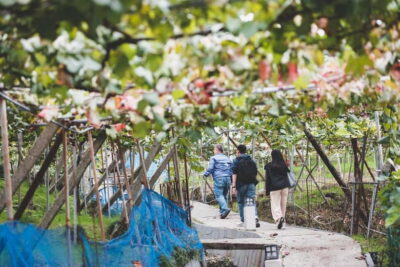
Stop 1 is Horie Park, a small urban escape with greenery and neat walking paths. It’s a nice palate cleanser after you arrive in Osaka’s retail and sidewalk traffic. Even if you only spend about 20 minutes here, it gives your feet a reset and makes the rest of the neighborhoods feel less chaotic.
Then the route heads to America-mura (Amemura), the area locals and visitors associate with indie fashion, alternative shops, and lots of casual hangouts. It’s often described as Osaka’s American Village, and you’ll feel that influence in the shop mix and the energy of the streets. For me, this stop matters because it shows one side of Osaka that doesn’t rely on giant attractions.
One practical note: Amemura is the kind of place where you’ll naturally want to browse. The time here is short, so keep moving if your goal is to finish the full loop. If you’re the type who could lose an hour in a single alley of shops, you may want to plan a follow-up stop later on your own.
Namba Hatch: A Performance Stop in the Middle of Shopping Land
Stop 3 is Namba Hatch, a live-events venue in the Namba area. The tour frames it as a place where concerts and performances happen, with a capacity around 1,200 people. Even if there’s nothing on during your visit, seeing where the city channels its music and crowd energy adds a useful layer.
This is one of those “context” stops that’s easy to skip if you’re DIY-ing. A licensed guide helps connect the neighborhood feel to how Osaka entertains itself. It also sets you up for what comes next, when the streets get louder and the sights get brighter.
If you’re someone who loves music culture, anime culture, or people-watching, this stop gives you a reason to look around rather than just walk through. And if you’re not, it’s still a good breather before the big sensory stuff.
Dotonbori and Hozen-ji Temple: Neon Sights with a Temple Pause
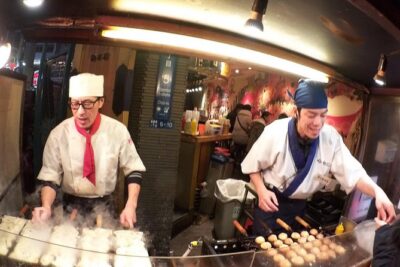
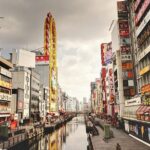
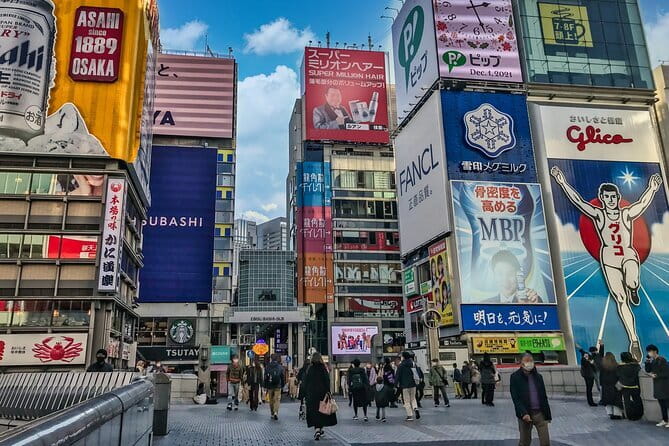
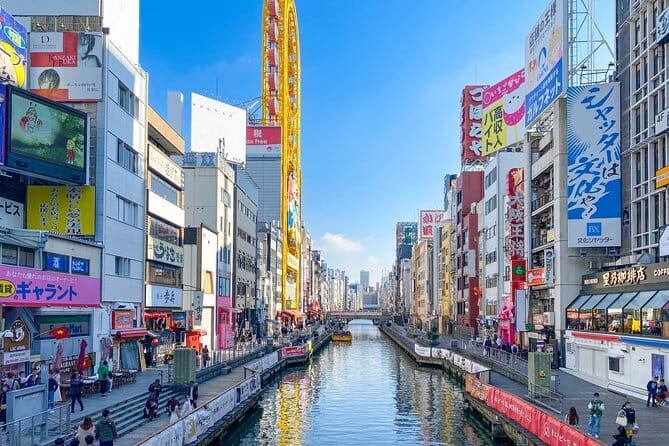
Next you hit Dotonbori District, along the canal where neon signage and street energy turn the area into a full-on visual scene. You also get a quick taste of the food focus here, since Dotonbori is known for its eating scene as part of the entertainment vibe. This is the stop that most people recognize instantly, but the value is in what you learn while you’re standing there.
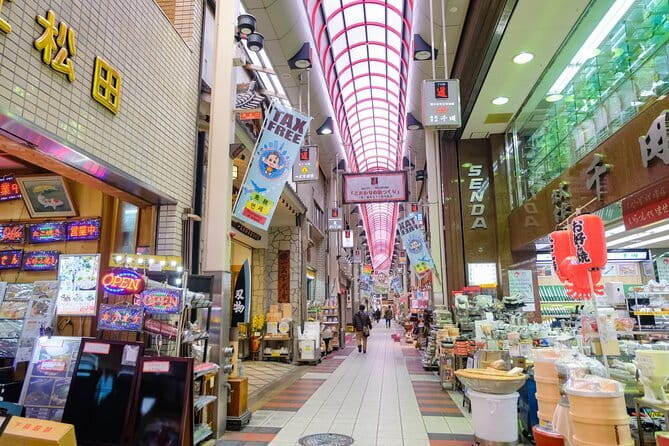
Stop 5 is Hozen-ji Temple (法善寺), near Dotonbori, founded in 1637. The standout detail is the moss-covered statue of Fudō Myōō, a fierce deity in Buddhist tradition. It’s a compact detour from the street noise, and it’s one of the best “contrast moments” on the whole route.
I like having a temple stop inside a major entertainment area. It reminds you Osaka isn’t only neon and snacks. You get a feel for how history sits beside commerce, sometimes within a few minutes’ walk.
Time-wise, this is short, so don’t treat it like a long temple visit. Instead, use it for observation: take in the statue detail, notice the layout, and let the guide explain why this place still matters so close to the action.
Kuromon Market and Nipponbashi: Food-and-Things Shopping in One Run
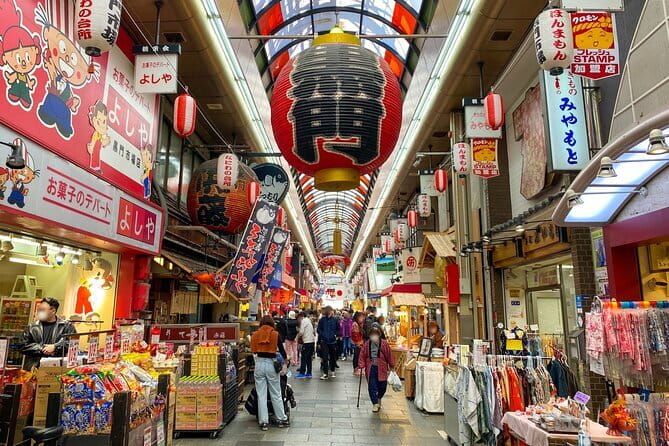
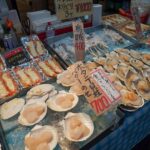
Stop 6 is Kuromon Ichiba Market (黒門市場), one of the go-to places for fresh seafood, produce, and Osaka local treats. The market is lively in the literal sense—lots of stalls, lots of sights, lots of smells. This is where your “walk and look” turns into “walk and decide,” since it’s the most natural spot to stop for a bite.
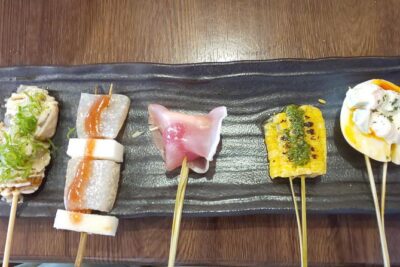
Just remember: snacks aren’t included, so if you want to sample, expect to pay there. The advantage is you can choose what you like instead of being forced into a single snack stop. If you have dietary needs, markets are also where it helps to ask questions in advance or stick to foods you can read.
Stop 7 is Nipponbashi, the area associated with electronics and anime/otaku culture. It sits near Namba and gives you a different kind of shopping thrill than the market. If Dotonbori feels like food and spectacle, Nipponbashi feels like fandom and gadgets.
I think this pairing is smart. You go from tasting-based exploration at Kuromon to browsing-based exploration at Nipponbashi. Even if you don’t buy anything, it’s a strong way to see two sides of Osaka’s consumer culture without spending a whole extra day traveling.
You can also read our reviews of more food & drink experiences in Osaka


Dōguya-suji Kitchenware Street: Why Osaka Cooks Think This Matters
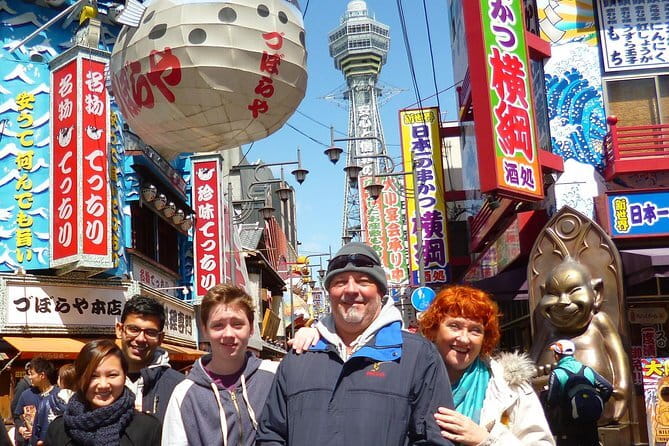
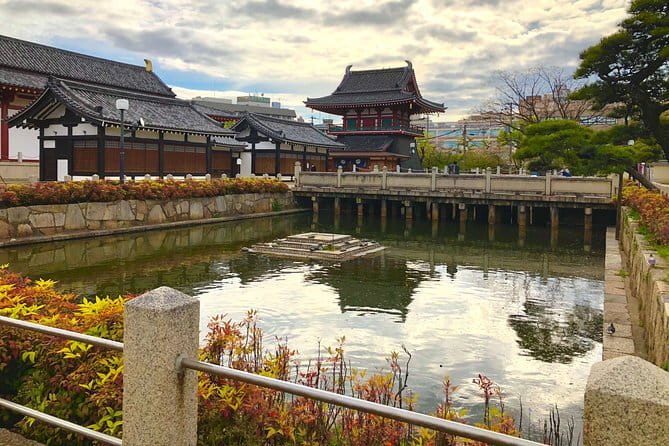
The final stop is Kitchenware Street (Dōguya-suji / 道具屋筋), a shopping lane for tools, kitchenware, and home goods. This is the street that’s tied to what you might call Osaka’s practical food identity—especially the idea that chefs in town come here for gear like knives.
Spending about 20 minutes here gives you a chance to notice details most visitors miss. It’s not only about souvenirs. It’s about the tools people use, which is why it fits the tour’s theme of local culture rather than just sightseeing.
If you’re a home cook or you like kitchen design, this is the most “buy-worthy” stop. Even if you don’t plan to purchase, browsing here helps you understand why Osaka’s food scene has such a reputation for craftsmanship and seriousness.
Price, Pace, and What Makes $25 Feel Like Value

At $25 per person, this tour is priced like a solid introductory experience rather than a high-end guided “day.” The big value is that you’re paying for a licensed guide and a route that hits multiple distinct areas in about 2.5 hours.
Here’s the part that really matters for value: you’re not just walking from one landmark to the next. You’re moving through parks, shopping districts, a temple, markets, and a chef-tool street, with explanations tied to the places themselves. For many visitors, that saves time and reduces decision fatigue, especially on a first trip to Osaka.
The pace is also friendly for most people, and the tour is capped at 12 travelers. Smaller groups help you keep up and makes it easier to ask questions when something catches your eye.
What I’d watch for: if you’re planning to do heavy shopping or eat multiple market snacks, this tour will likely end before you’re fully satisfied. Treat it like a guided sampler of Osaka culture. Then plan a second lap on your own in the neighborhood you liked best.
Who This Tour Fits Best (and Who Might Want a Different Plan)
This is a strong pick if you:
- Want a first-day introduction that doesn’t feel like a checklist
- Like mixing history, food stops, and modern neighborhoods
- Prefer guidance so you’re not stuck guessing what to prioritize
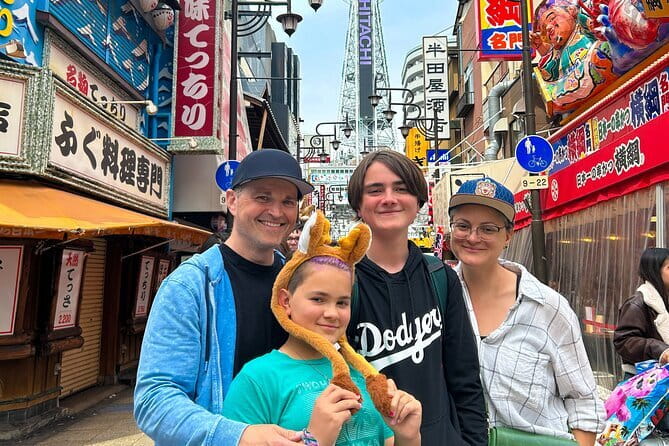
It’s also a great option for families and teens. Past comments specifically praised the guide approach and the fact that the walk stayed interesting for younger people, which is exactly what you want from a city tour.
If you’re the type who loves slow, long museum-style visits, you might find the time per stop short. This tour is built for street time, not deep lingering. But if your goal is to understand the city’s rhythm, it hits the mark.
Should You Book This Osaka Walking Tour?
I’d book it if you want a well-shaped route that covers Osaka’s major “angles” in one go: Dotonbori energy, Hozen-ji Temple contrast, Kuromon Market food culture, and the quirky neighborhoods in between. The licensed guide aspect is the difference between seeing sights and understanding what you’re looking at, and the small group size keeps it from turning into a crowded shuffle.
I’d skip or adjust your expectations if you’re mainly chasing a long food crawl with snacks included. Since snacks aren’t part of the price, you’ll need to handle eating as you go. Still, that can be a good thing, because you control what you buy.
Bottom line: for $25 and about 2.5 hours, this is a practical way to learn Osaka fast and pick better places to return to later.
FAQ
How much does the Osaka walking tour cost?
It costs $25.00 per person.
How long is the tour?
The duration is approximately 2 hours 30 minutes.
Where do I meet the guide?
You meet at Apple 心斎橋, 542-0086 Osaka, Chuo Ward, Nishishinsaibashi, 1-chōme55 アーバンBLD心斎橋.
Does the tour offer morning and afternoon times?
Yes, morning or afternoon tours are available.
What’s included in the price?
All fees and taxes are included, and a licensed guide is included.
Do I need a paper ticket?
No. The tour uses a mobile ticket.
Are snacks included?
No, snacks are not included.
Can I get a refund if I cancel?
Yes. You can cancel for free up to 24 hours in advance for a full refund.