REVIEW · OSAKA
Osaka Walking Tour
Book on Viator →Operated by ALL STAR OSAKA WALK · Bookable on Viator
Osaka can feel like a puzzle at first. This walking tour turns that puzzle into a simple plan: you start at Osaka Station, hop through local neighborhoods, and end in Dotonbori’s party zone.
I especially love the small-group vibe and how easy it is to ask questions without feeling lost in a crowd. I also like the fact that you get a real taste of Osaka street food with Kushikatsu plus a non-alcoholic drink included.
One consideration: part of the experience is navigating big-city transit areas, so if you hate train-station walking, give yourself extra patience (and remember the subway fare isn’t included).
In This Review
- Key things I’d plan around
- Meeting Osaka where it actually starts: Osaka Station
- Price and value: what you’re really paying for
- The walking pace: easy enough for first-timers, serious enough to feel Osaka
- Stop-by-stop: what you’ll experience and why it’s worth it
- Osaka Station City: orientation in the middle of the system
- Shinsekai: Osaka soul food and snack-stop storytelling
- Small restaurant alleys and the street-level Osaka you can’t get from maps
- Ebisu Bridge in Dotonbori: the finish line of neon energy
- Subway reality: what you should bring so the day stays smooth
- The guide factor: why people rave about the human touch
- Is this really a food tour? Manage that expectation
- Weather and comfort: rain or shine is the rule
- Who this Osaka walking tour suits best
- Should you book it? My practical take
- FAQ
- How long is the Osaka walking tour?
- What’s included in the ticket price?
- Do I need to pay for the subway during the tour?
- Where do I meet the guide, and when does it start?
- Does the tour run in bad weather?
- Is there free cancellation?
Key things I’d plan around
- Max 10 people, not a cattle-car tour: you’ll walk with a tight group and get more back-and-forth with your guide.
- Kushikatsu + 1 drink included: you’re not just seeing; you’re sampling a classic Osaka snack.
- Osaka Station time is real: expect meaningful orientation in and around a massive transport hub.
- You’ll ride the subway, but you pay the fare: bring the right mindset and yen, since it’s not included.
- Rain or shine, same plan: pack for weather because the tour keeps going.
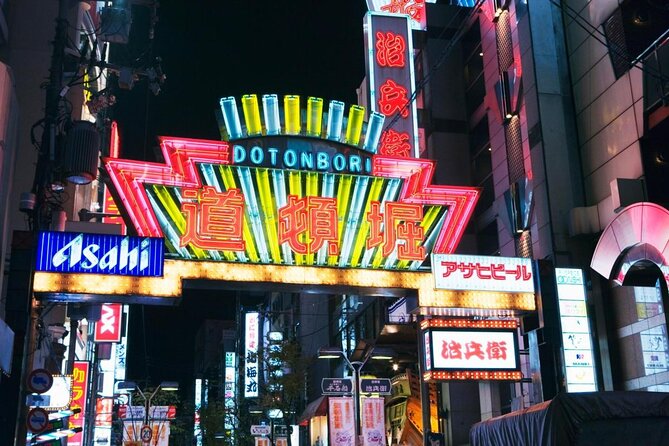
- Ends right where the lights are: Ebisu Bridge puts you at the center of Dotonbori’s electric energy.
Meeting Osaka where it actually starts: Osaka Station

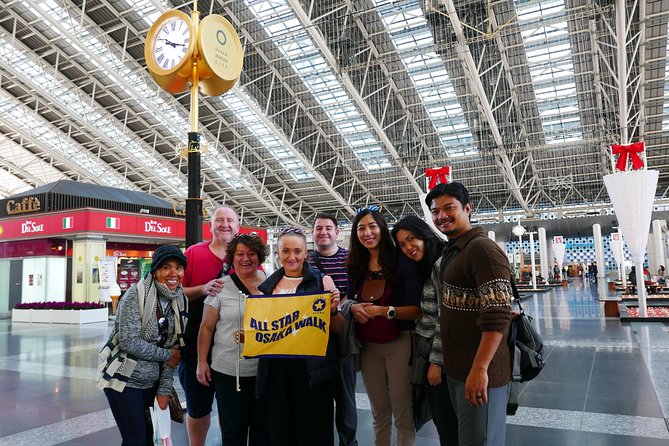
Your day begins at the Osaka Tourist Information Center on the ground level, in front of the central gate of JR Osaka Station. You meet at 9:50 am, and the walk starts right on time at 10:00 am, with the guide holding an All Star Osaka yellow flag.
This matters because Osaka Station is one of those places where a small wrong turn can cost you more time than you think. Starting together, with your guide pointing the way, is a big win if you’re new to the city or short on hours.
The tour is built for a “get your bearings fast” type of day. You’re not waiting around for a museum opening or lining up for a reserved ticket. You’re learning the city’s rhythm—especially how people move through it.
You can also read our reviews of more walking tours in Osaka


Price and value: what you’re really paying for
At $53.06 per person for about 3 hours, you’re paying for three things: a guide, a guided walk across several neighborhoods, and one included food tasting. The value isn’t only the Kushikatsu; it’s the shortcut you get in knowing where to go next and what you’re looking at.
Here’s what the price covers, based on the tour details:
- A local guide
- Food tasting (Kushikatsu)
- Beverages: 1 non-alcoholic drink
- The tour ticket itself (the “All Star Osaka Walk” portion)
What’s not included is important for budgeting:
- Subway fare (adult/youth 430 yen, child 220 yen)
If you can see yourself spending time wandering anyway, then paying for orientation starts to make sense. You’re buying fewer dead ends and less guesswork—especially around Shinsekai and Dotonbori, where the street-level details are the whole point.
The walking pace: easy enough for first-timers, serious enough to feel Osaka
The tour involves a moderate amount of walking. That’s a polite way of saying you should wear comfortable walking shoes, not your “I’ll be fine” shoes. You’ll also use escalators and some steps, so if you’re with a stroller or baby, plan to move slowly where needed.
The best part of a short walking tour is timing. You don’t spend half your day traveling to the next neighborhood. You get a set of stops that fit into a three-hour window and still feel like you “did something.”
From the guide feedback patterns, the pace seems designed to keep you moving without rushing. That’s the sweet spot for first-time Osaka visitors: enough structure to prevent confusion, enough time for questions and photos.
Stop-by-stop: what you’ll experience and why it’s worth it
Osaka Station City: orientation in the middle of the system
The first neighborhood stop is Osaka Station City, a modern complex attached to the station area. You spend about 45 minutes here.
This isn’t a random start. It’s the point where you learn how Osaka funnels people in and out—where major paths lead, how to regroup if you get separated, and how the city’s transit connects to shopping streets and onward travel.
The trade-off is that if you expected the tour to instantly jump into old temples or traditional streets, this part can feel “too practical.” But practical is exactly why it works. Osaka becomes easier once you understand the station geography.



Shinsekai: Osaka soul food and snack-stop storytelling
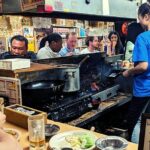
Next you head to Shinsekai, one of the city’s most distinctive downtown areas. You’ll spend about 50 minutes here, including a stop at a restaurant for Kushikatsu.
Shinsekai is where Osaka’s street-food identity is loud and clear. Kushikatsu—deep-fried skewered snacks—fits the neighborhood perfectly: casual, fast, and social. Even if you’re not a “food tour” person, this is a strong introduction because it tells you something about everyday Osaka.
Potential drawback: this is a snack tasting, not a full meal crawl. If your main goal is a long sit-down food experience with multiple dishes, you may want to pair this tour with a separate dinner plan.
Small restaurant alleys and the street-level Osaka you can’t get from maps
Between major anchors, you’ll walk through smaller stretches lined with restaurants—an attractive alley setup that shows you what Osaka looks like when it’s not trying to impress tourists.
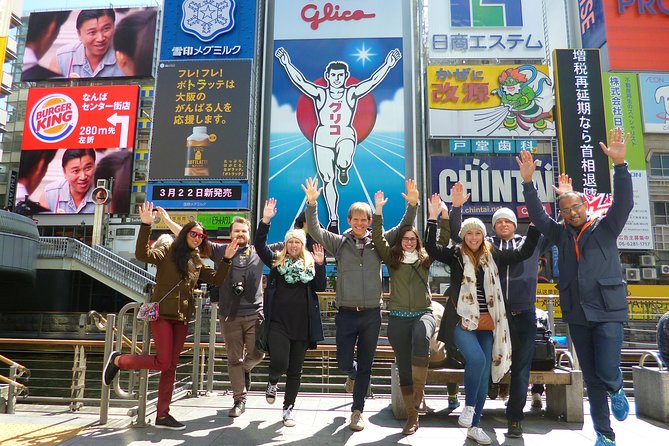
You’ll also pass through a lively commercial zone with restaurants, shops, and theaters and their flashy billboards. This is the part that feels most like walking through a live city poster. It’s also where your guide’s commentary helps, because signage and street design start making sense once someone points out what’s going on.
This section is great for photos, but don’t let your camera slow you down too much. The point is to keep moving so the route stays coherent.
Ebisu Bridge in Dotonbori: the finish line of neon energy
The tour ends at Ebisu Bridge in the Dotonbori area. You spend about 10 minutes there, then the walking portion finishes on the bridge.
Even with only a short final stretch, this ending location is smart. Dotonbori is one of Osaka’s most famous entertainment districts, and being dropped at Ebisu Bridge gives you instant access to the lights and the late-afternoon energy.
Practical bonus: if you’ve been using the subway for a day, ending near a major hotspot makes it easier to plan your next move—whether you’re heading to dinner or just continuing the night on your own.
Subway reality: what you should bring so the day stays smooth
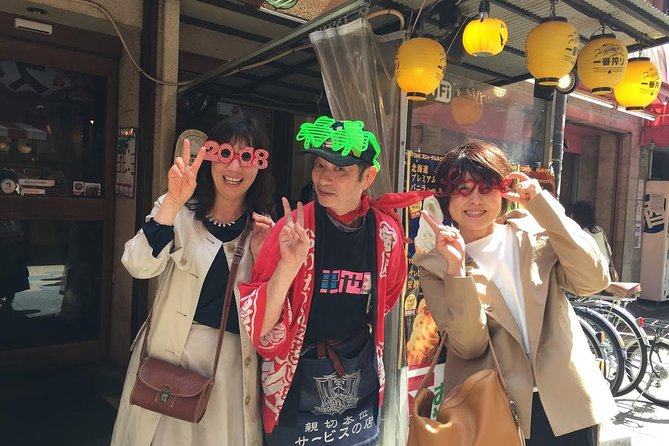
The tour is designed to include a subway ride like locals do, but subway fees are not included. Adults and youth are listed at 430 yen, and children at 220 yen.
That means you should come prepared with cash (or whatever payment method you personally use for transit in Japan). If you show up with no yen, the tour can still work, but you’ll lose momentum at the exact moment you want things to feel easy.
A simple rule: treat the tour cost as the guide + tastings package, then budget separately for the transit legs.
The guide factor: why people rave about the human touch
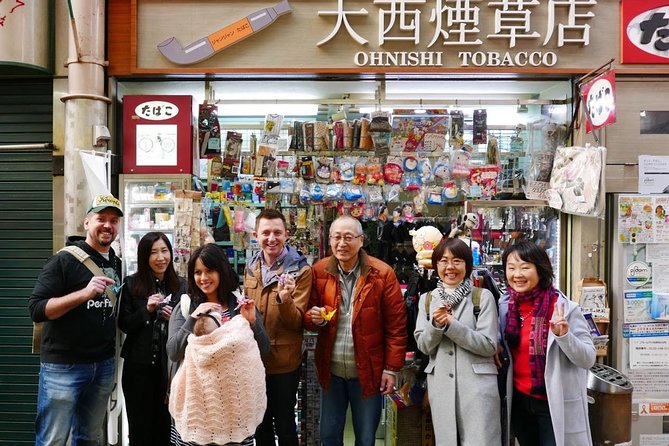
The highest praise in the feedback consistently points to one thing: the guides. Many names show up in positive comments—Hideoki, Harry, Rika, Yahiro, Kaori, Ichi, Ichiro, and Mikano—and the consistent theme is English ability, friendly communication, and clear explanations.
I like that the tour seems to attract guides who genuinely want you to understand Osaka, not just follow a script. You’ll often get practical advice like where to meet, how not to get tangled up in busy areas, and what to look for once you’re out on your own afterward.
That said, there are two side notes worth flagging:
- Some people felt the experience involved more train-station movement than expected.
- One comment mentioned feeling uncomfortable about frequent requests for photos for the company’s social media. If you’re camera-shy, it’s worth remembering this can come up on any group tour.
Is this really a food tour? Manage that expectation
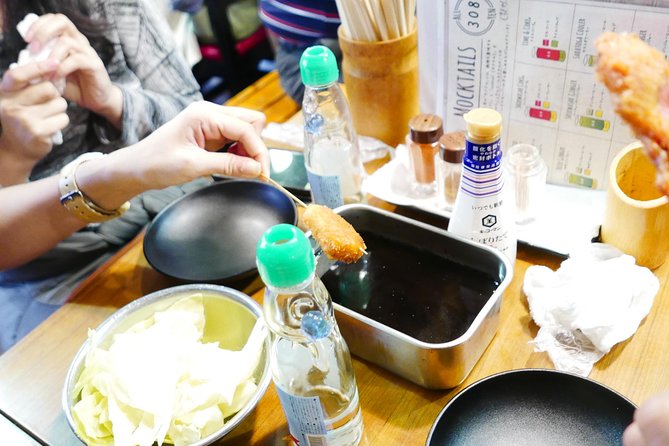
Kushikatsu is the headline snack, and you’ll get one non-alcoholic drink. But this is not a “many dishes, many stops, many bites” food festival.
Instead, think of it as an Osaka orientation tour with one excellent street-food tasting. That’s a strong mix for a first day in the city: you learn the layout and the vibe, then you sample a food that represents it.
If you want more food variety, this tour can still be a great opener. Use it to learn what to look for, then choose a dinner that matches your tastes.
Weather and comfort: rain or shine is the rule
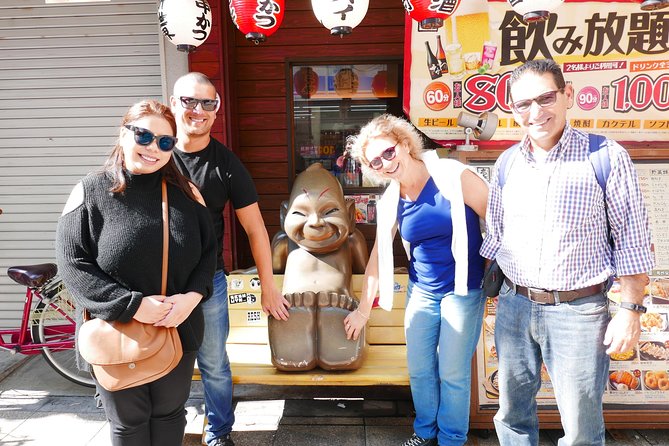
The tour runs rain or shine. That’s not unusual in Japan, but it changes what you pack. Bring a light rain layer and be ready for wet sidewalks.
Also, since the route uses steps in places (plus escalators), your comfort on uneven surfaces matters. You don’t need fancy footwear—just shoes that don’t punish you after a few hours.
Who this Osaka walking tour suits best
You’ll probably love this if:
- It’s your first time in Osaka
- You want three hours of smart orientation
- You like street scenes, neon areas, and everyday local food
- You prefer small-group guidance (up to 10 people)
You might want to skip or rethink it if:
- You dislike train stations and prefer scenic walking only
- You expect a lot of major sightseeing stops like temples and museums
- You’re hoping for a long, multi-item restaurant crawl
Should you book it? My practical take
I’d book this Osaka walking tour if you’re trying to make your first day in the city efficient. The combination of Osaka Station orientation, Shinsekai’s Kushikatsu stop, and a Dotonbori-area finish is a sensible route for getting oriented quickly without spending all day in transit.
If your biggest fear is subway navigation or busy station mazes, just adjust your expectations and budget for the subway fare. Show up early at the meeting point, keep your yen handy, wear good shoes, and treat the included snack as a taste test—not a full meal.
For the right mindset, it’s a strong value: a guided introduction you can build on while you’re still fresh in Osaka.
FAQ
How long is the Osaka walking tour?
It lasts about 3 hours.
What’s included in the ticket price?
You get a local guide, a Kushikatsu food tasting, and 1 non-alcoholic drink. A tour admission ticket is included for the All Star Osaka Walk portion.
Do I need to pay for the subway during the tour?
Yes. Subway fees are not included. The listed fares are 430 yen for adults and youth, and 220 yen for children.
Where do I meet the guide, and when does it start?
Meet at the Osaka Tourist Information Center on the ground level in front of the central gate of JR Osaka station at 9:50 am. The tour starts exactly at 10:00 am. The guide holds an All Star Osaka yellow flag.
Does the tour run in bad weather?
Yes, it runs rain or shine.
Is there free cancellation?
Yes. You can cancel up to 24 hours before the experience for a full refund. If you cancel less than 24 hours before, the amount paid is not refunded.