REVIEW · OSAKA
Osaka: Temari Embroidery Workshop
Book on GetYourGuide →Operated by EL PUENTE · Bookable on GetYourGuide
Thread, color, and a tiny piece of Japan. In this Osaka Temari embroidery workshop, you learn the old craft of stitching patterns onto a pre-made ball, and you do it in a small group of up to 10.
I also love that the instructor teaches clearly in English (and Spanish), so you can follow along even if your Japanese is limited. One consideration: only one side of your Temari will be finished during the 2 hours, and the other side is completed using a video link later.
In This Review
- Key points
- What Temari Is, and Why This Workshop Feels Worth Your Time
- Where You Meet in Shinsaibashi: C-Flat at SARASA HOTEL
- The First Steps: History, Then Picking Your Temari Base Ball
- Thread Planning: Selecting 4 Embroidery Colors
- Stitching Time: Learning the Technique With Your Instructor
- What You Finish in Class (and What You Finish Later)
- Price and Value: Is $38 a Good Deal for Temari?
- Who This Workshop Suits Best (and Who Might Skip)
- A Practical Tip List Before You Go
- Should You Book the Osaka Temari Embroidery Workshop?
- FAQ
- How long is the Osaka Temari embroidery workshop?
- How much does it cost?
- What’s included in the class?
- Will I finish both sides of the Temari during the workshop?
- Can I request a specific color for the Temari base?
- What languages does the instructor speak?
- Where do I meet the workshop?
Key points
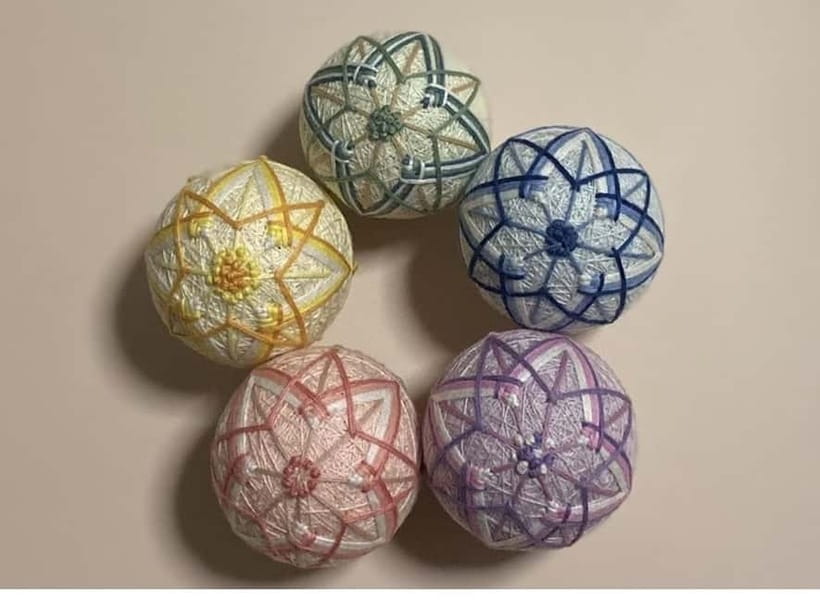
- A hands-on Temari lesson focused on real stitching technique, not just watching
- Small group size (10 people max), which keeps questions from getting lost
- Color choice on two levels: pick your base ball color, then select 4 thread colors
- Instructor-led guidance while you stitch your pattern together
- Take-home video help so you can finish the second side after the class
- Simple, practical souvenir that you’ll actually finish, not just admire
What Temari Is, and Why This Workshop Feels Worth Your Time
Temari are traditional Japanese hand-embroidered balls with a history that goes back over 1,000 years. The fun part isn’t only that the craft is old—it’s that it’s also doable. You’re not trying to copy a museum piece. You’re learning a repeatable stitching technique that turns into something you can hold, rotate, and show off later.
In a 2-hour format, this kind of activity works because it gives you enough structure to feel progress fast. You start with a Temari base that’s already prepared for you, so you’re free to focus on the embroidery steps and the color plan. And you’ll leave with an object that feels personal: you chose the base ball and the thread colors, and you follow the instructor’s lead to build your own pattern.
If you like crafts, this is the sweet spot between beginner and hands-on cultural experience. The style of learning—history first, then stitches—also helps you understand why Temari matters, instead of treating it like a souvenir you buy and forget.
You can also read our reviews of more tours and experiences in Osaka



Where You Meet in Shinsaibashi: C-Flat at SARASA HOTEL
You’ll meet at Free space C-Flat on the 1F of SARASA HOTEL Shinsaibashi. This is a practical setup: you’re meeting right at a hotel location in a central area, which makes it easy to get to before or after dinner.
A useful tip: go a little early and take a quick look around the entrance area before the class starts. In Japan, instructions are usually straightforward, but being on time helps you settle down and start stitching without stress. Also, since this is a small group session, you’ll want to be present for the color planning part at the beginning.
The First Steps: History, Then Picking Your Temari Base Ball
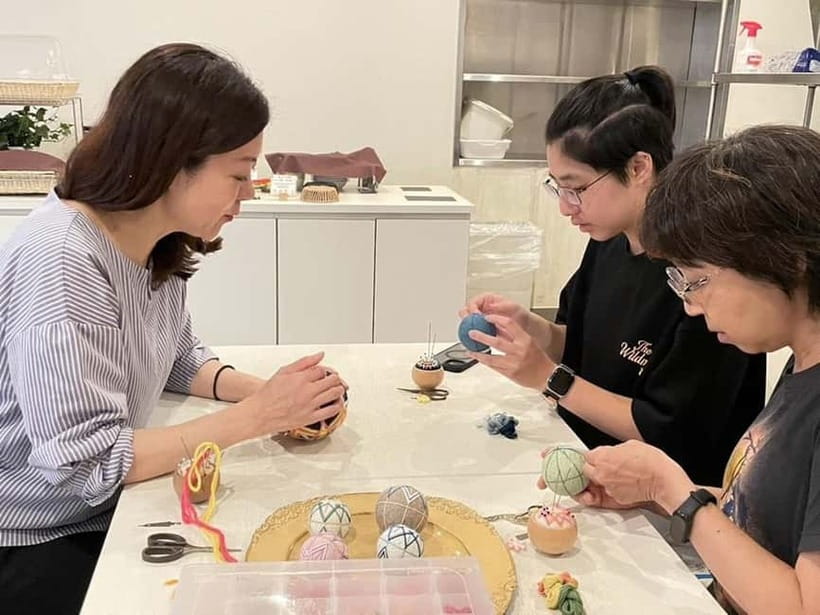
The workshop starts with an introduction to Temari—what it is and how it developed over the centuries. That context matters because it frames what you’re doing as a craft with continuity, not just a modern activity.
Then you move into the fun, personal part: choosing your Temari base ball. You can select from a variety of base ball colors. If you have a specific color in mind, you’ll want to tell the host at least 3 days in advance. That time window is important; it gives them a chance to prep your preferred option.
This is one place where you’ll get better results by thinking ahead. If you want a certain match—like colors that tie into a trip souvenir theme, or something that fits the clothes you packed—decide before you book. Even if you don’t, the color choices in class still let you shape the final look.
Thread Planning: Selecting 4 Embroidery Colors
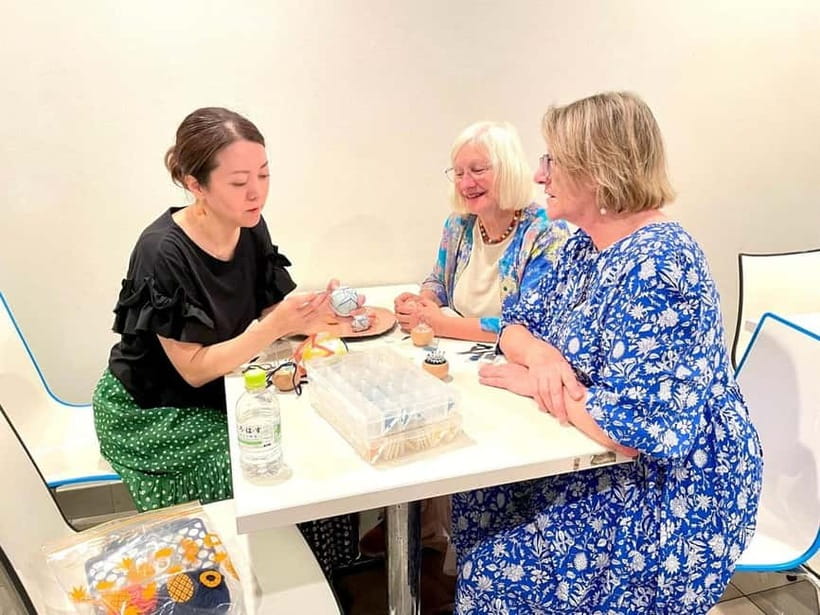
After you pick your base ball, you choose 4 colors of embroidery thread. This is the part that turns a craft lesson into a design decision.
Here’s the practical way to approach it:
- Pick at least one color you like most as your anchor.
- Choose 1–2 colors that add contrast so the pattern shows up clearly.
- Use the remaining color as a connector tone if you want the look to feel more balanced.
You don’t need to be artistic to make good choices. The stitching design you’ll do in class is guided by your instructor, so your color selection supports the pattern rather than replacing the technique. Still, the threads you select will be the most visible part of your finished Temari, so give this step a few minutes of calm thinking.
Also, you’ll be working with needles provided in the workshop. The host prepares the Temari base, so you’re not juggling materials you aren’t familiar with right away.
Stitching Time: Learning the Technique With Your Instructor
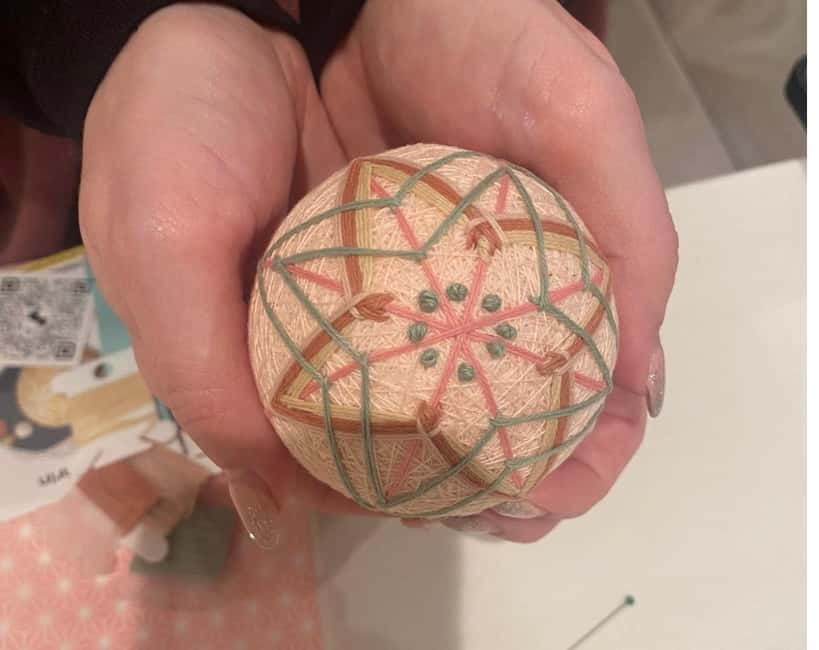
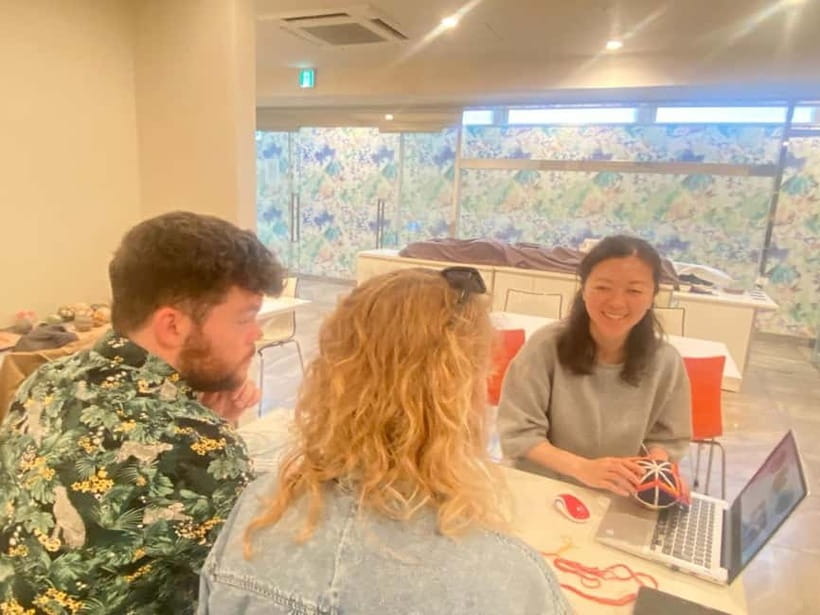
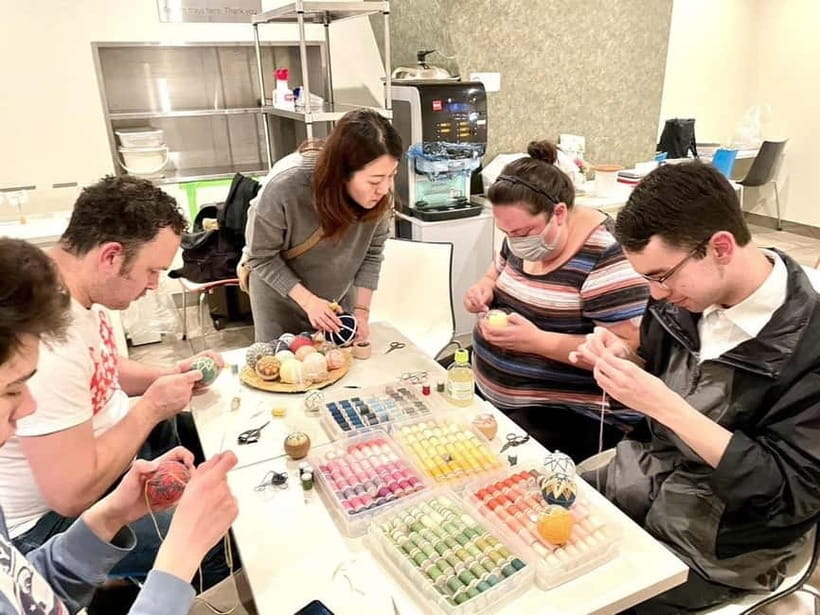
Now you get the core skill: stitching. The host teaches the stitch technique, and you stitch together with them as you build your pattern.
Because it’s a small group (limited to 10), the instructor can adjust pacing. If you’re unsure about hand position, thread tension, or where your stitches should land, you’re likely to get help quickly instead of waiting your turn. This kind of one-on-one support is a big deal in crafts. Small mistakes early can make later steps frustrating, and a good instructor helps you correct them before you get stuck.
The teaching is designed for an international crowd. The instructor speaks English and Spanish, and you’ll be able to follow along even if you’re not comfortable with Japanese terms. From my perspective, that matters for value: language clarity means you spend time stitching, not decoding.
You’ll also learn how the pattern is assembled through repeating the technique in a structured way. You may not fully “invent” the design from scratch, but you are actively building it. And that’s what makes the finished Temari feel earned.





What You Finish in Class (and What You Finish Later)
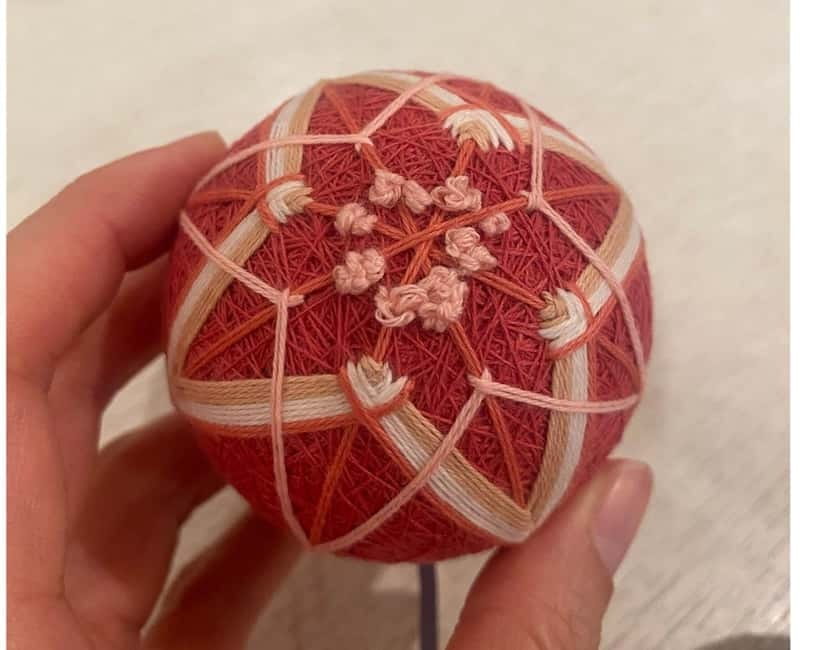
Here’s the key detail: in the workshop, only one side of the Temari will be finished. The other side is not left as a mystery project. You’ll get a video link that explains how to complete the second side at home.
This is a smart compromise. Finishing both sides in a single session would take longer than 2 hours, especially for beginners. By completing one side during the workshop, you gain enough confidence to tackle the second side yourself. The video link then removes the guessing.
If you’re the type who likes having a task that continues after the fun part ends, you’ll probably enjoy this format. You can stitch at home when you’re relaxed—maybe while traveling photos are still fresh, or when you want a quiet evening activity. And if you’re worried about finishing later, keep in mind the class gives you the base skill plus the specific guidance via the video.
In at least one real class experience, participants were even allowed to take a needle home to keep working. That’s not something you should assume, but it fits the overall idea: you’re meant to continue the craft beyond the workshop.
Price and Value: Is $38 a Good Deal for Temari?
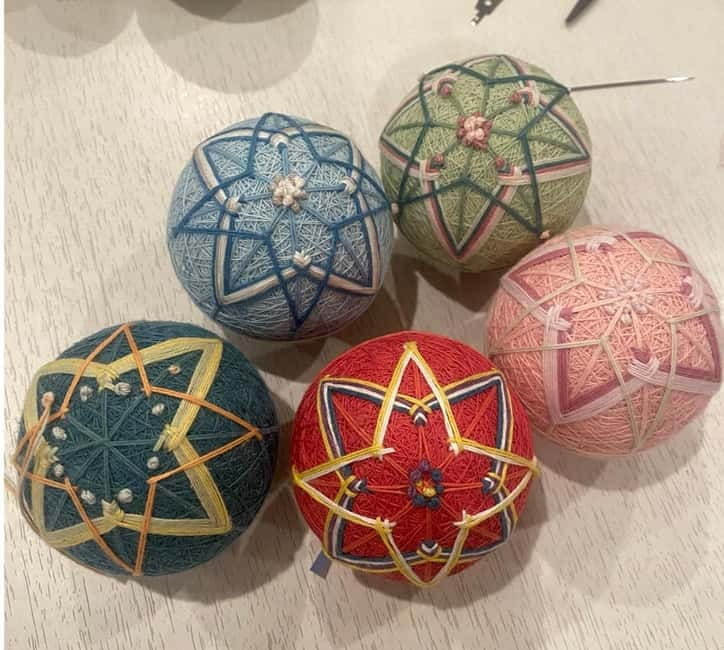
At $38 per person for a 2-hour workshop, this is a price that tends to make sense if you want more than a quick photo stop. You’re paying for several practical elements:
- a Temari base (host-prepared),
- 4 embroidery thread colors,
- needles,
- instructor time (English/Spanish instruction),
- and a take-home video link to finish the second side.
For many craft activities, the hidden question is always materials. Here, the materials are included, and you also get the guidance that turns materials into a usable skill. That’s where the value comes from.
It’s also small-group value. When a class is limited to 10 participants, you’re more likely to get direct help if something doesn’t make sense. That kind of support is hard to price, but you feel it in the quality of your learning.
The main “value test” for you: do you want a hands-on souvenir and a skill you can repeat? If yes, this price is reasonable. If you only want something decorative with no interest in working, you’d probably get more satisfaction elsewhere.
Who This Workshop Suits Best (and Who Might Skip)
This Temari workshop is ideal for:
- anyone who likes crafts and wants a structured way to learn,
- people who want a distinctly Japanese item that isn’t mass-produced,
- travelers who enjoy small-group activities with instructor guidance,
- first-timers who need English (or Spanish) explanation to feel confident.
It may be less ideal if:
- you only want a fully finished keepsake within 2 hours (since one side is completed later),
- you prefer activities with lots of sightseeing time,
- you don’t want a take-home project.
If you’re traveling with limited time in Osaka, this fits well because it’s a compact 2 hours. And if you’re already in the Shinsaibashi area, the meeting point makes it easy to slot in without big detours.
A Practical Tip List Before You Go
A few small moves can make the workshop smoother:
- Decide what colors you want before you arrive, especially if you care about a specific base color. If you want a preferred base color, notify the host at least 3 days ahead.
- Bring your best focus for the thread selection step. It’s the part you control most.
- Plan something calm right after class if you can. Your hands will be working with threads and needles, and it’s nice to avoid rushing into a hectic schedule.
- If you don’t love take-home steps, still plan to use the video link. Even a short session at home helps you finish what you start.
These are small things, but they protect your time and improve the finished result.
Should You Book the Osaka Temari Embroidery Workshop?
If you want a hands-on Osaka experience that produces a real, personal craft item, I’d book this. The strongest reasons are simple: clear English/Spanish instruction, a small group setting, and included materials that help you finish one side during the class with a video plan for the rest.
I’d especially recommend it if you enjoy learning techniques and you like the idea of something you made yourself. The $38 price is easier to justify because it’s not just watching—it’s stitching, and the workshop gives you what you need to keep going after you leave.
If you want a souvenir you can complete fully in one sitting, or you hate follow-up work at home, then you may want to pick a different activity. But for most people looking for an authentic Japanese craft experience in Osaka, this one is a solid bet.
FAQ
How long is the Osaka Temari embroidery workshop?
It lasts 2 hours.
How much does it cost?
It costs $38 per person.
What’s included in the class?
You get a Temari base, 4 embroidery thread colors, needles, and a video link with instructions to finish the other side at home.
Will I finish both sides of the Temari during the workshop?
No. Only one side will be finished in the class. You’ll use the video link to complete the other side after.
Can I request a specific color for the Temari base?
Yes. If you have a preferred base color, you should inform the host at least 3 days in advance.
What languages does the instructor speak?
The instructor speaks English and Spanish.
Where do I meet the workshop?
The meeting point is Free space C-Flat at SARASA HOTEL Shinsaibashi (1F).