REVIEW · OSAKA
Osaka Like a Local: 6 Hours of Walking, Eating & Exploring!
Book on GetYourGuide →Operated by Osaka JOINER · Bookable on GetYourGuide
One long neon-lit walk can teach you more about Osaka than a bus tour. This 6-hour small-group stroll strings together Osaka Castle, Kuromon Market, Shinsekai, Shitennouji, and an end-of-day view from Umeda Sky Building, with a guide who keeps the day moving and the food choices sensible. Two things I like: the mix of big-ticket sights plus real eating time, and the way the route is set up for photos and quick context at every stop. The main drawback is the pace: you’ll cover close to 10 km, so it’s not a relaxed sit-and-see day.
I also like that it starts in the Namba area, one of Osaka’s easiest neighborhoods to use as a base. You’ll do short public-transport hops between sights, with plenty of walking in between, and the tour runs in rainy weather (so bring a raincoat or umbrella). It finishes high up, where Osaka suddenly makes sense as a whole city instead of separate neighborhoods.
If you want extras, the tour is flexible. You can ask for custom stops and even add a tea ceremony, which is optional and costs about 4,000 yen at the store (not included). Still, food, drinks, and admissions are on your own budget, so come hungry and keep some cash handy.
In This Review
- Key reasons this tour is worth your time
- The big idea: a guided walk that matches how Osaka actually feels
- Starting in Namba Walk: fast, easy meeting point
- Osaka Castle: more than just a postcard photo
- A quick transit rhythm to the Osaka Housing and Living Museum
- Kuromon Ichiba Market: the lunch that actually feels local
- Dotonbori: lights, noise, and food shops everywhere
- Tea ceremony option in Dotonbori area: nice cultural add-on
- Shinsekai and Tsutenkaku: the New World viewpoint
- Shitennouji temple: prayer, calm, and a monthly flea market
- Umeda Sky Building: when Osaka finally clicks into one city
- Price and value: what $77 covers, and what you pay separately
- The guide factor: English-speaking, patient, and flexible
- Who this tour fits best (and who should skip it)
- What to bring for a smooth day
- Should you book this Osaka Like a Local tour?
- FAQ
- Where is the meeting point for this tour?
- How long is the tour, and how much will I walk?
- Is transportation included in the price?
- What is included in the $77 price?
- Are admission fees included for places like Osaka Castle?
- Can I add a tea ceremony to the tour?
- How much does the tea ceremony cost?
- Does the tour run in rainy weather?
- Is this tour suitable for pregnant women or people with mobility impairments?
- What language is the guide speaking?
Key reasons this tour is worth your time
- Osaka Castle with a photo stop and possible entry so you get both the view and the story
- Kuromon Market lunch time built around real street food choices (and a beer option)
- Dotonbori orientation for first-timers with a lot of food shops and night lights
- Shinsekai and Tsutenkaku for the New World feel and a top-of-tower viewpoint
- Shitennouji temple visit with free entry and a monthly flea market on the 21st–22nd
- Umeda Sky Building at sunset to wrap up the day with city-wide scale
The big idea: a guided walk that matches how Osaka actually feels
Osaka is the kind of city where neighborhood energy matters. You can’t really understand it from one temple or one museum. This tour works because it strings together places that each represent a different side of daily life: grandeur at Osaka Castle, hands-on eating at Kuromon and Dotonbori, street-level grit in Shinsekai, spiritual pause at Shitennouji, and city-scale perspective from Umeda Sky.
You also get a built-in rhythm. The day isn’t just “walk, look, repeat.” There are photo stops, museum time, food breaks, and viewpoint timing. That structure matters when you’re trying to do a lot in just 6 hours without burning out.
You can also read our reviews of more walking tours in Osaka


Starting in Namba Walk: fast, easy meeting point
You meet at Osaka JOINER in Namba, inside the Namba Walk underground area near exit B23. The store is between Mizuno Shop and Docomo Shop, so once you’re in the right passage, it’s usually straightforward to locate.
You can also arrange hotel pickup if that’s easier. That’s a real plus here, because Osaka’s transit is easy once you know it, and confusing if you don’t. Having a guide handle the first transfer saves time and stress.
Small-group size also helps. The limit is up to 8 participants, and the guide can work at your pace. One booking noted a 1-to-1 experience, which meant the guide filled time well and added an extra food stop en route.
Osaka Castle: more than just a postcard photo
Osaka Castle is a must-stop for first-timers. On this tour, you get a photo stop and sightseeing time, plus the chance to enter the castle interior depending on the day and timing. Admission fees aren’t included, so you’ll want to budget for that if you choose to go in.
What I like about this stop isn’t only the castle itself. It’s the way the guide frames it: you get quick context on why this landmark matters, then you get time to take photos without feeling rushed. Even if you don’t go inside, the castle grounds give you space to reset before the food section starts.
Practical tip: wear shoes you trust. Castle steps and paths can be uneven, and later in the day you’ll keep walking.
A quick transit rhythm to the Osaka Housing and Living Museum
Between major sights, the day uses short public-transport transfers. The goal is simple: spend your energy on places where you can actually learn something, not on long rides.
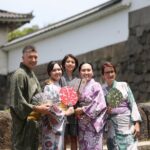
Next up is the Osaka Museum of Housing and Living. This is one of those stops that makes the city feel human. You’ll see how people lived in Osaka around the 1800s, and you can also try on a kimono if you want. There are model displays of Osaka around the 1900s, too, which helps connect the old city to what you see today.
One drawback: museum time is limited to a short visit and walk. If you’re a deep-history person, you might want to return later on your own for a longer look. Still, as a “wake up your city brain” stop, it’s a strong use of time.
Kuromon Ichiba Market: the lunch that actually feels local
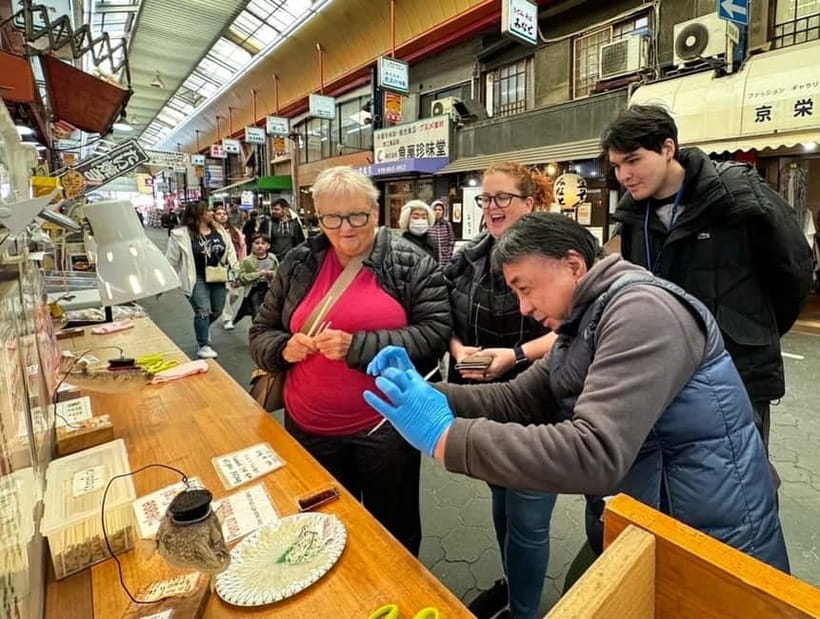
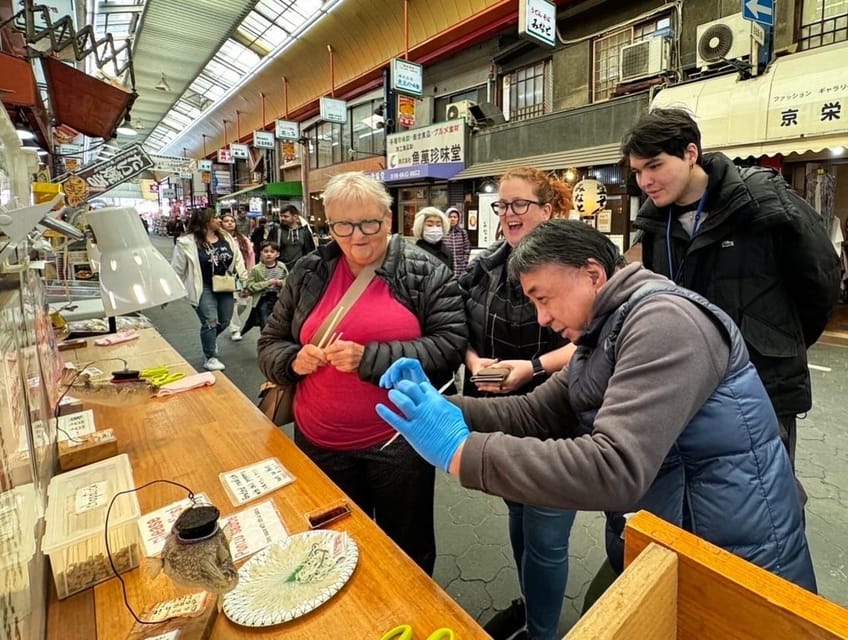
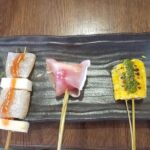
Kuromon Market (Kuromon Ichiba Market) is where the tour earns its keep. The itinerary schedules a full break period for street food, beer, and free time. That means you can snack your way through lunch instead of forcing one formal meal.
This stop is popular for a reason: it’s famous for seafood, but it’s not only seafood. You’ll also find beef, fruit, and sweets. For first-timers, that variety is key. Your guide can steer you toward options that are easy to try without turning lunch into an expensive guessing game.
What I recommend: think of this as your “choose 2 or 3 things” meal. With guidance, you’ll avoid the classic mistake of buying too much of one item. Also, come prepared to pay for food and drinks separately. The tour covers the guide fee and the walking tour, not your shopping at the market.
If you want a planning advantage, guides often steer you toward places that handle crowds well. You’ll spend time eating and walking inside the market, rather than hunting for the right stall.


Dotonbori: lights, noise, and food shops everywhere
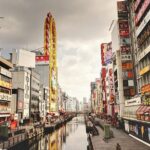
After Kuromon, you head to Dotonbori, Osaka’s famous street food and entertainment strip. The tour gives you time to see the area, do sightseeing, and eat. There are over 50 food shops here, and the guide works the timing so you get a feel for the street while it’s active.
This is also where Osaka becomes visually obvious. Even if you’ve seen photos online, seeing Dotonbori in person is a different thing. The signboards, the people, and the snack smell make it hard not to relax and just wander.
One detail to plan around: this is an intense walking zone. It’s fun, but you’ll want to pace yourself. Between snacks, stop for a breather so you don’t run out of energy before Shinsekai and the temples.
Tea ceremony option in Dotonbori area: nice cultural add-on
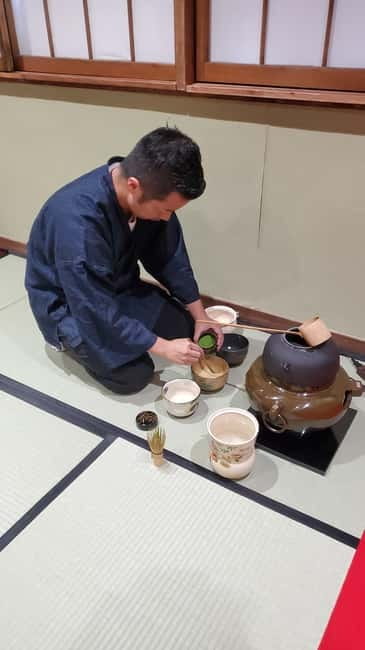
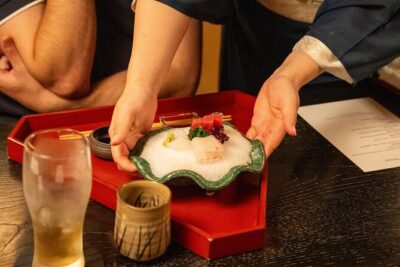
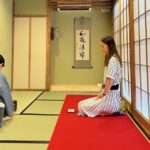
If you want a more traditional experience, the tour can include a tea ceremony. You need to request it beforehand so a reservation can be made, and it’s not included in the tour price. The fee is around 4,000 yen, paid at the store.
Two notes for your decision: first, it’s a cultural experience, not a quick photo stop. Second, adding it affects your day’s flow, so ask early if you’re also trying to keep pace for sunset.
If tea isn’t your thing, you still get a solid Dotonbori sightseeing block. You can skip the ceremony and use that hour for extra food tasting or photos.
Shinsekai and Tsutenkaku: the New World viewpoint
Shinsekai is Osaka’s “New World” district, and it feels different from Dotonbori. The vibe is more grounded, more street-forward. The tour gives you time for a photo stop and sightseeing, plus time on the way for scenic views.
A highlight here is Tsutenkaku Tower. You’ll visit the area and see Osaka from the top, which is a great way to understand the neighborhood layout. The guide also mentions the possibility of activities like a bungee jump if you have courage. That’s not the tour core, but it signals what kind of place Shinsekai is: a neighborhood where people come for the experience, not just for photos.
Food is part of Shinsekai’s identity, too. You’ll find lots of kushikatsu shops (fried skewers) and takoyaki. With a guide, you can pick an easy starting point instead of reading a menu and freezing.
Practical tip: if you’re doing lots of street food all day, consider keeping your Shinsekai order slightly lighter than Kuromon. Your future self will thank you before Shitennouji and Umeda.
Shitennouji temple: prayer, calm, and a monthly flea market
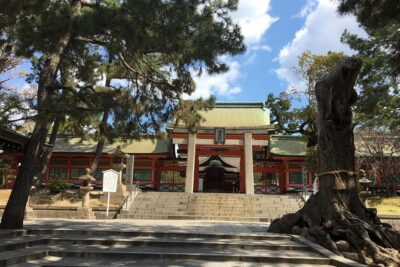
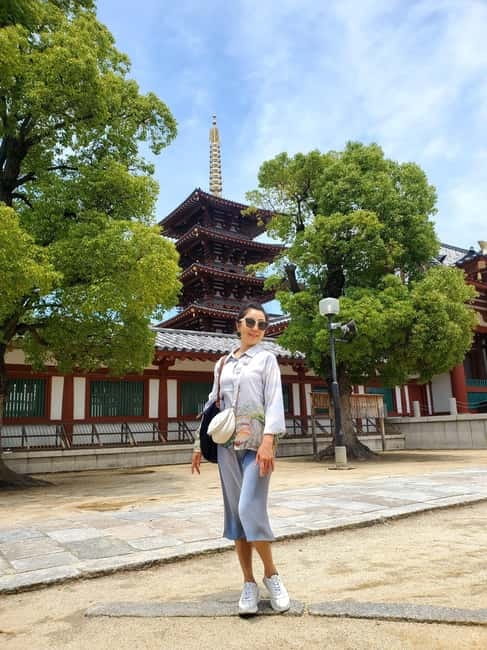
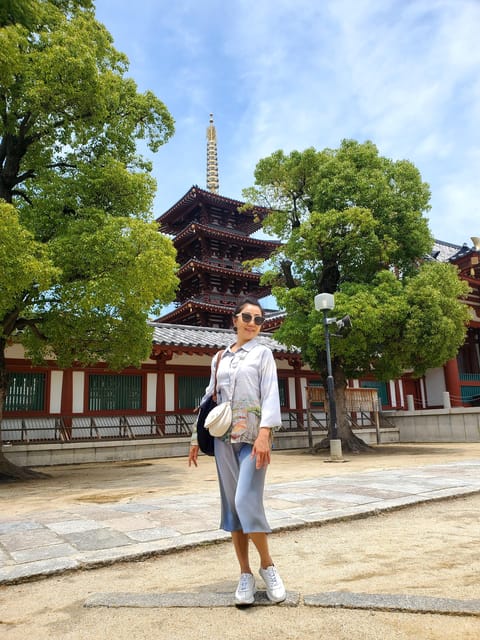
Next is Shitennouji, one of the most important temples near the Shinsekai area. You’ll get a photo stop and time for sightseeing. There’s also a moment for spiritual connection: you can pray for Buddha.
A useful timing detail: every 21st and 22nd of the month, there’s a flea market happening around the temple, and the entrance to the temple is free. If your dates match, you might catch that extra street-life layer.
Even if you don’t catch the flea market, this stop balances the day. Your brain needs a change of pace after food streets and tower viewpoints. The tour gives you that shift without making it feel like a detour.
Umeda Sky Building: when Osaka finally clicks into one city
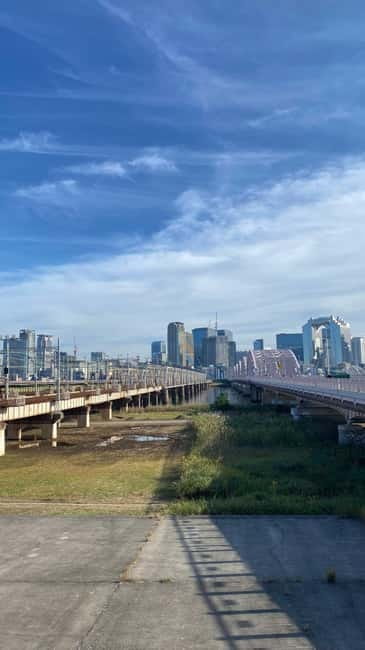
The day ends at Umeda Sky Building, with time for photos, sightseeing, and a focus on sunset views. The payoff is obvious once you’re up there: Osaka stops looking like separate destinations and starts looking like one large, connected place.
The tour schedules around an hour here, which is enough to walk around, find a view angle, and enjoy the change in light. Night views are specifically called out as memorable, so if you’re the type who likes atmosphere at the end of the day, this is where you’ll feel it.
Practical tip: bring a light layer if you get cold at night. Elevation and wind can do that even when the day felt warm.
Price and value: what $77 covers, and what you pay separately
This tour costs $77 per person for 6 hours. What you’re paying for is the guide fee and the walking tour, plus a route that includes multiple major stops that would be harder to piece together smoothly on your own in one day.
What’s not included is just as important. You’ll cover:
- Transportation expenses (subway/train)
- Admission fees if you choose to enter places like Osaka Castle or any museums
- Food and drink expenses
- Optional tea ceremony fee (about 4,000 yen)
So is it worth it? For me, it becomes worth it when you want two things at once: (1) structure so you don’t waste time figuring out transit and (2) guidance so you know what to eat and where to look. If you’re comfortable wandering solo, you could replicate pieces of this day. If you want someone to connect the dots quickly, the price starts to make sense.
The guide factor: English-speaking, patient, and flexible
The tour runs with an English-speaking host/greeter, and the feedback highlights a few guide names that come up often. Ken is noted for filling time well, adding city insight, and even slipping in an Osaka cheesecake stop on the route. Yuriko gets praised for patience and kindness, with answers that keep your questions from piling up. Minori is praised for being sweet, informative, and quick with suggestions when it’s hard to choose what to eat.
That matters because Osaka’s menus and neighborhoods can overwhelm you fast. If your guide helps you pick what to try, you end up spending your money more confidently and tasting more variety.
Who this tour fits best (and who should skip it)
This is best for you if:
- You want a 6-hour, high-impact walk across multiple areas of Osaka
- You like food streets and want help picking what to eat
- You’re okay with lots of walking and short transit hops
- You want city context fast, not a slow museum-only day
It’s not a good fit if:
- You’re pregnant
- You have mobility impairments
- You struggle with long walks, since the tour includes almost 10 km
The tour also goes forward in rain. So if bad weather makes you miserable, build your plan around that reality with a raincoat or umbrella.
What to bring for a smooth day
You’ll want:
- Comfortable shoes
- Comfortable clothes
- Cash (the tour explicitly asks you to bring it)
And because you’ll walk a lot, set yourself up for comfort from the start. If you arrive with blisters, you’ll spend the day thinking about your feet instead of the sights.
Smoking isn’t allowed on the tour, so plan bathroom breaks with that in mind.
Should you book this Osaka Like a Local tour?
Book it if you want a guided day that connects Osaka Castle, Kuromon Market eating time, the night energy of Dotonbori, the personality of Shinsekai, the spiritual pause at Shitennouji, and a final city view from Umeda Sky Building. It’s a solid value when you factor in the guide help and the tight routing for first-timers.
Skip it if you want a slow pace, or if paying admissions and handling food/drinks separately sounds like a hassle. Also think hard if your mobility is limited, since this is a walking-heavy plan.
If you do book, my best advice is simple: eat strategically at Kuromon, don’t over-order at every stop, and save your energy for Umeda at the end. That’s when the day turns from a list of sights into one clear picture of Osaka.
FAQ
Where is the meeting point for this tour?
You meet at Osaka JOINER in Namba inside the Namba Walk, near exit B23. The store is between Mizuno Shop and Docomo Shop. Hotel pickup is available if you message beforehand.
How long is the tour, and how much will I walk?
The tour lasts about 6 hours and includes almost 10 km of walking.
Is transportation included in the price?
Transportation expenses (subway/train) are not included, so you’ll pay for your own transit during transfers.
What is included in the $77 price?
The price includes the guide fee and the walking tour.
Are admission fees included for places like Osaka Castle?
Admission fees are not included. The itinerary mentions the possibility to enter Osaka Castle, but you should expect to pay the admission fee yourself if you go in.
Can I add a tea ceremony to the tour?
Yes. A tea ceremony is optional. You need to tell the provider beforehand so they can make a reservation.
How much does the tea ceremony cost?
The tea ceremony fee is around 4,000 yen, and it is paid at the store.
Does the tour run in rainy weather?
Yes, the tour proceeds in rainy weather. Bring a raincoat or an umbrella.
Is this tour suitable for pregnant women or people with mobility impairments?
No. It is not suitable for pregnant women or people with mobility impairments.
What language is the guide speaking?
The host/guide speaks English.