REVIEW · OSAKA
Osaka: Private Samurai Experience – Train with Sword Master
Book on GetYourGuide →Operated by DeepExperience, Inc. · Bookable on GetYourGuide
A sword lesson in a temple forest feels unreal. This private 3-hour program in Minoh pairs a guided look at the sacred grounds with hands-on training under Tatsuya Watanabe. I love that the instruction is tied to a real lineage and a real place, not a staged show.
Two things stand out for me: the private access to temple training space that’s usually closed to the public, and the extra sword performance that’s reserved for your group. One consideration: because this is classic kenjutsu training, you should expect focused discipline and respectful rules around weapons and movement, not a casual museum-style tour.
In This Review
- Key points I’d circle before you book
- Start at Minoh Station, then walk into a quieter Osaka
- Ryuan-ji or Saiko-ji: training in temple space that’s usually off-limits
- The one practical drawback: time in transit
- The exclusive performance that sets the tone for training
- Training with Tatsuya Watanabe: a classical path with modern teaching skills
- Why the master’s teaching style matters for you
- What you actually do in the 3 hours: from stance to controlled cuts
- A note on expectations: this is not a photo shoot
- The value question: $158 for private sword training in a temple
- Practical tips so your training feels smooth
- Who this Osaka samurai session is perfect for
- Who should think twice
- Should you book this Ryuan-ji or Saiko-ji samurai training experience?
- FAQ
- How long is the Osaka private samurai sword experience?
- Where do I meet the guide?
- What kind of group is this tour?
- Who teaches the sword training?
- What languages are available during the tour?
- What do you practice during the session?
- What is included in the price?
- Can I cancel and get a full refund?
Key points I’d circle before you book
- Private access to restricted temple areas at Ryuan-ji or Saiko-ji in Minoh, typically closed to the public
- Training with Tatsuya Watanabe, soke (headmaster) of Suishin-ryu, with guidance shaped by classical lineages
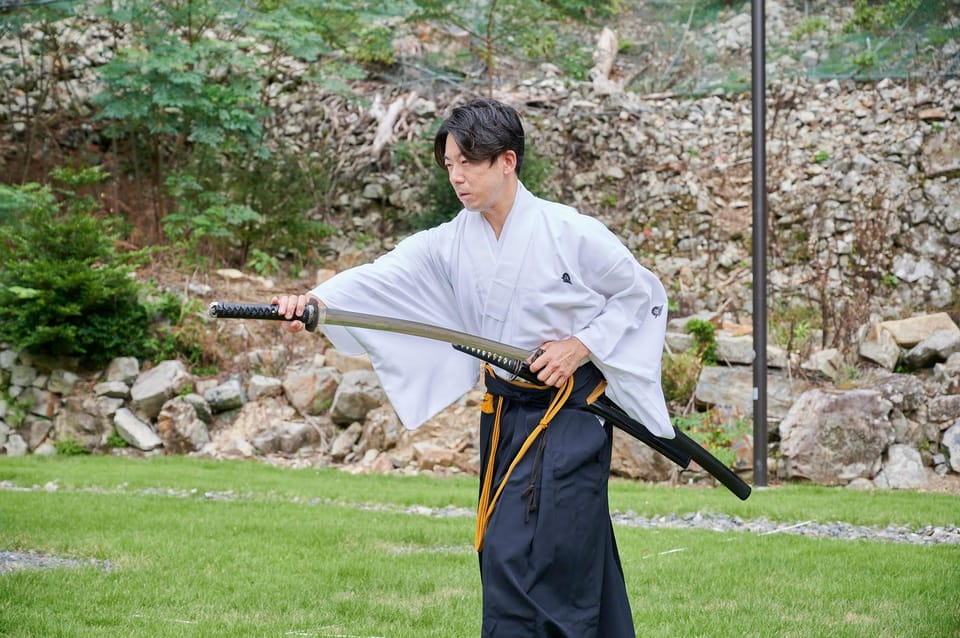
- A special sword performance exclusive to the tour, shared before practice
- A structured 3-hour flow that balances temple context with hands-on technique
- Bilingual support (English, Japanese, French) via a guide/translator paired with the master
Start at Minoh Station, then walk into a quieter Osaka
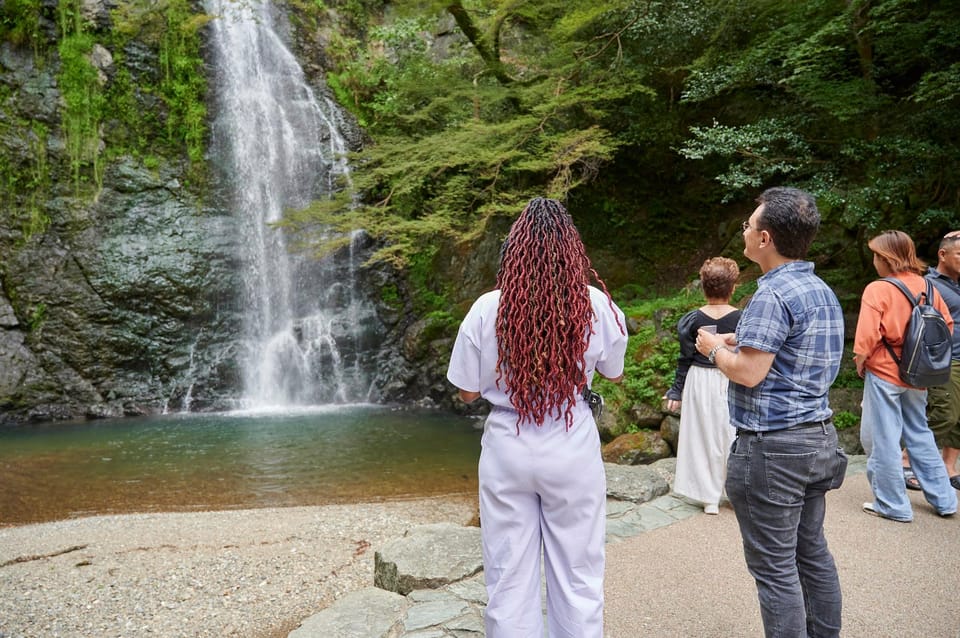
Your experience begins at Minoh Station, where your guide meets you in front of the station holding the yellow DeepExperience sign. From there, you’re taken to the temple area where the session takes place. This matters, because it keeps the day simple: you’re not trying to figure out how to reach a restricted site on your own.
I like that the tour is set up as a private group, which usually means you get a more direct back-and-forth. It’s also a big help when you’re working through technique, timing, and posture—those details are hard to pick up if you’re translating everything in your head.
The session runs about 3 hours total (270 minutes), with a significant chunk for training. So even if you’re only in Osaka for a short stay, you can still fit in something deeply local and specific to this region.
You can also read our reviews of more private tours in Osaka


Ryuan-ji or Saiko-ji: training in temple space that’s usually off-limits
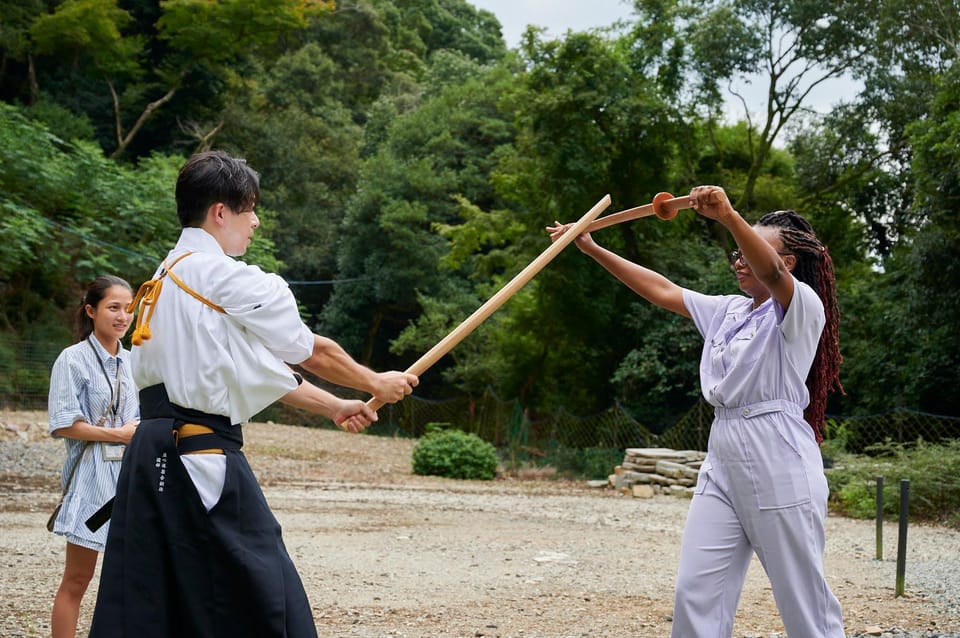
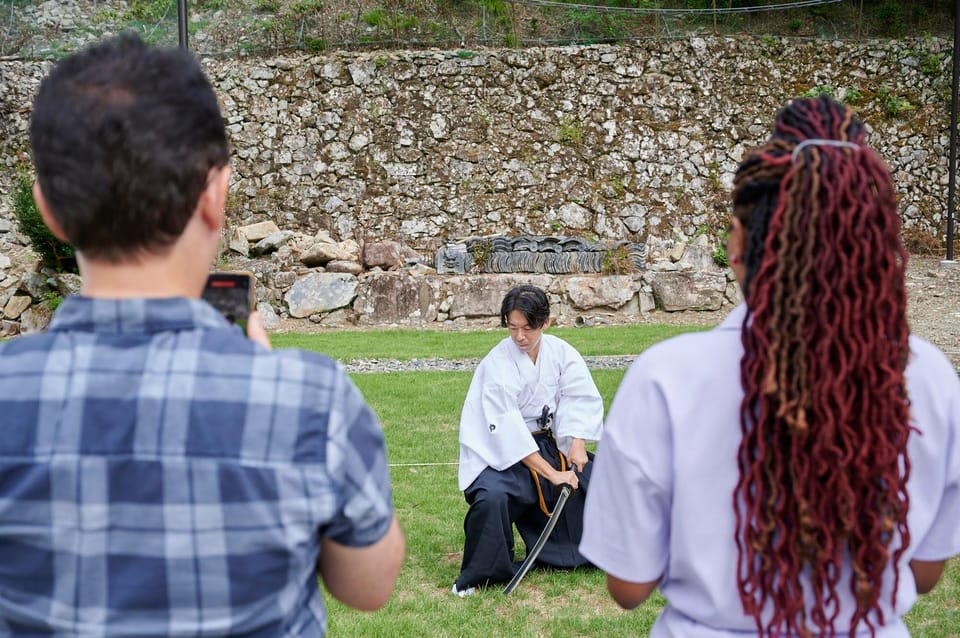
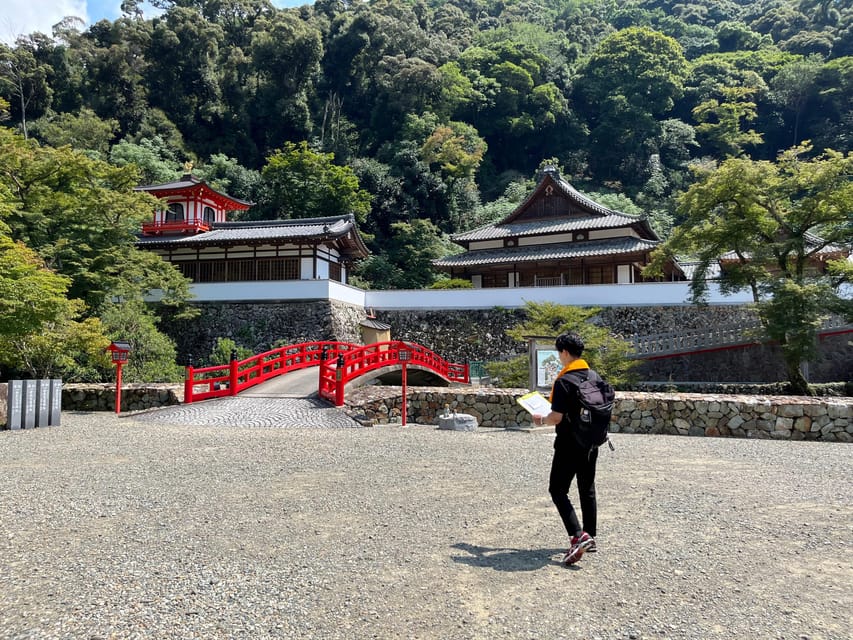
The program is centered on a sacred site in Minoh with deep spiritual heritage and historical significance. The temple grounds open exclusively for your program, and the sword practice happens in a restricted area that’s closed to the general public.
This is where the whole experience changes tone. In many sword lessons, you’re in a gym or a studio. Here, you’re inside a place designed for calm and restraint, which pairs naturally with the way classical swordsmanship is taught—slow control, clean form, and mental focus.
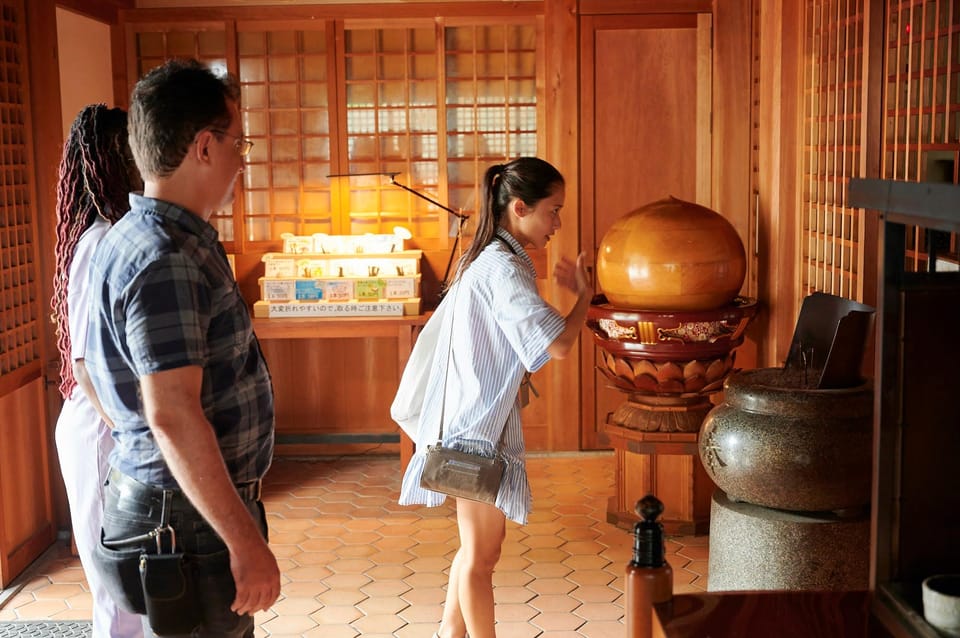
In practice, you’ll get a guided tour of the temple grounds and context tied to the setting. You’ll also have time in the temple area where you may see items connected to the sword tradition and the master’s personal collection, including mention of a sword dated to 1370. Seeing something like that in the temple environment gives the craft weight fast.
The one practical drawback: time in transit
Because this starts at Minoh Station and moves into temple grounds, you’re giving up some time that you might otherwise spend back in central Osaka. If your schedule is packed with big city stops, plan this as one of your main activities rather than a quick add-on.
The exclusive performance that sets the tone for training
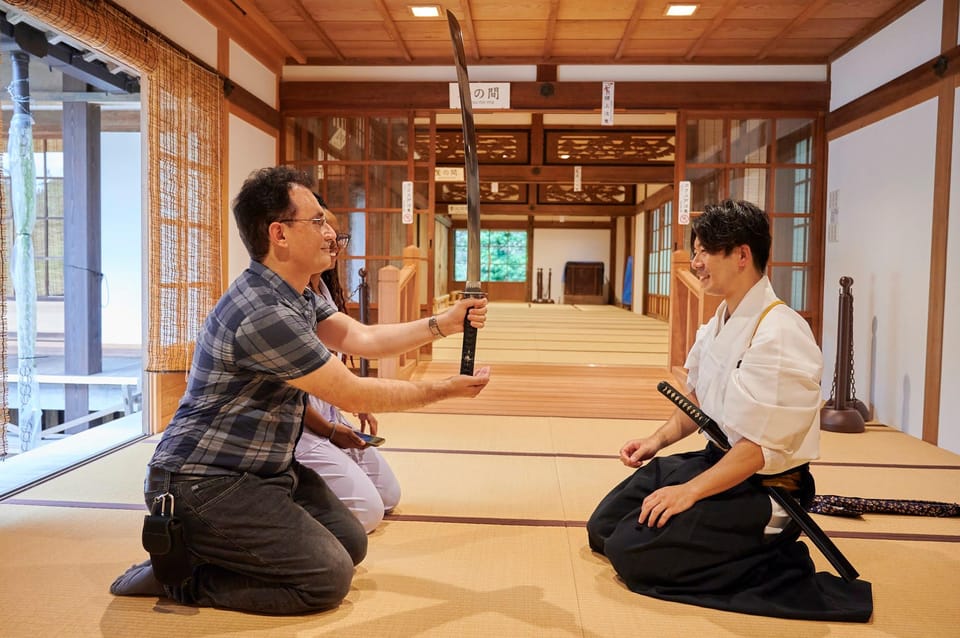
Before you practice, you’ll watch a special sword performance made for this tour. Think of it like a live example of what the master is aiming for: precision, control, and presence.
This part isn’t just entertainment. It’s a reference point you can hold in your mind as you train. When someone explains a technique, you can understand the words. When you watch the movement first in a formal setting, your eyes start catching the details the instructor is talking about—fluidity, distance control, and how stillness fits into the strike.
The performance also helps explain the mentality behind the training. Multiple sessions’ accounts stress how the master emphasizes both body mechanics and the spiritual factor of the practice. If you’re going in expecting only physical technique, this is the part that quietly corrects that expectation.
Training with Tatsuya Watanabe: a classical path with modern teaching skills
You’ll train with Tatsuya Watanabe, whose background is rooted in Japan’s classical sword world. He began in kendo in his early teens, then studied in Yagyū Shinkage-ryu while at university. Later he trained across other lineages, including Suishin-ryu, where he was appointed soke (headmaster) at a very young age.
That detail matters, because in this tradition, headmastership is not just a job title. It’s responsibility—preserving technique, philosophy, and the aesthetic values of the school. The master’s focus is described as continuing daily training and promoting sword culture globally through performances and hands-on programs.
On top of that, you’re not thrown into training with zero support. An English/Japanese/French guide/translator is part of the experience, and the teaching is delivered in a way that works for non-Japanese speakers. In practice, that means you’re more likely to correct your stance early and keep the training respectful and safe.




Why the master’s teaching style matters for you
If you’ve tried martial arts instruction through a video, you know how hard it is to match what you see with what you feel. Here, you get real-time feedback and short, clear coaching. The goal isn’t to turn you into a swordsman in three hours. The goal is to give you technique that makes sense and a mental model you can keep building.
What you actually do in the 3 hours: from stance to controlled cuts
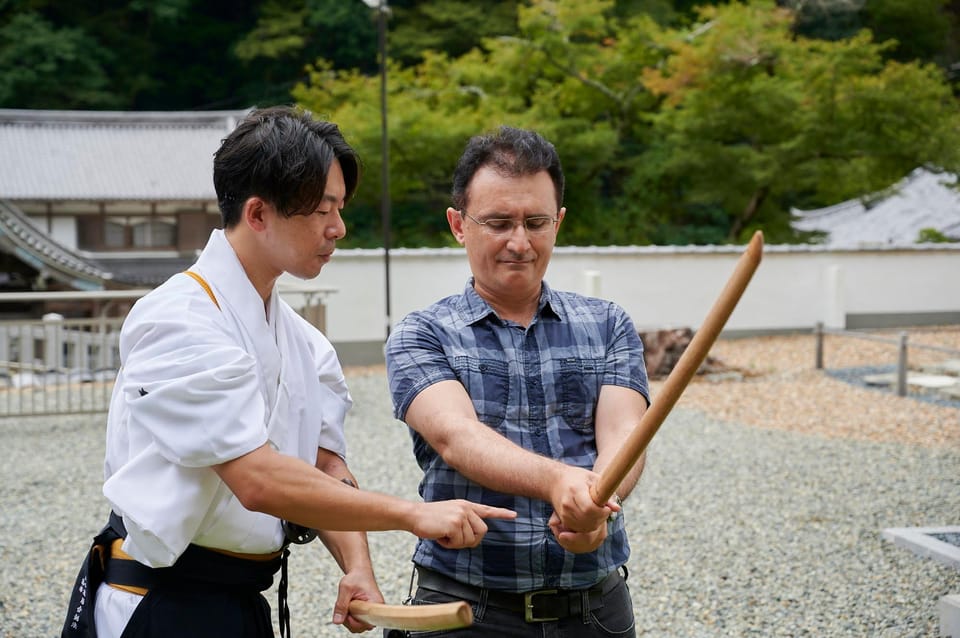
The experience is about 3 hours, and the structure is built around learning-by-doing. Expect a guided temple visit first, then a focused training block of about 1.5 hours where you work with a training sword.
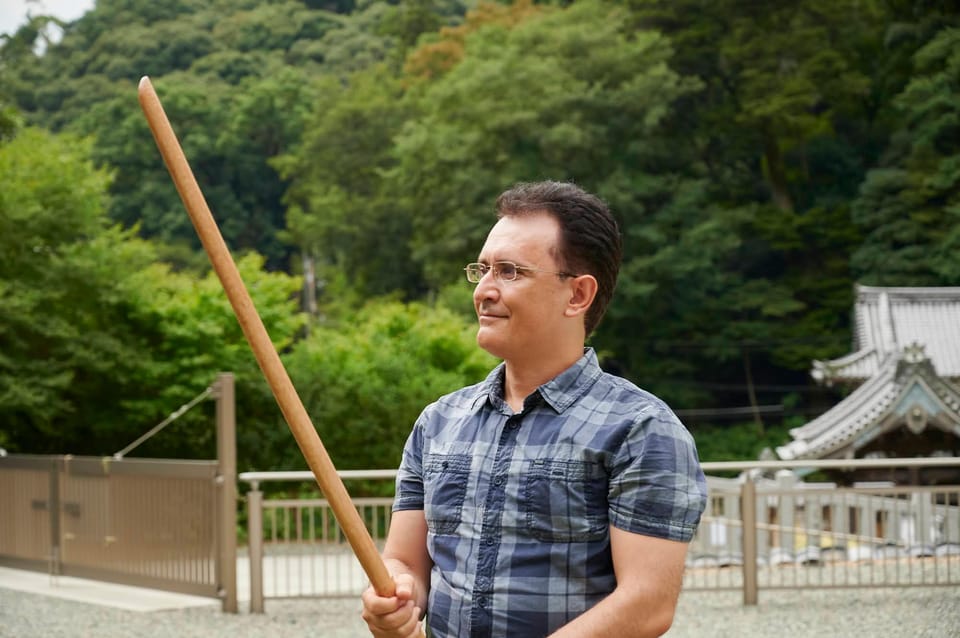
You start with basic technique using a wooden sword (a bokken). You practice things like striking mechanics, posture, and how to hold and move the sword with control. Multiple accounts highlight that instruction is clear and respectful, with a strong emphasis on fluidity and meditative qualities in the movements.
Then, depending on your comfort level and the flow of the session, you might move on to more advanced practice with real blades under supervision. One account notes that the group moved from wooden swords to real swords and even had a chance for supervised cutting that included paper. I can’t promise that every session works the same way, but it’s a clear example of how the tour can go beyond basic introduction.
A note on expectations: this is not a photo shoot
This isn’t framed as casual sightseeing. You’ll be asked to focus and follow directions. If you like quiet intensity and precise instruction, you’ll enjoy it. If you want a hands-off cultural show, you might find the training part more demanding than you expected.
The value question: $158 for private sword training in a temple

At $158 per person for about 3 hours, you’re paying for three things that usually cost more separately: private access to restricted temple space, instruction from a high-level classical sword teacher, and translation support. The price includes the sword experience fee and guide fee.
Is it expensive? For sure, it’s not a budget activity. But in value terms, it’s built like this:
- You’re not just learning a trick. You’re getting lineage-based instruction in a formal setting.
- The setting is special: temple training grounds that are normally closed to the public.
- It’s private-group style, which matters when you’re practicing movements that need correction.
If you compare this to entry-level group classes in big cities, you often pay less—but you don’t get the same access, the same cultural setting, and the same chance to receive targeted feedback.
I’d also treat it as an all-in cultural experience, not only a sword class. The temple context and the performance make the day feel like more than one short lesson.
Practical tips so your training feels smooth
You’ll get the most out of this if you show up ready to focus. Since you’re training with swords, wear something comfortable for standing and moving. Closed-toe shoes are a safe choice, and you’ll want to move carefully within temple areas.
Also, listen for the small corrections. A recurring theme in accounts of the training is how quickly the master can improve your strike by adjusting posture or how you bring the sword into position. When the translation is working well, take the opportunity to ask simple follow-ups like:
- What should I feel in my posture?
- How should my timing line up with the strike?
- What part of the movement comes first?
Finally, be mentally ready for a mix of culture and discipline. You’re going to learn how swordsmanship connects to mindset, not just technique.
Who this Osaka samurai session is perfect for
This is ideal if you want something specific to Osaka and western Japan’s temple culture, not another generic city tour. It’s a great match for:
- People who like martial arts but want a classical, lineage-based introduction
- Visitors who enjoy learning in a quiet, rules-based setting
- Families or pairs who can handle structured instruction (and like doing something memorable together)
It can also be a strong choice if you care about language support. The tour provides live guidance in English, Japanese, and French, and translation is part of making the training usable, not just scenic.
Who should think twice
If your main goal is ticking off big-city attractions, this might feel too slow or too focused. You’ll spend most of the time away from Osaka’s core sights.
Also, if you’re not comfortable with any sword-related practice—even wooden—this may not be your kind of activity. This program centers on sword technique, and the tone is serious and respectful.
Should you book this Ryuan-ji or Saiko-ji samurai training experience?
I’d book it if you want the rare combo: serious sword instruction + temple access + a performance reserved for your group. The price is justified by the access and the level of teaching, and the structure gives you a real taste of how classical kenjutsu is taught—step by step, with attention to posture, distance, and mental calm.
I’d skip it if you need a fast, low-structure activity with lots of flexible sightseeing. This day works best when you treat it as the main event.
If you can handle a focused practice session and you’re excited by the idea of training under a headmaster of a classical school, this is the kind of Osaka experience that you’ll remember long after the photos fade.
FAQ
How long is the Osaka private samurai sword experience?
The experience lasts about 3 hours, or 270 minutes.
Where do I meet the guide?
Meet your guide in front of Minoh Station. The guide will be holding a yellow sign with the DeepExperience logo.
What kind of group is this tour?
It’s a private group experience.
Who teaches the sword training?
Training is led by the sword master, identified as Tatsuya Watanabe.
What languages are available during the tour?
Live tour guidance is available in English, Japanese, and French.
What do you practice during the session?
You practice sword techniques during the training portion, starting with a wooden sword (bokken) and learning basic methods such as striking and holding.
What is included in the price?
The price includes the sword experience fee and the guide fee.
Can I cancel and get a full refund?
Yes. You can cancel up to 24 hours in advance for a full refund.