REVIEW · OSAKA
Eat Our Favorites! Osaka’s Backstreet Dining
Book on GetYourGuide →Operated by Japan Exploration Tours JIN · Bookable on GetYourGuide
Four bites, one night, Osaka at speed.
This small-group food and drink tour pulls together 4 venues in 3 hours, from takoyaki to sushi with sake, wagyu BBQ with local beer, then ramen to finish. I love the efficiency (you sample the big Osaka favorites without spending your whole evening hunting) and the local-guide touch, with guides like Kenji, Mio, and Kazuki steering the show. One consideration: at $95 per person it’s a splurge, so you’ll want to be genuinely ready to eat and walk.
After dinner, you shift into nighttime mode with Tenjinbashi—Osaka’s longest shopping street—plus narrow side streets where the city feels more lived-in than postcard-famous. You’ll start in front of McDonald’s at Tenjinbashisuji-6 chome, and your English-speaking guide also fills in the why behind Osaka’s food culture and nightlife. Vegetarian and gluten-free alternatives are available at no extra cost if you tell them in advance.
In This Review
- Key points before you go
- What this Osaka backstreet tour feels like in real life
- Starting at Tenjinbashisuji-6 chome: an easy meetup, then you’re moving
- Takoyaki first: the octopus dumpling that kicks off the whole meal
- Sushi at the counter, with sake: the part that feels most “real”
- Wagyu BBQ and local beer: the grilled-meat moment you’ll remember
- Ramen to close: chewy noodles after a walk through night streets
- Tenjinbashi after dark: Osaka’s longest shopping street, plus the side alleys
- Price and value: is $95 per person actually worth it?
- Who should book this, and who should skip it
- Food restrictions: how vegetarian and gluten-free work here
- How to get the most out of your Osaka night
- Should you book this Osaka backstreet dining tour?
- FAQ
- What food and drinks are included?
- How many stops does the tour include?
- Where is the meeting point?
- How long is the tour, and is it a small group?
- Is the tour offered in English?
- Are vegetarian and gluten-free options available?
- Is it suitable for children?
- Do I need cash, and are pets allowed?
- Can I cancel and can I reserve without paying right away?
Key points before you go
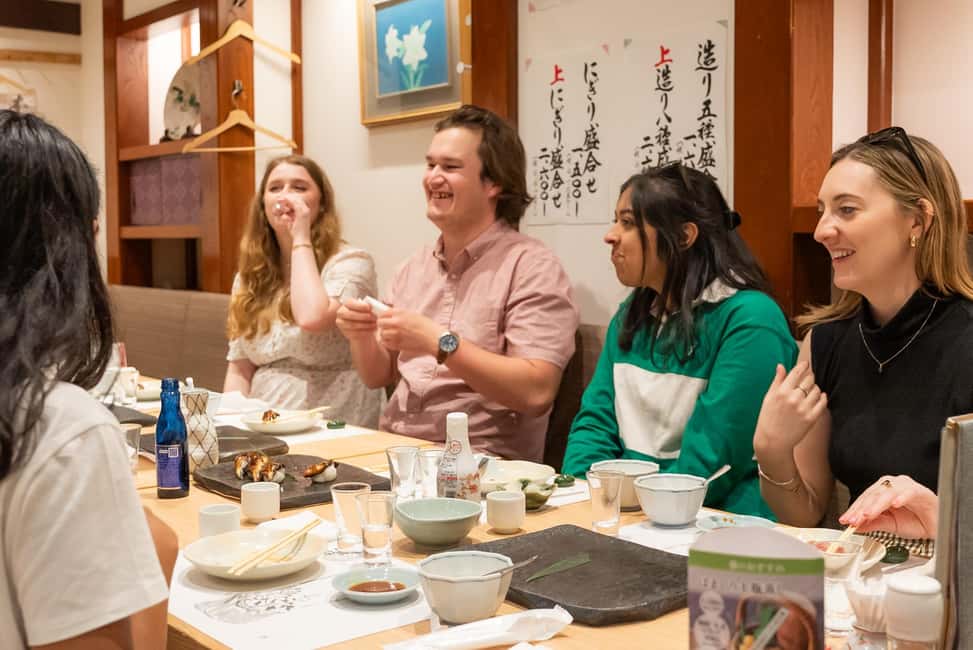
- 4 tastings, 4 venues, 3 hours: takoyaki, sushi, wagyu BBQ, ramen, with sake and local beer
- Small group (up to 6): more time for questions, less time waiting around
- Tenjinbashi at night: longest shopping street in Japan plus backstreet strolls
- Local-guide guidance: routes and ordering tips you’d struggle to piece together alone
- Food restrictions supported: vegetarian and gluten-free options available if you notify ahead
- Bring cash + comfy shoes: you’ll move through tight lanes and busy blocks
What this Osaka backstreet tour feels like in real life
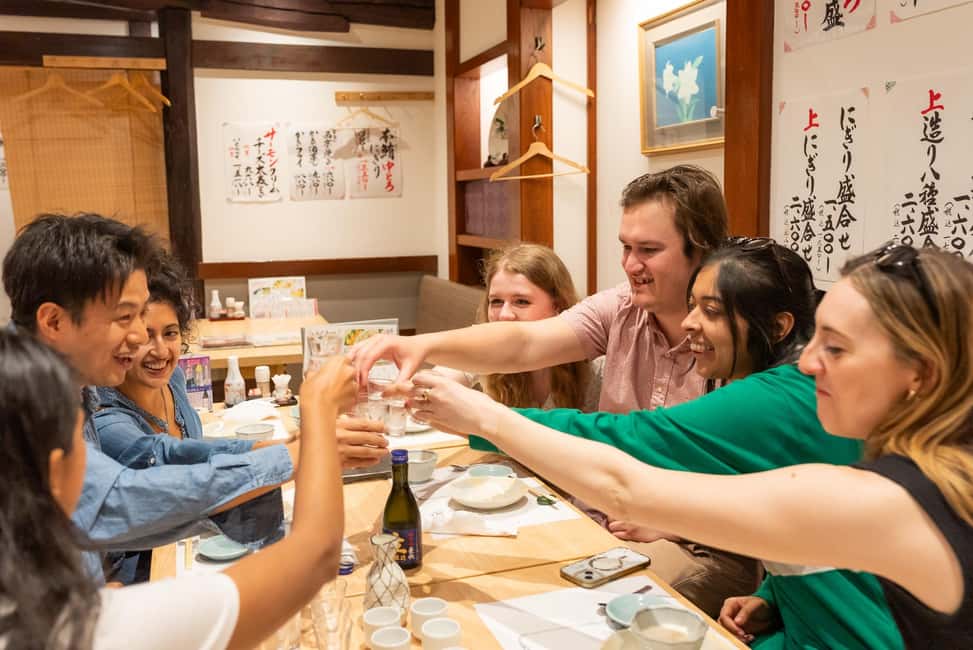
This is the kind of tour I like most: focused, efficient, and built around food you can’t easily “DIY” in a single evening. You’ll be in a small group (up to 6), and you’ll follow a local guide through a sequence of restaurants that each do one thing well. The lineup is classic Osaka—octopus dumplings, sushi at a counter, grilled wagyu, then chewy ramen—plus the drinks that make it all feel like an actual night out.
The pacing is also why this works. In just three hours, you’re not only eating; you’re learning how the city organizes dinner, snacks, and street life. The walk includes both the main Tenjinbashi shopping drag and the tighter side streets that branch off from it. You don’t need to be an expert in Japanese menus to enjoy it, because the guide handles the “where do we go next?” part.
Price-wise, you’re paying for the guide’s time, the structure, and the fact that you’re sampling multiple venues without awkward trial-and-error. If you prefer quiet, slow meals with lots of free wandering, this may feel a bit structured. But if you want a tasty, well-timed Osaka night, it’s a smart use of limited travel time.
You can also read our reviews of more tours and experiences in Osaka
Starting at Tenjinbashisuji-6 chome: an easy meetup, then you’re moving
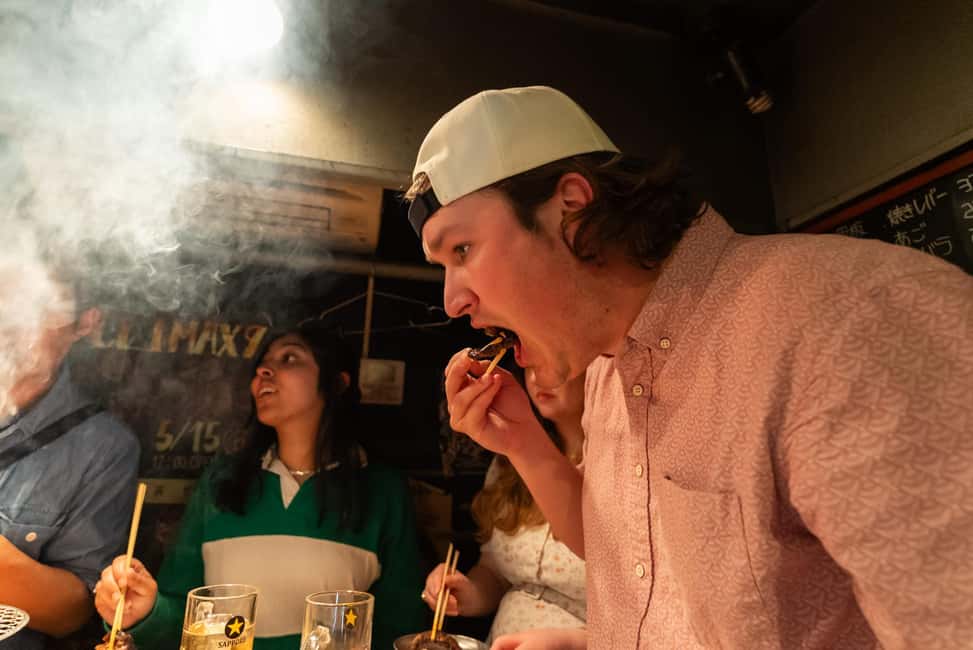
You’ll meet in front of McDonald’s at Tenjinbashisuji-6 chome (coordinates 34.7105827331543, 135.51112365722656). It’s a helpful landmark because Tenjinbashi is the sort of place where the streets can feel like a maze when you’re arriving hungry. Getting the first step right matters—less wandering to find your group, more time to eat.
From there, you’ll be on your feet through narrow side streets and busier blocks. Comfortable shoes aren’t a suggestion; they’re the difference between enjoying the night and counting down the minutes until you can sit.
One small but important practical note: bring cash. The tour specifically calls for it, so don’t plan on relying on your card unless you’re already confident the places you visit can handle it.
Takoyaki first: the octopus dumpling that kicks off the whole meal
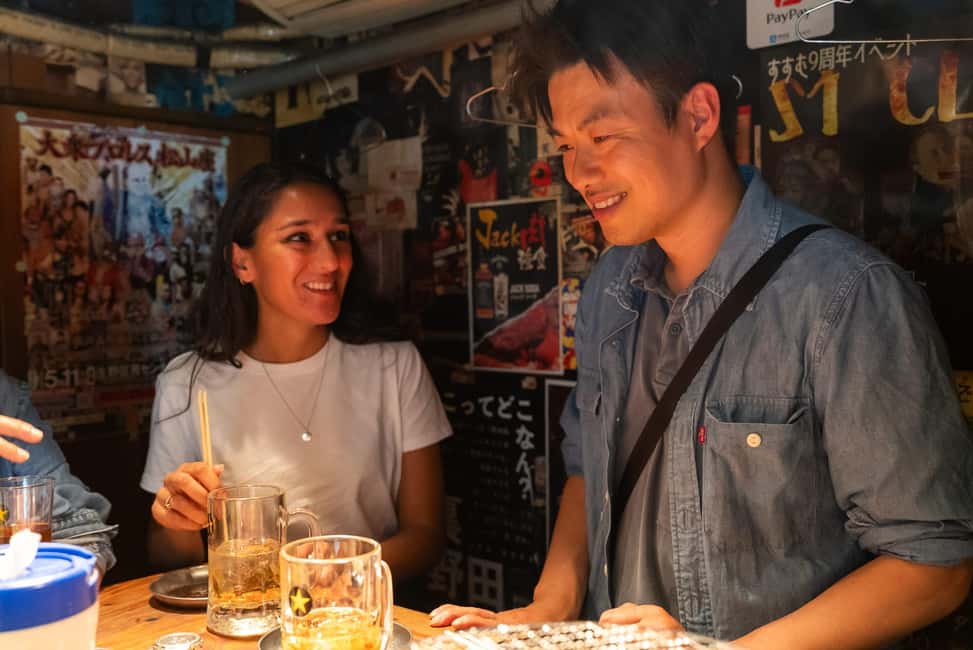
You start with takoyaki—Osaka-style octopus dumplings—served as an appetizer. Starting here is smart for two reasons. First, takoyaki is street-food friendly: quick to understand, fun to eat, and a classic regional signature. Second, it sets your taste expectations before you move into more “sit-down” restaurant meals.
Think of this as your warm-up round. You’ll get a feel for the flavor profile Osaka is known for: savory, slightly tangy, and richly comforting. It’s also the perfect moment to ask your guide how locals eat it—because the way you handle a first bite can make you appreciate the rest of the evening more.
A mild drawback: if you’re someone who dislikes octopus, you’ll need to flag dietary concerns ahead of time so the guide can guide you to vegetarian or gluten-free alternatives.
Sushi at the counter, with sake: the part that feels most “real”
Next comes fresh sushi at a counter. This is one of those experiences where the restaurant setup matters. A sushi bar counter tends to be more interactive than a table meal, and it usually means the flow is tighter: you eat, it arrives, then you’re onto the next bite without long pauses.
Sake is part of this stop, and it’s a big part of why it feels like a true local night. Even if you’re not a hardcore sake fan, this gives you a chance to taste the pairing culture rather than just “having dinner.” Your guide can also help with pacing so you don’t feel rushed or stuck with a drink you’re not sure how to enjoy.
From the way guides are praised, the best part here isn’t just the food—it’s the guidance. People consistently highlight how their guides lead them to places they wouldn’t find on their own, and how conversation makes the stops more meaningful. If you like asking questions about food culture, this is where you’ll get the payoff.
Wagyu BBQ and local beer: the grilled-meat moment you’ll remember
The third stop moves into BBQ mode for wagyu beef, paired with local beer. This is where the tour’s variety really pays off. After dumplings and sushi, you’re suddenly dealing with smoke, grill aromas, and the satisfying heaviness of well-cooked beef.
Wagyu is a “big flavor” meal even for people who think they’re not meat-focused. And Osaka has a reputation for making comfort food feel like an occasion, especially when you combine it with the social rhythm of drinking beer alongside grilling.
A practical consideration: you’ll likely be full by this point. That’s not a problem—most people on this tour enjoy the build-up—but it does mean you should pace yourself. Your guide will keep the schedule moving, and it’s still your job to listen to your stomach. If you know you get overstuffed easily, keep water in mind between stops (you might find they suggest it informally).
You can also read our reviews of more tours and experiences in Osaka



Ramen to close: chewy noodles after a walk through night streets
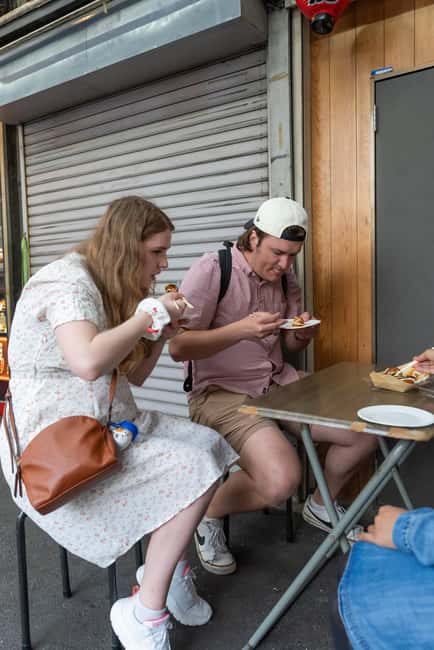
Ramen is the final dish. Ending with ramen works because it’s both comforting and forgiving. It also fits the Osaka-night vibe: after snacking and drinking your way through the evening, a warm bowl of noodles feels like a proper finish.
The ramen here is described as rich and chewy, which matches what you want at the end of a structured meal run. It’s a satisfying way to round out the evening without leaving you hungry for something else. If you like noodles, this is the kind of last stop that makes the whole tour feel “complete.”
If you’re the sort of eater who likes to pick and choose, this is the moment where you’ll be glad the guide already matched the tour to a specific end dish. It saves you decision fatigue when you’re tired from walking.
Tenjinbashi after dark: Osaka’s longest shopping street, plus the side alleys
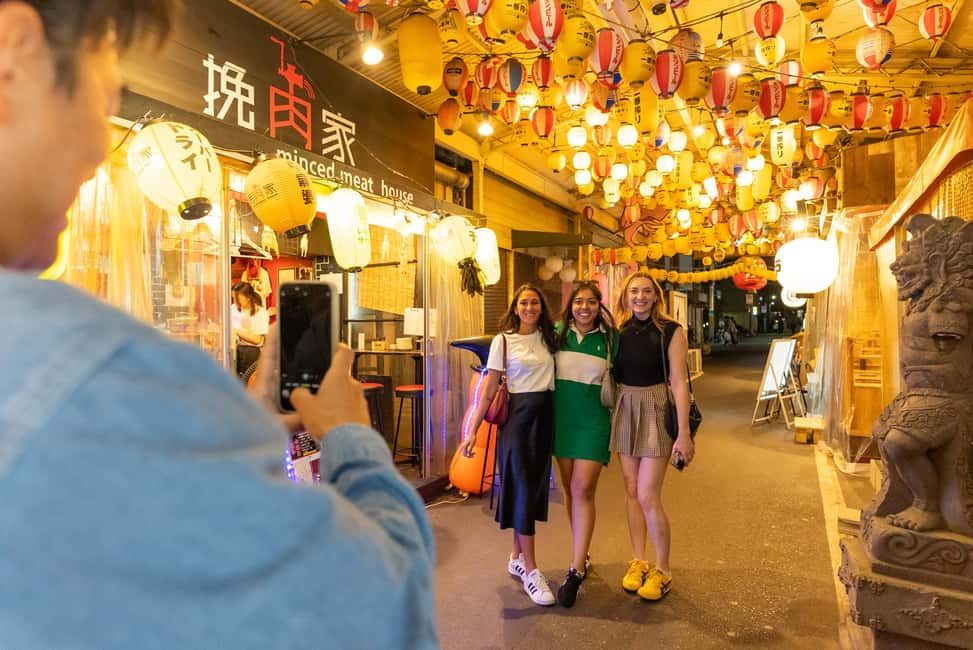
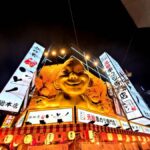
Once the food stops are done, you shift into exploring mode around Tenjinbashi. Tenjinbashi is known as Japan’s longest shopping street, and the tour leans into the difference between the main street and the side streets branching off it.
This is where the nightlife part comes in. You’re not just walking through a shopping corridor; you’re seeing the city’s nighttime texture—smaller lanes, everyday storefront energy, and the kind of backstreet atmosphere that doesn’t show up in fast, daytime photo sessions.
Your guide helps connect the dots: how the neighborhood food culture developed, what people do at night, and why certain areas feel like they belong to locals rather than to tourists on a schedule. In multiple experiences like this, the strongest feedback pattern is that the guide makes you feel like you’re in on the city’s rhythm, not just eating at a checklist of restaurants.
Practical tip: take your time on the side streets. That’s where the tour’s walking feels most rewarding, not where you race to tick off another photo.
Price and value: is $95 per person actually worth it?
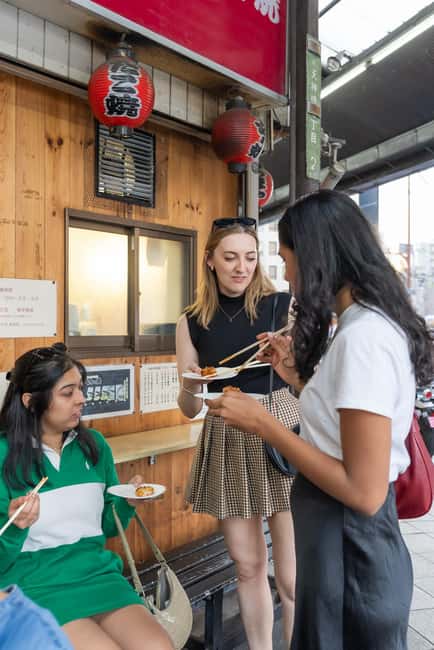
At $95 per person, this isn’t a budget street-food sampler. You’re paying for four things: (1) a local guide, (2) a small-group format capped at 6, (3) multiple restaurant stops, and (4) drinks (sake and local beer) that you’d likely pay for anyway.
Here’s how I’d judge the value if you’re deciding:
- If you only have one evening in Osaka and want the highlights—takoyaki, sushi, wagyu, ramen—this can cost less than piecing together four separate meals plus drinks while also paying for transportation and the time spent searching.
- If you love food and want someone to steer you away from tourist traps (or from places that look good but aren’t ideal for what you want), the guide’s routing is a real service.
- If you’d rather eat at your own pace and stop randomly where you feel like it, the structured format might feel like you’re buying convenience instead of freedom.
The included vegetarian and gluten-free alternatives are also part of the value story. It’s not just “we can try to accommodate you.” It’s offered as alternatives available at no extra charge when you notify ahead.
Who should book this, and who should skip it
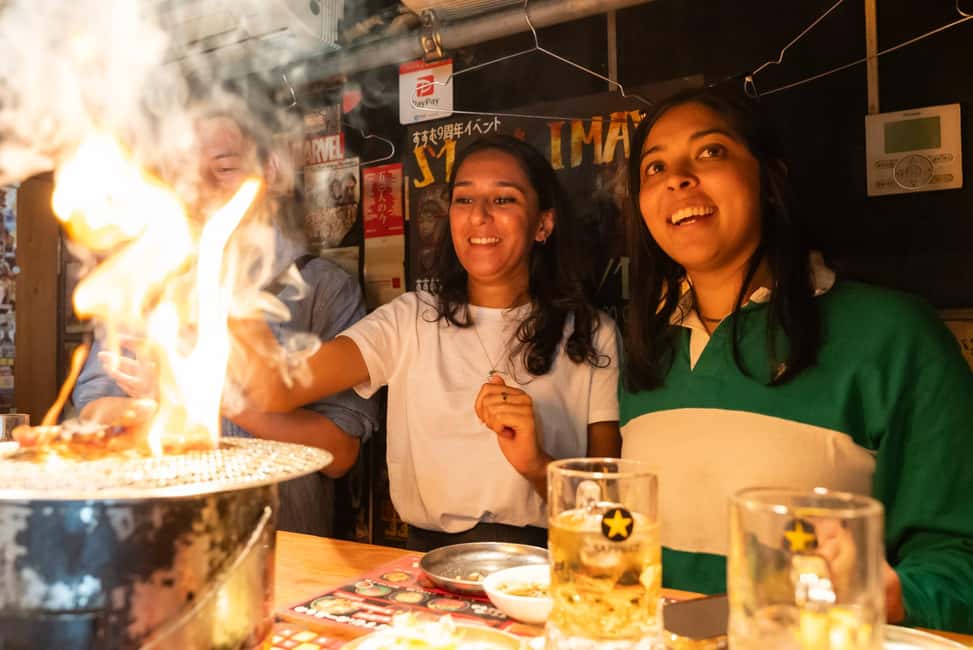
This tour is best for adults and older teens who want a guided food night with local context and don’t mind a brisk pace. If you enjoy nightlife energy and you’re the type who likes learning why certain dishes matter to a city, you’ll likely have a great time.
It’s also a strong fit if you’re traveling with limited time. Three hours is short enough to slot into a normal travel day, but long enough to cover four distinct dining moments.
On the skip side: it’s not suitable for children under 12. Also, if you have strict food needs and don’t plan to inform the guide in advance, you could end up with fewer options than you’d like. And if you strongly prefer quiet, slow meals, the tour’s back-to-back structure may not match your style.
Food restrictions: how vegetarian and gluten-free work here
The tour is clear about food restrictions: tell the guide in advance. If you do, vegetarian foods and gluten-free foods are available as alternatives at no extra cost.
That matters because it changes the whole experience. Without alternatives, a food tour can turn into a “watch everyone else eat” situation. Here, the goal is you still get to participate in each of the planned stops. Still, don’t wait until the last minute. If you want confidence, send the details early so the guide has time to plan.
If you have an allergy rather than a preference, you’ll want to be extra specific when you inform them—so the guide and the restaurant can make it safe.
How to get the most out of your Osaka night
Here’s how you’ll enjoy it more, with less stress:
- Come hungry, not ravenous. You’ll be eating multiple dishes in a short window, so aim for “normal hungry,” not “I haven’t eaten all day” panic.
- Wear comfortable shoes. The itinerary includes narrow side streets and a nighttime walk.
- Bring cash since the tour requests it.
- Be ready to talk. This kind of small-group night tends to work best when you’re open to conversation with your guide and the people in your group.
One thing I appreciate about this format is that it’s not just eating. It’s also walking with purpose. You’ll see Tenjinbashi’s shopping street energy and then get the quieter, tighter alley experience that makes Osaka feel different from other cities.
Should you book this Osaka backstreet dining tour?
Yes—if you want a concentrated Osaka food night with a local guide, you’re comfortable eating four standout dishes back to back, and you want to add Tenjinbashi nightlife to the mix. The consistently strong feedback around guides like Kenji, Mio, and Kazuki points to the same outcome you’ll care about most: you’ll get food you might miss on your own, plus context that makes the evening feel connected instead of random.
Skip it if you’re on a tight budget, you dislike structured schedules, or you need a very slow, long-meal pace. Also, don’t book if you’re traveling with kids under 12.
If your goal is to make the most of one Osaka evening, this tour is a practical, high-satisfaction choice.
FAQ
What food and drinks are included?
You’ll try takoyaki, sushi (with sake), wagyu beef (at a BBQ with local beer), and ramen.
How many stops does the tour include?
It visits 4 different venues for food and drink.
Where is the meeting point?
In front of McDonald’s at Tenjinbashisuji-6 chome.
How long is the tour, and is it a small group?
The tour lasts 3 hours and is limited to a small group of up to 6 participants.
Is the tour offered in English?
Yes. The live tour guide speaks English.
Are vegetarian and gluten-free options available?
Yes. Vegetarian foods and gluten-free foods are available as alternatives at no extra charge, but you should inform the guide in advance.
Is it suitable for children?
It is not suitable for children under 12 years old.
Do I need cash, and are pets allowed?
You should bring cash, and pets are not allowed.
Can I cancel and can I reserve without paying right away?
Free cancellation is available up to 24 hours in advance for a full refund. You can also reserve now and pay later.