REVIEW · OSAKA
Experience Samurai and traditional Culture to the fullest
Book on GetYourGuide →Operated by 株式会社武士の誉れ · Bookable on GetYourGuide
Wear armor, then try samurai arts. In 3 hours in Honshu (Osaka), you mix traditional culture with hands-on samurai-style activities, all near Osaka Castle. It is not just watching history. You practice techniques and follow etiquette, then you get the photo moment on the castle grounds.
Two things I really like about the format: the lessons are broken into short, learnable chunks (calligraphy, tea, sword trial), and the staff keep things calm and unhurried while you work through each step. You also get a real photo program with a photographer covering the key moments, including the armor shots.
One consideration: you need to show up ready for a lot of switching gears, and the day is not built around comfort perks like pick-up/drop-off or extra clothing options beyond what you’re given. Bring a simple t-shirt, arrive early, and be ready for rules like no alcohol or drugs.
In This Review
- Key highlights you’ll care about
- Samurai Honor in Osaka: starting in kimono, not in a classroom
- Learning kimono etiquette and calligraphy strokes you can actually repeat
- Samurai calligraphy: writing resignation as a final-words theme
- Tea ceremony: etiquette, manners, and hospitality in motion
- Sword trial cutting: technique comes before the slash
- Armor and the Osaka Castle photo: the battle scene you can stand inside
- Price and value: is $168 worth it for 3 hours?
- Practical tips so you don’t lose time or comfort
- Who should book Samurai Honor near Osaka Castle
- Should you book this tour?
- FAQ
- How long is the Samurai Honor experience?
- Where is the meeting point near Osaka Castle?
- What should I bring?
- Is transportation or pick-up included?
- What activities are included?
- What languages are available for the instructor or staff?
- Do I get photos from the armor and battle scene?
- Is this a private group?
- Can I cancel for a refund, and can I pay later?
Key highlights you’ll care about
- Kimono first, then culture skills: you change into kimono before calligraphy and tea, so the day feels structured from the start.
- Calligraphy with stroke practice: you work on basic strokes like tome, hane, and harai, then write your own chosen kanji.
- Samurai-themed calligraphy prompt: you write a kanji connected to resignation, described as last words before death.
- Tea ceremony as manners training: the focus is hospitality and graceful gestures, not just drinking tea.
- Sword trial cutting with a responsibility lecture: you learn how to use a sword and talk about self-respect and responsibility before you slash.
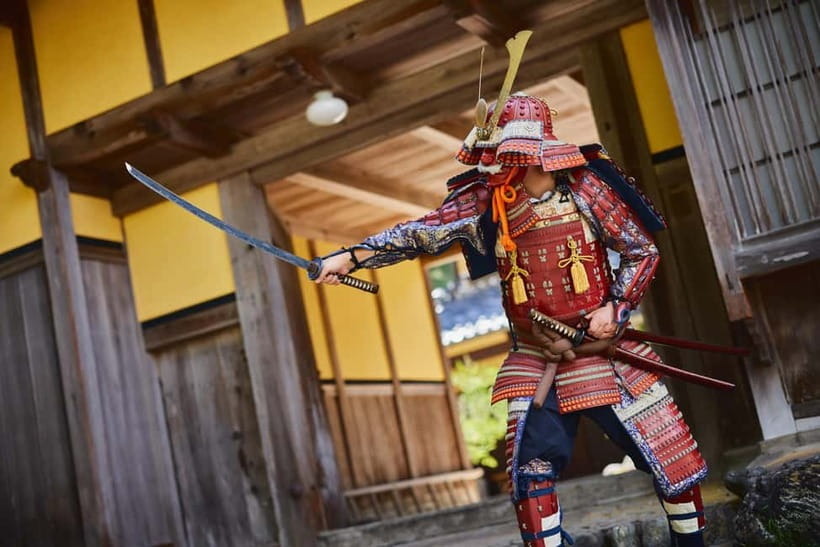
- Armor photos on Osaka Castle grounds: you wear armor (indoors) and get photographed on-site as part of a battle scene.
Samurai Honor in Osaka: starting in kimono, not in a classroom
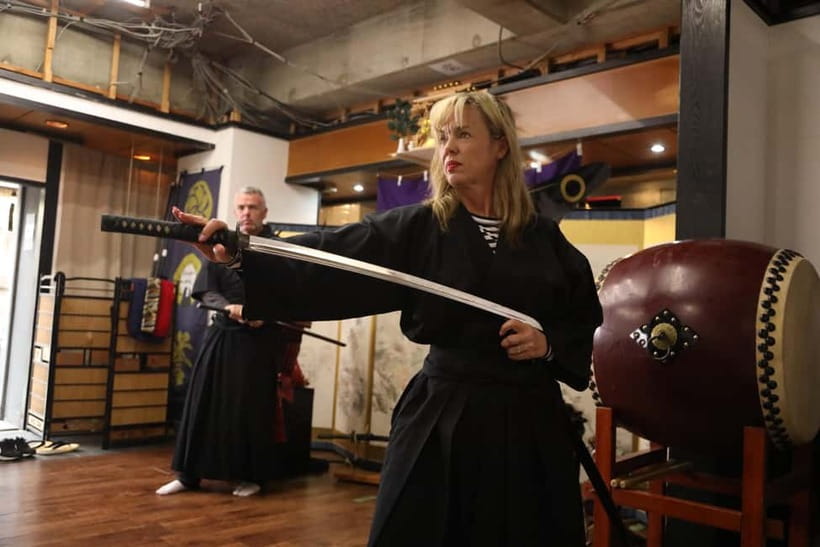
This experience begins with a change into kimono. That matters, because you’re not just learning facts about Japanese culture—you’re practicing the physical cues that come with it: posture, how you move, and how you hold yourself while you do the activities.
The meeting point is a wooden sign that reads Honor of the Samurai. Plan to arrive about 30 minutes before your reserved time so you have time for instructions and changing clothes without rushing. Once you’re set up, you’ll rotate through culture activities and samurai-style segments in a guided, step-by-step flow.
Also note the vibe: it’s a private group, so you’re not fighting for attention in a large crowd. That’s a big deal when you’re learning calligraphy strokes and basic sword-handling movements, where you want clear guidance and time to catch up.
You can also read our reviews of more tours and experiences in Osaka.



Learning kimono etiquette and calligraphy strokes you can actually repeat
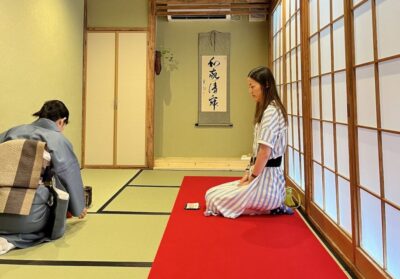
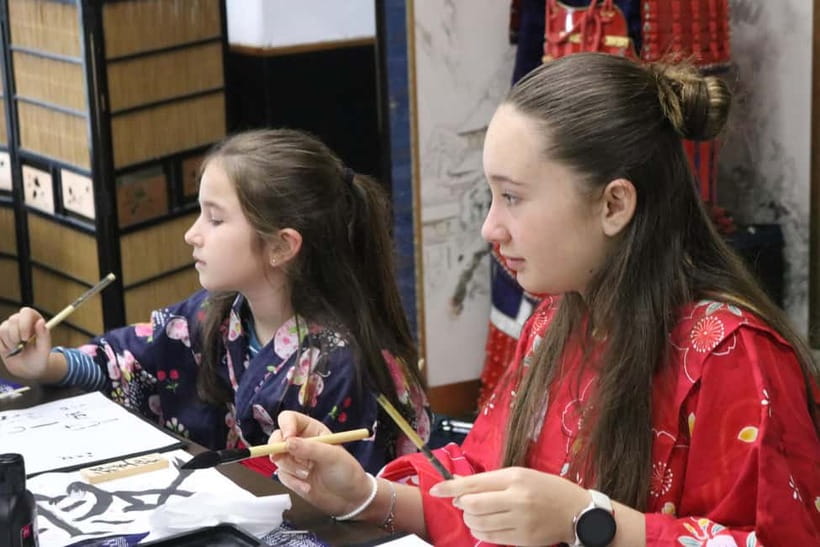
Calligraphy is the first deep skill you work on. You’ll learn how to prepare yourself, how to hold a brush, and how to use the tools before you start writing. Then you practice basic brush strokes that form the foundation of a kanji: tome, hane, and harai.
Here’s what makes this more useful than a quick demo: you practice technique, not just the finished result. You’re shown how the stroke order matters, and you’re guided to follow that order while you work.
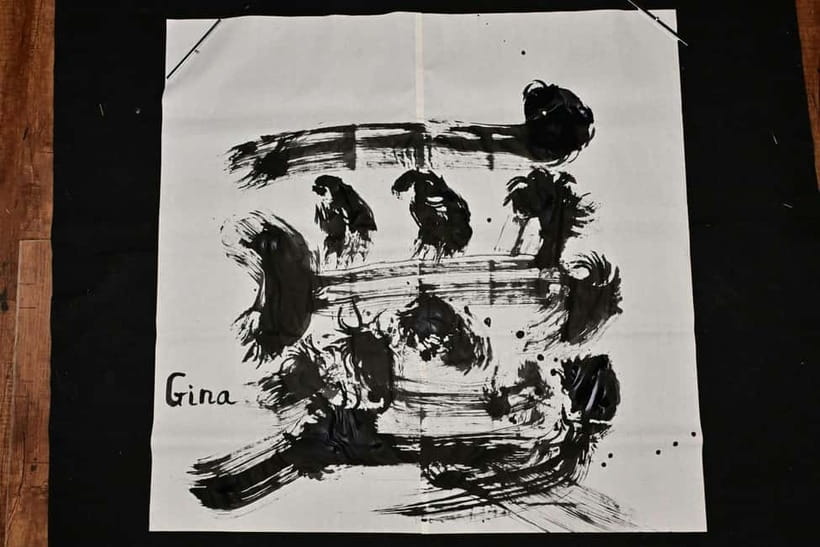
Then you choose a kanji character and write it while paying attention to technique. This is where your calligraphy stops being abstract. You start to see how control and consistency build a clean character.
Samurai calligraphy: writing resignation as a final-words theme
After your initial calligraphy practice, there’s a samurai calligraphy segment tied to resignation. The experience frames it as last words written as someone prepares to die. You write the kanji you just chose, again focusing on technique, but with that sharper theme in mind.
Whether you find that thought-provoking or heavy, it’s effective as a teaching tool. It turns calligraphy into more than handwriting—it becomes a moment of focus and discipline, which is exactly the kind of mindset sword training also demands later.
Tea ceremony: etiquette, manners, and hospitality in motion
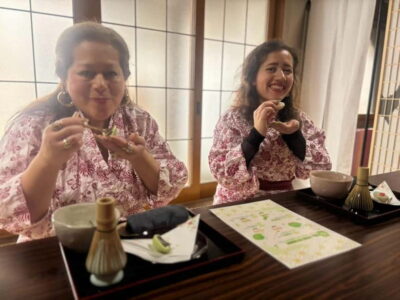
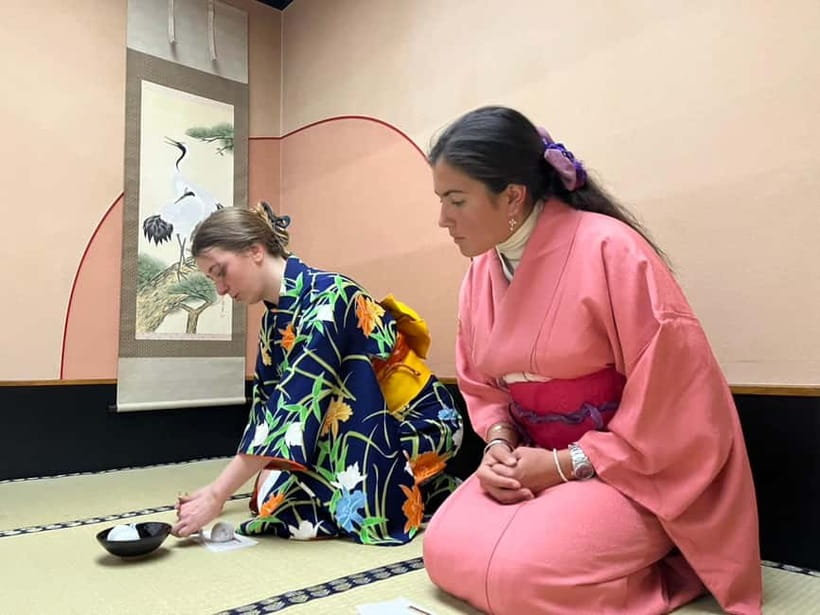
Next up is the samurai tea ceremony. A tea master prepares and serves powdered green tea to the guests. You learn how the ritual works and why it is tied to everyday behavior: courtesy, manners, beautiful gestures, and hospitality.
What I like about this portion is that it’s not treated as a performance you just observe. The flow is designed to make you slow down and hold correct manners while you participate. If you’ve ever felt awkward about tea etiquette in Japan, this is the kind of structured practice that helps you get your bearings fast.
The lesson also connects tea etiquette to Bushido language—especially the idea of honor. That link matters, because it explains why people still take these rituals seriously instead of treating them like old traditions that only belong in museums.
Sword trial cutting: technique comes before the slash
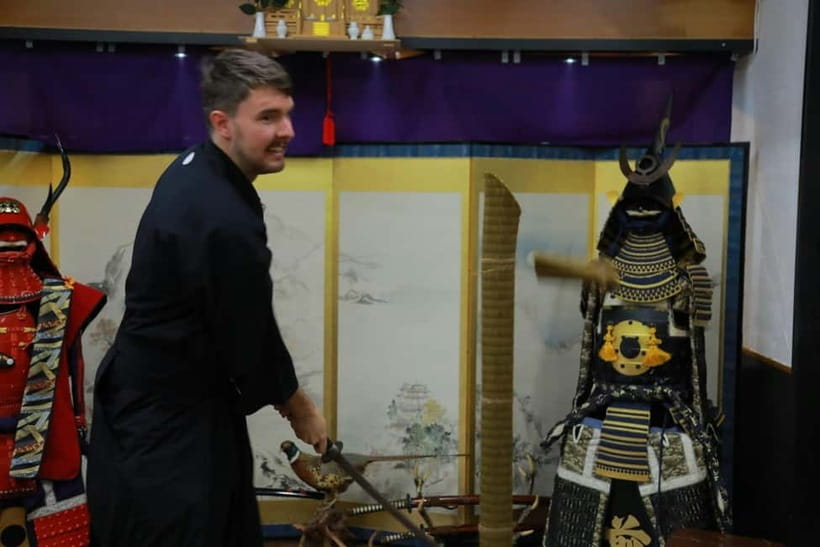
Then you move into the samurai sword trial cutting. The experience starts with learning how to use a sword, and it emphasizes two mental points before you swing: self-respect and responsibility for carrying a deadly weapon.
After that foundation, you’re allowed to wear a serious sword. Then you try your hand at sword cutting with a samurai sword. The day frames this as experiencing cutting edge skill, with training and guidance rather than random guessing.
A quick reality check: this is a short trial, not a full sword school. But that’s also why it works. You get instruction, you get to try the motion, and you leave with a better sense of what sword practice requires—focus, control, and discipline—not just brute force.


Armor and the Osaka Castle photo: the battle scene you can stand inside
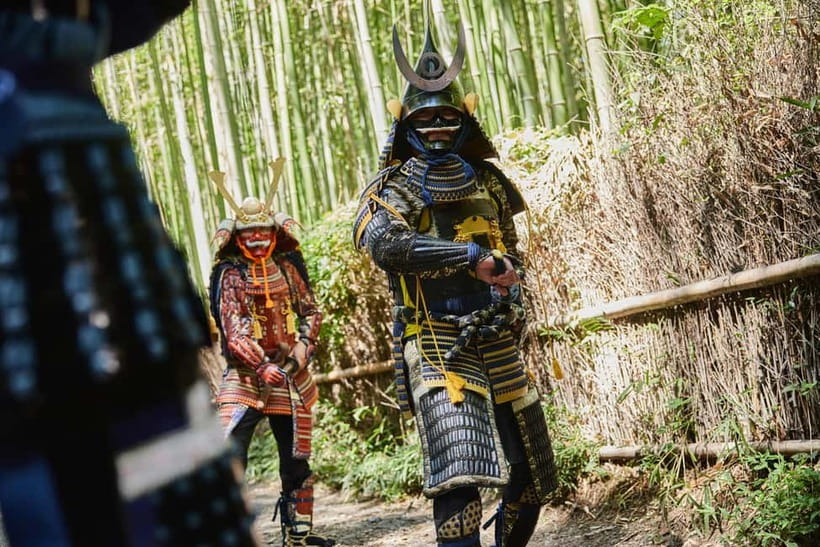
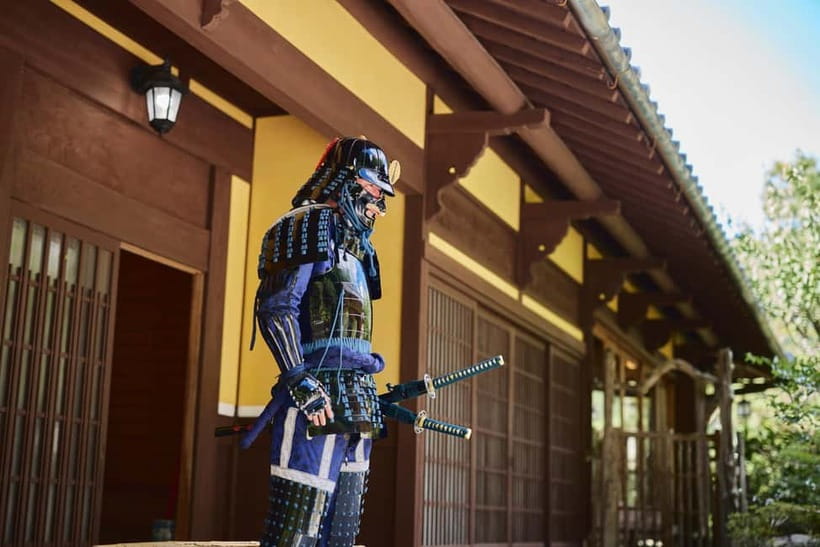
This is one of the most fun segments. You wear a suit of armor and participate in a battle-style scene. You’ll be photographed on the grounds of Osaka Castle, pretending to be a top soldier in an April 1615 setting connected to the Osaka Summer Battle.
A key detail: armor is worn indoors, then the photo moment happens outside on the castle grounds. You get that classic samurai look without the day turning into an all-weather ordeal.
The photo program also stands out for practical reasons. A photographer covers the events, and your photo data is sent to a designated email address after the experience. That means you’re not left juggling your camera while you’re trying to focus on the activities.
Price and value: is $168 worth it for 3 hours?
At $168 per person for a 3-hour private experience, the value depends on what you want from Osaka. If you’re looking for a single activity, you’ll find cheaper. But if you want multiple skills in one structured session—kimono, calligraphy, tea, sword trial, and armor photos—this price starts to make sense.
Here’s what you’re really paying for:
- A full set of included activities (calligraphy practice, tea ceremony, sword trial cutting, wearing armor).
- Samurai clothing.
- A certified professional instructor.
- English-speaking staff plus interpreter options.
- Photo shooting with your data delivered by email.
- Tax and tips included.
The “private group” piece also helps justify the cost. Learning calligraphy and basic sword technique is easier when you’re not sharing instructor attention with a large crowd.
Practical tips so you don’t lose time or comfort
Plan your day around arriving early. You need about 30 minutes before your time slot to handle instructions and changing clothes.
What to bring is simple: a t-shirt. You are also required to follow basic rules: no pets, no baby strollers, no alcohol or drugs, and no baby carriages.
Also consider this if you don’t like tight scheduling. The experience packs several distinct activities into one session. It flows, but you will switch from brushwork to tea manners to sword trial motions to armor photo posing.
If you want the best photos and the smoothest experience, go in with a calm attitude. The staff are set up to answer questions patiently and help you get through each step without feeling rushed.
Who should book Samurai Honor near Osaka Castle
This is best for adults and older kids who like hands-on learning. It’s also a strong choice if you want samurai culture in one place without bouncing around Osaka for separate activities.
It’s not suitable for:
- Children under 10
- Babies under 1
- People over 95
If you’re traveling with mobility limits, also keep in mind that the day includes changing into kimono and doing physical practice like sword trial cutting. The experience is guided, but you should still be comfortable standing and moving during short training segments.
If you’re a language-specific traveler, you’ll want to plan ahead. The default interpreter language is English, with Spanish, Italian, French, Chinese, Thai, and Indonesian available if the staff schedule can support it.
Should you book this tour?
If you want a compact Osaka experience that mixes calligraphy + tea etiquette + samurai sword trial + armor photos near Osaka Castle, I think this is a great match. The biggest strength is that the staff guide you through each technique with patience, and you get a real photo program that captures the armor-battle moment.
Skip it if you only want one simple activity, or if you’re not comfortable following cultural etiquette routines and practicing hands-on skills. Also, if your travel style depends on hotel pick-up and drop-off, you’ll need to handle transport yourself.
If you’re the type who likes learning by doing, this is the kind of 3-hour stop that can become a highlight without taking over your whole day.
FAQ
How long is the Samurai Honor experience?
It lasts 3 hours.
Where is the meeting point near Osaka Castle?
The meeting point landmark is a wooden sign that reads Honor of the Samurai. It’s described as a rack with Samurai Honor activity pamphlets in front of the store, and there may be kimonos and hakama hanging out to dry.
What should I bring?
Bring a t-shirt.
Is transportation or pick-up included?
No. Pick up and drop off at the train station or hotel are not included, and transportation is not included.
What activities are included?
Included activities are practice calligraphy, samurai calligraphy, tea ceremony, samurai sword trial cutting, and wearing armor. Samurai clothing is also included.
What languages are available for the instructor or staff?
The default interpreter language is English. Other languages available include Spanish, Italian, French, Chinese, Thai, and Indonesian, based on staff schedule.
Do I get photos from the armor and battle scene?
Yes. Photo shooting is included, and your photo data is sent to a designated email address.
Is this a private group?
Yes, it’s listed as a private group.
Can I cancel for a refund, and can I pay later?
Free cancellation is available up to 24 hours in advance for a full refund. There’s also reserve now & pay later.