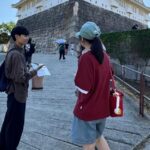
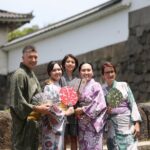
Osaka on foot feels like a greatest-hits CD. This walking tour strings together the big-name sights with quieter backstreets, so you get a real sense of how people live and snack in Osaka. I really like the small-group feel (max 12) and the way the guide keeps things moving with strong English and great photo angles. One thing to consider: it’s packed with stops, so if you want long hangs in just one neighborhood, you may feel a bit rushed.
I’m also glad this tour doesn’t try to do everything. It hits Dotonbori, Shinsaibashi-suji, Hozenji Yokocho, Kuromon Market, Tsutenkaku, and Shinsekai in about 4 hours, with brief breaks that still leave you time to look, shoot photos, and ask questions.
You’ll get a box of takoyaki and one drink, which helps keep your food plan simple while you’re bouncing between districts. Just remember: anything beyond that is on your own dime.
In This Review
- Key Points You’ll Care About
- Four Hours That Actually Give You Bearings
- Where You Start: 10:30 and a Clean Route Into Shinsekai
- Osaka Castle Stop: Viewing the Icon Without the Ticket Rush
- Dotonbori: Neon Riverside That Makes Osaka Feel Like Osaka
- Shinsaibashi-suji: The Shopping Arcade That Works for Both Browsers and Buyers
- Hozenji Yokocho: Lantern Alleys and Cobblestones
- Kuromon Market: Where Seafood Lessons Feel Hands-On
- Tsutenkaku Tower and Shinsekai: Retro Osaka and a Lot of Photos
- The Included Food: Takoyaki Box and One Drink
- What You Pay for: Value Beyond the Name of Famous Stops
- Who Should Book This Osaka Highlights Walk
- Possible Downsides (And How to Plan Around Them)
- Should You Book This Walking Tour?
- FAQ
- How long is the Osaka Highlights Walking Tour?
- What time does the tour start, and where does it end?
- What food and drinks are included?
- Is Osaka Castle entered during the tour?
- What is the group size?
- What is the cancellation policy?
Key Points You’ll Care About
- A tight route through Osaka’s top districts and older alley streets
- Takoyaki box plus one drink included, so you’re not hunting mid-walk
- Small group size (up to 12) for easier pacing and better guide attention
- No Osaka Castle entry, so you save time for Dotonbori and food stops
- Time-balanced photo stops from neon riverside to retro Shinsekai
Four Hours That Actually Give You Bearings
This is a good first-Osaka-orientation walk. You cover the city’s “I’ve seen this in photos” zones, then you get the side streets that make Osaka feel like Osaka instead of just a checklist.
The duration is about 4 hours, and the pace is described as flexible depending on group size and interests. That matters, because Osaka can be confusing at street level: one wrong turn and you lose the rhythm of the area. A guide helps you keep your bearings fast while still letting you browse.
Also, with a max of 12 people, you’re not shoulder-to-shoulder the entire time. That’s a big deal at busy spots like Dotonbori and Kuromon Market.
You can also read our reviews of more walking tours in Osaka


Where You Start: 10:30 and a Clean Route Into Shinsekai
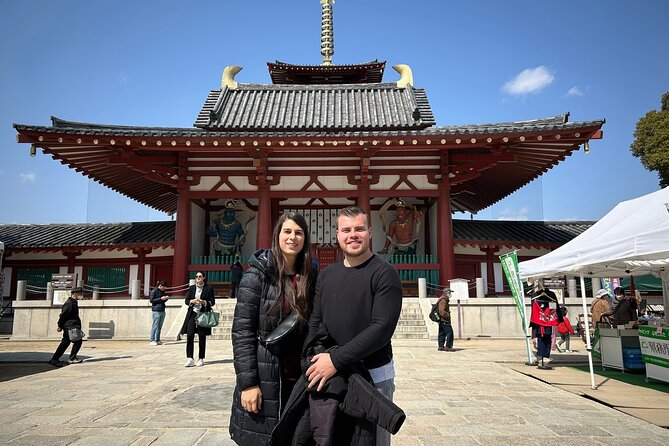
The tour starts at 3-1 Ōsakajō, Chuo Ward at 10:30am, and it ends in Shinsekai (2 Chome-5 Ebisuhigashi, Naniwa Ward). The start is noted as near public transportation, which makes it easier to slot into a day without complicated planning.
You’ll also use a mobile ticket, which is exactly what you want when you’re moving through neighborhoods with lots of signage and little time to spare.
If you’re trying to connect this with other plans, the ending in Shinsekai is handy. You’re dropped in a district known for retro charm, lights, and late-day wandering, so it’s a natural landing point.
Osaka Castle Stop: Viewing the Icon Without the Ticket Rush
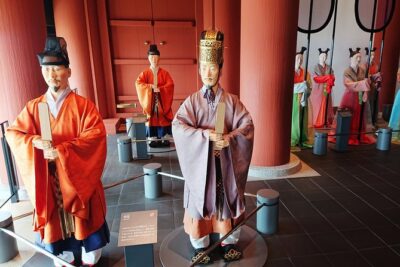
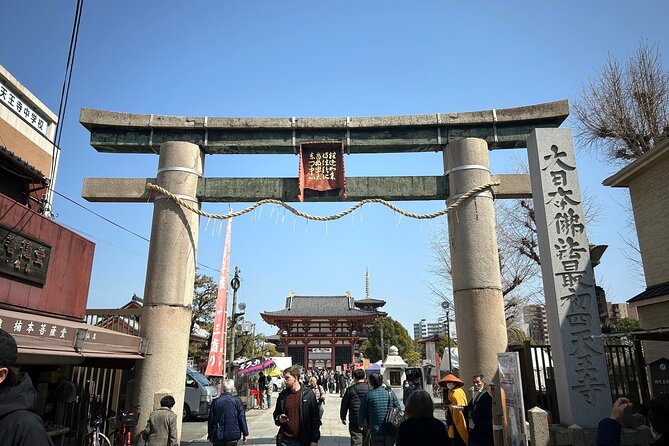
The tour includes a stop at Osaka Castle, but it clearly says: you do not enter the castle. You still get a context lesson on why this site matters, including its role in Japan’s samurai era of the sixteenth century and how it connects to the broader unification story in Kansai.
What you gain from not entering is time and energy. Castle days can turn into line-management days fast, and this tour keeps you from losing the rest of your route. You’ll still get the big visual payoff, plus an easy history thread to anchor the day.
Practical takeaway: treat the castle stop as your “reset and frame” moment. Use it to orient yourself before the neon and shopping begin.
Dotonbori: Neon Riverside That Makes Osaka Feel Like Osaka
Next comes Dotonbori, one of Osaka’s signature zones. You’ll spend about 40 minutes here, soaking in the iconic riverside scenery with neon lights, lively street energy, and endless storefront variety.
Dotonbori is where first-timers tend to feel overwhelmed because it’s sensory overload in a good way. A guide helps you avoid random wandering by pointing you toward the best walking routes and the best spots for photos.
If you’re the type who likes to understand what you’re seeing, this is also a great place to ask questions about local food culture and the district’s everyday vibe. You’re not just passing through—you’re building a mental map of where things cluster.
Shinsaibashi-suji: The Shopping Arcade That Works for Both Browsers and Buyers
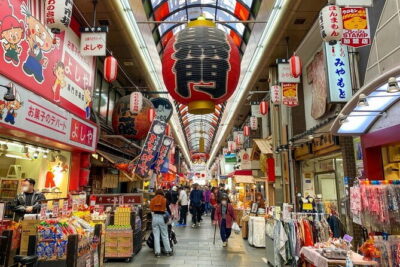
After Dotonbori, you head into Shinsaibashi-suji, about 20 minutes focused on Osaka’s most famous shopping arcade. The emphasis here is the atmosphere: Japanese fashion, quirky gadgets, and that energetic street-level “people are actually out here” feel.
This stop is short, which is intentional. It’s not trying to turn you into a shopping cart. It’s a chance to see modern Osaka retail culture and pick up small souvenirs without spending an entire afternoon chasing bargains.
What I like about this kind of stop: even if you don’t plan to buy much, you still get a feel for local tastes. And if you do find something, you’re already in the right area to exchange your money and move on.



Hozenji Yokocho: Lantern Alleys and Cobblestones

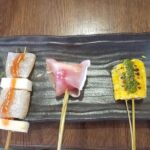
One of the more charming switches in the route is Hozenji Yokocho. You get about 20 minutes in this narrow, cobblestone alley area known for old-Osaka charm and traditional character—lantern-lit paths and tight street walls that make it feel like you stepped into a different Osaka.
This is the kind of stop that slows you down, even if only for a short time. You’ll likely find yourself looking up, watching how people move through the narrow lanes, and noticing details you’d miss if you were power-walking to the next highlight.
A realistic consideration: it’s still a walking tour, so you won’t have hours here. If you’re a “stay in one place and people-watch” traveler, treat this as your snapshot window and save deeper exploring for later if you want.
Kuromon Market: Where Seafood Lessons Feel Hands-On
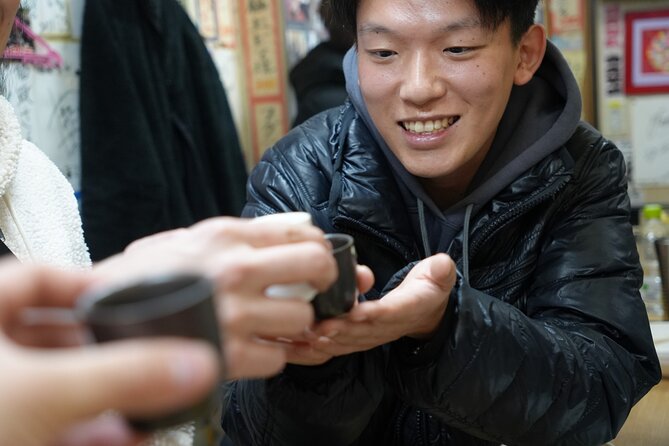
Then it’s Kuromon Market for around 20 minutes. The draw is the seafood focus—shops that may look modest from the outside, but offer a real look at what’s fresh inside. This is also where you can watch chefs prepare fish, including demonstrations like fugu preparation and the way tuna is cut.
That’s the key: it’s not just shopping. You’re observing the work behind the food. Even if you don’t buy much, you learn how the market operates and why people in Osaka come here for ingredients and quick bites.
One caution: markets can get crowded, and your time is limited. Come ready to move quickly, pick what looks interesting, and use the guide to decide where to look first. If you’re expecting a long food crawl, you’ll want to add extra time on your own after the tour ends.
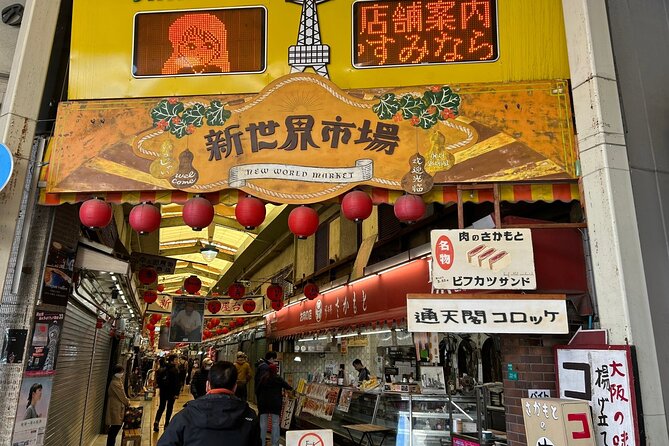
Tsutenkaku Tower and Shinsekai: Retro Osaka and a Lot of Photos
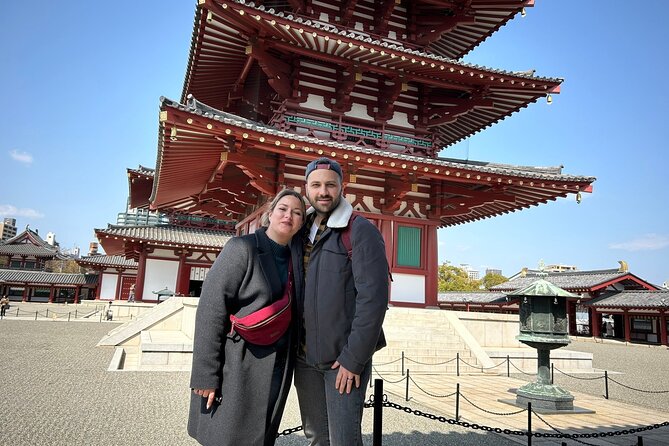
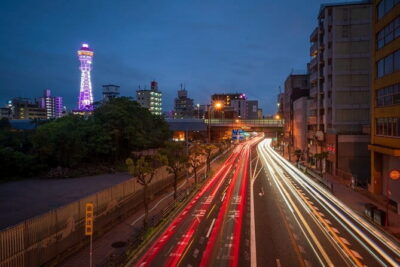
The route continues to Tsutenkaku, where you’ll spend about 20 minutes. The tower is described as a symbolic heart of Shinsekai and is tied to its history: first built in 1912, and inspired by Paris’s Eiffel Tower.
This stop matters because it explains how Osaka’s city identity links to old influences and local pride. You’re not just seeing a landmark. You’re seeing a piece of Osaka’s self-image.
After that, you shift into Shinsekai itself for about an hour. This is the longest block of time on the back half of the tour, and it’s where the day turns more “wander” than “check off.” Expect a mix of retro charm and modern street energy, plus plenty of photogenic angles.
If you like night lights and people watching, plan to extend your walk in Shinsekai after the tour ends. You’ll already be oriented, and the area rewards a slower loop.
The Included Food: Takoyaki Box and One Drink
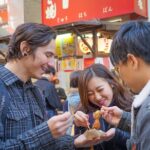
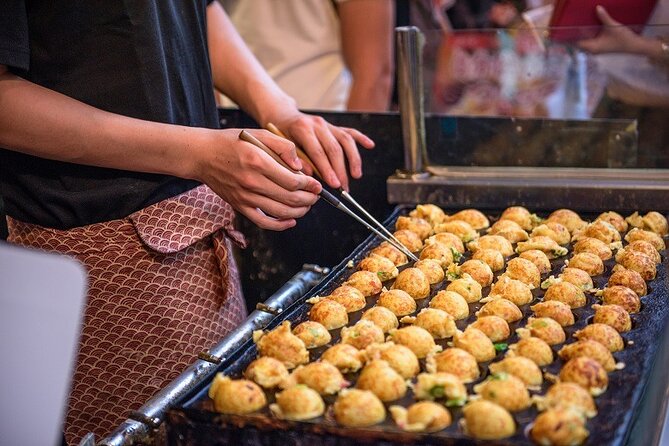
Your tour includes a box of takoyaki (the round, fried batter snack with tender octopus) and one drink. That’s solid value because it removes one of the biggest travel headaches in Japan: deciding what to eat while you’re moving.
Also, takoyaki is a perfect “walking tour food.” It’s portable, fast to enjoy, and easy to compare your tastes afterward—especially if you plan to try other Osaka street foods on separate days.
Just note the obvious: additional food and drinks are not included, so if you’re the type who snacks every 20 minutes, you’ll want a budget for extra bites.
What You Pay for: Value Beyond the Name of Famous Stops
At $84.70 per person for about 4 hours, you’re paying for a guide-led route through multiple major districts, plus the included takoyaki and one drink. The admission tickets listed for the stops are shown as free, which reduces friction on your end.
In practical terms, you’re buying:
- time savings (you don’t have to figure out the best order)
- local context (why these places matter and what to notice)
- guided pacing so you see both big sights and smaller lanes
Compared to trying to DIY all these neighborhoods in one day, this tour is easier. DIY can work, but you’ll spend time backtracking and hunting for “the right street.” Here, the route already strings everything together.
One more detail that’s easy to overlook: this tour is commonly booked about 65 days in advance on average. If your trip is tight, booking early helps you lock in a time slot.
Who Should Book This Osaka Highlights Walk
This tour fits best if you want a structured overview. You’ll probably enjoy it if you:
- are visiting Osaka for the first time
- want a mix of neon landmarks and older alley streets
- like food culture and want a guided look at market life
- prefer a small-group pace over a huge bus-tour feel
It’s also a good fit for returning travelers who want a “best of” day without spending hours planning neighborhood order.
If you’re the kind of traveler who hates group schedules, this might feel slightly structured. But with the stated flexibility based on interests, you should be able to steer questions and focus during the walk.
Possible Downsides (And How to Plan Around Them)
The route is active and stop-heavy, with mostly short time blocks at each location. If your travel style is slow and unstructured, you might feel like you’re moving too quickly between areas like Shinsaibashi-suji, Hozenji Yokocho, and Kuromon Market.
Also, the Osaka Castle portion is outside only. If castle interiors are the whole point of your visit, this won’t satisfy that alone. The upside is you save time for the rest of the highlights.
Finally, like any outdoor walking tour, weather can change the vibe. On rainy or very hot days, it’s smart to come with layers you can manage and shoes that handle slick surfaces.
Should You Book This Walking Tour?
Yes, I’d book it if you want a smart, time-efficient way to see Osaka’s major districts plus real street atmosphere. The inclusion of takoyaki + a drink, the small group size, and the fact that the day is built around both big icons and short visits to older lanes make it a strong value for your first Osaka day.
Skip it only if you’re looking for long stays in one neighborhood or you specifically want to enter Osaka Castle. Otherwise, this is a very practical “get oriented, then explore more later” kind of tour.
FAQ
How long is the Osaka Highlights Walking Tour?
It runs for about 4 hours.
What time does the tour start, and where does it end?
It starts at 10:30am and ends in Shinsekai (2 Chome-5 Ebisuhigashi, Naniwa Ward).
What food and drinks are included?
You get a box of takoyaki and one drink included. Additional food and drinks aren’t included.
Is Osaka Castle entered during the tour?
No. The tour includes a stop at Osaka Castle, but it says you do not enter.
What is the group size?
The tour has a maximum of 12 travelers.
What is the cancellation policy?
You can cancel for a full refund if you cancel at least 24 hours before the experience’s start time. Free cancellation is listed up to that point.