REVIEW · NAMBA
Osaka Delights: Traditional Japanese Food Tour
Book on Viator →Operated by Amigo Tours Japan · Bookable on Viator
Osaka tastes better when someone shows you the spots. In this 3-hour evening walk, you start at Kuromon Market, snack on takoyaki and three-color dango, then sit down to Osaka comfort food like okonomiyaki and kushikatsu before ending with neon energy in Dotonbori and a classic Ebisu Bridge photo.
I especially like that the food stops feel like a real Osaka plan, not a random sample parade. Tastings are built into the tour price, and the guide experience can make a big difference—people specifically praise guides such as Paula and Angeles for clear explanations and great food picks.
One thing to keep in mind: the tour is a walking route and it cannot accommodate travelers with mobility issues. Also, if you’re depending on English, do a quick language check—there’s been at least one report of a language mix that made an experience feel less inclusive.
In This Review
- Key things that make this tour worth your time
- Kuromon Market at 5:30 pm: your easy start to Osaka food
- Takoyaki at Wanaka: crispy bites and sauce sense
- Mitoya’s three-color dango: sweet comfort without the fuss
- Okonomiyaki and kushikatsu at Kushikatsu Yokozuna Hozenji: Osaka dinner in one place
- Egg tart from a beloved bakery: the warm finish
- Dotonbori at night: neon streets and the Ebisu Bridge photo
- Guides, language, and the real-world group size
- Price and value: how $84 makes sense for Osaka planning
- Is this tour right for you?
- FAQ
- How long is the Osaka Delights traditional Japanese food tour?
- What time does the tour start?
- Where do we meet, and where does the tour end?
- What food tastings are included?
- Is the tour ticket mobile?
- What languages is the guide available in?
- Is the tour suitable for people with mobility issues?
- Should I book in advance?
Key things that make this tour worth your time
- Kuromon Market first, before the streets take over: you get your Osaka food fix early.
- A logical savory-to-sweet route: takoyaki and dango set you up for okonomiyaki and kushikatsu.
- Real Osaka classics in a short window: you don’t have to plan dinner and dessert.
- Dotonbori at night is the payoff: neon walks and an Ebisu Bridge photo stop.
- Guide quality matters: several guides (Paula, Angeles, Heli, Eli) earn strong recommendations for food guidance.
Kuromon Market at 5:30 pm: your easy start to Osaka food
The tour starts at 5:30 pm from Hotel Royal Classic Osaka in Namba. That timing is smart. You catch the market’s evening momentum, then you’re already in position to watch Dotonbori light up later.
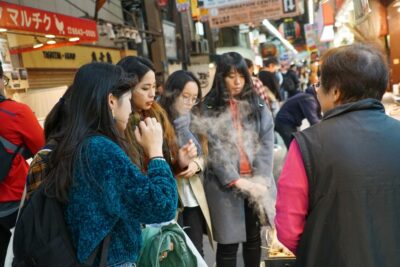
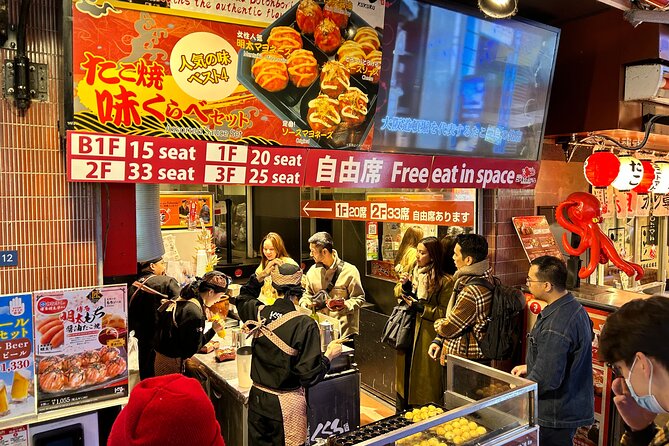
Kuromon Market is often called Osaka’s kitchen, and even if you’ve visited markets before, this one has a different feel: compact stalls, constant ordering, and that unmistakable food-smell that makes you hungry fast. The tour includes a short walk from the meeting point to get you there without stress.
You can also read our reviews of more food & drink experiences in Namba
Takoyaki at Wanaka: crispy bites and sauce sense
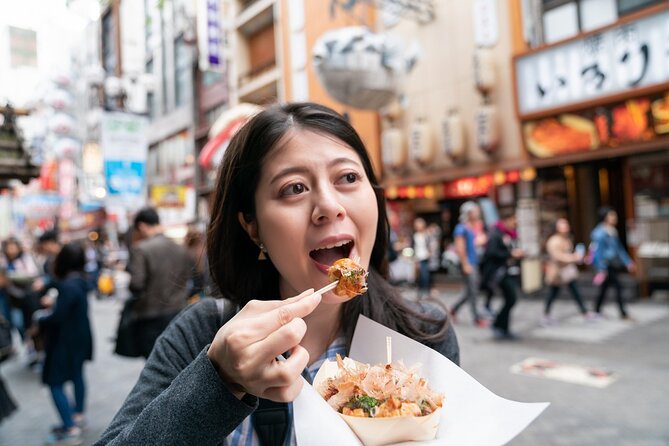
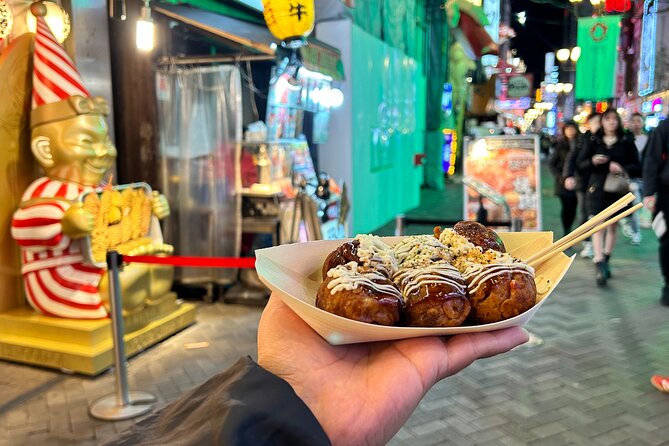
Your first official food stop is at a famous takoyaki stall in Kuromon Market (Wanaka). Takoyaki are those round, crispy dough balls filled with octopus, then topped with sauces and bonito flakes. It’s street food you can eat immediately, which matters because it keeps the tour moving and keeps the food hot.
Here’s the practical part: take the first bite carefully. They’re hot, they’re slick with sauce, and the crunchy outside can cool faster than you expect. You’ll do better if you eat standing close to the stall (or the area your guide positions you), not wandering off mid-bite.
This stop is also where you get a lot of the value of a guided tour. Without help, you’d still find takoyaki—sure—but you might waste time guessing which stalls are worth the line. With a guide, you’re usually pointed at a place that locals and visitors both treat as dependable.
Mitoya’s three-color dango: sweet comfort without the fuss
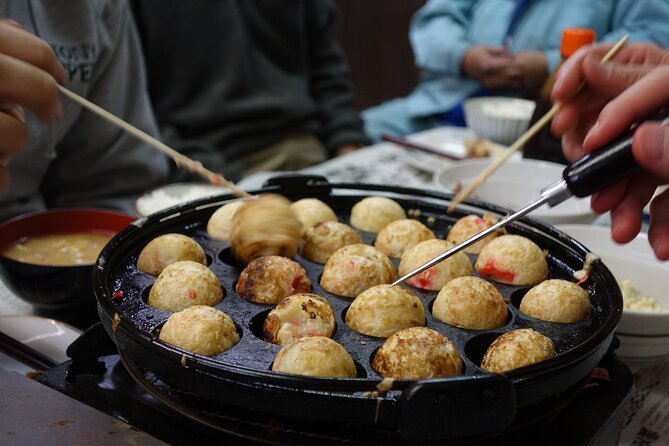
Next comes dango from Mitoya. Dango are sweet rice dumplings served on skewers, and here you get the three-color version. The colors tie to different aspects of Japanese culture, which gives this snack more meaning than just dessert-on-a-stick.
What I like about this stop is the rhythm. You’ve had a salty, fried, saucey bite with takoyaki, so dango feels like a reset. It’s also easy to eat while walking between stops, so you don’t lose time.
If you have a sweet tooth, you’ll appreciate the temperature and texture contrast: chewy dumplings, a gentle sweetness, and the kind of snack that won’t slow you down.
Okonomiyaki and kushikatsu at Kushikatsu Yokozuna Hozenji: Osaka dinner in one place
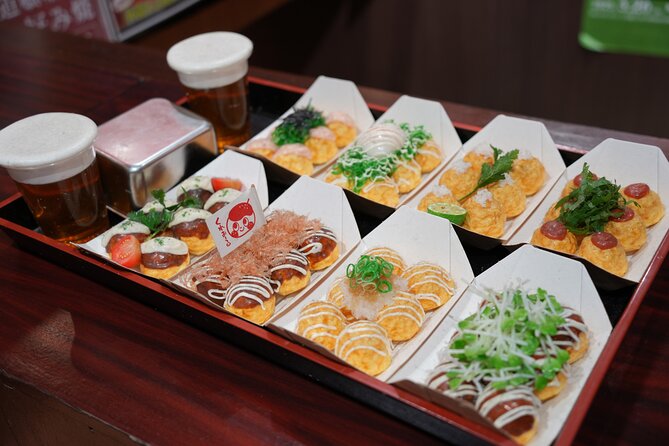
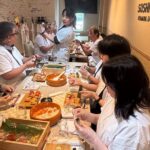
Then you hit the meat of the tour: a dedicated comfort-food stop at Kushikatsu Yokozuna Hozenji. This is where the tour earns its keep, because you’re not just tasting small street bites—you’re taking in a proper Osaka-style meal experience.
You’ll try two big hitters:
- Okonomiyaki: often described as a savory pancake, made with basics like flour and eggs and commonly featuring cabbage.
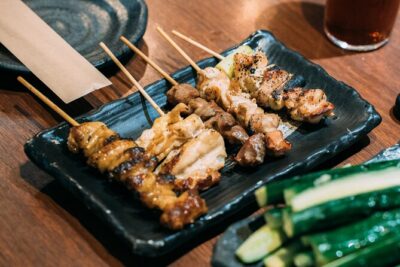
- Kushikatsu: crispy fried skewers that make Osaka feel like Osaka. It’s crunchy, savory, and built for that one-more-bite feeling.
What to expect here: the pace slows a bit compared with the market stops. That’s on purpose. You get time to eat, time to ask questions, and time to understand what you’re tasting. Many guides (including those praised by name like Angeles and Heli) are singled out for explaining dish background and how to recognize what makes each plate distinctly Osaka.
Egg tart from a beloved bakery: the warm finish
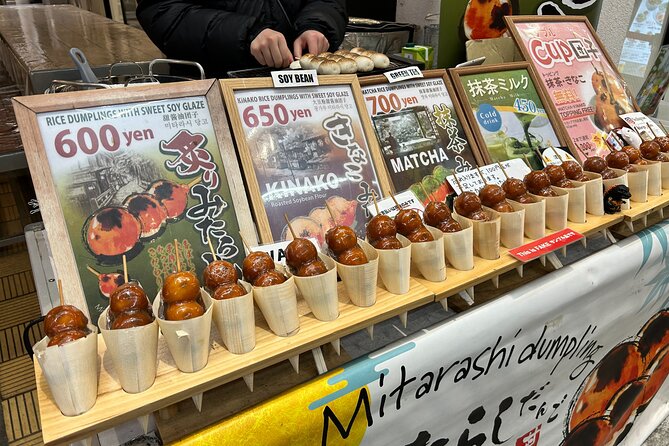
After savory food, you get a sweet ending: a warm egg tart. Egg tarts are all about contrast—creamy custard inside, flaky pastry outside, and typically served warm so the custard feels soft and silky.
This is a short stop (around 20 minutes), so it’s not trying to turn dessert into a whole separate event. If you’re the type who wants multiple rounds of sweets, adjust expectations. The tour’s plan is one pastry at the end, and that’s the point: you leave with dessert done, not dessert still searching.
You can also read our reviews of more tours and experiences in Namba
Dotonbori at night: neon streets and the Ebisu Bridge photo
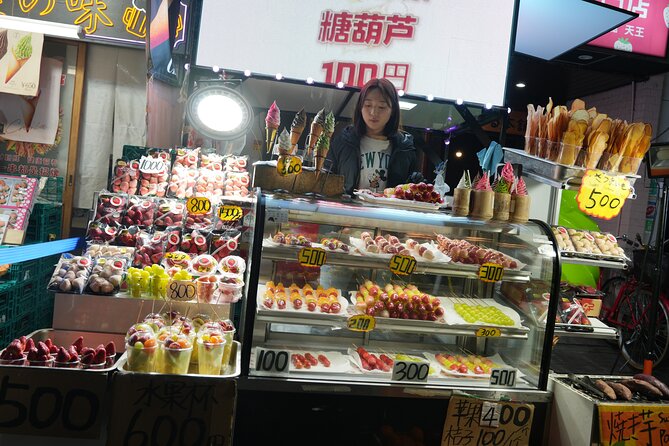
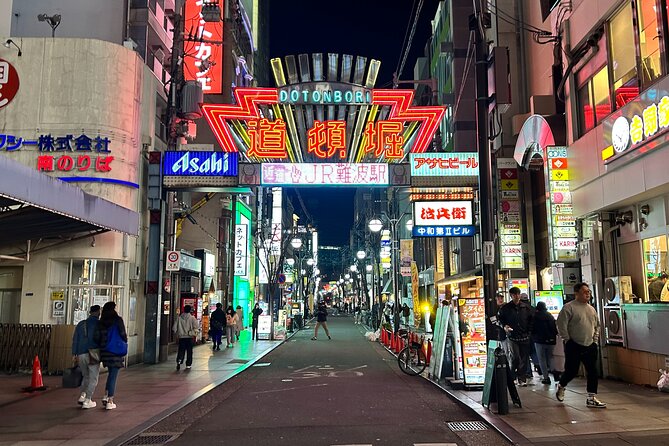
Once food is handled, you switch to the city part of Osaka Delights. You walk through Dotonbori, one of the city’s most famous areas, known for its neon lights and iconic signs.
The tour includes time for sightseeing, not just motion. You’ll get that classic Dotonbori canal vibe and a dedicated photo stop at Ebisu Bridge for the Glico Man sign. That’s the kind of place you see in photos online, but it hits differently in real life at night—brighter, louder, and full of people doing exactly what you’re doing: eating, walking, and taking pictures.
Quick photo tip: keep your phone charged. Evening photos eat battery fast, and you’ll want enough juice for both the bridge and the surrounding neon streets.
Guides, language, and the real-world group size
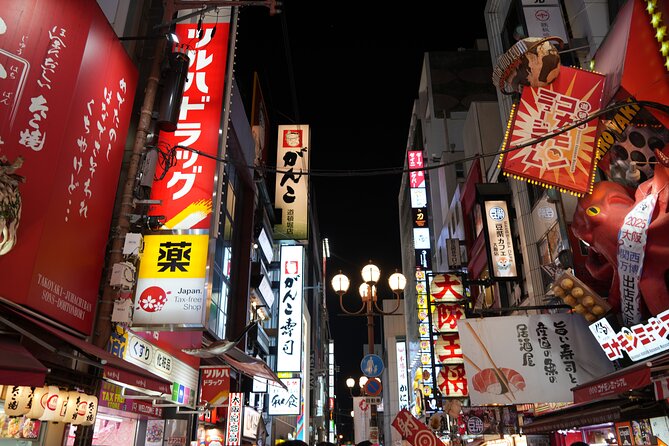
This tour is limited to up to 30 travelers, with a bilingual guide in English and Spanish. Many people highlight how guides like Paula and Heli/Helimar helped them find the right places, explain dishes, and keep things comfortable.
Still, here’s the reality check you should plan for: language needs can get tricky in mixed groups. There’s been an unhappy story about a language split where the guide mostly spoke Spanish, and an English speaker felt sidelined and left early. That’s rare, but it’s enough that I’d treat it as a planning signal.
My advice: if you care about English specifically, confirm at booking or check-in that your group will be guided in English for your session. It takes 30 seconds and can prevent a frustrating evening.
Also: the tour is not for anyone needing mobility accommodations. It’s a walking route, and the operator explicitly says they cannot accommodate travelers with mobility issues. If you’re on wheels or have limited walking ability, this is the wrong style of tour.
Price and value: how $84 makes sense for Osaka planning
The price is $84 per person for about 3 hours. That sounds like a lot until you look at what’s included:
- Multiple named food stops (not just generic suggestions)
- Tastings of the dishes on the itinerary
- A guide plus a neighborhood walk through major Osaka areas
- No separate attraction ticket fees mentioned for the stops
If you were building your own evening, you’d still pay for takoyaki, a sweet snack, dinner (likely okonomiyaki and fried skewers or a similar spread), plus an egg tart. And you’d spend time figuring out where to go, where lines are worth it, and what to order.
This tour is a way to buy planning help along with your food. The value is highest if it’s your first time in Osaka and you don’t want to risk a “maybe this place is good” guessing game.
One more practical point: it’s often booked around 42 days in advance on average. If your dates are fixed, don’t wait until the last week.
Is this tour right for you?
I’d book Osaka Delights if you want:
- A structured food route that avoids decision fatigue
- The classic pairing of market snacks and proper Osaka dinner
- Night energy in Dotonbori with a clear photo finish at Ebisu Bridge
- A guide-led plan (especially if you like having dish explanations as you go)
I’d skip it if:
- You need mobility accommodations (the tour can’t support that)
- You strongly depend on one language and can’t tolerate any mix (because language grouping can affect the experience)
FAQ
How long is the Osaka Delights traditional Japanese food tour?
It’s about 3 hours.
What time does the tour start?
The start time is 5:30 pm.
Where do we meet, and where does the tour end?
You meet at Hotel Royal Classic Osaka (Namba) and the tour ends back at the meeting point.
What food tastings are included?
You’ll taste takoyaki, three-color dango, okonomiyaki, kushikatsu, and an egg tart.
Is the tour ticket mobile?
Yes, it uses a mobile ticket.
What languages is the guide available in?
The guide is bilingual in Spanish and English.
Is the tour suitable for people with mobility issues?
No. The tour cannot accommodate travelers with mobility issues.
Should I book in advance?
It’s commonly booked about 42 days in advance, so booking ahead is smart if your schedule is fixed.