REVIEW · OSAKA
Amanohashidate & Ine Funaya Kyoto coast day trip from Osaka/Kyoto
Book on Viator →Operated by TrevoTour Travels · Bookable on Viator
Two coasts, one long day.
This day trip links two of Japan’s most photogenic shore stops, Amanohashidate and Ine no Funaya, with a quick temple break in between. You get the famous pine-lined sandbar (plus the fun upside-down viewing tradition) and the wooden boathouse coastline people nickname the Venice of Japan.
What I like most is the way the route hits big scenery without feeling like you’re just rushing by. Also, the tour teams up with guides who keep timing clear and help you know where to go, with humor and practical tips—Jay, Andrew, Naomi, Liu, Frederick, and LU all came through in different ways. The main thing to consider is the bus time: it’s a long day, and a good chunk of your time goes to the road, especially if you start from Osaka.
In This Review
- Key things to know before you go
- Price and value: what $84.25 covers (and what it doesn’t)
- Tour flow from Osaka or Kyoto: the long ride factor
- Guide quality matters on a day like this
- Amanohashidate: the pine-lined sandbar and the upside-down view
- Optional View Land ropeway: budget it, decide fast
- The upside-down viewing tradition
- Hyakumanben Chion-ji Temple: wisdom and academic luck in 30 minutes
- What to expect in a short visit
- Ine no Funaya: funaya boathouses, ferry ride, and birds
- The ferry: a scenic ride with feathered extras
- Lunch and timing: plan your own seafood, not your whole schedule
- Getting the most out of a 9–10 hour bus day
- Bring what keeps you comfortable
- Use the guide for micro-planning
- Who this day trip suits best (and who should think twice)
- Should you book this Amanohashidate & Ine Funaya day trip?
- FAQ
- How long is the Amanohashidate and Ine Funaya day trip?
- What is the price per person?
- What’s included in the tour price?
- What extra tickets should I budget for?
- Is the Chion-ji Temple admission included?
- What’s the maximum group size?
- Are there different pickup options if I’m staying in Osaka or Kyoto?
- How do child fares work?
- What if the weather is bad?
- Can I get a refund if I cancel?
Key things to know before you go
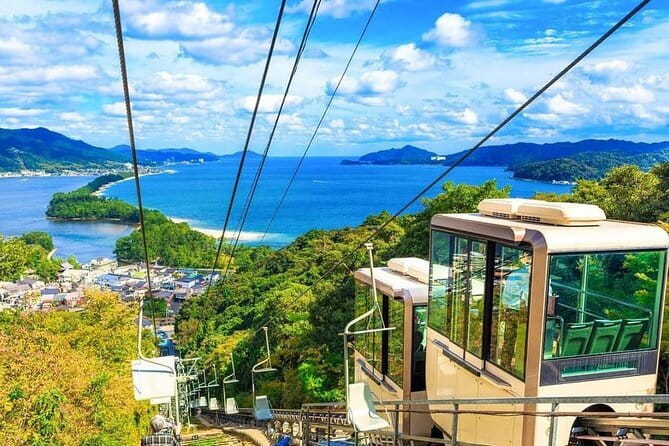
- Amanohidate sandbar timing: about 2 hours gives you time to walk, photo, and still add optional rides.
- Optional tickets you’ll want to budget: View Land ropeway and the Ine Funaya ferry are not included.
- A temple stop that’s short but meaningful: Hyakumanben Chion-ji is only about 30 minutes and focuses on wisdom and academic success.
- Ine no Funaya is all about structure and sea life: funaya boathouses plus a ferry ride where birds often show up.
- The group is capped at 48: enough company for energy, not so many people that you feel lost.
Price and value: what $84.25 covers (and what it doesn’t)
At $84.25 per person, this tour is a straight, no-frills way to get out of Osaka or Kyoto and into the Kyoto coast scenery. You’re paying mostly for the transportation and the guide support across multiple areas in a single day.
What’s included is a multi-language guide (Chinese/English/Japanese/Korean) and the core stop access listed as admission free for the main visits: Amanohashidate, Hyakumanben Chion-ji, and the Ine no Funaya visit area. What’s not included is where your day can get “add-on” costs: the View Land Ropeway ticket (adult $6, child $3) and the Ine Funaya ferry ticket (adult $8, child $4).
If you’re trying to keep the day cheap, you can still do a lot without those extras. If you want the full experience—especially the cable/ropeway view angle and the ferry—plan on adding those tickets to your budget.
You can also read our reviews of more tours and experiences in Osaka
Tour flow from Osaka or Kyoto: the long ride factor
This is a 9–10 hour day trip, and the tour time counts transportation time too. In plain terms: you’ll spend part of your day on the bus. One of the most common tradeoffs people point out is that you may feel like the road eats into your fun.
The flip side is that you’re not stuck designing logistics by yourself. The guide’s job is to keep the day organized: when to meet, where to go, and how long you’ll be at each spot. Several guides (like Jay and Andrew) were also praised for setting expectations clearly—timing, restrooms, and what to do next.
Also, the trip runs with a maximum group size of 48 people. That size is big enough to feel like you have momentum, but small enough that you can still hear instructions and find your group.
Guide quality matters on a day like this
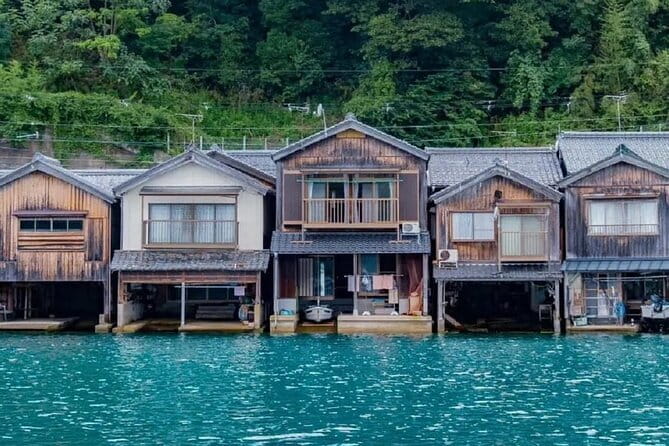
On a long day trip, the guide isn’t just background. A good one helps you avoid wasting time at the wrong door, missing a meeting point, or realizing too late you skipped a good photo spot.
Across the guides, the pattern is consistent: they were described as funny, upbeat, and willing to share practical tips. Jay and Andrew were singled out for humor and added historical context. Naomi was noted for being especially helpful as a guide and even for photo spotting. Liu and LU were praised for clear guidance and recommendations, including help with where to go for food or pictures.
One caution: communication quality can vary depending on the language level of your particular guide, and there can be occasional hiccups like confusing pickup details. So do yourself a favor—double-check your pickup instructions before you leave, especially if you’re coming from either Osaka or Kyoto.
Amanohashidate: the pine-lined sandbar and the upside-down view
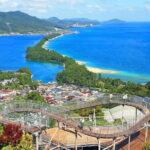
Amanohashidate is famous for a reason. The name translates to something like bridge in heaven, and the attraction is a natural sandbar stretching across Miyazu Bay with 8,000+ pine trees. The result is a “from the shoreline to the distance” view that looks carefully planned even when it’s entirely natural.
You get about 2 hours here, which is a solid window. You’re not just snapping one quick photo and leaving. This stop works best if you slow down enough to walk along the viewing areas and grab views from more than one angle.
Optional View Land ropeway: budget it, decide fast
The View Land Ropeway is not included, but it’s easy to tack on if you want a different perspective. At $6 for adults and $3 for children, it’s not a huge spend relative to the day, but it is a real add-on.
My practical take: treat the ropeway as an option, not a requirement. If the weather is clear and you like skyline-type views, it’s worth considering. If you’re trying to keep costs down, you can still enjoy Amanohashidate from the ground with the time you’re given.

The upside-down viewing tradition
There’s a well-known quirky local tradition: looking at Amanohashidate upside down. It’s part of what makes this stop memorable rather than just pretty. You don’t need to overthink it—just be game when your guide points it out.
Hyakumanben Chion-ji Temple: wisdom and academic luck in 30 minutes
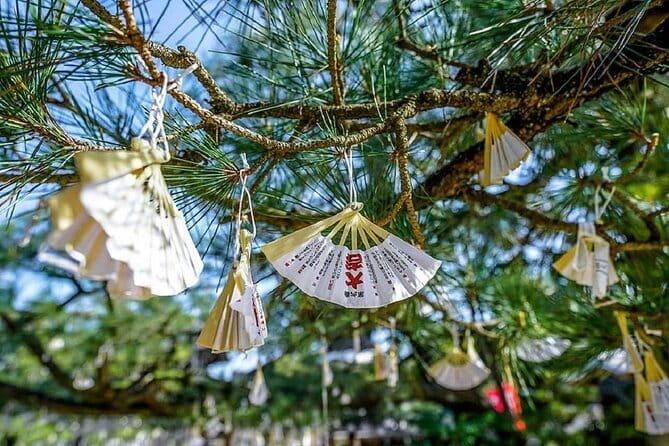
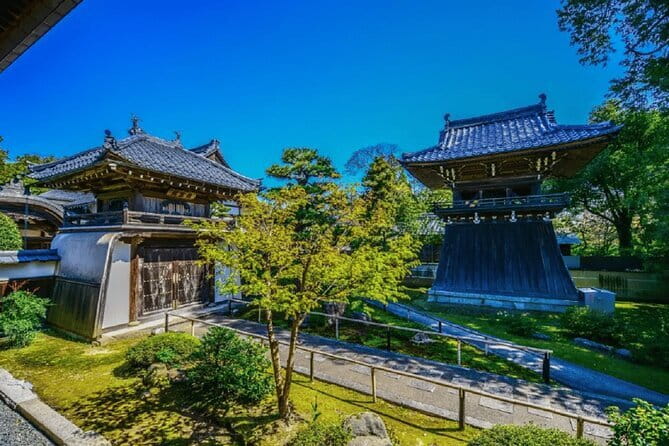
After the coast, the day pivots to something calmer: Hyakumanben Chion-ji Temple at the southern end of Amanohashidate. You’re there for about 30 minutes, and admission is listed as free.
This temple is tied to the idea of academic success and wisdom, connected with Monju Bosatsu, often described as the Bodhisattva of wisdom. Even if you’re not religious, it’s still a meaningful cultural break: you get a quieter space, a different rhythm from the seaside, and a short moment to reset before your next stop.
What to expect in a short visit
Because the time is limited, you won’t have a long, slow temple wandering session. Think of this as a focused cultural stop. You’ll likely have time to observe, pray if you want, and take a few photos without feeling rushed by the schedule.
If you’re the kind of person who likes temples with more time on your feet, you might feel it’s quick. But as part of a coast day, it’s a good balance.
Ine no Funaya: funaya boathouses, ferry ride, and birds
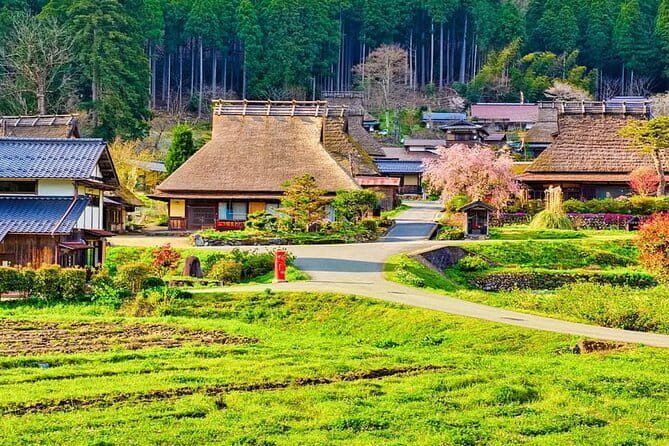
Then you’ll hit the other big character of the day: Ine no Funaya—often called the Venice of Japan. The defining feature is the line of traditional wooden boathouses, called funaya, built right along the coastline.
The tour gives you about 1 hour here, which means you’ll want to choose your pace quickly. If you love photography, use that hour to walk around and frame the boathouses from multiple points. If you’re more into atmosphere, aim for slow steps and just enjoy how the coastline looks when you’re closer to the water.
The ferry: a scenic ride with feathered extras
The Ine Funaya ferry ticket is not included (adult $8, child $4). If you buy it, you’re signing up for a water-level view that changes the whole feel of the area.
One of the most repeated highlights is that birds often show up during the ride—pigeons and kites were mentioned in that context. There’s even a note that feeding the birds from the boat wasn’t appealing to everyone, so keep expectations simple: if you don’t want that, you can choose not to participate and still enjoy the scenery.
This is one of those “small logistics, big memory” segments. You’ll usually remember it more than you think because it feels different from the land-based sightseeing.
Lunch and timing: plan your own seafood, not your whole schedule
The tour overview mentions a fresh seafood lunch, but it’s at your own expense. That matters because with a long bus day, you don’t want to arrive at a spot starving with no plan.
Here’s how I’d handle it:
- Decide whether you’ll snack on the bus ride or save your appetite for the coast stops.
- Treat lunch as part of your strategy at Amanohashidate or Ine, not something you can casually postpone without stress.
- Keep some flexibility, because guides manage group pacing and meeting times.
The good news is that guides were praised for checking timing and giving clear instructions. Still, your day will move as a group—so you’ll have less freedom than if you built your own route.
Getting the most out of a 9–10 hour bus day
This tour is ideal when you want the route solved for you. But you also need to respect the time tradeoff.
Bring what keeps you comfortable
Even though the details aren’t listed, the smart move on long coach rides is to pack for it: water, something light to snack on, and layers for seat comfort. If you’re prone to motion sickness, consider it too.
Use the guide for micro-planning
A strong theme from the feedback was that guides don’t just talk. They also give meeting instructions and time expectations—some guides even helped with where to find food and photo spots. Ask yourself at the start: where should I stand for the best view, and when is the ropeway or ferry decision window?
That small question often makes the difference between a day that feels effortless and one that feels like you’re guessing.
Who this day trip suits best (and who should think twice)
This tour fits you if you want:
- High-impact scenery in one day, without needing rail passes and transfers for each stop.
- A guide who keeps the day moving and helps you find the right meeting points.
- A mix of big views, a short temple culture stop, and a water experience.
You might think twice if:
- You strongly dislike long bus rides. The schedule includes substantial transportation time, and at least one highlight is also a downside: the ride length.
- You want deep, slow exploration. The stops are timed—Amanohashidate gets about 2 hours, the temple about 30 minutes, and Ine about 1 hour—so it’s not designed for long lingering.
If you’re traveling with kids, note that children 0–2 are free as long as they don’t require their own seat, while children 3+ pay the adult rate. That’s helpful for families doing budget math.
Should you book this Amanohashidate & Ine Funaya day trip?
Book it if you want a straightforward, scenic day out of Osaka or Kyoto where the major sights are handled for you. The value is strongest when you plan to use the guide’s direction, consider at least one optional add-on (ropeway and/or ferry), and accept the long ride as the price of convenience.
Skip it if your top priority is a relaxed pace or if bus time alone makes you cranky. In that case, you might be happier planning multiple separate outings—or choosing fewer stops so you can slow down.
For a lot of people, though, this route hits the sweet spot: big coastal views, a temple pause, and a ferry ride that’s memorable for more than just the scenery.
FAQ
How long is the Amanohashidate and Ine Funaya day trip?
The tour runs about 9 to 10 hours, and that total includes the transportation time.
What is the price per person?
The price is listed as $84.25 per person.
What’s included in the tour price?
The price includes a Chinese/English/Japanese/Korean-speaking guide. The main admissions for Amanohashidate, Hyakumanben Chion-ji Temple, and Ine Funaya are listed as free.
What extra tickets should I budget for?
You may want to budget for View Land Ropeway (adult $6, child $3) and the Ine Funaya Ferry (adult $8, child $4). These are not included.
Is the Chion-ji Temple admission included?
Yes. Hyakumanben Chion-ji Temple admission is free as listed.
What’s the maximum group size?
The tour has a maximum of 48 travelers.
Are there different pickup options if I’m staying in Osaka or Kyoto?
The tour includes pickup points for Osaka and Kyoto. Double-check which one applies to you based on the messages you receive.
How do child fares work?
Children 0–2 are free if they do not occupy separate seats. Children aged 3+ are charged the same rate as adults.
What if the weather is bad?
This experience requires good weather. If it’s canceled due to poor weather, you’ll be offered a different date or a full refund.
Can I get a refund if I cancel?
Yes. You can cancel up to 24 hours in advance for a full refund. Canceling less than 24 hours before the start time is not refunded.