REVIEW · OSAKA
Osaka Food Quest: Self-Guided Culinary & History Adventure
Book on Viator →Bookable on Viator
Osaka tastes better when you hunt clues. This self-guided smartphone quest turns Dotonbori into a walk-through story of food and history, with 10 puzzle stops along the way.
I especially like how it mixes famous landmarks with practical “look around here” tasks, so you’re not just sightseeing. You also get real flexibility: pause and resume anytime, which is rare for a timed walking plan.
The best part for me is the food focus. You pass spots tied to Osaka classics like takoyaki and horumon (beef offal), and the puzzles push you to connect what you’re seeing with why it matters. The main drawback is also the biggest “catch”: there’s no physical guide, so you’re relying on your phone and the quest app to keep you oriented.
In This Review
- Quick hits before you start
- Why this Osaka quest works in Dotonbori
- Price, time, and what $7.85 buys you
- How the smartphone puzzle adventure is set up
- The route: Ebisu Bridge, takoyaki, and horumon clues
- Stop 1: Ebisu Bridge and the Hanshin Tigers story
- Konamon Museum: takoyaki as a hands-on history lesson
- Showa Taishu Horumon Dotonbori: beef offal, Osaka style
- Hozenji Temple and Bunraku Theater: Osaka beyond the food counter
- Hozenji Temple (built 1637) and Fudo Myoo
- National Bunraku Theater: where the story shifts to performance
- Kuromon Market and Namba Yasaka Shrine to finish strong
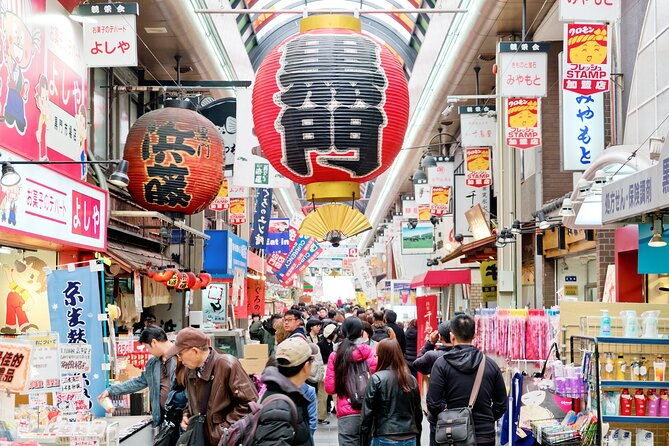
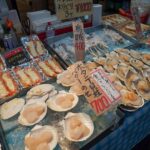
- Kuromon Market: black gate, fish market roots
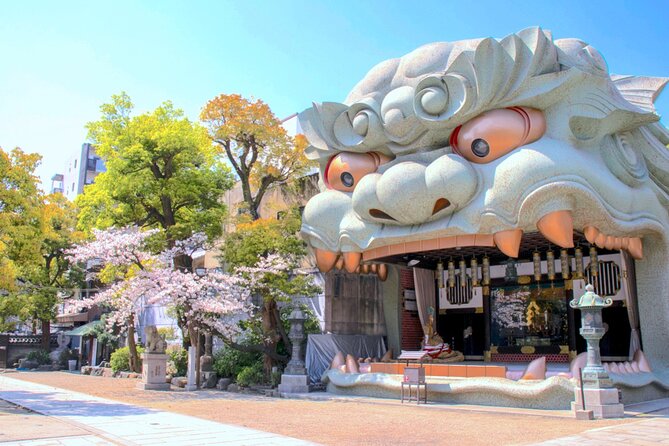
- Namba Yasaka Shrine: moved because of Osaka Castle
- What to eat while you play, without ruining your pace
- Best for couples, families, and solo food hunters
- Quick logistics you’ll care about on the day
- Should you book Osaka Food Quest?
- FAQ
- How long does the Osaka Food Quest take?
- What do I need to start the quest?
- Is there a physical tour guide?
- Where does the quest start and end?
- Can I pause and resume?
- What’s the cancellation policy?
Quick hits before you start
- Self-guided, not group-led: you run the pace, with pause and resume built in
- 10 puzzle challenges: you’ll be scanning, reading, and answering as you walk
- Dotonbori core route: Ebisu Bridge, Hozenji Temple, and the Bunraku Theater are all on the path
- Food stops that match the themes: takoyaki learning at Konamon Museum, horumon at a Dotonbori restaurant, market time at Kuromon
- Smartphone-only experience: a mobile access code replaces a tour guide
Why this Osaka quest works in Dotonbori
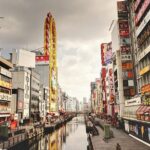
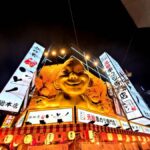
Dotonbori is one of those areas where your eyes can keep running faster than your plan. Signs, neon, smells from food stalls, and crowds can turn even an easy walk into a blur.
This quest gives your feet a job. You’re moving through Dotonbori and nearby areas to solve clues, and each clue pulls you toward a specific spot with a specific story. That means you notice things you’d otherwise miss, like the role of Ebisu Bridge in connecting shopping streets, or how Hozenji Temple fits into the older entertainment world around Namba.
If you like travel that feels like a game but still teaches you something real, this is a strong fit. You’re not stuck in a classroom. You’re out on the street, hunting answers where the landmarks actually are.
You can also read our reviews of more food & drink experiences in Osaka
Price, time, and what $7.85 buys you
At $7.85 per person, this isn’t trying to be a premium guided tour. It’s a budget-friendly way to turn one concentrated walk into a structured experience.
Here’s what you’re really paying for:
- A mobile access code that unlocks the quest content
- 10 puzzle-based challenges that keep you engaged as you move
- A storyline focused on Osaka food and history
- Flexibility to pause and resume whenever you need a snack break or a bathroom stop
The duration is listed as about 1 hour, but in practice, you’ll likely spend more time if you read carefully and actually stop for food. One key detail: the experience is built around walking between major stops in the Dotonbori/Kuromon orbit. That’s great value for a self-guided setup, because you’re getting a “reason to walk” across several top sights.
How the smartphone puzzle adventure is set up
This is a private activity for just your group, which is ideal if you want to avoid the slow shuffle of waiting for others. And because there’s no physical guide included, you’re in charge of your own pacing.
Your basic approach:
- Start at the meeting point in Dotonbori (more on that below)
- Use your smartphone to open the quest content with your access code
- Complete 10 puzzle challenges by looking around and answering prompts
- Move from stop to stop until you finish at the endpoint
Because it’s smartphone-driven, I recommend you show up ready. Charge your phone the same day. If you can, bring a small power bank. Also, have your maps app ready so if you need to re-orient for a minute, you can get back on track fast.
One caution from experience running similar phone quests: if the app feels slow or your connection is weak, direction can become a chore. If your phone battery is low or the signal is unstable, it can turn a fun scavenger vibe into “where do I tap next?” energy.
The route: Ebisu Bridge, takoyaki, and horumon clues
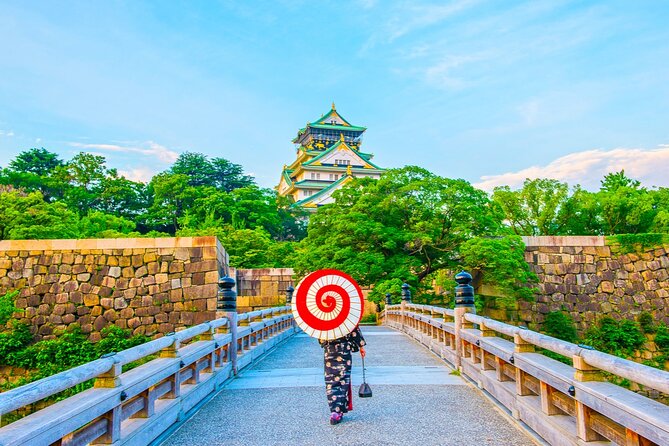
You begin in central Dotonbori at 1 Chome-6 Dotonbori, Chuo Ward. The walk starts with a landmark that’s more interesting than it looks.
Stop 1: Ebisu Bridge and the Hanshin Tigers story
Ebisu Bridge was built to provide access to nearby Ebisu Shrine. Practical detail matters here: it also links Shinsaibashi-suji and Ebisubashi-suji, two shopping streets that are easy to wander and easy to lose track in.
Your quest task at this stop is simple but effective: look around for the answer to the challenge to move forward. It’s short—about 5 minutes—so use it as a warm-up. If you’re a first-time puzzle player, this is where you learn how the game wants you to “read” the space.
You can also read our reviews of more tours and experiences in Osaka

Konamon Museum: takoyaki as a hands-on history lesson
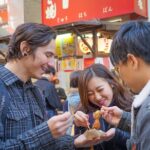
Next up is Konamon Museum, described as a place where you can eat, learn, and make takoyaki—Osaka’s “soul food.” Even if you don’t do a full cooking-style activity there, the theme is the point: takoyaki isn’t just a snack; it’s part of the city’s everyday food identity.
Your quest task again is built around observation. You look around to find the answer for the next location. This works well because takoyaki is visual and sensory. You’re surrounded by cues that connect the food to Osaka culture.
Showa Taishu Horumon Dotonbori: beef offal, Osaka style
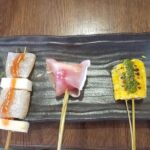
Then comes Showa Taishu Horumon Dotonbori, a horumon restaurant specialized in beef offal. This is a very Osaka kind of choice: bold tastes, no apology, and a strong local food culture that treats offal as normal comfort food.
Expect the clue to steer you from “this looks like a restaurant” to “this is part of a food tradition.” If you’re food-curious, this stop is a good reality check. Osaka isn’t only about sweetness and street snacks. It’s also about the savory side of local cooking.
Practical pacing tip: if you plan to actually eat at multiple stops, start with water and snack lightly early. You’ll thank yourself later when you hit Kuromon.
Hozenji Temple and Bunraku Theater: Osaka beyond the food counter
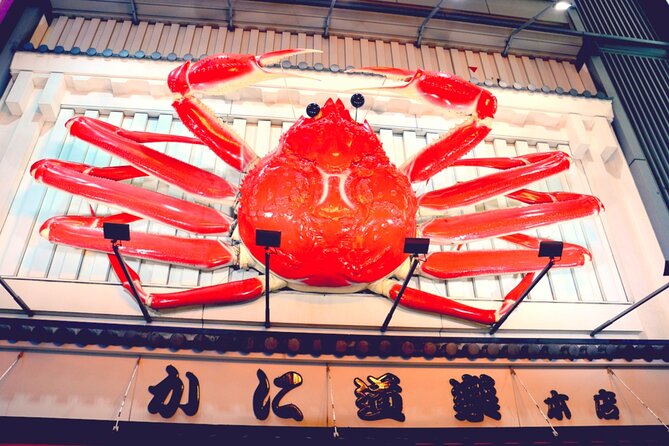
The quest doesn’t keep you trapped in street food land. It makes room for religion and performing arts, which is where the Osaka story gets more layered.
Hozenji Temple (built 1637) and Fudo Myoo
Hozenji Temple is built in 1637 and honors Fudo Myoo, one of the five guardians in Buddhism. This stop also links to the historical entertainment scene around Namba and Dotonbori in the 1600s, when kabuki and bunraku performances drew crowds.
Your mission is still puzzle-based: look around for the answer to progress. That format is smart. It keeps the temple stop from feeling like a lecture, even if you only spend a short time there.
One thing I like about this kind of inclusion: it reminds you that food districts weren’t isolated from culture. The same neighborhoods that served meals also held performances and rituals.
National Bunraku Theater: where the story shifts to performance
The National Bunraku Theater was established in 1984 as the home of bunraku in the Kansai region. The detail that helps you understand the scale: the main hall has 753 seats, while the small hall has 159 seats.
Again, your quest task is observation and answer-based. It pushes you to notice the theater as more than a backdrop photo spot. Bunraku is part of the local artistic identity, just like takoyaki is part of the local eating identity.
If you want to take this step further, you might plan your day so you’re not rushed to catch a performance. But even without tickets, the theater stop adds meaning to the route.
Kuromon Market and Namba Yasaka Shrine to finish strong
After the temple and theater pieces, the quest shifts back into food-land with Kuromon Market, then ends with a shrine history that ties Osaka’s power and rebuilding to the present layout.
Kuromon Market: black gate, fish market roots
Kuromon Market literally means black gate. The name traces back to an earlier Enmyo Temple “black gate” and to the Meiji-era story of how markets formed in this area.
You’ll see the timeline details built in:
- A fish market that opened around 1822
- Approved as an official market in 1902
- The Enmyo Temple black gate area linked to the “black gate” name, until 1912
Your clue task is again based on looking around. The stop is listed around 10 minutes, which means you’re meant to scan, solve, and move. This is perfect if you don’t want to spend an entire morning in the market but still want the Osaka market feel.
Namba Yasaka Shrine: moved because of Osaka Castle
The last clue stop is Namba Yasaka Shrine. It’s said the shrine was commissioned by Emperor Hanzei in honor of his father, Emperor Nintoku. The original location is given as what’s now in Kawachi Matsubara City.
Then comes a key Osaka detail: after Hideyoshi Toyotomi began construction of Osaka Castle, the shrine was moved to its present location.
That’s the kind of history that makes a city feel real. Osaka didn’t just grow randomly. It reshaped itself around major political changes, and places like this shrine show the ripple effects.
When you finish, you end at 2-chōme-9-19 Motomachi, Naniwa Ward.
What to eat while you play, without ruining your pace
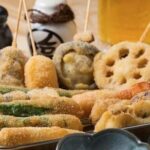
The quest itself won’t guarantee meals for you, but it’s built around Osaka food culture. You’ll pass places tied to takoyaki and horumon, and you’re specifically encouraged to try a few specialties along the way.
My practical advice:
- Plan to eat at most one main snack early and keep room for Kuromon
- If you do try takoyaki at Konamon Museum, consider it a “food anchor.” Then solve the nearby clues with less pressure
- If horumon is your thing, treat it as a savory counterbalance to the sweeter street snacks
Also, remember the experience is short on paper. If you treat it like a sit-and-stare museum tour, you’ll feel rushed. But if you treat it like a walking game with occasional breaks, the timing makes more sense.
Best for couples, families, and solo food hunters
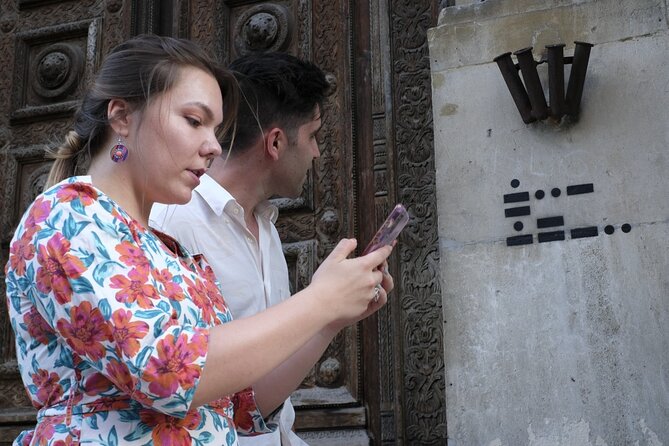
This experience is a good match for:
- Food lovers who want more than just a list of dishes
- Solo travelers who like “my pace” planning
- Couples and families who want a playful activity that’s still connected to real places
- Anyone comfortable walking and reading clues while moving
It may not be the best match if:
- You strongly prefer a human guide to explain everything
- Your phone battery is unreliable
- You get frustrated when an app slows down or direction feels unclear
The upside is that the structure helps you cover ground without needing to coordinate with a group. The downside is that there’s no backup guide if tech acts weird.
Quick logistics you’ll care about on the day
You start and end at different points. That’s normal for a quest format, but it means you should plan how you’ll get back afterward.
The schedule shows it’s available daily, 12:00 AM to 11:59 PM across the listed date range, so you’re not boxed into a single departure window.
And since it’s a private activity, it’s limited to your group. That’s helpful if you don’t want to wait around for other schedules.
Should you book Osaka Food Quest?
If you want a self-guided way to connect Dotonbori landmarks with Osaka’s food and cultural background, I think this is worth booking. It’s built for people who like walking, spotting details, and solving clues while still seeing real places like Ebisu Bridge, Hozenji Temple, Kuromon Market, and the Bunraku Theater area.
Book it if:
- You’re okay relying on your smartphone for guidance
- You like short, frequent stops instead of one long sit-down tour
- You want a value-priced activity that still feels structured
Skip it if:
- You strongly dislike phone-based navigation
- You need a guide to keep you on track step-by-step
- You’re hoping for a full meal plan or a tasting tour with guaranteed food stops
FAQ
How long does the Osaka Food Quest take?
The experience is listed at about 1 hour, but you may take longer if you slow down to read clues carefully and stop for food.
What do I need to start the quest?
You’ll need a smartphone and the mobile access code provided for the quest.
Is there a physical tour guide?
No. A physical tour guide is not included, and the experience is run through your phone.
Where does the quest start and end?
It starts at 1 Chome-6 Dotonbori, Chuo Ward, Osaka, and ends at 2-chōme-9-19 Motomachi, Naniwa Ward, Osaka.
Can I pause and resume?
Yes. You can pause and resume anytime.
What’s the cancellation policy?
You can cancel for a full refund up to 24 hours before the experience starts. If you cancel less than 24 hours before, the amount paid won’t be refunded.