REVIEW · OSAKA
Private Handmade Ring Workshop Class
Book on Viator →Operated by itoaware-いとあはれ-大阪店 · Bookable on Viator
Your ring starts with a hammer. In Osaka, this private ring workshop lets you create the classic Japanese 槌目 (Tankin) texture pattern, with choices for metal, width, shape, and finish. It’s hands-on in the fun way: you customize the look, not just pick a pre-made design.
I love that the workshop is set up so you can be creative even if you’re new to jewelry. You’ll hammer the surface texture yourself, then the delicate final work (like polishing) is handled by the artisan.
The main thing to keep in mind is price can change day-of. The base plan starts at a minimum silver option, but the metal and thickness you choose affect what you pay when it’s time to finalize the ring, so you should budget for upgrades.
In This Review
- Key highlights you’ll care about
- Tankin Hammer Marks: What You’re Actually Making
- Inside itoaware Osaka: The Workshop Flow From Base Ring to Final Polish
- Design Choices That Actually Change the Look (and Your Final Total)
- Silver925 (lowest starting point)
- K10 GreenGold (a fun curveball)
- Platinum and 18K gold (the big jump)
- Size surcharge note
- Hammering Time: What You Do, What They Do, and Why That Matters
- Photos, Souvenirs, and That “I Made This” Feeling
- Private and Local: How This Fits Into a Day in Osaka
- Price and Value Check: Paying for Experience vs Paying for the Ring
- Should You Book This Osaka Ring Workshop?
- FAQ
- Where is the ring workshop located in Osaka?
- How long does the workshop take?
- What does the price include?
- Can I choose different ring materials?
- Can I choose ring width and thickness?
- Do I hammer the texture myself or is it fully done for me?
- Who does the final finishing?
- Will there be help if I don’t speak Japanese?
- What happens if I’m late?
- Can I cancel and get a refund?
Key highlights you’ll care about
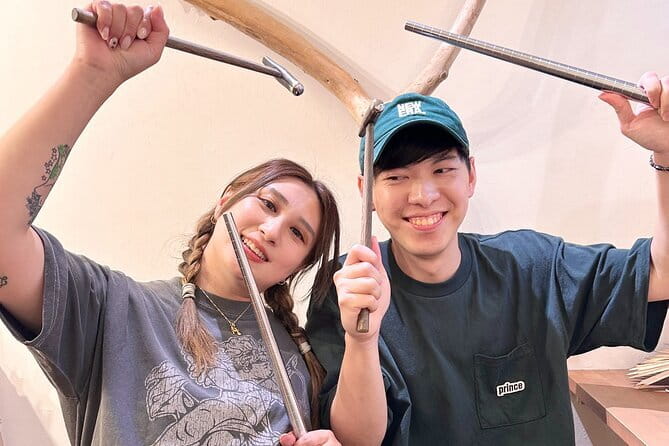
- Tankin / 槌目 texture: a hammered pattern that ends up looking like no one else’s ring
- You hammer, staff finishes: your role is hands-on, but the final polish is done for you
- Pick the ring details: material, width, shape, and finish are all part of the fun
- Couples can make matching symbols: you can exchange rings and hammer the texture together
- Private group experience: only your group participates, so you’re not rushed by strangers
- Translation support: Japanese staff guide you using translation tools if needed
Tankin Hammer Marks: What You’re Actually Making
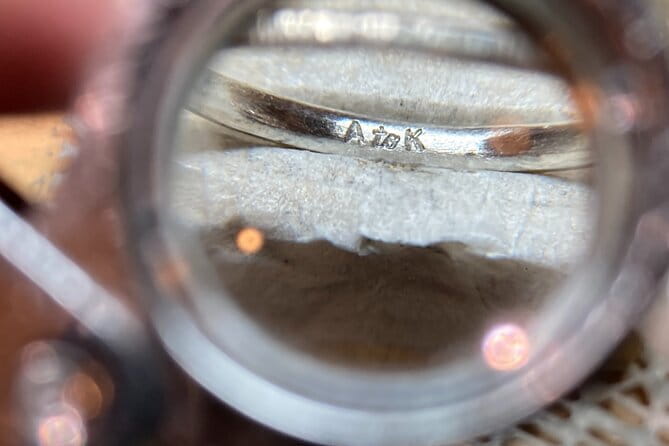
This is a ring-making class built around a traditional Japanese technique called Tankin (槌目). The big idea is simple: you make the ring’s surface pattern by hammering, and the result is a textured look you can’t fully replicate by machine. Even if two people choose the same design options, the hammered marks are inherently different.
What makes it feel special is that you’re not just selecting from a menu and leaving. You’re working the metal surface to create the pattern you’ll wear for years. That’s why it makes such a strong souvenir from Osaka—you can point to the texture and tell the story.
You can also read our reviews of more private tours in Osaka



Inside itoaware Osaka: The Workshop Flow From Base Ring to Final Polish
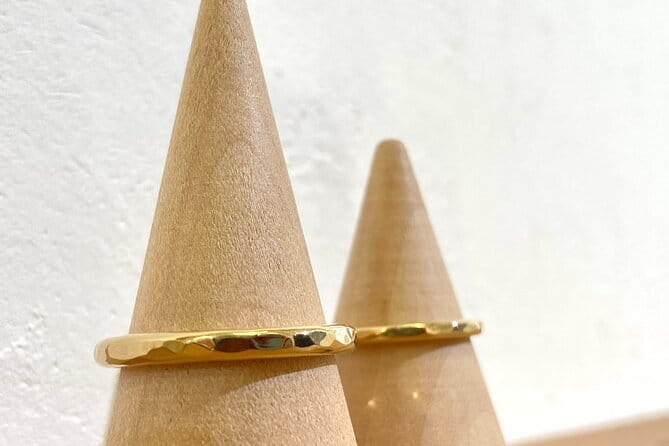
The class runs about 60–90 minutes total, with the full process around 1.5 hours. You’ll move through a clear sequence, and the structure matters because it keeps beginners from feeling lost.
Here’s how the experience is paced:
1) Choose your design combination
You start by selecting the ring’s width, shape, and finishing style. This is where you can steer the vibe—sleek and minimal, or more statement-like depending on the thickness and texture you want. If you’re doing this with someone else, this is the stage where it becomes a shared decision.
2) The base ring gets prepared
Before you start hammering the texture, a craftsperson prepares the base ring (the part you’ll work on). This matters because it prevents the class from turning into a “learn metallurgy from scratch” situation. You’re hammering for the pattern, not trying to shape the whole ring from raw material.
3) You hammer the texture yourself
This is the fun core. Using special hammers and tools, you apply the 槌目 texture to the ring surface. The staff guides you step by step, and if your grip is shaky at first, that’s normal. The texture takes time to control, but it’s not meant to be perfect on the first try.
4) An artisan handles the delicate finishing
After your hammering, the final polishing and delicate steps are done by the professional. This is a huge practical benefit: you can focus on the texture creation, without worrying that your fine-motor skills have to match a jeweler’s.
In reviews, people praise how patient the instructors are, including staff such as Junpei, and also mention other friendly helpers like Ayane and Connie. The theme is consistent: you get real guidance, plus enough breathing room to enjoy it.
Design Choices That Actually Change the Look (and Your Final Total)
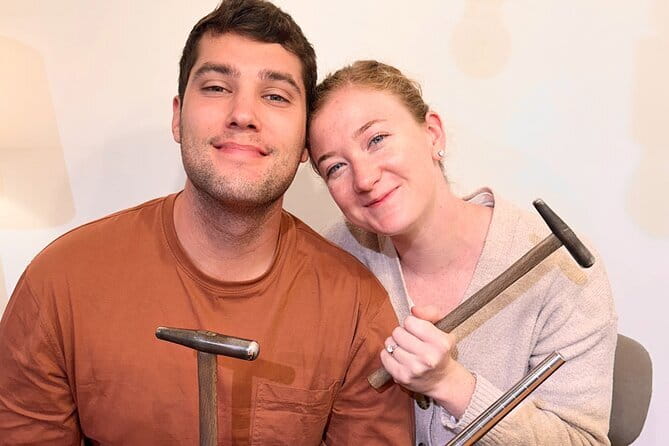
This workshop uses a smart pricing approach—but you need to understand it. The booking price is tied to the experience itself, while the actual ring price depends on what you pick.
The plan you buy is described as a lowest-price product option. On the day, you choose the material and ring width (and you can add options), so your checkout amount may differ from what you paid initially online.
Here’s the pricing logic you can use to budget:
Silver925 (lowest starting point)
For silver925, the “starting” width option is 1.0mm at 3,300 yen (tax included). Thicker widths climb quickly:
- 1.5mm: 4,400 yen
- 2.0mm: 5,500 yen
- 2.5mm: 7,700 yen
- 3.0mm (and 4×2mm): 11,000 yen
- 5×2mm: 15,400 yen
If you want a classic look on a budget, thin to mid-width silver is usually the safest bet. It also tends to feel light and comfortable for daily wear.
K10 GreenGold (a fun curveball)
One reason this workshop gets recommended is that it offers colors beyond the usual yellow or white gold. K10GreenGold can go from:
- 1.0mm: 11,000 yen
- 1.5mm: 22,000 yen
- up to 3.0mm: 99,000 yen
If you like the idea of a “Japan detail” that doesn’t look touristy, this green option is memorable.
You can also read our reviews of more tours and experiences in Osaka




Platinum and 18K gold (the big jump)
Platinum (Pt900) and K18 gold options start much higher:
- Pt900 1.0mm: 27,500 yen (tax included) and higher with width
- K18 gold (yellow/pink/green/white): also rises sharply with thickness
This isn’t a downside, just a heads-up: if you’re dreaming of a precious-metal ring with a thicker profile, the final total can climb fast.
Size surcharge note
If you’re getting a ring size 21 or above, there’s a 10% extra charge mentioned in the details. If you’re unsure what size you’ll need, double-check before you show up.
Hammering Time: What You Do, What They Do, and Why That Matters
People tend to assume a ring class will be “hard labor, hope you don’t ruin it.” This one is structured to avoid that trap.
The staff handles the parts that require delicacy. You hammer the pattern. You don’t have to sweat the last polish step, because an artisan finishes it for you. That makes the experience feel forgiving while still ending with a ring that looks intentional—not like a craft project you’d hide in a drawer.
There’s also a practical support layer for non-Japanese speakers. The workshop description says Japanese staff help you and guidance can use translation tools. In real-world terms, that means you won’t be stuck pointing at pictures with confusion while everyone waits.
You’ll likely feel the rhythm quickly:
- first you pick your combo
- then you get set up
- then hammer in short guidance cycles
- then relax because finishing is handled
Also, if you’re doing it as a couple, the format can become more than just jewelry. You can exchange rings and hammer the texture as part of the moment, turning the final object into something you can actually talk about.
Photos, Souvenirs, and That “I Made This” Feeling
This workshop explicitly offers commemorative photos using your mobile. That matters because you’re not just buying a souvenir off a shelf—you’re documenting the process while it’s happening. The best photo moments here tend to be when you’re actively hammering and when the ring is finished.
It also works as a gift. The workshop is designed to produce a one-of-a-kind result with the hammered pattern, which makes it feel less like mass-produced jewelry. One review calls it a relaxing, fun souvenir experience, and that fits the overall vibe: it’s hands-on, but not stressful.
One small fun detail from feedback: there was mention of Halloween games during at least one visit. That’s not something you should count on every time, but it signals that the shop can add small themed touches.
Private and Local: How This Fits Into a Day in Osaka
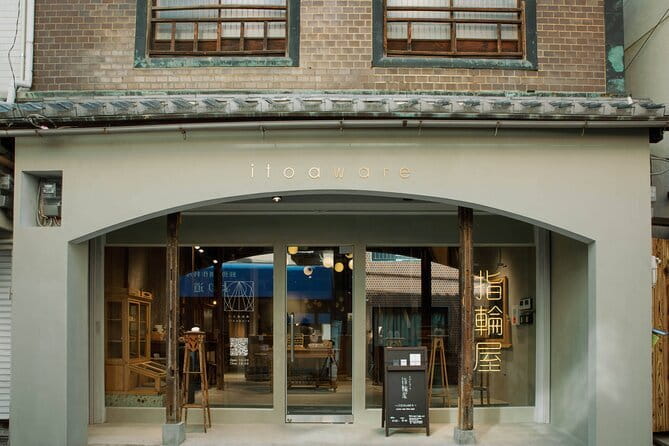
The workshop is in Osaka at itoaware Osaka (Itoaware Osaka3-chōme-2-18 Nakazaki, Kita Ward, 530-0016). It’s described as near public transportation, and the experience is private, meaning only your group participates.
Because it’s around 1.5 hours, it’s easy to pair with a morning or afternoon in nearby neighborhoods. You don’t need to build your whole day around it. Think of it like a mini detour: you can go explore Osaka, then come back for a craft session that leaves you with something you’ll actually use.
If you’re traveling as a couple, it also works well because you share one table and one project. The workshop is designed so the two rings can become a pair of symbols—exact metal and texture choices still let you keep individuality.
Price and Value Check: Paying for Experience vs Paying for the Ring

Here’s the honest value math you should do before you go.
The listing price you see (for example, $21.80 per person) is effectively for the workshop experience. The ring cost is based on the material and ring width you choose. That’s why people recommend it with a budget note: if you only expect the workshop price, you may feel surprised when you finalize the ring.
That said, the price structure is also what makes it fair. You can go from:
- silver925 1.0mm at 3,300 yen (tax included)
to much higher totals if you pick thicker widths or precious metals.
So the question isn’t just “Is it cheap?” The better question is: does it fit your souvenir goals? If you want a memorable wearable item made with your own hands, it’s strong value compared to many “let’s watch someone else make something” experiences.
A second value win: you take the ring home the same day. The class promises the finished rings can be taken home that day, which reduces the usual “wait for shipping” annoyance.
Should You Book This Osaka Ring Workshop?
I’d book this if you want a hands-on Osaka memory that isn’t generic, and if you’re okay with a day-of checkout that depends on your ring choices. It’s also a great fit if you like the idea of traditional technique—槌目 texture—and you want the final ring to look like a real personal creation.
You might skip it if your souvenir budget is tight and you only want a single fixed price. The experience price is only part of the story. Also, if you’re the type who hates time pressure, plan to arrive on time: the details warn that if you’re more than 15 minutes late, you may not be able to join the experience.
If you want something meaningful that you’ll wear, not just display, this hits the mark. And if you’re traveling with a partner, the couple-friendly setup makes it a surprisingly sweet way to add a shared moment to your Osaka trip.
FAQ
Where is the ring workshop located in Osaka?
The workshop starts at itoaware Osaka (3-chōme-2-18 Nakazaki, Kita Ward, Osaka, 530-0016, Japan).
How long does the workshop take?
Plan for about 1 hour 30 minutes (approximately). The process including staff finishing is described as about 60–90 minutes.
What does the price include?
The included part is the workshop price. The ring itself is priced based on the material and width you choose on the day.
Can I choose different ring materials?
Yes. The options listed include silver925, K10 GreenGold, Pt900 (platinum), and K18 gold in multiple colors (yellow/pink/green/white).
Can I choose ring width and thickness?
Yes. The day-of choices include ring width (thickness), and pricing changes depending on which width you select.
Do I hammer the texture myself or is it fully done for me?
You’ll use special hammers and tools to hammer the 槌目 (Tankin) texture on your ring.
Who does the final finishing?
The final finishing and polishing are described as being done by the artisan, even if you struggle with delicate work.
Will there be help if I don’t speak Japanese?
Yes. Japanese staff assist, and the description notes guidance can be provided using translation tools.
What happens if I’m late?
If you arrive more than 15 minutes late, you may not be able to complete the experience.
Can I cancel and get a refund?
Yes, you can cancel for a full refund if you cancel at least 24 hours before the experience starts.