REVIEW · OSAKA
Osaka: Shinsekai Food Tour – 13 Dishes at 5 Local Eateries
Book on Viator →Operated by Travel Osaka · Bookable on Viator
Neon snacks start at 5 pm. This Shinsekai evening food tour threads through retro lanes like Jyanjyan Yokocho and ends by Tsutenkaku Tower, with 13 dishes across five eateries plus two drinks. One big consideration: they can’t accommodate gluten-free or vegan diets, so you’ll need to be flexible.
What I like most is the practical pacing. In about three hours you get a lot of variety without trying to plan each stop yourself, and the guidance tends to be in English—people have even cited guides like Mike and Victor, and others like Bel, Camilla, Bell, Jess, and Mycal for clear explanations along the way. Still, the quality can’t be guaranteed every time with any small-group tour, so do show up early and keep your confirmation details handy.
In This Review
- Key things to know before you go
- Osaka’s Shinsekai Food Tour: what the 5 pm timing changes
- Value math: 13 dishes for one set price
- Start at a Shinto moment: Shinsekai Inari Shrine
- Shinsekai streets: retro neon, arcades, and real local energy
- Jyanjyan Yokocho’s covered lane: snack hopping in 180 meters
- Tsutenkaku Tower and finishing strong
- Guides: why the explanations matter more than you think
- Pacing and eating strategy for 13 dishes
- Who this tour is for (and who should reconsider)
- Price, logistics, and weather: the practical checklist
- Should you book the Osaka Shinsekai Food Tour?
- FAQ
- How long is the Osaka Shinsekai Food Tour?
- What does the tour price include?
- Is admission included for the shrine and Tsutenkaku stop?
- Where do the tour meetings start and end?
- What time does the tour start?
- How many people are in a group?
- Can the tour accommodate gluten-free or vegan diets?
- What happens if the weather is bad?
Key things to know before you go
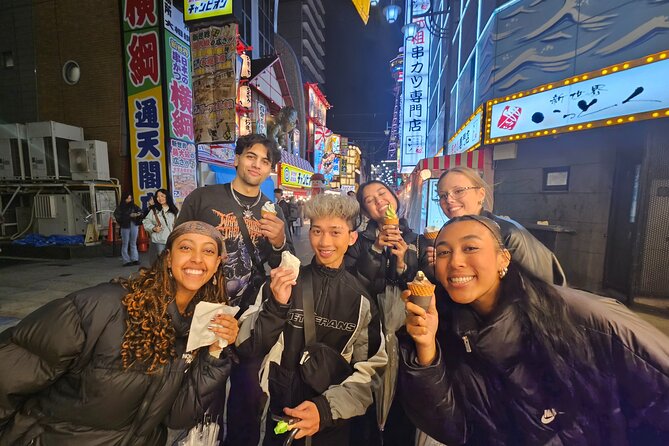
- 13 dishes, 5 eateries, 2 drinks: you’re not just walking—you’re eating your way through the neighborhood.
- Shinsekai + Jyanjyan Yokocho: the tour includes both the open-air neon streets and the covered 180-meter snack lane.
- Tsutenkaku Tower by design: you finish near the district’s most recognizable landmark.
- Max group size of 10: small enough to ask questions without feeling lost in the crowd.
- Diet limits are strict: gluten-free and vegan swaps aren’t available, so this is best for flexible eaters.
Osaka’s Shinsekai Food Tour: what the 5 pm timing changes
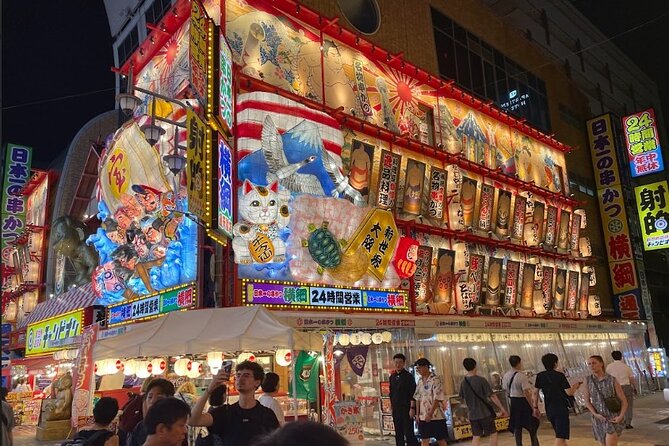
Osaka is a great city for food tours because dinner starts early and locals actually go out. This one kicks off at 5:00 pm, right when Shinsekai starts feeling fun instead of merely busy. You’ll get street life, neon glow, and a steady flow of places to eat without arriving too late.
And because the tour is about 3 hours, it hits a sweet spot. You don’t need a whole evening off your sightseeing plan, and you won’t be wandering around snack hunting on an empty stomach. It’s built for a simple rhythm: short sight stop, food, short sight stop, more food.
You can also read our reviews of more food & drink experiences in Osaka

Value math: 13 dishes for one set price
The price is $79.07 per person, and it includes 13 dishes across five local eateries, plus two drinks. If you break it down, that’s roughly $6 per dish, before you even count the guide and the coordination of getting you into the right spots.
That matters in Osaka. A self-guided plan can turn expensive fast—especially if you keep changing your mind or end up eating at one place that’s good but pricey. Here, the tour handles the logistics so you get variety instead of repeating the same kind of meal.
The included drinks are also a nice touch. You get something refreshing during the walk, which helps when you’re stacking lots of savory bites.
Start at a Shinto moment: Shinsekai Inari Shrine
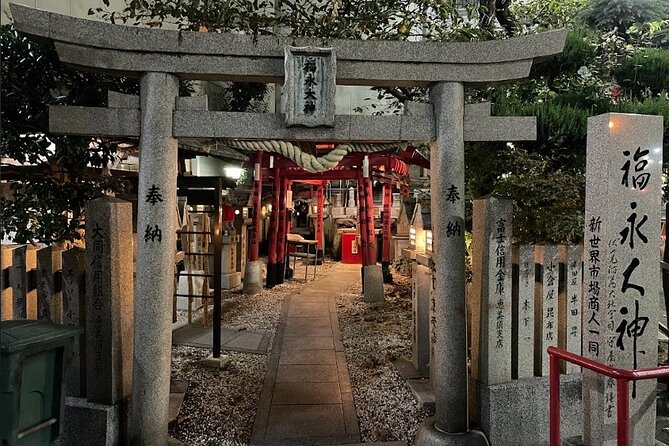
Before the neon takes over, you pause at Shinsekai Inari Shrine for about 15 minutes. Admission is free here, and the point isn’t sightseeing for sightseeing’s sake. It’s a reset. You step into a quieter pocket of Shinsekai, and that contrast makes the rest of the night feel more dramatic—in a good way.
Inari shrines are tied to Shinto tradition, and you may also see fortune-telling-style elements in this setting. Even if you don’t go deep into religion, it gives context for the area. Shinsekai isn’t only a snack playground—it also has roots.
Shinsekai streets: retro neon, arcades, and real local energy
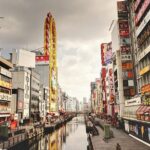
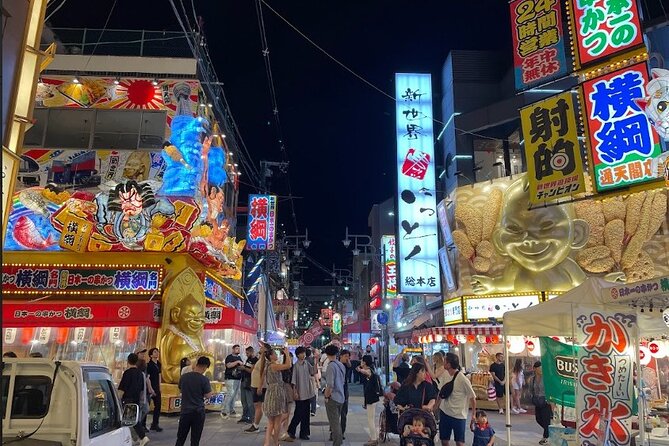
Then you move into Shinsekai itself for about an hour. This is the part most people picture: bright neon signage, old-school arcade vibes, and street corners that feel like they’ve been doing the same thing for decades. The iconic Tsutenkaku Tower is part of the atmosphere even when you’re not right underneath it.
Why it works as a food tour route: Shinsekai is full of places where locals actually linger. That means you’re more likely to get classic Osaka flavors and dishes that you might not confidently order alone.
Practical tip: bring comfortable shoes. This part is a walk-through district, not a sit-and-sip dinner.
Jyanjyan Yokocho’s covered lane: snack hopping in 180 meters
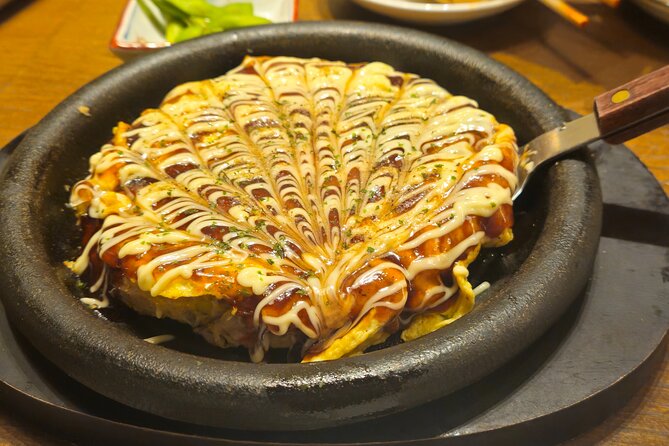
Next comes Jyanjyan Yokocho, also linked with the Nanyodori shopping district, for about an hour. The standout here is the setup: a covered 180-meter street with tiny eateries, standing bars, and game shops. The roof matters. Even when the evening weather gets weird, this kind of lane keeps the flow going.
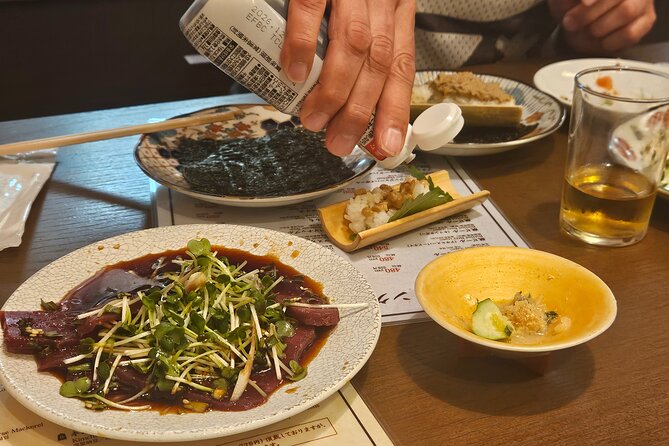
This is also where tasting-style dining shines. Smaller bites are easier to sample in sequence, and it’s a great space for a guide to explain what you’re eating. If you’re the type who likes to understand the difference between similar-sounding dishes, this stop is where the tour can feel extra satisfying.
One bite that gets called out: fried chicken. If that’s your weakness, I’d plan to savor it instead of rushing to the next dish right away.
You can also read our reviews of more tours and experiences in Osaka
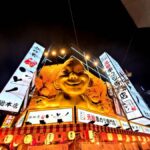
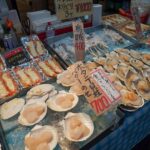

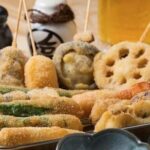
Tsutenkaku Tower and finishing strong
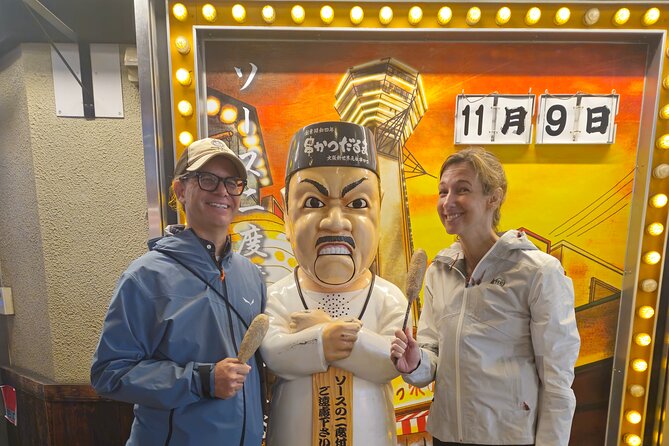
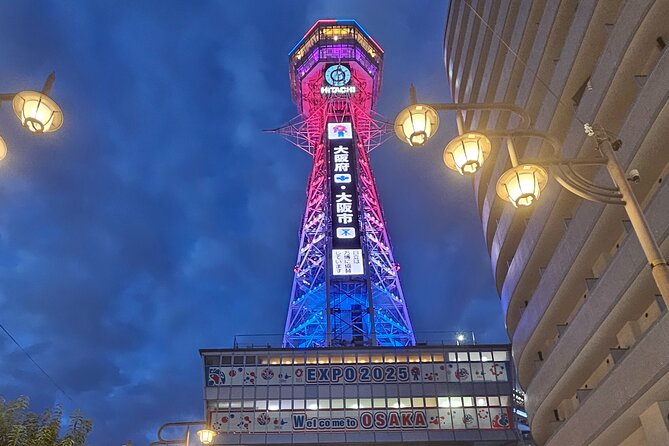
You end with Tsutenkaku Tower for about 15 minutes. Admission is listed as free for the stop, and the timing matters: you arrive when you’re already fed, so you can enjoy the atmosphere without feeling like you need to sprint through the landmark.
Even if you’re not the tower photo type, Tsutenkaku is the shorthand for Shinsekai. Finishing near it helps you keep your bearings for the rest of your Osaka evening.
Guides: why the explanations matter more than you think
This tour lives or dies by the guide. The good news: there are plenty of signals that the guiding is strong and in English for many departures. People have named English-speaking guides like Mike, Victor, Bel, Camilla, Bell, Majo, Jess, and Mycal, and several described the explanations as clear and friendly.
Here’s what that means for you, practically:
- You’ll understand what you’re eating instead of playing guessing games.
- The guide can help you navigate menu decisions, especially if you’re not used to Japanese ordering.
- You get local context for why certain foods fit the neighborhood.
One note to keep expectations fair: a small tour can have swings in how smoothly everything runs. If your priority is deep cultural answers, still bring your questions, but don’t assume every guide will match the same level of detail.
Pacing and eating strategy for 13 dishes
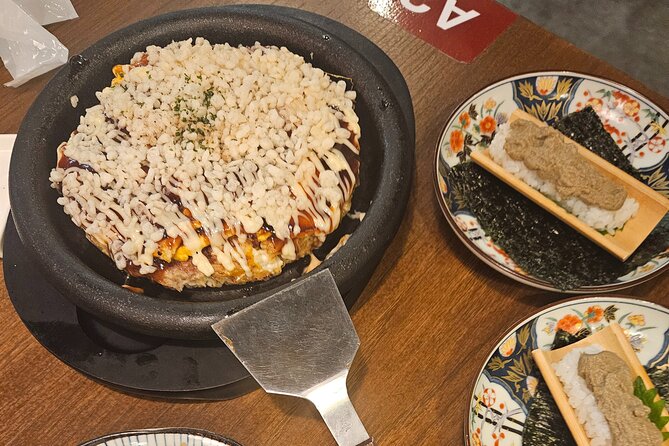
13 dishes sounds like a lot because it is a lot. But it usually lands well when the tour is structured and dishes are shared in sequence. Your best move is to eat at a steady pace instead of going all-in on the first taste.
A simple strategy that works:
- Take a small bite, then pause for a second to notice flavor, texture, and heat level.
- Save your appetite for the later stops. The tour includes a mix of street-lane snacks and sit-and-stand style dining.
- If you’re sensitive to rich food, stick to the included drinks as your main beverage.
Also, if you’re picky, this isn’t a “only safe choices” tour. Some people want familiar, comforting flavors, and this tour can lean more adventurous in variety.
Who this tour is for (and who should reconsider)
This is a strong fit if you:
- want a guided way to explore Shinsekai without doing detective work
- like trying lots of different bites in one night
- enjoy walking through neon districts as part of the experience
It’s less ideal if you:
- need gluten-free or vegan options (they can’t accommodate)
- want a quiet, museum-style pace instead of a lively street route
- get uncomfortable when foods are unfamiliar and you can’t swap them out easily
Group size is capped at 10 travelers, which generally keeps things friendly and makes it easier to move as a unit. If you’re traveling solo, that can also be a plus. You’ll still feel part of a group, but not swallowed by one.
Price, logistics, and weather: the practical checklist
This tour uses a mobile ticket, which is convenient in the evening when you don’t want to juggle paper. It’s also described as near public transportation, so you can plan your arrival without a long taxi ride.
Start point is near Daily YamazakiJapan at Ebisuhigashi in Naniwa Ward, and the tour ends near Tsutenkaku Tower. That end location is handy: it’s an easy jumping-off point if you want to keep exploring afterward.
Weather is noted as important. It requires good weather, and it may be canceled due to poor conditions, with the option of a different date or a refund. For that reason, I’d keep your evening flexible and pack a light rain layer.
One more practical point: with any time-based meeting, aim to arrive a bit early. There’s no use gambling on timing, especially when you’re stepping into an area full of signage and street-level turns.
Should you book the Osaka Shinsekai Food Tour?
If you want an easy win—13 dishes, five eateries, an English-speaking guide, and a route through Shinsekai’s most memorable streets—this is a great booking. The price works out well when you factor in the number of tastings and the coordination, and the small group size keeps the night from feeling chaotic.
I’d book it if you eat a wide range of foods and you’re excited by the idea of neon districts being part of the meal. I’d think twice if dietary needs are strict, because the tour can’t provide gluten-free or vegan alternatives.
Finally, treat this like a real evening out, not a hurried food checkbox. Show up on time, wear comfortable shoes, and bring a curious attitude. Shinsekai is best when you let the street rhythm guide you.
FAQ
How long is the Osaka Shinsekai Food Tour?
It lasts about 3 hours.
What does the tour price include?
The tour includes tasting 13 dishes across five local eateries, plus two drinks.
Is admission included for the shrine and Tsutenkaku stop?
The tour lists free admission for the Shinsekai Inari Shrine stop and the Tsutenkaku stop.
Where do the tour meetings start and end?
It starts at Daily YamazakiJapan in Naniwa Ward, Osaka, and ends near Tsutenkaku Tower (1-chōme-18-6 Ebisuhigashi, Naniwa Ward).
What time does the tour start?
The start time is 5:00 pm.
How many people are in a group?
The tour has a maximum group size of 10 travelers.
Can the tour accommodate gluten-free or vegan diets?
No. The tour cannot cater for gluten-free or vegan diets.
What happens if the weather is bad?
This experience requires good weather. If it’s canceled due to poor weather, you’ll be offered a different date or a full refund.